1
User Instructions
6350 Skyline™ Structural Steel HLL System
Reliance Industries, LLC
Typical rescue plans include (but are not limited to) the following items:
1. List of equipment that must be readily accessible in the event of an emergency and the names of
those workers certified to use or operate that equipment.
2. Emergency contact phone numbers (ambulance, hospital, fire department…) and a means to
contact them (cell phone, emergency radio).
3. List of employees on the site, and the specific tasks they will perform to effect the rescue.
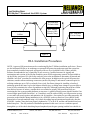
The equipment that will be used to aid in the rescue of any worker must be attached to structural
anchorages independent of those used for the horizontal lifeline system. During installation of horizontal
lifeline anchorages, tie-off and equipment attachment hardpoints should be attached, and also clearly
marked in such a manner as to provide a means to rescue a worker in any position along the lifeline
system.
With the number of potential scenarios and locations for a worker requiring rescue, an on-site rescue team
is advantageous. This group of individuals is given the tools, both in equipment and technique, so they
can perform a successful and efficient rescue. It is important to provide training on a periodic basis to
ensure skills learned are kept current.
Inspection
Prior to each use, the worker must inspect the system for any physical damage, wear, corrosion, or
malfunctioning parts. Check the shock absorber for deployment by looking to see if the black slide
bearing under the shock absorber eye is exposed. If the washer on the shock absorber freely rotates when
not in tension (indicating either misuse or over-tensioning) the shock absorber must be replaced to verify
proper pre-tensioning of the horizontal lifeline. Once the shock absorber is deployed, its energy capacity
is used up, and it cannot be reset. If the shock absorber deploys, the entire system has seen a fall arrest
load and must be removed from service until it is inspected by a competent person who either replaces or
repairs and re-certifies the components for use on the system. Once deployed, shock absorbers are not reusable, and must be replaced. With deployment of the shock absorber, it is critical for a competent person
to inspect all lifeline components for cracks, distortion of the structural anchorages and connectors. In
addition to a normal cable inspection, inspect the swaged eye of the lifeline cable to verify it retains its’
original tear-drop shape. Any variation from the original shape indicates excessive load on the cable and it
should be replaced. If an inspection reveals a problem or unsafe condition, remove the entire system from
service until it can be re-certified by a competent person.
The worker, who must also check the pre-tension prior to each use, must inspect all system components.
A formal inspection must be carried out a minimum of once each year, and be formally documented and
kept on file with the system parameter documents.
Reliance Industries, LLC
Rev: B
Date: 07/21/04
Denver, CO 80214
Ph. (800) 488-5751
Doc.: M-6350
Fax (303) 424-8670
Page 21 of 24