1
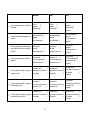
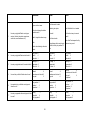
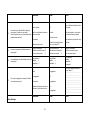
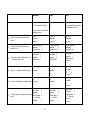
(two informal carers) or because the service was too difficult due to the separate devices and steps
needed to make a phone call with the service (one informal carer). The other two informal carers
participating thought the function would be useful for the person with dementia. In correspondence
with these findings, two informal carers experienced the picture dialling function as not at all
inconvenient and three found it to be a little bit more inconvenient. However, all informal carers were
satisfied with picture dialling in general. Two informal carers suggested that the telephone should be
integrated with the stationary device so that no confusion could arise with regard to separate devices
and steps. Two informal carers would like to see the option to add more contacts in the picture dialling
address book. Another informal carer suggested the help icon should be renamed, as the function
would not be recognisable from the button name.
Belfast
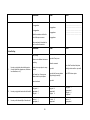
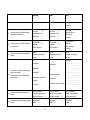
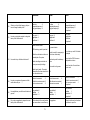
Four Pwds thought that the picture dialling feature was very useful; however, one Pwd stated that
although it was useful they had no problem using the normal telephone. Two Pwds said that the
picture dialling function was very helpful and two said it was appropriate. The size of the pictures used
on the stationary screen was judged by four Pwds to be appropriate. In contrast, two Pwds thought
that the size of pictures on the mobile device was too small. The emergency contact function was
considered appropriate by three Pwds, with one finding it easy to use. Four persons commented that
using the picture dialling feature was not all inconvenient or stressful. Three Pwds were very satisfied
with the picture dialling service in general, with one being just satisfied. There were no suggestions
from the Pwds about ways to improve the picture dialling function on either the stationary or mobile
devices.
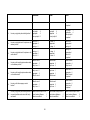
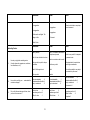
Two carers considered the picture dialling function to be very helpful and two thought it to be
appropriate. Four carers found the pictures displayed on the stationary device to be of an appropriate
size while two carers thought the pictures on the mobile device were too small. Three carers felt that
the PwdV¶XVHRIWKHDGGUHVVERRNRQWKHVWDWLRQDU\GHYLFHZDVDSSURSULDWHKRZHYHUWZRFDUHUV
reported that it was difficult for the Pwd WRXVHWKHPRELOH¶VDGGUHVVERRN7KHFDUHUVwere divided in
their opinion when it came to how the picture dialling function facilitated social contact, with two carers
claiming that it would make it easier to keep in touch and two stating that it would make no difference.
The emergency contact function was judged to be appropriate by three carers and thought to be easy
to use by one carer. When asked to comment on improvements, none of the carers had any
suggestions.
Lulea
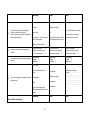
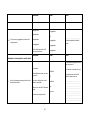
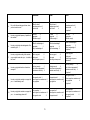
The communication function which made telephoning easy was appreciated by almost all participants.
One exception was a Pwd who thought that she had no need for it now. All the Pwds found the
function useful and easy to learn. The concept of having a directory with pictures and written names
was much appreciated. Some of the Pwds could still remember phone numbers, but the carers could
foresee that they might have problems later on. Two of the carers found the directory too small and
wanted to have the possibility to include more persons.
Two of the carers found the system of calling confusing in the sense that the caller first spoke with the
screen and was then requested to pick up the receiver. They thought it was better to have fewer steps
in the procedure and only talk directly to the screen. Their thinking was that calling with the CHH was a
new procedure that had to be learned anyway, so why confuse it with the old way of calling?
Three of the Pwds found the help function confusing and did not understand its purpose until this was
explained. One of them thought that it would be easier to identify the help button if it had a stronger
contrast with the background. Four of the carers appreciated the function and thought it was important.
24