1
FFC User Manual
A.3.4
Anders Logg
Alignment of edges
Depending on the orientation of any given cell, an edge on the cell may be
aligned or not aligned with the corresponding edge on the reference cell if the
vertices of the cell are mapped to the reference cell. We define the alignment
of an edge with respect to a cell to be 0 if the edge is aligned with the
orientation of the reference cell and 1 otherwise.
Example 1: The alignment of the first edge (e0 ) on a triangle is 0 if the
first vertex of the edge is the second vertex (v 1 ) of the triangle.
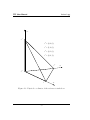
Example 2: The alignment of the second edge (e1 ) on a tetrahedron is 0 if
the first vertex of the edge is the third vertex (v 2 ) of the tetrahedron.
If two cells share a common edge and the edge is aligned with one of the cells
and not the other, we must reverse the order in which the local nodes are
mapped to global nodes on one of the two cells. As a convention, the order
is kept if the alignment is 0 and reversed if the alignment is 1.
A.3.5
Internal ordering on faces
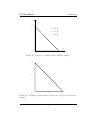
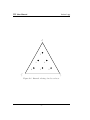
For faces containing more than one node, the ordering of nodes is nested
going from the first to the third vertex and in each step going from the first
to the second vertex as in Figure A.6.
A.3.6
Alignment of faces
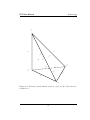
There are six different ways for a face to be aligned on a tetrahedron; there are
three ways to pick the first edge of the face, and once the first edge is picked,
there are two ways to pick the second edge. To define an alignment of faces as
an integer between 0 and 5, we compare the ordering of edges on a face with
the ordering of edges on the corresponding face on the reference tetrahedron.
If the first edge of the face matches the first edge on the corresponding face
on the reference tetrahedron and also the second edge matches the second
edge on the reference tetrahedron, then the alignment is 0. If only the first
56