1
Delimiters Moves (and move numbers) are delimited by spaces, periods, or
semicolons. None of these will be typeset directly, since TEXmate takes
care of all formatting and punctuation. Of course, this is customizable.
\makebarother
\makebarchess
Chess mode All this is done within ‘chess mode:’ just as $ changes to math
mode, | changes to chess mode. Sometimes (notably tables) you need | for
other things, so you can turn its chess meaning off with \makebarother.
To turn it back on, \makebarchess.
Checks should be input (with +), even if you don’t like them to be typeset.
There is a \checksign command (default ‘’) that you could redefine as
nothing.
Captures too should be input, with x, even if not intended to be visible. The
command \takes holds the sign that will be used for them (default a
space-trimmed \times).
Mate is done through \mate. Alternatively, of course, \#.
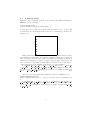
Promotions are kind of an exception. Due to how TEXmate works, the particle
‘c8N’ will produce literally ‘c8N,’ instead of ‘c8 .’ I did not think it was
worth to change the whole nature of the system just for this, so I will ask
the user to use piece-name commands for promotions: ‘c8\knight’ (or
‘c8=\knight,’ as some people do).
N
4
Formatting and punctuation
The output will be consistent as to punctuation marks. All of the following
input streams:
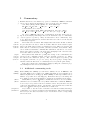
|1. e4 e5; 2. Nc3 Nf6; 3. Bb5 a6|,
|1 e4 e5 2 Nc3 Nf6 3 Bb5 a6|, and even
|1 e4 e5 Nc3 Nf6 ; Bb5 a6|,
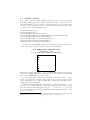
will produce, with default settings, ‘1. e4 e5; 2. c3 f6; 3. b5 a6.’ This format
can be changed redefining the following commands:
N
\afterno
\afterw
\afterb
\beforeb
\beforeno
N
B
What comes after the number (.~ by default)
What comes between white’s and black’s moves ( )
What comes between black’s move and the next number (; )
What comes before black’s move when it’s resuming the variation (\the\move.\ \dots~)
What comes before the number.
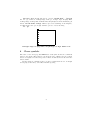
The character that symbolizes each pieces (by default the figurines) is contained in the commands \rook, \knight, \bishop, \queen, and \king, and can
be changed at any moment. These piece-name commands, as well as those for
chess symbols, can be used in running text. Or in chess mode, for that matter.
3