1
US006701527B2
(12) United States Patent
(10) Patent N0.:
(45) Date of Patent:
Schein et al.
(54)
(75)
TELEVISION SCHEDULE SYSTEM AND
METHOD OF OPERATION FOR MULTIPLE
PROGRAM OCCURRENCES
(56)
(US); David P. Warden, Belmont, CA
(US); Molly K. King, Fremont, CA
(US); Theresa A. Alba, Fremont, CA
(US); Robert E. Russman, Pleasanton,
CA (US)
(73) Assignee: StarsightTelecast, Inc., Fremont, CA
(Us)
(*)
Subject to any disclaimer, the term of this
patent is extended or adjusted under 35
U.S.C. 154(b) by 0 days.
12/1984 Kruger et al. ............ .. 358/181
11/1987
A
Young
.. ... ... ... .
. . . ..
358/142
. . . ..
358/335
4,751,578 A
6/1988 Reiter et al. .
4,908,713
A
3/1990
Levine
358/183
5,335,277
A
8/1994
Harvey et al.
......
. . . . . ..
5,357,276
A
10/1994
Banker et al.
......
. . . . . . ..
5,523,796
A
6/1996
. ... ... ... .
Marshall
.. ... ... .
5,592,551 A
1/1997 Lett et al.
5,596,373
A
1/1997
White
5,635,989
A
6/1997
Rothmuller
5,684,525 A
11/1997
. . . ..
380/20
348/7
348/589
..... .. 380/20
.. ... ... .
.....
. . . ..
348/569
. . . .. 348/563
Klosterman ............... .. 348/906
WO 96/09721
WO 96/17473
3/1996
6/1996
US 5,353,131, 10/1994, Young et al. (withdrawn)
Goldberg, “A 35—inch Zenith TV premieres StarSight’s
onscreen guide,” Video (Apr. 1995) pp. 41.
StarSight User’s Manual.
Related U.S. Application Data
Continuation of application No. 10/055,533, ?led on Jan. 22,
2002, now abandoned, which is a continuation of application
No. 09/841,137, ?led on Apr. 24, 2001, now Pat. No.
6,341,374, which is a continuation of application No.
09/344,274, ?led on Jun. 30, 1999, now Pat. No. 6,247,176,
which is a continuation of application No. 09/120,704, ?led
on Jul. 22, 1998, now Pat. No. 5,959,688, which is a
continuation of application No. 08/665,216, ?led on Jun. 14,
1996, now Pat. No. 5,801,787.
(51)
(52)
Int. Cl.7 .............................................. .. H04N 5/445
(58)
Field of Search ............................... .. 348/563, 564,
U.S. Cl. ........................... .. 725/43; 725/49; 725/53;
725/58; 725/141
348/569, 600, 906,589; 725/43, 45, 49,
53, 58, 141, 39, 40,48; H04N 5/445, 5/50
in
51/
COORDINATOR
30
CABLE
4,488,179 A
4,706,121
OTHER PUBLICATIONS
US 2003/0028878 A1 Feb. 6, 2003
(63)
References Cited
FOREIGN PATENT DOCUMENTS
W0
W0
(21) Appl. No.: 10/256,469
Sep. 27, 2002
(22) Filed:
Prior Publication Data
(65)
Mar. 2, 2004
U.S. PATENT DOCUMENTS
Inventors: Steven M. Schein, Menlo Park, CA
Notice:
US 6,701,527 B2
26
28
El WE]
Primary Examiner—Sherrie Hsia
(74) Attorney, Agent, or Firm—Christie, Parker & Hale,
LLP
(57)
ABSTRACT
An improved television guide system. According to one
embodiment of the invention, television guide information is
provided that includes multiple occurrences of a single
show. The guide system of the present invention allows the
user to identify a show and, thereafter, identify when the
identi?ed show will be played again. Accordingly, the user
may more easily select shows for viewing or recordation.
1 Claim, 4 Drawing Sheets
U.S. Patent
Mar. 2, 2004
Sheet 2 0f 4
US 6,701,527 B2
/ 40
SOURCE
USA
7
3100
1
4400
3.45
)
SOAP
NEWS
////7/7///////
GONE WITH THE WIND
/J//////J/////
H802
1
|
BATMAN
NBC
HBO]
2:00
CASABLANCA
J
A
COMEDY
I
‘42
L44
@ “8
FIG 2.
U.S. Patent
Mar. 2, 2004
Sheet 3 0f 4
GONE WITH THE WIND
SOURCE
pg
TIME
IE'QIVHZTIQ DAV/A3915,’6'03;
HBO]
TODAY
H802
TODAY
088!
wE0,s/8
NBC
TH, 5/9
INTERNET
BLOCKBUSTER
FIG.
“=00
“=30
4-00
5:00
3.
PM
PM
AM
PM
US 6,701,527 B2
U.S. Patent
Mar. 2, 2004
(
Sheet 4 0f 4
START
US 6,701,527 B2
)
/4o:
RECEIVE "WRER'ELSE'
INPUT
T
r402
SEARCH FOR OTHER IN
STAHCES OF THE PARTICU
LAR SHOW
DISPLAY OTHER
INSTANCES OF THE
PARTICULAR SHOW
R
RECEIVE TURE/
RECORD COMMANDS
P76 4.
/406
US 6,701,527 B2
1
2
TELEVISION SCHEDULE SYSTEM AND
METHOD OF OPERATION FOR MULTIPLE
PROGRAM OCCURRENCES
SUMMARY OF THE INVENTION
An improved television guide system is provided by
virtue of the present invention. According to one embodi
ment of the invention, multiple occurrences of a single shoW
may be identi?ed for a user. For example, in many digital
satellite systems today, a particular movie Will be played on
CROSS-REFERENCE TO RELATED
APPLICATIONS
This application is a continuation of application Ser. No.
10/055,533, ?led Jan. 22, 2002, abandoned, Which is a
continuation of US. Ser. No. 09/841,137 ?led Apr. 24, 2001,
now US. Pat. No. 6,341,374, Which is a continuation of US.
Ser. No. 09/344,274 ?led Jun. 30, 1999, now US. Pat. No.
6,247,176, Which is a continuation of US. Ser. No. 09/120,
704 ?led Jul. 22, 1998, noW U. S. Pat. No. 5,959,688, Which
is a continuation of US. Ser. No. 08/665,216 ?led Jun. 14,
1996, now US. Pat. No. 5,801,787.
multiple channels With offset start times. The guide system
of the present invention alloWs the user to identify a par
10
more easily select shoWs for vieWing or recordation.
Accordingly, in one embodiment the invention provides a
method of generating television guide information for a
15
information into a guide system; receiving user input to
The present invention relates to the ?eld of television
20
speci?cally, in one embodiment the invention provides a
method and apparatus for identifying When a particular shoW
is being broadcast in a television guide system.
As video entertainment becomes increasingly
sophisticated, consumers are provided With Wider options in
draWings.
25
embodiment of the invention;
30
each of the various transmission media available to the
dramatically.
While bene?tting consumers through greater selection,
35
40
capable of transmitting a signal, such as a computer or
modem line. Although the invention Will ?nd Wide use in
process of choosing a program Would have been daunting.
45
particular note, the StarSightTM on-screen guide system has
proven to be pioneering in the ?eld of on-screen guide
systems. The StarSight system provides not only television
listings, but also capabilities such as theme searching, VCR
programming, detailed program information, and other
ventional antenna and a satellite dish such as a DBS source,
or (5) one of the above sources and an Internet or other
functionality.
computer source. The multi-source schedule information is
sorted and displayed to the user in an organiZed fashion as
Recently, additional functionality is suggested in such
55
When a user selects a shoW Within a displayed guide, the
system reads a source identi?er associated With that shoW or
sources such as satellite sources and cable sources is com
bined to form a uni?ed guide.
channel. In the preferred embodiment, the system then
60
eliminate redundant information from such sources and
provide other functionality.
carries out an automatic sWitching/tuning process that
sWitches the input to the television (either RF or video) to a
source device. Exemplary source devices include a DBS, a
cable box, a television tuner, an Internet access, etc. The
Signi?cant strides have been made via the StarSight guide
system, and in fact such guide systems are achieving Wide
plexity of such systems increases, hoWever, still further
functionality is desired.
described in greater detail in US. application Ser. No.
08/423,410, incorporated herein by reference.
system, guide information from, for example, disparate
spread acceptance in the television industry. As the com
systems With only a single source of television signals, such
as a satellite system, the invention Will be illustrated herein
primarily in relation to a system Where broadcasts are
received from at least tWo separate sources such as (1) cable
and a satellite dish, or (2) tWo different satellites, or (3) local
cable and digital broadcast sources (DBSs), or (4) a con
on the television screen of the consumer’s television. Of
A system according to this invention may, for example,
information Which may be obtained from one or several
sources. These sources may include an incoming cable line
(e.g., on a coax cable), satellite broadcasts, a dedicated
telephone line (e.g., a tWisted pair), and any other medium
also other programming (such as digital satellite service) the
systems. See US. application Ser. No. 08/665,216, incor
porated herein by reference for all purposes. In one such
DESCRIPTION OF THE PREFERRED
EMBODIMENTS
The present invention utiliZes television schedule guide
ingly onerous. For example, a consumer may have access to
Accordingly, neW and improved methods of providing
program guide information have been developed for display
FIG. 3 is a display provided to the user When the “When
else” feature is utiliZed; and
FIG. 4 is an overall ?oWchart illustrating operation of the
invention.
consumer, the number and variety of programs is increasing
Well over 100 cable television channels. If a particular
consumer has access to not only cable programming, but
BRIEF DESCRIPTION OF THE DRAWINGS
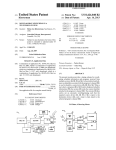
FIG. 1 is an overall diagram illustrating a television
system in accordance With one embodiment of the invention;
FIG. 2 is a typical grid guide used according to one
television programs, a television vieWer may noW have
the array of programming available to consumers also
presented a certain dilemma. Speci?cally, as the number of
programs available to the consumer became large, the pro
cess of selecting Which program to vieW became increas
and identifying for the user other times When the particular
shoW Will be shoWn.
A further understanding of the nature and advantages of
the inventions herein may be realiZed by reference to the
remaining portions of the speci?cation and the attached
video entertainment. In addition to conventional broadcast
access to, for example, cable television programming, digi
tal satellite service programming, cable stereo broadcast,
and conventional satellite programming. Moreover, Within
vieWer comprising the steps of inputting schedule guide
identify a particular shoW in the schedule guide information;
BACKGROUND OF THE INVENTION
schedule guides and their method of operation. More
ticular shoW and, thereafter, identify When the identi?ed
particular shoW Will be played again. The user may therefore
system then tunes to the required channel for the desired
65
shoW. Additionally, the source identi?er can be utiliZed to
sWitch betWeen various devices automatically When unat
tended VCR programming is desired. Furthermore, When
US 6,701,527 B2
3
4
program information is received from multiple satellite
sources Which are available via the DBS satellite dish. The
sources and a desired channel is selected, the present inven
tion can, in one embodiment, automatically move the cus
tomer’s satellite dish such that the customer receives the
desired program from the associated source. The present
invention then tunes to the correct channel.
In creating a merged television guide, a channel map is
created Which identi?es the channels available on the mul
tiple sources, and identi?es their source. For example, in the
case of DBS/local channel implementations, a channel map
IRD box 18 then automatically positions the DBS satellite
dish such that the desired satellite source is received by the
IRD box 18.
Coordinator 14 includes processor (CPU) 26 and memory
(typically RAM) 28 that serve as the primary devices for
operating the system. In the case Where the various televi
sion signal sources are provided to the coordinator, the
coordinator may also contain elements such as an internal
tuner, a sWitching device for sWitching betWeen sources, and
other components. In the embodiment shoWn in FIG. 1, he
coordinator is connected to and controls infrared (IR)
emitter(s) 30. IR receiver 31 is connected to coordinator 14
and receives input from the remote or keyboard 22 to
provide the necessary user input to the system. IR emitter(s)
30 can be replaced by, for example, a hard Wired interface,
is created With both local cable and DBS channels merged.
The local channels and the DBS channels are tagged With a
source identi?er. This merged guide information is used by
the system to identify When a particular shoW is to be played,
even When it is not from the same source as another instance 15
of the same shoW.
a bus interface, or an RF transmitter. The IR emitter(s) 30
When the user/consumer selects a non-DBS channel from
and/or direct connections (e.g., 31) control one or more of
the guide, the integrated receiver decoder unit (IRD box) for
IRD box 18, television 12, VCR 13, cable box 16, and other
inputs 20. IR emitter(s) 30 acts as a remote control device by
the satellite sWitches the IRD to couple the local cable, for
example, to the receiver. The system then tunes the televi
sion tuner or other tuning device to the required channel. If
a DBS channel is later selected, the system sWitches the IRD
to couple the satellite receiver/decoder to the receiver. The
system then tunes the DBS tuner to the selected DBS
channel. In the case of, for example, cable and antenna
inputs, the system sWitches to the correct video input and
then tunes the television tuner to the required channel for
receiving the selected source. Thus, automatic access to
multi-source television schedule guide information is pro
vided.
While the present invention is illustrated herein primarily
in relation to a system in Which the merged guide is formed
at the user’s location, it Will be understood that this is only
for the purposes of illustration, and the merged guide may be
formed at a remote location such as a cable head-end.
emulating remote control signals of television 12, VCR 13,
cable box 16, and/or other devices. Coordinator 14 can, in
some embodiments, be placed in, for example, the cable box
16, VCR 13, television 12, a satellite receiver or even the
keyboard/computer.
25
remote control 22 is provided With an IR transmitter Which
controls the coordinator via IR receiver 31. Other remote
controls, not shoWn in FIG. 1, can be used for manually
controlling television 12, VCR 13, cable box 16, IRD box
18, and other inputs 20 although, in a preferred embodiment,
35
FIG. 1 illustrates in simpli?ed form an example of a
multisource television schedule guide system 10 With mul
tiple sources connected directly or indirectly to a television
12 and/or VCR 13. In the embodiment in FIG. 1, multi
source television program and television schedule guide
system 10 operates under the control of coordinator 14.
Television 12 and VCR 13 are provided With inputs from
cable box 16 and DBS source 18 either directly as illustrated
in FIG. 1, or via coordinator 14. Other inputs 20 may also
be supplied to the television and/or VCR directly or via the
coordinator 14. A remote control 22 is used by a vieWer to
tune the television and conduct other operations. In alterna
tive embodiments, a keyboard, such as a computer
Remote control 22 is a hand-held remote controller for
controlling coordinator 14. In the preferred embodiment,
coordinator 14 performs all the necessary control functions
of the system. For example, as the user adjusts the volume
control on remote 22, coordinator 14 emits signals through
IR emitter 30 to adjust the volume in television 12.
IRD box 18 receives television programs along With other
information via, in one embodiment, satellite dish 32. IRD
box 18 and the other sources of television signals each
provide program schedule information to the system. This
program schedule information (or guide) may also include a
channel map that contains the channel information indicat
ing Which channels are available on that source. Information
associated With the DBS guide and others is saved in the
IRD box receiver’s RAM or doWnloaded to the coordinator
45
14. Similarly, program guide information can be received
through cable box 16, other inputs 20, antennae 24, and/or
through any other transmission medium (e.g., dedicated
tWisted pair telephone line). Each of these sources may also
be provided With television schedule data Within the signal
keyboard, is used for input. The keyboard may be hard-Wire
transmitted by the service provider.
connected or Wireless.
Coordinator 14 ?nds and sorts the program guide infor
mation available in system 10. Various formats can be used
In this embodiment, cable is provided via cable box 16,
and DBS is provided via IRD box 18. Antennae 24 may be
for the television schedule information. For example, data
packets comprising a simple header section and an infor
used as additional sources of television broadcasts along
With cable box 16, IRD box 18, and other inputs 20. In one
typical embodiment, antenna 24 and cable box 16 Would be
considered “local” sources meaning that they likely contain
55
local television broadcasts such as local neWs broadcasts. By
contrast, DBS sources Would not be considered local
because they Would likely not contain such local content.
Other inputs 20 can include multiple satellite sources.
When multiple satellite sources are present, coordinator 14
sWitches betWeen the available satellite sources by automati
cally moving the user’s satellite dish or sWitching betWeen
satellite dishes. In order to automatically move the satellite
dish, a memory Within IRD box 18 (or elseWhere) tracks the
position of the DBS satellite dish in relation to satellite
65
mation section can be received and sorted With other, more
complex data packet formats, or a header With source
information can be added. In the preferred embodiment,
coordinator 14 takes the television schedule information
from the available source(s) or a data input line and sorts/
mixes it. For example, coordinator 14 may receive program
schedule information via the vertical blanking interval in a
television channel or via a transponder for the DBS, or the
Internet, and then arrange the information in an organiZed
fashion, or perform other operations. For example, the
system may eliminate duplicate channels.
In an alternative arrangement, the sorting/mixing of pro
gram schedule information is done in a separate location and
US 6,701,527 B2
5
6
then provided to system 10, for example, on a simple
satellite channel. Thus, program schedule information,
shoW Will be presented. This input may be, for example,
provided by pressing a dedicated button on the remote
control, or by marking a shoW, toggling the cursor to a
“When-else” screen display button 48, and striking an
Which has already been mixed, sorted, organized, etc., is
received in a format Which is ready for display. This ready
for-immediate-display format can also be provided in a
“enter” button on the remote control. Of course a full
separate data stream via a different medium or on a televi
keyboard Will alloW more versatile operation.
sion channel.
FIG. 2 is a simpli?ed example of an on-screen display of
a schedule grid guide that has been assembled from the
In either event the controller 14 searches the stored
schedule information for other occurrences of that particular
shoW. As used herein, the term “particular shoW” refers to a
speci?c movie or other unique shoW. In the case of a series
television guide information. This display may be presented
10
on a television screen, a personal computer that conducts the
of shoWs (e.g., the COSBY SHOW) the term “particular
overall process, or a television sensor display generated by
shoW” Will refer to a speci?c segment or episode of that
shoW. In the example in FIG. 2 the system searches for other
a personal computer. In the preferred embodiment, after
coordinator 14 has collected and sorted all the available
program guide information, coordinator 14 generates the
grid guide set forth in FIG. 2 for display on television 12 via,
occurrences of GONE WITH THE WIND and indicates to
15
for example, a direct connection (not shoWn) to TV 12 or via
the user if, When, and Where GONE WITH THE WIND Will
be played again. The particular shoW may or may not be
shoWn again on the same source of video. Of course, a
an overlay on one of the sources such as cable source 16. In
“shoW” may also refer to, for example, an FM radio broad
the preferred embodiment, the user displays grid guide 40 by
cast as Well as a television shoW.
pressing a guide button on remote control 22. Coordinator
20
14 responds to the initial pressing of the guide button by
automatically tuning to the channel or device Which carries
grid guide 40, or overlaying a grid guide in a current
broadcast. When the user is done With grid guide 40, the user
presses the guide button again (or an exit button) and
coordinator 14 (1) automatically returns to the channel or
25
the same channel is shoWing this movie at 11:00 pm. on the
source last vieWed by the user or (2) removes the overlay.
same day. A different channel, HBO2, is shoWing this movie
The grid guide, designated generally With the reference
at 11:30 pm. on the same day. In this particular illustration,
numeral 40, provides a line up of all channels or a selection
of channels 42 along With a description of the shoWs 44
available on those channels at certain times 46. For example,
the USA netWork is shoWing BATMAN beginning at 2:00
HBO1 and HBO2 are provided to the user over the same
30
source of television signals (in this case a cable service
provider). Accordingly, it is seen that the invention is useful
even When only a single source of service is utiliZed. The
usefulness of the invention is further expanded When mul
tiple sources of television signals are provided. In this
pm. ASOAP is shoWn on NBC from 2:00 pm. to 4:00 p.m.,
folloWed by NEWS. The information may be sorted and/or
?ltered by, for example, theme(s) according to Young et al.,
FIG. 3 illustrates one possible outcome after entering the
“When-else” button. As shoWn, the movie GONE WITH
THE WIND is being played at multiple times in the future.
Speci?cally, it is currently being shoWn on HBO1 as the user
is probably already aWare if the screen has been entered
from a grid guide generated for the current time. In addition,
35
example, GONE WITH THE WIND is also being shoWn on
US. Pat. No. 4,706,121, incorporated herein by reference
the next Wednesday at 4:00 pm. on a DSS channel, as Well
for all purposes.
When multiple sources are used for receiving television
channels, an overlap of channels sometimes occurs. For
signal, NBC. Accordingly, When a particular shoW is played
example, both cable and DBS may carry the netWork NBC,
as on the next Thursday on a conventional antenna netWork
40
at different times the user may make use of this information,
even When the shoW is broadcast over different sources of
but cable may have NBC on channel 6 and DBS may have
television signals.
NBC on channel 7. By having the ability to delete and
activate the channels displayed in grid guide 40, the user can
determine Whether to display one of the NBC channels, both
Still other sources of the particular shoW (or information
about the shoW) may be indicated. For example, in FIG. 4,
of the NBC channels, or neither of the NBC channels. In an
45
the guide indicates an “Internet” source. Toggling to this
source may provide the user With a direct Internet connec
alternative embodiment, coordinator 14 may automatically
tion that Will, for example, provide information about the
note duplicate netWork names and delete one of the dupli
shoW or doWnload the full shoW itself. Alternatively, adver
tising about the availability of the shoW at a video store
cates.
(Blockbuster) may be provided.
The user may utiliZe the remote control device to move a
cursor or other indicator from position to position in the grid
After identifying When a shoW is to be played the user
guide. The cursor may be indicated by, for example, coloring
the display of the indicated shoW differently from the rest of
may conduct any one of several operations. In a common
case the user Will toggle the cursor doWn to a particular
instance of the shoW, and strike a “record” button on the
the shoWs. In the embodiment shoWn in FIG. 2, the cursor
is directed to GONE WITH THE WIND and is indicated by
cross hatching. In this particular instance the double marks
to the left of the display indicate that GONE WITH THE
55
WIND has been playing for some period of time already.
Accordingly, the user may Wish to ?nd out if the movie
GONE WITH THE WIND is shoWing at other times such
that the user may either automatically record the future
60
remote control. The system Will then tune the VCR to the
proper program at the designated time and record the shoW.
In other embodiments, the user Will mark the shoW to be
placed in a reminder list. When the time for the shoW in the
reminder list arises the system Will either tune automatically
to that shoW, or prompt the user to determine if the user
Wishes to have the television tuned to that particular channel.
presentation of GONE WITH THE WIND, automatically
In other cases, the user may use the information for the
tune to the future presentation of GONE WITH THE WIND,
purpose of recalling that he/she Wishes to return to the
television at that particular time.
FIG. 4 is an overall ?oWchart illustrating operation of the
invention according to one particular embodiment. In most
cases the operation shoWn in FIG. 4 Will be performed under
or simply be aWare that GONE WITH THE WIND Will be
shoWing at a future time.
65
Accordingly, the user provides input to the system to
indicate that the user Would like to knoW “When-else” the
US 6,701,527 B2
7
8
the direction of software stored on a RAM, ROM, or other
computer-readable memory such as memory 28. The data
may be stored locally, in an external database, or in a
the shoW, and mark it for a future reminder to be generated
for the user When that instance of the shoW arises. In still
combination of both. In step 401 the system receives input
indicating that the user Wishes to identify other instances of
a particular shoW. At step 402 the system searches for other
instances of the particular shoW beginning at the present
even if no other instances of the particular shoW are pres
further embodiments, the system may store the request and,
ently in the guide, provide alerts to the user When instances
of the shoW are added to the guide.
The above description is illustrative and not restrictive.
time. It should be recogniZed that the user may or may not
be in a current time display in a guide When such input is
provided. For example, the user may be scanning a listing of
action movies that have been generated based on a theme
Many variations of the invention Will become apparent to
those of skill in the art upon revieW of this disclosure.
10
search, and have the cursor on an instance of a particular
movie one Week in the future. When the user activates the
“When-else” function the system Will, in most embodiments,
search for all instances of that particular shoW beginning at
the invention is not so limited. The scope of the invention
15
the actual present time, not the time one Week in the future.
In this manner the user may, for example, identify When a
particular movie is shoWing in the next feW hours, even
though the user may have his/her interest peaked in a
particular shoW based on a listing at a distant date.
What is claimed is:
1. A television guide system for providing television
program information for a vieWer, the system comprising:
a memory storing vieWer selection data and an electronic
In some embodiments, sources are searched in the stored
and may be based on shoW identity ?elds, or on term-based
searching, or a combination of the tWo. After the other 25
instances of that particular shoW have been identi?ed, a
display is generated at step 404 that includes a listing of the
other instances of the particular shoW. If none are identi?ed,
the display can either contain no such listings, or indicate
speci?cally to the user that no such listings have been
identi?ed.
Thereafter, at step 406 the user may perform any one of
still other cases the user may toggle doWn to an instance of
program database comprising a listing of a plurality of
television programs telecast at particular times;
a display, coupled to the memory, for displaying at least
a portion of the listing in a guide format;
an input for receiving vieWer selection of a television
program listing associated With a particular television
program; and
a processor, coupled to the memory, display, and input,
the processor including logic for:
storing the vieWer selection of the television program
listing in the memory; and
alerting the vieWer When the particular television pro
a Wide variety of functions. Commonly the user may toggle
the user may simply return to the previous guide listing. In
should, therefore, be determined not With reference to the
above description, but instead should be determined With
reference to the appended claims along With their full scope
of equivalents.
guide information to identify other instances of a particular
shoW. The search may be performed locally or externally,
doWn to an instance of the shoW, and strike a record button,
or otherWise select the shoW for recordation. In other cases
Merely by Way of example the invention has been illustrated
primarily With regard to multiple source guide systems, but
gram becomes available from an alternate program
35
source.


![AGIVEN PROGRAM ]](http://vs1.manualzilla.com/store/data/005708142_1-ae1c6d6b32e7a9016e2dede042b38772-150x150.png)