1
US 6,701,527 B2
3
4
program information is received from multiple satellite
sources Which are available via the DBS satellite dish. The
sources and a desired channel is selected, the present inven
tion can, in one embodiment, automatically move the cus
tomer’s satellite dish such that the customer receives the
desired program from the associated source. The present
invention then tunes to the correct channel.
In creating a merged television guide, a channel map is
created Which identi?es the channels available on the mul
tiple sources, and identi?es their source. For example, in the
case of DBS/local channel implementations, a channel map
IRD box 18 then automatically positions the DBS satellite
dish such that the desired satellite source is received by the
IRD box 18.
Coordinator 14 includes processor (CPU) 26 and memory
(typically RAM) 28 that serve as the primary devices for
operating the system. In the case Where the various televi
sion signal sources are provided to the coordinator, the
coordinator may also contain elements such as an internal
tuner, a sWitching device for sWitching betWeen sources, and
other components. In the embodiment shoWn in FIG. 1, he
coordinator is connected to and controls infrared (IR)
emitter(s) 30. IR receiver 31 is connected to coordinator 14
and receives input from the remote or keyboard 22 to
provide the necessary user input to the system. IR emitter(s)
30 can be replaced by, for example, a hard Wired interface,
is created With both local cable and DBS channels merged.
The local channels and the DBS channels are tagged With a
source identi?er. This merged guide information is used by
the system to identify When a particular shoW is to be played,
even When it is not from the same source as another instance 15
of the same shoW.
a bus interface, or an RF transmitter. The IR emitter(s) 30
When the user/consumer selects a non-DBS channel from
and/or direct connections (e.g., 31) control one or more of
the guide, the integrated receiver decoder unit (IRD box) for
IRD box 18, television 12, VCR 13, cable box 16, and other
inputs 20. IR emitter(s) 30 acts as a remote control device by
the satellite sWitches the IRD to couple the local cable, for
example, to the receiver. The system then tunes the televi
sion tuner or other tuning device to the required channel. If
a DBS channel is later selected, the system sWitches the IRD
to couple the satellite receiver/decoder to the receiver. The
system then tunes the DBS tuner to the selected DBS
channel. In the case of, for example, cable and antenna
inputs, the system sWitches to the correct video input and
then tunes the television tuner to the required channel for
receiving the selected source. Thus, automatic access to
multi-source television schedule guide information is pro
vided.
While the present invention is illustrated herein primarily
in relation to a system in Which the merged guide is formed
at the user’s location, it Will be understood that this is only
for the purposes of illustration, and the merged guide may be
formed at a remote location such as a cable head-end.
emulating remote control signals of television 12, VCR 13,
cable box 16, and/or other devices. Coordinator 14 can, in
some embodiments, be placed in, for example, the cable box
16, VCR 13, television 12, a satellite receiver or even the
keyboard/computer.
25
remote control 22 is provided With an IR transmitter Which
controls the coordinator via IR receiver 31. Other remote
controls, not shoWn in FIG. 1, can be used for manually
controlling television 12, VCR 13, cable box 16, IRD box
18, and other inputs 20 although, in a preferred embodiment,
35
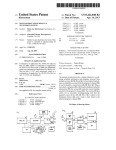
FIG. 1 illustrates in simpli?ed form an example of a
multisource television schedule guide system 10 With mul
tiple sources connected directly or indirectly to a television
12 and/or VCR 13. In the embodiment in FIG. 1, multi
source television program and television schedule guide
system 10 operates under the control of coordinator 14.
Television 12 and VCR 13 are provided With inputs from
cable box 16 and DBS source 18 either directly as illustrated
in FIG. 1, or via coordinator 14. Other inputs 20 may also
be supplied to the television and/or VCR directly or via the
coordinator 14. A remote control 22 is used by a vieWer to
tune the television and conduct other operations. In alterna
tive embodiments, a keyboard, such as a computer
Remote control 22 is a hand-held remote controller for
controlling coordinator 14. In the preferred embodiment,
coordinator 14 performs all the necessary control functions
of the system. For example, as the user adjusts the volume
control on remote 22, coordinator 14 emits signals through
IR emitter 30 to adjust the volume in television 12.
IRD box 18 receives television programs along With other
information via, in one embodiment, satellite dish 32. IRD
box 18 and the other sources of television signals each
provide program schedule information to the system. This
program schedule information (or guide) may also include a
channel map that contains the channel information indicat
ing Which channels are available on that source. Information
associated With the DBS guide and others is saved in the
IRD box receiver’s RAM or doWnloaded to the coordinator
45
14. Similarly, program guide information can be received
through cable box 16, other inputs 20, antennae 24, and/or
through any other transmission medium (e.g., dedicated
tWisted pair telephone line). Each of these sources may also
be provided With television schedule data Within the signal
keyboard, is used for input. The keyboard may be hard-Wire
transmitted by the service provider.
connected or Wireless.
Coordinator 14 ?nds and sorts the program guide infor
mation available in system 10. Various formats can be used
In this embodiment, cable is provided via cable box 16,
and DBS is provided via IRD box 18. Antennae 24 may be
for the television schedule information. For example, data
packets comprising a simple header section and an infor
used as additional sources of television broadcasts along
With cable box 16, IRD box 18, and other inputs 20. In one
typical embodiment, antenna 24 and cable box 16 Would be
considered “local” sources meaning that they likely contain
55
local television broadcasts such as local neWs broadcasts. By
contrast, DBS sources Would not be considered local
because they Would likely not contain such local content.
Other inputs 20 can include multiple satellite sources.
When multiple satellite sources are present, coordinator 14
sWitches betWeen the available satellite sources by automati
cally moving the user’s satellite dish or sWitching betWeen
satellite dishes. In order to automatically move the satellite
dish, a memory Within IRD box 18 (or elseWhere) tracks the
position of the DBS satellite dish in relation to satellite
65
mation section can be received and sorted With other, more
complex data packet formats, or a header With source
information can be added. In the preferred embodiment,
coordinator 14 takes the television schedule information
from the available source(s) or a data input line and sorts/
mixes it. For example, coordinator 14 may receive program
schedule information via the vertical blanking interval in a
television channel or via a transponder for the DBS, or the
Internet, and then arrange the information in an organiZed
fashion, or perform other operations. For example, the
system may eliminate duplicate channels.
In an alternative arrangement, the sorting/mixing of pro
gram schedule information is done in a separate location and


![AGIVEN PROGRAM ]](http://vs1.manualzilla.com/store/data/005708142_1-ae1c6d6b32e7a9016e2dede042b38772-150x150.png)