1
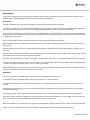
Bringing all the strings up to pitch gradually is better achieved with a digital guitar tuner or pitch pipes as a reference. Please be aware
that the tension in the strings and vibrato springs may take some time to settle and re-tuning a few times might be necessary. Stretching
each string gently after reaching pitch will help to take up slack.
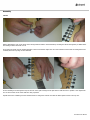
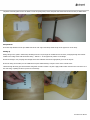
The neck is fitted with a truss rod which may need adjusting. When the strings are tuned up, they will try to pull away from the neck,
which may mean that the action becomes too high. If this happens, use the larger of the 2 hex keys provided to gradually tighten the
truss rod – a half turn is usually enough and may not take effect immediately – allow adjustments to settle each time – do not be tempted
to over-tighten the truss rod.
Sighting along the neck should show a very slight concave tendency – this is called “relief” and too straight a neck may lead to “fret
buzzing”.
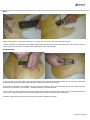
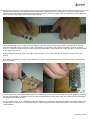
Some strings may need to be raised or lowered individually to give the correct action and this can be adjusted using the smaller of the 2
hex keys provided.
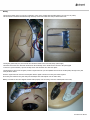
Once the desired action is achieved, all that remains is to set the vibrato tension and intonation. After tuning up all the strings, the spring
claw may need tightening (or slackening) in the rear cavity to make the vibrato system “float” (note: some players prefer that the bridge
lies completely flat against the body).
Also, the harmonic at the 12th fret should be the same as a fretted note in this position. Adjusting the saddle for each string back or forth
on the bridge can compensate for inconsistencies with this. Careful listening and gentle adjustment until the 2 notes match will achieve
correct intonation.
174.460UK User Manual