1
Assembly of kite
damaged if the nozzle is inserted too far.
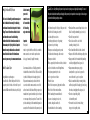
Important - When pumping up a kite for its first time,
1. Inflation: Before you inflate your kite, make
sure you have a suitable “anchor” to weight down
your kite (sand, fine gravel, weight bag, etc).
Important - Before inserting pump nipple into
bladder, make several pumps to clear nipple
of any debris (sand, stones, etc) Debris in
the bladder can cause small punctures.
Important - Always use the largest nozzle
size possible. The backdraft valve can be
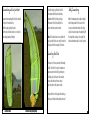
make sure the inner bladder is filling up all corners of
the strut. If not, see strut bladder replacement section.
Helpful tip:
Before inserting pump nipple into bladder, make
several pumps to clear nipple of any debris (sand).
Sand in the bladders can cause small punctures.
2. Select an area free of obstruction, the same
or larger than the span of your kite. Avoid areas
with sharp objects (thorns, sharp stick, etc).
3. Starting on one wing tip, weight tip with sand and
unroll kite downwind. Inflate ribs starting from upwind
end, working your way downwind. Inflate ribs until they
assume their shape. Do not over inflate. Because of
the back draft valves, it is not required to pinch the
inflate nipples to retain air pressure. Make sure plug
is secure in valve and held snug with velcro closure.
4. While holding the leading edge, remove weight
from wingtip. Work your way to the center of leading
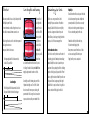
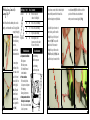
edge tube. Clip pump onto pump leash [5a]. Insert
pump into valve labeled inflate [5b]. Ocean Rodeo
kites come with a dual valve system: one to inflate
and one to deflate. Inflate leading edge until kite
assumes full arced shape. Do not over inflate.
Note - when deflating kite, use pokers. Gently
push into strut valves to release air [6].
5. Holding kite at center of leading edge, rotate
so that kite sits leading edge down and into the
wind. Use a weight (sand, fine gravel, no sharp
objects) and weight the leading edge of the kite.
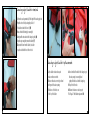
Helpful tip:
We highly
recommend using
a bag to contain
sand, fine gravel,
etc for weighting the
kite. This reduces
your kite’s exposure
to abrasion [7].
5
10
5a
5b
6
7
11