1
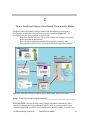
To determine which type of model best suits the user’s needs for FEPF, consider these questions: • Where are you most comfortable accepting error/variability: incorporated into the outcome → use a stochastic model, or excluded from the outcome → use a deterministic model? • Do you desire a quantitative measure of error → possible for deterministic models, or of variability → possible for stochastic models? • Is your primary interest to develop information about the current situation → either, or to compare results of alternative management strategies → stochastic? • How important is spread: can you accept stand-based predictions (no spread), or do you need to consider the influence of spread? We describe how to use FEPF with two models: a deterministic, stand-based model (FLAMMAP, Finney, in press), and a stochastic, landscape model (SIMPPLLE, Chew and others 2004, Chew 1995). Though both are spatial, they have very different architectures. Briefly, FLAMMAP is a non-contagious, deterministic program based on empiricallyderived fire process/behavior equations (for example, Rothermel’s [1972] and Albini’s [1976] fire behavior equations).While it maps fire behavior across an entire landscape, calculations are performed on each pixel independently. FLAMMAP uses quantified fuels information for a single point in time. To enable consideration of future fire behavior, a vegetation simulator must be used to create future fuels data. Because FLAMMAP is based on process equations, it is easily transported to any situation in which base data on vegetation and fuels are available. SIMPPLLE is a stochastic, contagious vegetation dynamics simulator developed from both empirical and knowledge-based sources. It incorporates significant process variability (climate, fire weather, suppression efficiency, fire start location) and calculates fire effects by considering biophysical and vegetative conditions in both the ‘initiating’ and ‘receiving’ polygons/pixels. SIMPPLLE does not generate or track quantitative fuels information, but because it incorporates fire effects, it can be used to model either the current or future situations. Because SIMPPLLE incorporates significant local information about a number of complex ecosystem processes (insects, disease, fire) which science has yet to define or describe mathematically at the landscape scale, SIMPPLLE must be parameterized locally (generally by forest or region, BLM Resource Area, or planning unit)5. We do not recommend use or avoidance of any particular model; nor will following this protocol provide a black-box that will give you the ‘right’ answer. Following the Framework will provide you with information relevant to your area and be useful to both fire and resource management to aid in decision-making. 5 SIMPPLLE datasets have been created and parameterized for a number of National Forests and BLM Resource Areas around the west, predominantly in the Northern Rockies, but including southern California, the Kenai and Michigan’s Upper Peninsula (Chew and others 2004). 6 RMRS-GTR-163WWW Fire Effects Planning Framework