1
Hot-Shot™
5.
GENERAL SAFETY RULES
Work Area
1.
2.
3.
Keep work area clean and well lit. Cluttered benches and dark
areas invite accidents.
Do not operate these tools in explosive atmospheres, such
as in the presence of flammable liquids, gases, or dust.
Power tools create sparks which may ignite the dust or fumes.
Keep bystanders, children, and visitors away while operating a power tool. Distractions can cause you to lose control.
Tool Use and Care
1.
2.
Electrical Safety
1.
2.
3.
4.
5.
6.
7.
8.
3.
Grounded tools must be plugged into an outlet, properly
installed and grounded in accordance with all codes and
ordinances. Never remove the grounding prong or modify
the plug in any way. Do not use any adapter plugs. Check
with a qualified electrician if you are in doubt as to whether
the outlet is properly grounded. If the tool should electrically
malfunction or break down, grounding provides a low resistance
path to carry electricity away from the user.
Avoid body contact with grounded surfaces such as pipes,
radiators, ranges and refrigerators. There is an increased risk
of electric shock if your body is grounded.
Do not expose power tools to rain or wet conditions. Water
entering a power tool will increase the risk of electric shock.
Do not abuse the cord. Never use the cord to carry the tools
or pull the plug from an outlet. Keep cord away from heat,
oil, sharp edges or moving parts. Replace damaged cords
immediately. Damaged cords increase the risk of electric shock.
When operating a power tool outside use an outdoor extension cord marked “W-A” or “W”. These cords are rated for
outdoor use and reduce the risk of electric shock.
Use only three-wire extension cords which have three-prong
grounding plugs, and three-pole receptacles which accept
the tool’s plug. Use of other extension cords will not ground the
tool and increases the risk of electrical shock.
Use proper extension cords. Insufficient conductor size will
cause excessive voltage drop, loss of power, and overheating.
Keep all electric connections dry and off the ground. Reduces the risk of electric shock.
4.
5.
6.
7.
8.
1.
2.
3.
1.
Personal Safety
3.
4.
Tool service must be performed only by qualified repair personnel. Service or maintenance performed by unqualified repair
personnel could result in injury.
When servicing a tool, use only identical replacement parts.
Follow instructions in the Maintenance section of this manual. Use of unauthorized parts or failure to follow Maintenance
Instructions may create a risk of electric shock or injury.
Disconnect all power from the unit before servicing. Eliminates the risk of electrical shock and accidental starting.
SPECIFIC SAFETY RULES
of electric shock.
2.
Do not use tool if switch does not turn it on or off. Any tool
that cannot be controlled with the switch is dangerous and must
be repaired.
Disconnect the plug from the power source before making
any adjustments, changing accessories, or storing the tool.
Such preventative safety measures reduce the risk of starting the
tool accidentally.
Store idle tools out of reach of children and other untrained
persons. Tools are dangerous in the hands of untrained users.
Maintain tools with care. Properly maintained tools are less
likely to cause injury.
Check for breakage of parts, and any other condition that
may affect the tool’s operation. If damaged, have the tool
serviced before using. Many accidents are caused by poorly
maintained tools.
Only use accessories that are recommended by the manufacturer for your model. Accessories that may be suitable for
one tool may become hazardous when used on another tool.
Inspect tool and extension cords periodically and replace if
damaged. Damaged cords increase the risk of electrical shock.
Keep handles dry and clean; free from oil and grease. Allows
for better control of the tool.
Service
9. Do not touch plugs or tools with wet hands. Reduces the risk
1.
Always wear safety glasses and rubber soled, non-slip
shoes. Dust mask, non-skid safety shoes, hard hat, or hearing
protection must be used for appropriate conditions.
Stay alert, watch what you are doing and use common sense
when operating a tool. Do not use tool while tired or under
the influence of drugs, alcohol, or medication. A moment of
inattention while operating power tools may result in serious
personal injury.
Dress properly. Do not wear loose clothing or jewelry. Contain long hair. Keep your hair, clothing, and gloves away
from moving parts. Loose clothes, jewelry, or long hair can be
caught in moving parts.
Avoid accidental starting. Be sure switch is off before plugging in. Plugging in tools that have the switch on invites accidents.
Do not overreach. Keep proper footing and balance at all
times. Proper footing and balance enables better control of the
tool in unexpected situations.
2.
3.
4.
3
Be sure that the unit is plugged into a properly grounded
receptacle. If in doubt, check receptacle before plugging in
machine. Check the power cord to see that there are no cuts or
frays, and that the grounding prong on the plug is still in place.
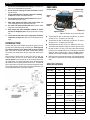
The Hot-Shot 300 and 320 require a 120 volt AC grounded 15
amp circuit. The Hot-Shot 400 requires either a 15 amp 120
volt AC outlet when on the “low” setting, and a 20 amp outlet when on the “high” setting. Using an inadequate power
supply will cause the unit to underperform.
If the power cord supplied with the machine is not long
enough, be sure to use a 16 gauge heavy duty extension
cord no more than 50 feet long and in good condition. Using
lighter cords can result in severe power loss and overheating.
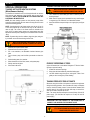
All grounds (i.e. electric service, telephone, and cable TV
grounds) must be disconnected, both at the house being
thawed and all houses on the same distribution transformer.
There is a possibility that the output current of the unit may be
transferred into the electrical service, either at the house being
thawed, or at a remote location.