1
Getting Started
Mbox® 2
Version 7.3
Copyright
© 2007 Digidesign, a division of Avid Technology, Inc. All rights
reserved. This guide may not be duplicated in whole or in part
without the express written consent of Digidesign.
Avid, Digidesign, Mbox , and Pro Tools are either trademarks
or registered trademarks of Avid Technology, Inc. in the US and
other countries. All other trademarks contained herein are the
property of their respective owners.
Product features, specifications, system requirements, and
availability are subject to change without notice.
PN 9320-55985-00 REV A 1/07
used in accordance with the instructions, may cause harmful
interference to radio communications. However, there is no
guarantee that interference will not occur in a particular
installation. If this equipment does cause harmful interference
to radio or television reception, which can be determined by
turning the equipment off and on, the user is encouraged to try
and correct the interference by one or more of the following
measures:
• Reorient or locate the receiving antenna.
• Increase the separation between the equipment and
receiver.
• Connect the equipment into an outlet on a circuit different
from that to which the receiver is connected.
• Consult the dealer or an experienced radio/TV technician
for help.
Communications and Safety Regulation Information
Compliance Statement
This model Digidesign Mbox 2 complies with the following
standards regulating interference and EMC:
• FCC Part 15 Class B
• EN 55022
• EN 55204
• AS/NZS 3548 Class B
• CISPR 22 Class B
Radio and Television Interference
This equipment has been tested and found to comply with the
limits for a Class B digital device, pursuant to Part 15 of the
FCC Rules.
DECLARATION OF CONFORMITY
Mbox 2
Any modifications to the unit, unless expressly approved by
Digidesign, could void the user's authority to operate the
equipment.
Canadian Compliance Statement:
This Class B digital apparatus complies with Canadian ICES003.
We Digidesign,
2001 Junipero Serra Boulevard, Suite 200
Cet appareil numérique de la classe B est conforme à la norme
NMB-003 du Canada.
Daly City, CA 94014 USA
tel: 650-731-6300
Australian Compliance
declare under our sole responsibility that the product
Mbox 2
complies with Part 15 of FCC Rules.
Operation is subject to the following two conditions: (1) this
device may not cause harmful interference, and (2) this device
must accept any interference received, including interference
that may cause undesired operation.
NOTE: This equipment has been tested and found to comply
with the limits for a Class B digital device, pursuant to Part 15
of the FCC Rules. These limits are designed to provide
reasonable protection against harmful interference in a
residential installation. This equipment generates, uses, and
can radiate radio frequency energy and, if not installed and
European Compliance
contents
Chapter 1. Installation QuickStart . . . . . . . . . . . . . . . . . . . . . . . . . . . . . . . . . . . . . . . . . . . . . 1
Windows Installation Overview . . . . . . . . . . . . . . . . . . . . . . . . . . . . . . . . . . . . . . . . . . . . . . . 1
Mac Installation Overview . . . . . . . . . . . . . . . . . . . . . . . . . . . . . . . . . . . . . . . . . . . . . . . . . . 1
Chapter 2. Welcome to Mbox 2 . . . . . . . . . . . . . . . . . . . . . . . . . . . . . . . . . . . . . . . . . . . . . . . 3
Mbox 2 Package . . . . . . . . . . . . . . . . . . . . . . . . . . . . . . . . . . . . . . . . . . . . . . . . . . . . . . . . . 3
Mbox 2 Features . . . . . . . . . . . . . . . . . . . . . . . . . . . . . . . . . . . . . . . . . . . . . . . . . . . . . . . . . 4
Pro Tools LE Capabilities . . . . . . . . . . . . . . . . . . . . . . . . . . . . . . . . . . . . . . . . . . . . . . . . . . . 4
System Requirements . . . . . . . . . . . . . . . . . . . . . . . . . . . . . . . . . . . . . . . . . . . . . . . . . . . . . 5
Digidesign Registration . . . . . . . . . . . . . . . . . . . . . . . . . . . . . . . . . . . . . . . . . . . . . . . . . . . . 6
About the Pro Tools Guides . . . . . . . . . . . . . . . . . . . . . . . . . . . . . . . . . . . . . . . . . . . . . . . . . 6
About www.digidesign.com . . . . . . . . . . . . . . . . . . . . . . . . . . . . . . . . . . . . . . . . . . . . . . . . . 7
Chapter 3. Windows Configuration . . . . . . . . . . . . . . . . . . . . . . . . . . . . . . . . . . . . . . . . . . . . 9
Installation Overview . . . . . . . . . . . . . . . . . . . . . . . . . . . . . . . . . . . . . . . . . . . . . . . . . . . . . . 9
Windows System Optimization . . . . . . . . . . . . . . . . . . . . . . . . . . . . . . . . . . . . . . . . . . . . . . . 9
Installing Pro Tools LE and Connecting Mbox 2 . . . . . . . . . . . . . . . . . . . . . . . . . . . . . . . . . . 13
Launching Pro Tools LE . . . . . . . . . . . . . . . . . . . . . . . . . . . . . . . . . . . . . . . . . . . . . . . . . . . 14
Configuring Pro Tools LE . . . . . . . . . . . . . . . . . . . . . . . . . . . . . . . . . . . . . . . . . . . . . . . . . . 14
Additional Software on the Pro Tools Installer Disc . . . . . . . . . . . . . . . . . . . . . . . . . . . . . . . . 18
Removing Pro Tools LE . . . . . . . . . . . . . . . . . . . . . . . . . . . . . . . . . . . . . . . . . . . . . . . . . . . 19
Chapter 4. Mac Configuration. . . . . . . . . . . . . . . . . . . . . . . . . . . . . . . . . . . . . . . . . . . . . . . . 21
Installation Overview . . . . . . . . . . . . . . . . . . . . . . . . . . . . . . . . . . . . . . . . . . . . . . . . . . . . . 21
Mac System Optimization . . . . . . . . . . . . . . . . . . . . . . . . . . . . . . . . . . . . . . . . . . . . . . . . . 21
Installing Pro Tools LE . . . . . . . . . . . . . . . . . . . . . . . . . . . . . . . . . . . . . . . . . . . . . . . . . . . . 23
Connecting Mbox 2 to the Computer . . . . . . . . . . . . . . . . . . . . . . . . . . . . . . . . . . . . . . . . . . 23
Launching Pro Tools LE . . . . . . . . . . . . . . . . . . . . . . . . . . . . . . . . . . . . . . . . . . . . . . . . . . . 24
Additional Software on the Pro Tools Installer Disc . . . . . . . . . . . . . . . . . . . . . . . . . . . . . . . . 24
Contents
iii
Configuring Pro Tools LE . . . . . . . . . . . . . . . . . . . . . . . . . . . . . . . . . . . . . . . . . . . . . . . . . . 25
Removing Pro Tools . . . . . . . . . . . . . . . . . . . . . . . . . . . . . . . . . . . . . . . . . . . . . . . . . . . . . 29
Chapter 5. Mbox 2 Hardware Overview . . . . . . . . . . . . . . . . . . . . . . . . . . . . . . . . . . . . . . . 31
Mbox 2 Front Panel Features . . . . . . . . . . . . . . . . . . . . . . . . . . . . . . . . . . . . . . . . . . . . . . . 31
Mbox 2 Back Panel Features . . . . . . . . . . . . . . . . . . . . . . . . . . . . . . . . . . . . . . . . . . . . . . . 34
Chapter 6. Making Hardware Connections . . . . . . . . . . . . . . . . . . . . . . . . . . . . . . . . . . . . 37
Connecting Headphones . . . . . . . . . . . . . . . . . . . . . . . . . . . . . . . . . . . . . . . . . . . . . . . . . . 37
Connecting a Sound System . . . . . . . . . . . . . . . . . . . . . . . . . . . . . . . . . . . . . . . . . . . . . . . 37
Connecting a Recorder for Mixdowns . . . . . . . . . . . . . . . . . . . . . . . . . . . . . . . . . . . . . . . . . 38
Connecting Audio Inputs . . . . . . . . . . . . . . . . . . . . . . . . . . . . . . . . . . . . . . . . . . . . . . . . . . 38
Connecting a Microphone . . . . . . . . . . . . . . . . . . . . . . . . . . . . . . . . . . . . . . . . . . . . . . . . . 39
Connecting Instruments to the Mbox 2 . . . . . . . . . . . . . . . . . . . . . . . . . . . . . . . . . . . . . . . . 41
MIDI Connections . . . . . . . . . . . . . . . . . . . . . . . . . . . . . . . . . . . . . . . . . . . . . . . . . . . . . . . 43
Chapter 7. Common Tasks with Pro Tools LE . . . . . . . . . . . . . . . . . . . . . . . . . . . . . . . . . 45
Recording a Pro Tools Session . . . . . . . . . . . . . . . . . . . . . . . . . . . . . . . . . . . . . . . . . . . . . . 45
Importing Audio from a CD . . . . . . . . . . . . . . . . . . . . . . . . . . . . . . . . . . . . . . . . . . . . . . . . 47
Creating an Audio CD from a Pro Tools Session . . . . . . . . . . . . . . . . . . . . . . . . . . . . . . . . . . 48
Recording MIDI in a Pro Tools Session . . . . . . . . . . . . . . . . . . . . . . . . . . . . . . . . . . . . . . . . 50
Appendix A. Configuring MIDI Studio Setup (Windows Only) . . . . . . . . . . . . . . . . . . . . 55
MIDI Studio Setup . . . . . . . . . . . . . . . . . . . . . . . . . . . . . . . . . . . . . . . . . . . . . . . . . . . . . . 55
MIDI Patch Name Support . . . . . . . . . . . . . . . . . . . . . . . . . . . . . . . . . . . . . . . . . . . . . . . . . 57
Appendix B. Configuring AMS (Mac OS X Only) . . . . . . . . . . . . . . . . . . . . . . . . . . . . . . . 59
Audio MIDI Setup . . . . . . . . . . . . . . . . . . . . . . . . . . . . . . . . . . . . . . . . . . . . . . . . . . . . . . . 59
MIDI Patch Name Support . . . . . . . . . . . . . . . . . . . . . . . . . . . . . . . . . . . . . . . . . . . . . . . . . 62
Appendix C. Hard Drive Configuration and Maintenance . . . . . . . . . . . . . . . . . . . . . . . . 63
Avoid Recording to the System Drive . . . . . . . . . . . . . . . . . . . . . . . . . . . . . . . . . . . . . . . . . 63
Supported Drive Formats and Drive Types . . . . . . . . . . . . . . . . . . . . . . . . . . . . . . . . . . . . . . 63
Formatting an Audio Drive. . . . . . . . . . . . . . . . . . . . . . . . . . . . . . . . . . . . . . . . . . . . . . . . . 64
Partitioning Drives . . . . . . . . . . . . . . . . . . . . . . . . . . . . . . . . . . . . . . . . . . . . . . . . . . . . . . 66
iv
Mbox 2 Getting Started Guide
Defragmenting an Audio Drive . . . . . . . . . . . . . . . . . . . . . . . . . . . . . . . . . . . . . . . . . . . . . . 67
Using Mac Drives on Windows Systems . . . . . . . . . . . . . . . . . . . . . . . . . . . . . . . . . . . . . . . . 68
Hard Disk Storage Space . . . . . . . . . . . . . . . . . . . . . . . . . . . . . . . . . . . . . . . . . . . . . . . . . . 69
Appendix D. Troubleshooting . . . . . . . . . . . . . . . . . . . . . . . . . . . . . . . . . . . . . . . . . . . . . . . . 71
Backing Up Your Work . . . . . . . . . . . . . . . . . . . . . . . . . . . . . . . . . . . . . . . . . . . . . . . . . . . . 71
Common Issues . . . . . . . . . . . . . . . . . . . . . . . . . . . . . . . . . . . . . . . . . . . . . . . . . . . . . . . . 71
Performance Factors . . . . . . . . . . . . . . . . . . . . . . . . . . . . . . . . . . . . . . . . . . . . . . . . . . . . . 72
Before You Call Digidesign Technical Support . . . . . . . . . . . . . . . . . . . . . . . . . . . . . . . . . . . 73
Index . . . . . . . . . . . . . . . . . . . . . . . . . . . . . . . . . . . . . . . . . . . . . . . . . . . . . . . . . . . . . . . . . . . . . 75
Contents
v
vi
Mbox 2 Getting Started Guide
chapter 1
Installation QuickStart
Windows Installation
Overview
(Windows Systems Only)
Installing the Mbox 2 on a Windows computer
includes the following steps:
1 “Windows System Optimization” on page 9.
2 “Installing Pro Tools LE and Connecting
Mbox 2” on page 13.
3 “Launching Pro Tools LE” on page 14.
4 “Configuring Pro Tools LE” on page 14.
5 Making audio and MIDI connections to the
Mbox 2. (See Chapter 6, “Making Hardware
Connections” for details.)
Mac Installation Overview
(Mac OS X Systems Only)
Installation of the Mbox 2 on a Mac includes
the following steps:
1 “Mac System Optimization” on page 21.
2 “Installing Pro Tools LE” on page 23.
3 “Connecting Mbox 2 to the Computer” on
page 23.
4 “Launching Pro Tools LE” on page 24.
5 “Configuring Pro Tools LE” on page 25.
6 Making audio connections to the Mbox 2.
(See Chapter 6, “Making Hardware Connections” for details.)
Chapter 1: Installation QuickStart
1
2
Mbox 2 Getting Started Guide
chapter 2
Welcome to Mbox 2
Welcome to the Mbox® 2 audio/MIDI production system from Digidesign®.
Mbox 2 provides your USB-equipped computer
with two channels of analog audio input and
output, two channels of digital audio input and
output, MIDI In and Out ports, analog monitor
outs, and a headphone output with front panel
level control. Mbox 2 provides professionalquality mic preamps and 24-bit analog-to-digital and digital-to-analog converters.
Mbox 2 Package
The Mbox 2 package includes the following:
• Mbox 2 desktop audio interface
• Pro Tools Installer disc containing
Pro Tools LE™ software, DigiRack RTAS (RealTime AudioSuite) and AudioSuite plug-ins,
optional software, and electronic PDF guides
• This Getting Started Guide, covering installation, configuration, and common tasks for
your Pro Tools system.
• USB connector cable
• Digidesign Registration Information Card
Chapter 2: Welcome to Mbox 2
3
Mbox 2 Features
Pro Tools LE Capabilities
The Mbox 2 provides the following:
Pro Tools LE software provides the following capabilities with Mbox 2:
• Two channels of analog audio input with microphone preamps and switchable 48V phantom power
• Analog input jacks include one XLR and
two 1/4-inch connectors (one TRS, one TS),
with switchable Mic, Line, and DI levels
• –20 dB pad available separately on each analog input channel
• Two channels of S/PDIF digital input and output
• S/PDIF inputs are available independently,
in addition to analog inputs 1–2
• S/PDIF outputs mirror analog outs 1–2
• Up to a total of four channels of input, using
analog and digital inputs simultaneously
• One MIDI In and one MIDI Out port, providing 16 MIDI input channels and 16 MIDI output channels
• Two 1/4-inch TRS analog monitor outputs
• 24-bit A/D and D/A converters, supporting
sample rates of 44.1 kHz and 48 kHz
• Zero-latency analog record monitoring with
adjustable balance between input and playback
• Mono switch for enhanced monitoring of single-channel input sources (does not affect recording)
• 1/4-inch (TRS) stereo headphone output with
adjustable level control
• USB-powered operation
Mbox 2 will not function properly if connected to a passive USB hub. If you need to
use a hub for other USB peripherals, use a
powered hub or a separate dedicated USB
port for Mbox 2 to function properly.
4
Mbox 2 Getting Started Guide
• Playback of up to 32 mono digital audio
tracks, and of playback up to 28 tracks
while recording up to 4 tracks, depending
on your computer’s capabilities
• Up to 128 audio tracks (with 32 voiceable
tracks maximum), 64 video tracks,
128 Auxiliary Input tracks, 64 Master Fader
tracks, 256 MIDI tracks, and 32 Instrument
tracks per session
• 16-bit or 24-bit audio resolution, at sample
rates up to 48 kHz
• Non-destructive, random-access editing
and mix automation
• Audio processing with up to 5 RTAS plugins per track, depending on your computer’s capabilities
• Up to 5 inserts per track
• Up to 10 sends per track
• Up to 32 internal mix busses
Pro Tools LE uses your computer’s CPU to
mix and process audio tracks (host processing). Computers with faster clock speeds
yield higher track counts and more plug-in
processing.
System Requirements
Mbox 2 can be used with a Digidesign-qualified
Windows or Mac computer running
Pro Tools LE software.
For complete system requirements, visit the
Digidesign website (www.digidesign.com).
Compatibility Information
Digidesign can only assure compatibility and
provide support for hardware and software it
has tested and approved.
For a list of Digidesign-qualified computers, operating systems, hard drives, and third-party devices, refer to the latest compatibility information on the Digidesign website
(www.digidesign.com).
MIDI Requirements
Mbox 2 includes one MIDI In port and one
MIDI Out port, providing 16 channels of MIDI
input and 16 channels of MIDI output.
If you require additional MIDI ports, add a MIDI
interface to your system.
Hard Drive Requirements
For optimal audio recording and playback, all
Pro Tools systems require one or more Digidesign-qualified drives.
For a list of Digidesign-qualified hard drives,
visit the Digidesign website
(www.digidesign.com).
If you are using an ATA/IDE or FireWire hard
drive, initialize your drive with Windows Disk
Management (Windows) or the Disk Utility application included with Apple System software
(Mac).
For more information, see Appendix C, “Hard
Drive Configuration and Maintenance.”
Avoid Recording to the System Drive
Recording to your system drive is not recommended. Recording and playback on a system
drive may result in lower track counts and fewer
plug-ins.
Digidesign does not recommend recording
to the system drive. Record to a system drive
only when necessary.
USB MIDI interfaces work effectively with
Pro Tools systems on Windows or Mac. Serial
MIDI interfaces are supported on Windows systems only.
Only USB MIDI interfaces are compatible
with Pro Tools systems for Mac OS X.
Modem-to-serial port adapters and serial
MIDI devices are not supported.
For a list of supported adapters, visit the Digidesign website (www.digidesign.com).
Chapter 2: Welcome to Mbox 2
5
Digidesign Registration
Review the enclosed Digidesign Registration Information Card and follow the instructions on it
to quickly register your purchase online. Registering your purchase is the only way you can be
eligible to receive complimentary technical support and future upgrade offers. It is one of the
most important steps you can take as a new user.
These guides and other guides are installed on
your startup drive during installation. To view
or print PDF guides, you can use Adobe Reader
or Apple Preview (Mac only).
Printed copies of the Pro Tools Reference
Guide and other guides in the Pro Tools
guide set can be purchased separately from
the DigiStore (www.digidesign.com).
Conventions Used in This Guide
About the Pro Tools Guides
This Getting Started guide explains how to install Pro Tools LE software, make basic connections to your Mbox 2 interface (to get sound in
and out of your interface), and do common
tasks (such as recording in Pro Tools).
Digidesign guides use the following conventions to indicate menu choices and key commands:
:
Convention
Action
File > Save
Choose Save from the File
menu
In addition to any printed guides or documentation included with your system, PDF versions of
Pro Tools guides and Read Mes are installed automatically with Pro Tools.
Control+N
Hold down the Control key
and press the N key
Control-click
Hold down the Control key
and click the mouse button
The main guides (such as the Pro Tools Reference
Guide and the Pro Tools Menus Guide) are accessible from the Pro Tools Help menu.
Right-click
Click with the right mouse
button
• Pro Tools Reference Guide explains Pro Tools
software in detail.
• Pro Tools Menus Guide covers all the Pro Tools
on-screen menus.
• DigiRack Plug-Ins Guide explains how to use
the RTAS and AudioSuite plug-ins included
with Pro Tools.
• Digidesign Plug-Ins Guide explains how to use
optional Digidesign plug-ins.
• Pro Tools Shortcuts lists keyboard and Rightclick shortcuts for Pro Tools.
The following symbols are used to highlight important information:
User Tips are helpful hints for getting the
most from your Pro Tools system.
Important Notices include information that
could affect your data or the performance of
your system.
Shortcuts show you useful keyboard or
mouse shortcuts.
Cross References point to related sections in
other Digidesign guides.
6
Mbox 2 Getting Started Guide
About www.digidesign.com
The Digidesign website (www.digidesign.com)
is your best source for information to help you
get the most out of your Pro Tools system. The
following are just a few of the services and features available.
Registration Register your purchase online. See
the enclosed Digidesign Registration Information Card for instructions.
Support Contact Digidesign Technical Support
or Customer Service; download software updates and the latest online manuals; browse the
Compatibility documents for system requirements; search the online Answerbase; join the
worldwide Pro Tools community on the Digidesign User Conference.
Training and Education Become a certified
Pro Tools Operator or Expert; study on your
own using courses available online, or find out
how you can learn in a classroom setting at a
certified Pro Tools Training Center.
Products and Developers Learn about Digidesign
products; download demo software; learn about
our Development Partners and their plug-ins,
applications, and hardware.
News and Events Get the latest news from
Digidesign; sign up for a Pro Tools demo.
To learn more about these and other resources
available from Digidesign, visit the Digidesign
website (www.digidesign.com).
Chapter 2: Welcome to Mbox 2
7
8
Mbox 2 Getting Started Guide
chapter 3
Windows Configuration
This chapter contains information for Windows
systems only. If you are installing Pro Tools on a
Mac computer, see Chapter 4, “Mac Configuration.”
Before installing this version of Pro Tools,
refer to the Read Me information included
on the Pro Tools LE Installer disc.
Windows System Optimization
Before configuring your computer, make sure
you are logged in as an Administrator for the account where you want to install Pro Tools. For
details on Administrator privileges, refer to your
Windows documentation.
Required Optimizations
Installation Overview
Installing the Mbox 2 on a Windows computer
includes the following steps:
1 “Windows System Optimization” on page 9.
2 “Installing Pro Tools LE and Connecting
Mbox 2” on page 13.
To ensure optimum performance with
Pro Tools LE, configure the following settings
before you install Pro Tools hardware and software.
When you are finished changing Windows
system settings, restart your computer.
3 “Launching Pro Tools LE” on page 14.
4 “Configuring Pro Tools LE” on page 14.
5 Making audio and MIDI connections to the
Mbox 2. (See Chapter 6, “Making Hardware
Connections” for details.)
Chapter 3: Windows Configuration
9
Enabling DMA
To configure Windows Power Management:
Enabling your computer's DMA (Direct Memory
Access) frees up CPU bandwidth so the computer can do other Pro Tools tasks.
1 Choose Start > Control Panel.
2 Double-click Power Options.
3 Click the Power Schemes tab.
In most cases the DMA option will already be set
correctly, as Windows XP detects and activates
DMA mode by default.
4 From the Power Schemes pop-up menu, select
Always On.
5 Click OK.
To enable DMA for any IDE hard drives:
1 Choose Start > Control Panel.
2 In Classic View, double-click System.
3 Click the Hardware tab.
4 Under Device Manager, choose Device Manager.
5 In the Device Manager window, double-click
IDE ATA/ATAPI controllers, then double-click
the Primary IDE Channel for your IDE hard
drive.
6 Click the Advanced Settings tab.
7 For each device, set the Transfer Mode to
“DMA if available,” and click OK.
8 Repeat steps 5–7 for any additional IDE Chan-
This sets System Standby, System Hibernate,
and “Turn off hard disks” to Never.
On AMD processors, be sure to check and
disable Cool N’Quiet in the System BIOS (in
the Cool & Quiet Configuration section).
Refer to the manufacturer’s documentation
for instructions on disabling this power option, if necessary.
Disabling ClearType Font Smoothing
When using Pro Tools, the Effects “Clear Type”
setting must be disabled.
To disable ClearType font smoothing:
1 Choose Start > Control Panel.
nels.
2 Double-click Display.
9 Close the Computer Management window.
3 Click the Appearance tab.
Disabling System Standby and Power
Management
4 Click Effects.
5 Deselect “Use the following method to
smooth edges of screen fonts.”
When using Pro Tools, the Windows System
Standby power scheme must be set to Always
On. This helps prevent long record or playback
passes from stopping due to system resources
powering down.
10
Mbox 2 Getting Started Guide
6 Click OK to save your settings and close the
Effects dialog.
7 Click OK.
8 Restart the computer.
Recommended Optimizations
Pro Tools can also be affected by other software
and hardware drivers installed on your computer. It is recommended (but not required) that
you do the following:
• Avoid running any unneeded programs at
the same time as Pro Tools.
• Turn off any software utilities that run in
the background, such as Windows Messenger, calendars, and disk maintenance programs.
4 Under the General tab, choose “Do not use
this device (disable)” from the Device Usage
pop-up menu, and click OK.
5 Close the Computer Management window.
Adjusting Processor Scheduling
To Adjust Processor Scheduling Performance:
1 Choose Start > Control Panel.
2 In Classic View, double-click System.
• Turn off any nonessential USB devices
while running Pro Tools.
3 Click the Advanced tab.
• If your video display card supports it, enable Bus Mastering in the manufacturer’s
Control Panel. Refer to the manufacturer’s
instructions for details.
tings button.
4 Under the Performance section, click the Set-
5 In the Performance Options window, click the
Advanced tab.
6 Under the Processor scheduling section, select
Optional Optimizations
The following system optimizations may help
Pro Tools perform better on some systems. It is
recommended that you only try these optimizations if necessary, as they may disable or adversely affect the functionality of other programs on your system.
Disabling Network Cards
If applicable, disable any networking cards
(other than a FireWire card that you might use
to connect an external drive to your system).
the Background Services option.
7 Under the Memory Usage section, select the
System cache option.
8 Click OK to close the Performance Options
window.
9 Click OK to close the System Properties win-
dow.
10 Restart the computer for the changes to take
effect.
To disable a network card:
1 Right-click My Computer and choose Man-
age.
2 Under System Tools, select Device Manager.
3 In the Device Manager window, double-click
Network adapters, then double-click the Network Adapter card you want to disable.
Chapter 3: Windows Configuration
11
Disabling Hyper-Threading
To Disable System Startup Items:
Pro Tools LE takes advantage of the added processing power of computers that have multiple
processors, or that feature multi-core processing
or Hyper-Threading, for RTAS processing.
1 From the Start menu, choose Run.
2 Type “msconfig” and click OK. The System
Configuration Utility opens.
3 Under the General tab, choose Selective Star-
However, if you set the number of processors
available for RTAS processing to 1 (in the
Pro Tools Playback Engine dialog), some computers with hyperthreading capability may experience decreased performance.
If this occurs, you can increase the number of
RTAS processors in the Playback Engine dialog,
or you can disable Hyper-Threading on the computer.
Refer to your computer’s documentation for
steps on how to enter the computer’s BIOS and
disable Hyper-Threading.
Disabling System Startup Items
The fewer items in use by your computer, the
more resources are available for Pro Tools. Some
startup applications may be consuming unnecessary CPU resources, and should be turned off.
If you disable any of the following startup items,
do so carefully:
• Portable media serial number (required for
applications that utilize a copy protection
key)
• Plug and play
• Event log
• Cryptographic services
• DHCP Client, TCP/IP Net BIOS, and other
networking-related items (unless the computer has no network or internet connection, in which case these items can be
disabled)
12
Mbox 2 Getting Started Guide
tup.
4 Deselect Load Startup Items and click OK.
5 Click Restart to restart the computer.
6 After restarting, the computer displays a Sys-
tem Configuration message. Check to see if
Pro Tools performance has increased before you
deselect the “Don't show this message again”
option. If performance has not changed, run
“msconfig” and return your computer Selective
Startup back to Normal Startup. Alternatively,
try disabling Startup items and non-essential
processes individually.
Installing Pro Tools LE and
Connecting Mbox 2
Windows will display several messages
during installation that can be ignored, including multiple “Found New Hardware”
dialogs and “A Problem Occurred During
Hardware Installation.”
10 Select the Pro Tools application for installation.
11 You can also select from a list of optional
items to install along with Pro Tools.
Mac HFS+ Disk Support Option This option lets
your Pro Tools system read, write, record, and
play back using Mac-formatted HFS+ disks. HFS+
disks are commonly referred to as Mac OS Extended disks.
To install Pro Tools LE:
1 Start Windows, logging in with Administrator
privileges. For details on Administrator privileges, refer to your Windows documentation.
2 Connect the small end of the included USB ca-
ble to the USB port on Mbox 2.
Mbox 2 may not function properly if connected to a USB hub. If you need to use a
hub for other USB peripherals, connect the
hub to a separate USB port; Mbox 2 must
have a dedicated port in order to function
properly.
3 Connect the other end of the USB cable to any
available USB port on your computer. Wait for
the Found New Hardware Wizard dialog to appear and leave it open: Do not click Next.
4 Insert the Pro Tools LE Installer disc for Win-
dows in your CD/DVD drive.
5 On the Installer disc, locate and open the
DigiTranslator DigiTranslator™ is a software option for Pro Tools that lets you convert and exchange OMF and AAF sequences and MXF files
directly in the Pro Tools application. This option is purchased separately.
Command|8 Controller and Driver The Command|8 Driver is required if you are using the
Digidesign Command|8 control surface.
MP3 Export Option The MP3 Export Option lets
you export MP3 files from Pro Tools. This option is purchased separately.
12 Click Next.
13 Click Install.
Windows will display several messages
during installation that can be ignored, including multiple “Found New Hardware”
dialogs and “A Problem Occurred During
Hardware Installation.”
Pro Tools Installer folder.
6 Double-click the Setup icon.
7 Follow the on-screen instructions to proceed
If you get a warning dialog about the driver
not passing Windows Logo testing, click
Continue Anyway.
with installation.
8 Select the install location. For maximum reli-
ability, install Pro Tools on your startup drive.
9 Click Next.
14 Wait for the installer to finish installing all
software components, drivers, and PACE System
files before proceeding to the next step.
15 When installation is complete, click Finish.
Chapter 3: Windows Configuration
13
Installing QuickTime
QuickTime is required for Pro Tools if you plan
to include movie files, or import MP3 or MP4
(AAC) files in your sessions. QuickTime for Windows XP is available as a free download from the
Apple website (www.apple.com).
For information on which version of QuickTime is compatible with your version of
Pro Tools, visit the compatibility pages of
the Digidesign website
(www.digidesign.com).
To install QuickTime:
1 Visit www.apple.com and go to the QuickTime page.
Launching Pro Tools LE
When launching Pro Tools LE the first time, you
are prompted to enter an authorization code.
To authorize Pro Tools LE software:
1 Double-click the Pro Tools LE shortcut on
your desktop (or the application icon in the
Pro Tools folder inside the Digidesign folder).
2 Enter the authorization code in the dialog
(making sure to type it exactly as printed, and
observing any spaces and capitalization), then
click Validate.
Your authorization code is located on the inside
front cover of this guide.
2 Download the QuickTime installer application to your computer.
3 Double-click the QuickTime installer application and follow the on-screen installation instructions.
4 Restart your computer.
If the USB LED on the front panel of the
Mbox 2 does not illuminate after installation, try unplugging the USB cable from the
Mbox 2 USB port, and plugging it back in.
If the USB LED still does not illuminate,
shut down the computer, disconnect
Mbox 2 and start the computer. Once the
computer has fully restarted, reconnect
Mbox 2.
The Pro Tools Installer disc includes additional software for your system. For more
information, see “Additional Software on
the Pro Tools Installer Disc” on page 18.
Configuring Pro Tools LE
Pro Tools System Settings
Pro Tools LE lets you adjust the performance of
your system by changing system settings that affect its capacity for processing, playback, and recording.
In most cases, the default settings for your system provide optimum performance, but you
may want to adjust them to accommodate large
or processing-intensive Pro Tools sessions.
Hardware Buffer Size
The Hardware Buffer Size (H/W Buffer Size) controls the size of the buffer used to handle host
processing tasks such as Real-Time AudioSuite
(RTAS) plug-ins. The H/W Buffer setting can also
be used to manage monitoring latency.
◆ Lower Hardware Buffer Size settings reduce
monitoring latency, and are useful when you are
recording live input.
14
Mbox 2 Getting Started Guide
Higher Hardware Buffer Size settings allow for
more audio processing and effects, and are useful when you are mixing and using more RTAS
plug-ins.
◆
In addition to causing slower screen response and monitoring latency, higher
Hardware Buffer Size settings can increase
the latency caused by RTAS plug-ins, and
affect the accuracy of plug-in automation,
mute data, and MIDI track timing.
To change the Hardware Buffer Size:
1 Choose Setup > Playback Engine.
With computers that have multiple processors,
or that feature multi-core processing or hyperthreading, this setting lets you enable multi-processor support for RTAS processes. Used in combination with the CPU Usage Limit setting, the
RTAS Processors setting lets you control the way
RTAS processing and other Pro Tools tasks are
carried out by the system.
◆ A higher number of processors reserves more
CPU processing capacity for RTAS plug-in processing. This is useful for sessions with large
number of RTAS plug-ins.
◆ A lower number of processors leaves more
CPU processing capacity for automation, screen
redraws, and video playback in Pro Tools, or for
other application running at the same time as
Pro Tools.
To set the number of RTAS Processors:
1 Choose Setup > Playback Engine.
2 From the RTAS Processors pop-up menu, select
the number of available processors you want to
allocate for RTAS plug-in processing.
3 Click OK.
CPU Usage Limit
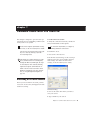
Playback Engine dialog for Mbox 2
2 From the H/W Buffer Size pop-up menu, select
the audio buffer size, in samples.
3 Click OK.
RTAS Processors
The RTAS Processors setting determines the
number of processors in your computer allocated for RTAS plug-in processing.
The CPU Usage Limit controls the percentage of
CPU resources allocated to Pro Tools host processing tasks. Used in combination with the
RTAS Processors setting, the CPU Usage Limit
setting lets you control the way Pro Tools tasks
are carried out by the system.
◆ Lower CPU Usage Limit settings limit the effect of Pro Tools processing on other CPU-intensive tasks, such as screen redraws, and are useful
when you are experiencing slow system response, or when running other applications at
the same time as Pro Tools.
Chapter 3: Windows Configuration
15
◆ Higher CPU Usage Limit settings allocate
more processing power to Pro Tools, and are
useful for playing back large sessions or using
more real-time plug-ins.
The maximum available CPU Usage Limit depends on the number of processors in your computer and on the number of processors you
specify for RTAS processing. This value can
range from 85 percent for single-processor computers to 99 percent for multi-processor computers.
There is one RTAS Engine option:
Ignore Errors During Playback/Record When enabled, Pro Tools continues to play and record
even if the RTAS processing requirements exceed the selected CPU Usage Limit. This can result in pops and clicks in the audio, but does not
stop the transport.
To enable RTAS error suppression:
1 Choose Setup > Playback Engine.
2 Select Ignore Errors During Playback/Record.
Increasing the CPU Usage Limit may slow
down screen response on slower computers.
To change the CPU Usage Limit:
DAE Playback Buffer Size
1 Choose Setup > Playback Engine.
The DAE Playback Buffer Size determines the
amount of memory DAE allocates for disk buffers. The optimum DAE Playback Buffer Size for
most disk operations is Level 2.
2 From the CPU Usage Limit pop-up menu, select the percentage of CPU processing you want
to allocate to Pro Tools.
3 Click OK.
RTAS Engine (RTAS Error Suppression)
The RTAS Engine option determines RTAS error
reporting during playback and recording. This is
especially useful when working with instrument
plug-ins.
You should only enable RTAS error suppression
if you are experiencing frequent RTAS errors
that are interrupting your creative workflow.
When RTAS error suppression is enabled, you
can experience a degradation of audio quality.
However, this may be acceptable in order to
avoid interrupting playback and recording
when working with instrument plug-ins. Be sure
to disable RTAS error suppression when you
need to ensure the highest possible audio quality, such as for a final mix.
16
3 Click OK.
Mbox 2 Getting Started Guide
◆ DAE Playback Buffer Size settings lower than
Level 2 may improve playback and recording
initiation speed, but may make it difficult to
play or record tracks reliably with sessions containing a large number of tracks or a high density of edits, or with systems that have slower or
heavily fragmented hard drives.
◆ DAE Playback Buffer Size settings higher than
Level 2 will allow for a higher density of edits in
a session or a higher track count when using
slower hard drives. However, a higher setting
can also cause a time lag to occur when starting
playback or recording, or longer audible time lag
while editing during playback.
Using a larger DAE Playback Buffer Size
leaves less system memory for other tasks.
The default setting of Level 2 is recommended unless you are encountering -9073
(“Disk too slow or fragmented”) errors.
To change the DAE Playback Buffer Size:
Clock Source
1 Choose Setup > Playback Engine.
The Pro Tools Hardware Setup dialog lets you select the Clock Source for the system.
2 From the DAE Playback Buffer pop-up menu,
select a buffer size.
3 Click OK.
Pro Tools Hardware Settings
Pro Tools lets you set the default sample rate
and clock source for your system, as well as a
range of controls specific to each type of audio
interface.
Default Sample Rate
The Sample Rate setting appears as the default
sample rate when you create a new session.
(This setting is available in the Hardware Setup
dialog only when no session is open.)
You can change the sample rate when creating a new Pro Tools session by selecting a
different sample rate in the New Session
dialog. (Refer to the Pro Tools Reference
Guide for details.)
To change the default Sample Rate:
1 Choose Setup > Hardware.
Internal Use this setting if you are recording analog signals directly into Mbox 2 analog inputs
1–2 and/or are recording digital inputs into
Mbox 2 inputs 3–4 where the digital device is
synchronized to the Mbox 2 digital output.
S/PDIF Use this setting if you are recording
through the Mbox 2 S/PDIF inputs from an external digital device. This setting will synchronize Pro Tools to that digital device.
To select the Clock Source:
1 Choose Setup > Hardware.
2 Choose the clock source from the Clock
Source pop-up menu.
3 Click OK.
Your digital input device must be connected
and powered on for Pro Tools to synchronize to it. If your input device is not powered
on, leave the Clock Source set to Internal.
Configuring I/O Setup
Using the I/O Setup dialog, you can label
Pro Tools LE input, output, insert, and bus signal paths. The I/O Setup dialog provides a graphical representation of the inputs, outputs, and
signal routing of the Mbox 2.
Hardware Setup dialog for Mbox 2
Pro Tools LE has default I/O Setup settings that
will get you started. Use the I/O Setup dialog
only if you want to rename the default I/O
paths.
2 Select the sample rate from the Sample Rate
pop-up menu.
3 Click OK.
Chapter 3: Windows Configuration
17
To rename I/O paths in I/O Setup:
1 Choose Setup > I/O.
Additional Software on the
Pro Tools Installer Disc
The Pro Tools Installer disc provides additional
software for your system, including audio drivers (for playing other audio applications
through your Digidesign hardware) and a
Pro Tools demo session.
Refer to your Pro Tools Installer disc for additional software and installers.
Windows Audio Drivers
I/O Setup dialog for Mbox 2
2 Click the Input, Output, Insert, or Bus tab to
display the corresponding connections.
3 To change the name of a path or subpath,
double-click directly on the Path Name, type a
new name for the path, and press Enter.
4 Click OK.
T
See the Pro Tools Reference Guide (or choose
Help > Pro Tools Reference Guide) for more
information on renaming I/O paths.
MIDI Studio Setup
(Optional)
If you plan to use any MIDI devices with
Pro Tools, configure your MIDI setup with MIDI
Studio Setup. See Appendix A, “Configuring
MIDI Studio Setup (Windows Only)” for details.
Backing Up your System
Configuration
After configuring your system and Pro Tools,
you should save an image of your system drive
using a backup utility such as Norton Ghost. By
doing this, you can quickly restore your system
configuration and settings if you encounter any
problems.
18
Mbox 2 Getting Started Guide
The Digidesign ASIO Driver and WaveDriver
Windows System Audio Driver let you use your
Digidesign Mbox 2 hardware interface with
third-party applications that support the ASIO
Driver or WaveDriver MME (Multimedia Extension).
The Digidesign ASIO Driver and WaveDriver for
Mbox 2 are automatically installed when you
install Pro Tools.
Digidesign ASIO Driver
The Digidesign ASIO (Audio Sound Input Output) Driver is a single-client multichannel
sound driver that allows third-party audio programs that support the ASIO standard to record
and play back through Digidesign hardware.
For detailed information on configuring the
Digidesign ASIO Driver, see the Windows
Audio Drivers Guide.
Digidesign WaveDriver
3 Double-click Setup.exe.
The Digidesign WaveDriver Windows System
Audio Driver is a single-client, stereo sound
driver that allows third-party audio programs
that support the WaveDriver MME (Multimedia
Extension) standard to play back through Digidesign hardware.
4 Select your audio drive as the install location
and click Install.
5 When installation is complete, click OK.
Removing Pro Tools LE
For detailed information on configuring the
Digidesign WaveDriver, see the Windows
Audio Drivers Guide.
If you need to remove Pro Tools LE software
from your computer, you can use the Add or Remove Programs command.
Standalone Digidesign ASIO Driver
To remove Pro Tools from your computer:
Digidesign Windows Audio Drivers can be installed on Windows systems that do not have
Pro Tools software installed. Use the standalone
version of the Digidesign Windows Audio Drivers installer (Digidesign Audio Drivers
Setup.exe), which is available on the Pro Tools
Installer disc.
For information on installing and configuring the standalone version of the Digidesign
Windows Audio Drivers, see the Windows
Audio Drivers Guide.
1 Choose Start > Control Panel.
2 Double-click Add or Remove Programs.
3 From the Currently Installed Programs list, select Digidesign Pro Tools LE.
4 Click the Change/Remove button.
5 Follow the on-screen instructions to remove
Pro Tools LE.
Pro Tools Demo Session
The Pro Tools LE Installer disc includes a demo
session that you can use to verify that your system is working.
Before installing the demo session to your
audio drive, make sure the drive is configured as described in “Formatting an Audio
Drive” on page 64.
To install the demo session:
1 Insert the Pro Tools LE Installer disc into your
CD/DVD drive.
2 From your CD/DVD drive, locate and open
the Additional Files/Pro Tools LE Demo Session
Installer folder.
Chapter 3: Windows Configuration
19
20
Mbox 2 Getting Started Guide
chapter 4
Mac Configuration
This chapter contains information for Mac systems only. If you are installing Pro Tools on a
Windows computer, see Chapter 3, “Windows
Configuration.”
Before installing this version of Pro Tools,
refer to the Read Me information included
on the Pro Tools Installer disc.
Installation Overview
Installation of the Mbox 2 on a Mac includes
the following steps:
1 “Mac System Optimization” on page 21.
2 “Installing Pro Tools LE” on page 23.
3 “Connecting Mbox 2 to the Computer” on
page 23.
Mac System Optimization
To ensure optimum performance with
Pro Tools, configure your computer before installing Pro Tools hardware and software.
Before configuring your computer, make sure
you are logged in as an Administrator for the account where you want to install Pro Tools. For
details on Administrator privileges in Mac OS X,
refer to your Apple OS X documentation.
Do not use the Mac OS X automatic Software Update feature, as it may upgrade
your system to a version of Mac OS that has
not yet been qualified for Pro Tools.
For details on qualified versions of Mac OS,
refer to the latest compatibility information
on the Digidesign website (www.digidesign.com).
4 “Launching Pro Tools LE” on page 24.
5 “Configuring Pro Tools LE” on page 25.
Turning Off Software Update
6 Making audio connections to the Mbox 2.
To turn off the Software Update feature:
(See Chapter 6, “Making Hardware Connections” for details.)
1 Choose System Preferences from the Apple
menu and click Software Update.
2 Click Update Software and deselect Check for
Updates.
Chapter 4: Mac Configuration
21
Turning Off Energy Saver
To turn off the Energy Saver feature:
1 Choose System Preferences from the Apple
menu and click Energy Saver.
2 Click Sleep and do the following:
• Set the computer sleep setting to Never.
• Set the display sleep setting to Never.
• Deselect “Put the hard disk(s) to sleep
when possible” option.
Setting Processor Performance
(Mac G5 Computers Only)
Disabling the Spotlight Shortcuts
The Mac OS X Spotlight feature uses the same
key commands Pro Tools uses to start recording
(Command+Spacebar), and to record online
(Command+Option+Spacebar). If you want to
retain use of these key commands in Pro Tools,
these shortcuts must be disabled.
To disable the Spotlight keyboard shortcut:
1 Choose System Preferences from the Apple
menu and click Spotlight.
2 Deselect “Spotlight menu keyboard shortcut”
and “Spotlight window keyboard shortcut.”
To set the Processor Performance:
Disabling the Dashboard Shortcut
1 Choose System Preferences from the Apple
menu and click Energy Saver.
The Mac OS X Dashboard feature uses the same
key command Pro Tools uses to start recording
(F12). If you want to retain use of this key command in Pro Tools, this shortcut must be disabled.
2 Click Options and set Processor Performance
to Highest.
Disabling Spotlight Indexing
The Mac OS X Spotlight feature indexes files and
folders in the background, affecting system performance. It is recommended that you disable
Spotlight indexing before using Pro Tools.
To disable the Dashboard keyboard shortcut:
1 Choose System Preferences from the Apple
menu and click Dashboard and Exposé.
2 Set the Dashboard keyboard shortcut to “–” to
disable the shortcut.
To disable Spotlight indexing:
1 Choose System Preferences from the Apple
menu and click Spotlight.
2 In the Spotlight window, click Privacy.
3 To prevent indexing of a drive, drag its icon
from the desktop into the list.
Enabling Journaling for Audio Drives
If you plan to use an audio drive that you used
with a previous version of Pro Tools on the Mac,
enable journaling.
To enable journaling:
1 Launch the Disk Utility application, located in
Applications/Utilities.
2 Select the volume in the left column of the
Disk Utility window.
3 Click Enable Journaling in the toolbar.
22
Mbox 2 Getting Started Guide
Installing Pro Tools LE
After the Apple System software settings are configured, you are ready to install Pro Tools LE.
To install Pro Tools LE on Mac OS X:
1 Make sure you are logged in as an Administrator for the account where you want to install
Pro Tools. For details on Administrator privileges in Mac OS X, refer to your Apple Mac OS X
documentation.
2 Insert the Pro Tools LE Installer disc in your
CD/DVD drive.
3 On the Installer disc, locate and double-click
“Install Pro Tools.”
4 Follow the on-screen instructions to continue
and accept installation.
5 Select the install location. For maximum reli-
ability, install Pro Tools on your startup drive.
10 If prompted, enter your Administrator password and click OK to authenticate the installation.
11 Follow the remaining on-screen instructions.
12 When installation is complete, click Restart.
The Pro Tools Installer disc includes additional software for your system. For more
information, see “Additional Software on
the Pro Tools Installer Disc” on page 24.
Connecting Mbox 2 to the
Computer
Before launching Pro Tools LE software, connect Mbox 2 to your computer.
To connect Mbox 2 to your computer:
1 Connect the small end of the included USB ca-
ble to the USB port on Mbox 2.
6 Click Continue.
2 With your computer on, connect the other
7 Select the Pro Tools application for installa-
end of the USB cable to any available USB port
on your computer.
tion.
8 You can also select from a list of optional
items to install along with Pro Tools:
DigiTranslator DigiTranslator™ is a software option for Pro Tools that lets you convert and exchange OMF and AAF sequences and MXF files
directly in the Pro Tools application. This option is purchased separately.
MIDI I/O Driver The MIDI I/O Driver is required
if you are using the Digidesign MIDI I/O.
MP3 Export Option The MP3 Export Option lets
you export MP3 files from Pro Tools. This option is purchased separately.
9 Click Install.
If the USB LED on the front panel of the
Mbox 2 does not illuminate after installation, try unplugging the USB cable from the
Mbox 2 USB port, and plugging it back in.
If the USB LED still does not illuminate,
shut down the computer, disconnect
Mbox 2 and start the computer. Once the
computer has fully restarted, reconnect
Mbox 2.
Mbox 2 may not function properly if connected to a USB hub. If you need to use a
hub for other USB peripherals, connect the
hub to a separate USB port; Mbox 2 must be
connected to a dedicated port on the computer in order to function properly.
Chapter 4: Mac Configuration
23
Launching Pro Tools LE
When launching Pro Tools LE the first time, you
are prompted to enter an authorization code to
validate your software.
The Mbox 2 CoreAudio Driver is installed by default when you install Pro Tools.
For information on configuring the
Mbox 2 CoreAudio Driver, see the CoreAudio Drivers Guide.
To authorize Pro Tools LE software:
Standalone Mbox 2 CoreAudio Driver
1 Click the Pro Tools LE icon in the Dock (or
double-click the application icon in the
Pro Tools folder inside the Digidesign folder).
The Mbox 2 CoreAudio Driver can be installed
as a standalone driver on Mac systems that do
not have Pro Tools software installed. The
standalone version of this driver is available on
the Pro Tools Installer disc (in the Additional
Files Folder).
2 Enter the authorization code in the dialog
when prompted (making sure to type it exactly
as printed, and observing any spaces and capitalization), then click Validate.
Your authorization code is located on the inside
front cover of this guide.
Additional Software on the
Pro Tools Installer Disc
The Pro Tools Installer disc provides additional
software for your system, including audio drivers (for playing other audio applications
through your Digidesign hardware) and a
Pro Tools demo session.
Check your Pro Tools Installer disc for additional software and installers.
Mbox 2 CoreAudio Driver
For information on installing and configuring the standalone version of the Mbox 2
CoreAudio Driver, see the CoreAudio Drivers Guide.
Pro Tools Demo Session
The Pro Tools Installer disc includes a separate
demo session installer. You can use this session
to verify that your system is working.
To install the demo session:
1 Insert the Pro Tools LE Installer disc in your
CD/DVD drive. Locate and double-click the
demo session installer icon.
2 Select your audio drive as the install location
and click Install.
3 When installation is complete, click Quit.
The Mbox 2 CoreAudio Driver is a multi-client,
multichannel sound driver that allows CoreAudio compatible applications to record and
play back through Digidesign hardware.
24
Mbox 2 Getting Started Guide
Configuring Pro Tools LE
Pro Tools System Settings
Pro Tools LE lets you adjust the performance of
your system by changing system settings that affect its capacity for processing, playback, and recording.
In most cases, the default settings for your system provide optimum performance, but you
may want to adjust them to accommodate large
or processing-intensive Pro Tools sessions.
Playback Engine dialog for Mbox 2
Hardware Buffer Size
The Hardware Buffer Size (H/W Buffer Size) controls the size of the buffer used to handle host
processing tasks such as Real-Time AudioSuite
(RTAS) plug-ins. The H/W Buffer setting can also
be used to manage monitoring latency.
Lower Hardware Buffer Size settings reduce
monitoring latency, and are useful when you are
recording live input.
◆
Higher Hardware Buffer Size settings allow for
more audio processing and effects, and are useful when you are mixing and using more RTAS
plug-ins.
◆
In addition to causing slower screen response and monitoring latency, higher
Hardware Buffer Size settings can increase
the latency caused by RTAS plug-ins, and
affect the accuracy of plug-in automation,
mute data, and MIDI track timing.
To change the Hardware Buffer Size:
1 Choose Setup > Playback Engine.
RTAS Processors
The RTAS Processors setting determines the
number of processors in your computer allocated for RTAS plug-in processing.
With computers that have multiple processors,
or that feature multi-core processing or hyperthreading, this setting lets you enable multi-processor support for RTAS processes. Used in combination with the CPU Usage Limit setting, the
RTAS Processors setting lets you control the way
RTAS processing and other Pro Tools tasks are
carried out by the system.
◆ A higher number of processors reserves more
CPU processing capacity for RTAS plug-in processing. This is useful for sessions with large
number of RTAS plug-ins.
◆ A lower number of processors leaves more
CPU processing capacity for automation, screen
redraws, and video playback in Pro Tools, or for
other application running at the same time as
Pro Tools.
2 From the H/W Buffer Size pop-up menu, select
the audio buffer size, in samples.
3 Click OK.
Chapter 4: Mac Configuration
25
To set the number of RTAS Processors:
To change the CPU Usage Limit:
1 Choose Setup > Playback Engine.
1 Choose Setup > Playback Engine.
2 From the RTAS Processors pop-up menu, select
2 From the CPU Usage Limit pop-up menu, se-
the number of available processors you want to
allocate for RTAS plug-in processing.
lect the percentage of CPU processing you want
to allocate to Pro Tools.
3 Click OK.
3 Click OK.
CPU Usage Limit
RTAS Engine (RTAS Error Suppression)
The CPU Usage Limit controls the percentage of
CPU resources allocated to Pro Tools host processing tasks. Used in combination with the
RTAS Processors setting, the CPU Usage Limit
setting lets you control the way Pro Tools tasks
are carried out by the system.
The RTAS Engine options determine RTAS error
reporting during playback and recording. This is
especially useful when working with instrument
plug-ins.
◆ Lower CPU Usage Limit settings limit the effect of Pro Tools processing on other CPU-intensive tasks, such as screen redraws, and are useful
when you are experiencing slow system response, or when running other applications at
the same time as Pro Tools.
◆ Higher CPU Usage Limit settings allocate
more processing power to Pro Tools, and are
useful for playing back large sessions or using
more real-time plug-ins.
The maximum available CPU Usage Limit depends on the number of processors in your computer and on the number of processors you
specify for RTAS processing. This value can
range from 85 percent for single-processor computers to 99 percent for multi-processor computers.
Increasing the CPU Usage Limit may slow
down screen response on slower computers.
26
Mbox 2 Getting Started Guide
You should only enable RTAS error suppression
if you are experiencing frequent RTAS errors
that are interrupting your creative workflow.
When RTAS error suppression is enabled, you
can experience a degradation of audio quality.
However, this may be acceptable in order to
avoid interrupting playback and recording
when working with instrument plug-ins. Be sure
to disable RTAS error suppression when you
need to ensure the highest possible audio quality, such as for a final mix.
There are two RTAS Engine options:
Ignore Errors During Playback/Record When enabled, Pro Tools continues to play and record
even if the RTAS processing requirements exceed the selected CPU Usage Limit. This can result in pops and clicks in the audio, but does not
stop the transport.
Minimize Additional I/O Latency When enabled,
any additional latency due to suppressing RTAS
errors during playback and record is minimized
to 128 samples. Suppressing RTAS errors requires at least 128 samples of additional buffering on some systems. If this option is disabled,
the buffer is half the H/W Buffer Size, or at least
128 samples (which ever is greater). If you are on
an older, slower computer, you may not want to
enable this option since doing so can adversely
affect performance.
The Minimize Additional I/O Latency option is
only available if the Ignore Errors During Playback/Record option is enabled.
Using a larger DAE Playback Buffer Size
leaves less system memory for other tasks.
The default setting of Level 2 is recommended unless you are encountering -9073
(“Disk too slow or fragmented”) errors.
To change the DAE Playback Buffer Size:
1 Choose Setup > Playback Engine.
To enable RTAS error suppression:
1 Choose Setup > Playback Engine.
2 From the DAE Playback Buffer pop-up menu,
select a buffer size.
2 Select Ignore Errors During Playback/Record.
3 Click OK.
3 If available, you can also select Minimize Ad-
ditional I/O Latency.
4 Click OK.
Pro Tools Hardware Settings
Pro Tools lets you set the default sample rate
and clock source for your system.
DAE Playback Buffer Size
The DAE Playback Buffer Size determines the
amount of memory DAE allocates for disk buffers. The optimum DAE Playback Buffer Size for
most disk operations is Level 2.
DAE Playback Buffer Size settings lower than
Level 2 may improve playback and recording
initiation speed, but may make it difficult to
play or record tracks reliably with sessions containing a large number of tracks or a high density of edits, or with systems that have slower or
heavily fragmented hard drives.
◆
Default Sample Rate
The Sample Rate setting appears as the default
sample rate when you create a new session.
(This setting is available in the Hardware Setup
dialog only when no session is open.)
You can change the sample rate when creating a new Pro Tools session by selecting a
different sample rate in the New Session
dialog. (See the Pro Tools Reference Guide for
more information.)
DAE Playback Buffer Size settings higher than
Level 2 will allow for a higher density of edits in
a session or a higher track count when using
slower hard drives. However, a higher setting
can also cause a time lag to occur when starting
playback or recording, or longer audible time lag
while editing during playback.
◆
Chapter 4: Mac Configuration
27
To change the default Sample Rate:
To select the clock source:
1 Make sure that no Pro Tools session is open.
1 Choose Setup > Hardware.
2 Choose Setup > Hardware.
2 Choose the clock source from the Clock
Source pop-up menu.
3 Click OK.
Your digital input device must be connected
and powered on for Pro Tools to synchronize to it. If your input device is not powered
on, leave the Clock Source set to Internal.
Hardware Setup dialog for Mbox 2
3 Select the sample rate from the Sample Rate
popup menu.
4 Click OK.
Clock Source
The Pro Tools Hardware Setup dialog lets you select the Clock Source for the system.
Internal Use this setting if you are recording analog signals directly into Mbox 2 analog inputs
1–2 and/or are recording digital inputs into
Mbox 2 inputs 3–4 where the digital device is
synchronized to the Mbox 2 digital output.
Configuring I/O Setup
Using the I/O Setup dialog, you can label
Pro Tools LE input, output, insert, and bus signal paths. The I/O Setup dialog provides a graphical representation of the inputs, outputs, and
signal routing of the Mbox 2.
Pro Tools LE has default I/O Setup settings that
will get you started. Use the I/O Setup dialog
only if you want to rename the default I/O
paths.
To rename I/O paths in I/O Setup:
1 Choose Setup > I/O.
S/PDIF Use this setting if you are recording material into Mbox 2 S/PDIF inputs from an external digital device. This setting will synchronize
Pro Tools to that digital device.
I/O Setup dialog for Mbox 2
2 Click the Input, Output, Insert, or Bus tab to
display the corresponding connections.
28
Mbox 2 Getting Started Guide
3 To change the name of a path or subpath,
double-click directly on the Path Name, type a
new name for the path, and press Return.
4 Click OK.
Removing Pro Tools
If you need to remove Pro Tools software from
your computer, use the Uninstaller application.
T
See the Pro Tools Reference Guide (or choose
Help > Pro Tools Reference Guide) for more
information on renaming I/O paths.
To remove Pro Tools from your computer:
1 Make sure you are logged in as an Administrator for the account where Pro Tools is installed.
Audio MIDI Setup (AMS)
For details on Administrator privileges in
Mac OS X, refer to your Apple OS X documentation.
(Optional)
If you plan to use any MIDI devices with
Pro Tools LE, configure your MIDI setup with
the Apple Audio MIDI Setup (AMS) utility. See
Appendix B, “Configuring AMS (Mac OS X
Only)” for details.
2 Go to Applications/Digidesign/Pro Tools/
Pro Tools Utilities and double-click the
“Uninstall Pro Tools” file.
3 Click Continue to proceed with the uninstall.
Backing Up your System
Configuration
4 Choose the type of uninstall you want to per-
After configuring your system and Pro Tools,
you should save an image of your system drive
using a backup utility such as Bombich Carbon
Copy Cloner. By doing this, you can quickly restore your system configuration and settings if
you encounter any problems.
Safe Uninstall Leaves certain plug-ins and system files needed for compatibility with some
Avid products.
form:
Clean Uninstall Removes all Pro Tools files, including system files, Digidesign plug-ins, and
MIDI patch names.
5 Click Uninstall.
6 Enter your Administrator password and click
OK.
7 Click Finish to close the Installer window.
Chapter 4: Mac Configuration
29
30
Mbox 2 Getting Started Guide
chapter 5
Mbox 2 Hardware Overview
Mbox 2 Front Panel Features
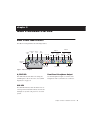
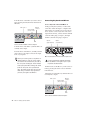
The Mbox 2 front panel has the following features:
Input 2
Input 1
Headphone Monitor
Level
Level
S/PDIF
LED
USB
LED
Mix
(Ratio)
Gain
Mono 48V
Peak
LED
Source
selector
Pad
Gain
Peak
LED
Source
selector
Pad
Headphone
Output
Mono 48V
LED LED
DI/Mic LEDs
DI/Mic LEDs
Figure 1. Mbox 2 front panel
S/PDIF LED
Front Panel Headphone Output
This LED indicates that Mbox 2 is using the
S/PDIF inputs as the clock source. See “S/PDIF
Digital I/O” on page 34.
Use the Headphone Output to connect stereo
headphones with a 1/4-inch stereo connector.
USB LED
The USB LED indicates that the Mbox 2 has received power from its USB connection. Once the
USB light is on, audio can pass in or out of the
system.
Chapter 5: Mbox 2 Hardware Overview
31
Headphone Level
Mono Switch and LED
The headphone knob adjusts the output level of
the Headphone port, which outputs the signal
that is routed to Outputs 1–2 in Pro Tools LE,
and mirrors the Line Outputs.
The Mono switch sums the input channels to a
mono signal (delivering that identical signal to
both speakers). This has no effect on Pro Tools
playback monitoring, recording, or on the main
outputs. Switching your stereo source signal to
mono is useful when you are recording a mono
input while listening to stereo playback (to hear
your playing in both sides), or for checking the
phase relationship of stereo inputs. When engaged, the Mono LED lights.
Monitor Level
The Monitor knob adjusts the output level of
the Line Out ports. In Pro Tools, this will be the
signal routed to Outputs 1–2.
Mix (Ratio) Control
Mbox 2 gives you the ability to monitor your
analog input signals while recording, without
the delay incurred by A/D/A converters and
host-based processing.
This zero-latency analog monitoring is controlled with the Mix knob, which you can use to
blend and adjust the monitor ratio between
Mbox 2 analog inputs and Pro Tools playback.
The Mix knob has no effect when you are using
S/PDIF digital inputs, since it controls the signal
before it reaches the A/D converters.
To listen to just the Source input signal, turn the
Mix knob fully left to Input. To listen to
Pro Tools output only, turn the knob fully right
to Playback.
The output from the Mix control is routed directly to the TRS line outputs, and is mirrored in
the Headphone ports and S/PDIF output ports.
This ability to blend and control the relative levels of Pro Tools playback and latency-free live
analog inputs can be particularly effective when
overdubbing.
32
Mbox 2 Getting Started Guide
Monitoring while Overdubbing
By panning signals to the center or using the
Mono switch, as opposed to panning them hard
left and right in the Headphone outputs, you
can create a more focused monitor mix to help
minimize distractions while overdubbing.
In situations where you are monitoring stereo
microphones, stereo synthesizers, or any source
pairs with a comfortable balance, you will probably not want to use the Mono switch.
Checking Phase Relationships
The Mono switch can also be used for a quick
check of the phase relationship between
Source 1 and Source 2 inputs.
When the two input signals are out of phase,
pressing the Mono switch will result in a sudden
“hollow” sound that is the result of phase cancellation. This quick test with the Mono switch
can help to avoid phase problems later when
mixing these tracks. Frequent checking of phase
relationships with the Mono switch can also assist you in finding the optimal microphone
placement.
48V Switch and LED
Pad Switches and LEDs
Phantom power is activated by the switch labeled 48V on the front panel of Mbox 2. The
LED, when lit, indicates that 48V phantom
power is active on the Mic/Line inputs. These
inputs provide phantom power for microphones that require it to operate.
The Pad switches engage a –20 dB pad on their
corresponding input channels. When engaged,
the Pad LEDs light.
Source Selectors and LEDs
About Phantom Power
These switches select either the Mic or DI inputs
for each channel. The DI and Mic LEDs indicate
the current source input.
Dynamic microphones (such as a Shure SM57)
do not require phantom power to operate, but
are not harmed by it. Most condenser microphones (like an AKG C3000) do require phantom power to operate.
Removable Handle
Although phantom power can be used
safely with most microphones, it is possible
to damage some ribbon microphones with
it. Always turn off phantom power and
wait at least ten seconds before connecting
or disconnecting a ribbon microphone.
When using phantom power, Mbox 2’s
maximum current per microphone is 4 mA.
If you are not sure about the phantom power requirements for your microphone, consult your
microphone’s documentation or contact the
manufacturer.
Peak LEDs
These LEDs are clip indicators. If the Peak LEDs
flicker occasionally, the signal reaching Mbox 2
has clipped.
Gain Controls
These knobs adjust the input gain levels of the
Mic/Line inputs.
Mbox 2 includes a handle that can be used for
carrying and tilting, as well as a replacement
panel that makes the unit more compact.
◆ The handle can be used as a stand that tilts the
unit into a more easily viewable angle when the
Mbox 2 is placed on a desktop. The handle can
also be used to carry the unit.
◆ The handle can also be replaced with the optional Mbox 2 faceplate panel. This panel lets
Mbox 2 sit flat on a desktop, and reduces the
space required when packed for traveling.
To replace the handle with the Mbox 2 panel:
1 Unscrew the handle mounting screw located
along the right edge of the handle (when viewing from the front).
2 Remove the handle.
3 Mount the replacement panel in position
where the handle had been.
4 Secure the panel to the unit in its new posi-
tion using the same screw you removed in
step 1.
5 Repeat the above basic instructions to replace
the panel with the handle.
Chapter 5: Mbox 2 Hardware Overview
33
Mbox 2 Back Panel Features
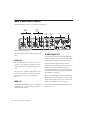
Figure 2 identifies each port on the Mbox 2 back panel.
Input 2
(analog
input 2)
Mic
Input 1
(analog
input 1)
DI
Line
Mic
DI
Line
Monitor
outputs
S/PDIF
digital I/O
MIDI I/O
USB port
Figure 2. Mbox 2 back panel
The Mbox 2 back panel has the following features:
USB Port
This standard USB v1.1 connector is used to
connect your computer to the Mbox 2. One
standard USB cable is included with your system.
The Mbox 2 is compatible with USB 2.0 ports.
However, the USB 2.0 bus will switch to the
slower USB v.1.1 speed to accommodate
Mbox 2.
MIDI I/O
The MIDI In and MIDI Out ports are standard 5pin MIDI ports, each providing 16 channels of
MIDI input and output.
34
Mbox 2 Getting Started Guide
S/PDIF Digital I/O
The S/PDIF in and out ports are unbalanced twoconductor phono (RCA) connectors that utilize
a full 24-bit, two-channel digital data stream.
The Sony/Philips Digital Interface Format
(S/PDIF) is used in many professional and consumer CD recorders and DAT recorders. To
avoid RF interference, use 75-ohm coaxial cable
for S/PDIF transfers and keep the cable length to
a maximum of 10 meters.
In use, the S/PDIF input channels are available
in addition to the two channels of analog audio
input. This lets Mbox 2 be used as a 4-in/2-out
digital audio interface for Pro Tools LE.
The S/PDIF output channels always mirror the
main outs 1–2.
Mon Out (Monitor Output)
These outputs support balanced TRS, or unbalanced TS, 1/4-inch connections. To monitor
your mix, these outputs can be connected to a
mixing board, directly to a monitoring system
such as a stereo power amp, or another stereo
destination.
The Mon Out Left and Right play the audio that
is routed to analog outputs 1 and 2 from within
Pro Tools, respectively. These analog outputs
feature 24-bit digital-to-analog converters.
Source 2 is at the far left (when looking at the
back panel), and Source 1 is to its right. The back
panel inputs for Source 1 and Source 2 are located such that they are directly in line with
their associated input controls on the front
panel. This lets you locate input jacks more easily when viewing from the front of the unit.
Though the XLR connectors support instrument and microphone level inputs, whenever a TRS cable is plugged in to the
Line(TRS) port, the XLR port on that channel is ignored.
Input 1 and Input 2
Each analog source input channel (Input 1 and
Input 2) provides Mic, DI (“Direct Inject”), and
Line (TRS) ports. These balanced/unbalanced
analog audio inputs support a broad range of input levels, as follows:
• Mic (microphone) for XLR inputs
• Line (TRS) for line level signals on TRS or TS
inputs
• DI for other 1/4-inch TRS or TS connections
On the front panel, the input signal is adjusted
by the Gain control for each channel and the
source (Mic/Line, or DI) is chosen using the
Source selectors.
Chapter 5: Mbox 2 Hardware Overview
35
36
Mbox 2 Getting Started Guide
chapter 6
Making Hardware Connections
To hear audio recorded into a Pro Tools session,
you will need to connect headphones or an external sound system (such as powered monitors
or a home stereo) to Mbox 2. Sound from
Mbox 2 cannot be played through your computer’s speakers or your computer’s sound output.
Connecting Headphones
On the front panel of the Mbox 2 is a 1/4-inch
jack to connect headphones, and a headphone
level control to adjust headphone volume.
Connecting a Sound System
The monitor outputs on the back of the Mbox 2
support 1/4-inch plugs. These connections can
be balanced, TRS (Tip, Ring, Sleeve) style connectors, or unbalanced connectors. To listen to
your Pro Tools session, these outputs can be
connected to any amplification system: powered speakers, a home stereo system, or an audio
mixer.
When connecting to a stereo system, connect
the left channel (often the white plug) to
Mon Out Left, and right channel (often the red
plug) to Mon Out Right.
Headphone level
Home stereo systems often use RCA
connectors. You can use an adaptor or
a special cable to convert from the TRS
or TS connectors used by Mbox 2 to the
RCA connectors on your home stereo.
1/4-inch
Headphone jack
Monitor Out Left
Headphone jack on front of Mbox 2
To connect headphones:
Connect headphones with a 1/4-inch stereo
connector (or adapter) to the Headphone jack.
■
Monitor Out Right
Stereo output from the Mbox 2 (back panel)
Chapter 6: Making Hardware Connections
37
Mon Outs Left and Right play the audio that is
routed to analog outputs 1 and 2 within
Pro Tools.
Connecting a Recorder for
Mixdowns
After you record and mix your sessions in
Pro Tools, you may want to mix them down to a
DAT, CD recorder, Mini-Disc, or other stereo 2track recording device.
For more information on mixdown options,
see Chapter 7, “Common Tasks with
Pro Tools LE.”
Connecting an Analog Deck
Connect the left and right Mon Outs on the
back of the Mbox 2 to your recorder’s analog inputs. Mon Outs Left and Right should be routed
to the left and right inputs, respectively, on your
recorder. These outputs are TRS ports. You may
need adapter cables if your mixdown deck has
RCA inputs.
Connecting a Digital Deck
If you have a CD recorder, DAT deck or other device that accepts S/PDIF connections, connect it
to the S/PDIF In and S/PDIF Out RCA ports on
the back of Mbox 2
When recording from Pro Tools to a digital
device, make sure the Pro Tools Clock
Source setting is set to Internal clock mode.
38
Mbox 2 Getting Started Guide
Connecting Audio Inputs
This section describes the analog inputs available on Mbox 2. For information about connecting specific audio sources, see “Connecting a
Microphone” on page 39, and “Connecting Instruments to the Mbox 2” on page 41.
Overview of Analog Inputs
Mbox 2 inputs (sources) support microphones,
guitars, keyboards, and other types of instruments. Mbox 2 has two audio input sections, labeled Input 1 and Input 2. For stereo inputs, use
Input 1 for the left input, and Input 2 for the
right input.
Input 2
Input 1
Inputs on back of Mbox 2
The two input sections are located so that the
hardware input jacks line up directly behind
their corresponding input controls on the front
panel. This makes it easier to locate channel input connections from the front.
Each Input section has three analog input jacks:
Mic Cables and Connectors
Mic For XLR microphone cables.
Some microphone cables use an XLR connector
to attach a microphone to an input (such as
those on the Mbox 2); other microphones use a
1/4-inch connector. If you have a choice, use an
XLR connector to connect the microphone to
the Mbox 2 to yield better results.
Line (TRS) For 1/4-inch Tip-Ring-Sleeve cables
from keyboards, mixers, microphones, and
other line sources.
DI For 1/4-inch Tip-Sleeve cables from guitar,
bass, microphones, or similar sources.
XLR connector
Mic
DI
Mic
DI
1/4-inch connector
XLR and 1/4-inch connectors
Phantom Power
Line
(TRS)
Line
(TRS)
Analog input connectors
For information about connecting specific audio sources, see “Connecting a Microphone” on
page 39, and “Connecting Instruments to the
Mbox 2” on page 41.
Connecting a Microphone
There are several ways to use Mbox 2 with a microphone, depending on the type of microphone and cable you use.
Some microphones require power to operate.
This power, called phantom power, is supplied either by a battery in the microphone, or through
an audio interface (such as Mbox 2) that can
supply power through the microphone cable.
Most condenser microphones (such as an AKG
C3000) require phantom power to operate. Dynamic microphones (such as a Shure SM57) do
not require phantom power to operate, but are
not harmed by it.
Although phantom power can be used
safely with most microphones, it is possible
to damage some ribbon microphones with
it. Always turn off phantom power and
wait at least ten seconds before connecting
a ribbon microphone.
The Mbox 2 can only supply power through a
microphone cable with XLR connectors. If you
are not sure about the phantom power requirements for your microphone, refer to your microphone’s documentation or contact the manufacturer.
Chapter 6: Making Hardware Connections
39
Using a Mic that Has an XLR
Connector
To use a microphone that has an XLR connector:
1 Plug your microphone cable into one of the
Mic inputs on the back of Mbox 2.
Input 2
Mic input
Input 1
Mic input
4 If your microphone requires phantom power,
make sure the microphone is connected, then
press the Phantom Power switch (labeled 48V)
on the front of the Mbox 2. This switch sends
48V to both mic inputs. The 48V LED on the
front of the Mbox 2 will light when phantom
power is being supplied.
Phantom Power
switch
Phantom Power switch
XLR connector plugged into Input 1
2 Make sure nothing is plugged in to the
Line (TRS) jack, otherwise Mbox 2 will use audio
from the Line (TRS) input and not the Mic input.
5 On the front of the Mbox 2, turn the Mix control fully left to Input.
Mic control
Gain
3 Set the Source to Mic (microphone) by pressing the Mic/DI Source selector on the front of
Mbox 2 until the Mic LED is lit.
Mic/DI
Source selector
DI Mic
LED LED
Input 1 Source selector and LEDs
40
Mbox 2 Getting Started Guide
Mix control and Gain knob for Input 1
6 On the front of the Mbox 2, carefully turn the
Gain control to the right to increase the input
level of your microphone signal.
Using a Mic that Has a 1/4-Inch
Connector
To use a microphone that has a 1/4-inch TS
(Tip-Sleeve) connector:
1 On the back of the Mbox 2, plug the 1/4-inch
connector from your microphone into one of
the DI inputs.
Input 1 DI
5 If the incoming signal is too loud, press the
Pad switch to engage the 20 dB pad.
Connecting Instruments to
the Mbox 2
Mbox 2 provides two input types (DI and Line)
that correspond to the different signal strengths
output by different types of instruments.
DI Input Instruments such as electric guitar or
electric bass that usually have a lower level of
output than line level instruments use the DI
(“Direct Inject”) input.
Connecting a microphone to the Input 1 DI connector
2 On the front of the Mbox 2, set the source to
DI by pressing the input channel Source selector
until the DI LED is lit.
Mic/DI
selector
Line Input Line level devices, including electronic audio sources such as mixers, samplers,
keyboards, turntables, and synthesizers use the
Line input.
Connecting Electric Guitar or Bass
To use a guitar with Mbox 2:
1 On the back of the Mbox 2, plug your guitar
cable into one of the DI inputs.
Input 1 DI
DI
LED
Input 1 selector switch and DI LED
3 On the front of the Mbox 2, turn the Mix control fully left to Input.
Mix control
Connecting guitar to the Input 1 DI connector
Gain
Pad
Input 1 Gain and Pad controls, and the Mix control
4 On the front of the Mbox 2, carefully turn the
Gain control to the right to increase the input
level of your microphone signal.
Chapter 6: Making Hardware Connections
41
2 On the front of the Mbox 2, set the Source to
Connecting Keyboards and Mixers
DI by pressing the Mic/DI switch until the DI
LED is lit.
To use a keyboard or mixer with Mbox 2:
Mix control
Mic/DI
selector
Input 1 Gain
(level) control
DI
LED
1 Plug your keyboard, mixer, or other audio
source into either the Input 1 or Input 2 Line
(TRS) inputs on your Mbox 2. If your source is
stereo (such as a stereo keyboard or the stereo
output from a mixer), connect the left channel
(often the white plug) to Input 1, and right
channel (often the red plug) to Input 2.
Input 2
(right channel)
Input 1
(left channel)
Source selector and Gain control for Input 1
3 On the front of the Mbox 2, turn the Mix control fully left to Input.
4 On the front of the Mbox 2, carefully turn the
Gain control to the right to increase the input
level of your guitar.
When you record a guitar (or any mono instrument that uses only one source input),
you will hear the sound in only one side of
the stereo field. Pushing the “mono” button
on the front of the Mbox 2 brings the sound
from one side of the stereo field to both
sides. The Mono switch does not affect the
audio being recorded. It only affects how
you hear your input to the Mbox 2.
Mbox 2 connections for line-level stereo input source
If your keyboard has unbalanced outputs,
use the Mbox 2’s DI inputs. Refer to your
keyboard’s documentation
2 On the front of the Mbox 2, set the source to
Line by pressing the Source selector until the
Line LED is lit.
3 On the front of the Mbox 2, turn the Mix control fully left to Input.
Mix control
Mic/DI
selector
Input 1 Gain
(level) control
Mic
LED
Source selector and Gain control for Input 1
42
Mbox 2 Getting Started Guide
4 Set your instrument’s volume to its optimal
4 On the recording track, choose the appropri-
level. For example, the optimal level for most
keyboards is between 80% and 100% of maximum volume.
ate stereo or mono S/PDIF source from the track
Input selector.
5 On the front of the Mbox 2, carefully turn the
Gain control to the right to increase the input
level of your keyboard.
Digital Input and Output
Mbox 2 provides digital inputs and outputs for
S/PDIF format digital audio. The two channels
of S/PDIF digital input can be used in combination with the two analog inputs (for a total of
four simultaneous input channels).
Connecting Digital Devices
To connect a S/PDIF device to Mbox 2:
1 Use two 75-ohm coaxial cables with male RCA
connectors on both ends (purchased separately).
2 Connect the device’s S/PDIF output to
Mbox 2’s S/PDIF input port, and the device’s
S/PDIF input to Mbox 2’s S/PDIF output port.
To configure Mbox 2 to record from a digital
source, choose Setups > Hardware Setup in
Pro Tools, then select S/PDIF in the Clock
Source.
S/PDIF Mirroring
Pro Tools LE uses S/PDIF mirroring to automatically “mirror” the audio that is sent to Line Outputs 1 and 2 on the S/PDIF RCA outputs. This is
useful, for example, if you are monitoring a mix
using your Line Outputs, and also recording the
same source to an external S/PDIF device.
MIDI Connections
The two MIDI ports on Mbox 2 let you take advantage of all the MIDI features of Pro Tools LE,
including recording and editing MIDI tracks.
If you need additional MIDI ports you can add a
compatible MIDI interface. USB MIDI interfaces
work effectively with Pro Tools systems on Windows or Mac. Serial MIDI interfaces are supported on Windows systems only.
Only USB MIDI interfaces are compatible
with Pro Tools systems for Mac OS X. Modem-to-serial port adapters and serial MIDI
devices are not supported.
To connect your MIDI device to Mbox 2:
1 Connect a standard 5-pin MIDI cable from the
Using S/PDIF Input
MIDI Out port of your device to the MIDI In
port on the back of Mbox 2.
To configure Pro Tools to record from a S/PDIF
device:
1 Choose Setups > Hardware Setup.
2 Choose S/PDIF from the Clock Source selector.
On the front panel, the S/PDIF LED lights to indicate this setting.
3 Click OK.
Chapter 6: Making Hardware Connections
43
2 Connect another MIDI cable from the
MIDI In port of your device to the MIDI Out
port on the back of Mbox 2.
MIDI Out
MIDI In
Mbox 2 MIDI connections
Monitoring MIDI Instruments with
Mbox 2
If you have a MIDI instrument that has analog
outputs, you can connect it to Mbox 2 to monitor its output.
To connect your MIDI instrument for monitoring in
Pro Tools:
■ Connect the MIDI instrument’s audio output
to a Line (TRS) input on your Mbox 2.
Input 2
(right channel)
Input 1
(left channel)
Mbox 2 connections for line-level stereo input source
44
Mbox 2 Getting Started Guide
chapter 7
Common Tasks with Pro Tools LE
This chapter is designed to give new users specific methods for accomplishing common tasks
with your Pro Tools system.
For the most complete information on using
Pro Tools, see the Pro Tools Reference Guide.
You can view an electronic PDF version of the
Reference Guide by choosing it from the
Pro Tools Help menu.
To create a Pro Tools session:
1 Verify the connections between your Mbox 2
and your instrument or microphone.
For connection information, see Chapter 6,
“Making Hardware Connections.”
2 Launch Pro Tools.
3 Choose File > New Session.
4 In the New Session dialog, set the session pa-
This chapter uses analog inputs in its examples of common tasks. To record digitally
through the Mbox 2 S/PDIF input, the steps
are basically the same with the following
important exception: S/PDIF must be enabled as the Pro Tools Clock Source in the
Hardware Setup dialog. For more information, see “Digital Input and Output” on
page 44.
rameters as needed, or leave them at their default settings. (For details on New Session
settings, see the Pro Tools Reference Guide.)
Recording a Pro Tools Session
Before you record with Pro Tools LE, you first
create a Pro Tools session, then prepare an audio
track for recording.
New Session dialog
5 Choose the audio drive where you want to
save your session.
6 Type a name for your session.
Chapter 7: Common Tasks with Pro Tools LE
45
7 Click Save.
7 Play the instrument or sound source at the
volume you will record.
To prepare an audio track for recording:
1 Choose Track > New.
2 Specify 1 Mono Audio Track in Samples, if
your source is mono, or 1 Stereo Audio Track in
Samples, if your source is stereo.
Creating a new Stereo Audio track
3 Click Create.
A mono instrument uses one input on the
Mbox 2, and a stereo instrument uses two.
Creating a stereo track in Pro Tools will not
make a mono instrument into a stereo instrument. If a mono instrument is recorded
on a stereo track, one of the sides of the stereo track will show no signal.
8 Use the Gain controls to maximize the signal
going into Pro Tools while avoiding clipping.
Clipping occurs when you feed a signal to an
audio device that is louder than the circuitry
can accept. To avoid clipping, adjust the output volume of the source device, then adjust
the Mbox 2 Gain control. Adjust these two
levels so that the input Peak LEDs on the
front panel do not light red. (One Peak LED
is provided on the front panel for each input;
Peak LEDs light green when the input signal
is roughly –60 dBFS, light yellow at –6 dBFS,
and will turn red to indicate the input signal
is at –0 dBFS (also known as “full code”).
To record an audio track:
1 Click the track’s Record Enable button.
4 Make sure the Mix window is open by choosing Window > Mix.
Record enabling a track in the Mix window
5 In the Mix window, click the Audio Input Path
2 Choose Window > Transport to display the
selector on the new track.
Transport window. Click Return to Zero to go to
the beginning of the session.
6 From the pop-up menu, select the interface in-
put you want to record. For example, select
Analog 1 if your audio source is plugged into an
Input 1 connector on the Mbox 2.
Return to Zero
Rewind
Online
Transport window
Routing an input to a stereo track
46
Mbox 2 Getting Started Guide
Stop
Fast Forward
Play
Go to End
Record
3 Click Record in the Transport window to arm
Pro Tools for recording. The Record button
flashes red to indicate that Pro Tools is ready to
record.
4 When you are ready to start recording, click
Play or press the Spacebar.
5 Record your performance.
6 Click Stop in the Transport window or press
the Spacebar when you are finished recording.
Importing Audio from a CD
To import audio from a compact disc:
1 Put the source CD into your computer’s
CD/DVD drive.
2 In Pro Tools, open the Workspace browser by
choosing Window > Workspace. The Workspace
browser is a window where you can find, audition, and manage your audio files.
To play back a recorded track:
1 If the track’s Record Enable button is lit, click
on it to take it out of Record mode.
2 Click Play in the Transport window or press
the Spacebar to start playback.
3 Click Stop in the Transport window or press
the Spacebar to stop playback.
Opening the Workspace browser
3 In the Workspace browser, click the Audio CD
icon to show the files on the CD.
4 Click the speaker icon in the Waveform col-
umn to audition the audio file. Press the Spacebar to stop playback.
Auditioning an audio file in the Workspace browser
Chapter 7: Common Tasks with Pro Tools LE
47
5 Drag the audio file from the Workspace
browser to the Track List in the Edit window to
import the file to a new audio track.
If you are bouncing to 16-bit (CD resolution),
you should use a dither plug-in on the main output. (For details, see the Pro Tools Reference
Guide.)
To bounce audio to disk:
1 After you have finished recording and mixing
a session in Pro Tools, select the length of the
session in the timeline ruler (or on a track), plus
an additional amount of time to avoid cutting
off any reverb tails that might continue past the
end of the last region.
Dragging an audio file from the Workspace browser to
the Edit window Track List
To play back the new track:
1 In the Transport window, click Return to Zero
to go to the beginning of the track.
2 Click Play in the Transport window to begin
playback.
3 Click Stop in the Transport window or press
Session audio selected and ready to bounce
the Spacebar to stop playback.
2 Choose File > Bounce to > Disk.
Creating an Audio CD from a
Pro Tools Session
Pro Tools does not create audio CDs directly,
but you can create stereo audio files from your
Pro Tools sessions that can be used by most CD
burning software.
Bouncing Audio to Disk
Use the Pro Tools Bounce to Disk feature to
combine all your audible tracks into a single
“master” audio file. After the new audio file has
been bounced to disk, you can burn it to a CD.
48
Mbox 2 Getting Started Guide
Choosing Bounce to Disk from the File menu
3 In the Bounce Options dialog, choose
Analog 1–2 as the Bounce Source.
4 Choose WAV (BWF) for the File Type.
5 Choose Stereo Interleaved for the Format.
10 Click Save.
6 Choose 16 for the Resolution and 44100 for
Pro Tools begins bouncing to disk. Pro Tools
bounces are done in real time, so you hear audio
playback of your mix during the bounce process
(though you cannot adjust it).
the Sample Rate.
7 If you are changing the sample rate of the
bounced file, choose a Conversion Quality setting. (For details, see the Pro Tools Reference
Guide.)
.
8 Choose “Convert after Bounce,” and click
Bounce.
Bouncing to Disk dialog
Burning a CD
After the bounce is completed, you will have an
audio file that is ready for burning onto a CD.
Quit Pro Tools and launch any common CD
burning application to burn your bounced mix
to CD.
Bounce options for creating CD burnable tracks
9 In the Bounce dialog, give the bounce tracks a
Make certain that you configure your CD
burning application to create an audio CD
rather than a data CD.
name and choose where they should be saved.
Entering a name for the bounced file
Chapter 7: Common Tasks with Pro Tools LE
49
Recording MIDI in a Pro Tools
Session
What is MIDI?
MIDI (Musical Instrument Digital Interface)
data is not audio, and has no sound. MIDI is a
way for musical devices to communicate. MIDI
is data that can trigger a MIDI device (such as a
keyboard or software synthesizer).
In order to create or play a MIDI recording, you
must have a MIDI controller or sound module
(real or virtual) connected to the computer
through a MIDI interface. Audio from your
MIDI instrument can be monitored through the
audio interface or sent to an external mixer.
Recording MIDI on an Instrument Track
Pro Tools Instrument tracks provide both MIDI
and audio capabilities, so you can record MIDI
and monitor audio from software and hardware
instruments.
To record or playback tracks using MIDI
data, your Pro Tools system must be configured for MIDI. See Appendix A, “Configuring
MIDI Studio Setup (Windows Only)” or
Appendix B, “Configuring AMS (Mac OS X
Only).”
To create an Instrument track and configure it for
recording:
1 Choose Setup > MIDI > Input Devices and
make sure your input device is selected in the
MIDI Input Enable window, and click OK.
MIDI sound module
2 Choose Track > New and specify 1 Mono InMIDI
strument Track, then click Create.
Audio
To amplifier
MIDI keyboard (controller)
Mixer
Signal paths for MIDI instruments
Creating a new Mono Instrument track
3 Select View > Mix Window > Instruments to
display the MIDI controls for the Instrument
track.
Showing the Instrument View in the Mix window
50
Mbox 2 Getting Started Guide
4 At the top of the Instrument track in the Mix
window, click the track’s MIDI Input selector
and assign the device and channel to be recorded, or leave it set to All.
MIDI Input selector
• If you are using an external MIDI device,
click the track’s MIDI Output selector (at
the top of the Instrument track) and assign
the device and channel to receive the MIDI
output (the choices will vary depending on
the device).
MIDI Input selector in an Instrument track
5 Do one of the following, depending on the
type of instrument you are using:
• If you are using an instrument plug-in,
click an Insert selector and insert the plugin on the Instrument track. The track’s
MIDI output is automatically assigned to
the instrument plug-in.
MIDI Output selector in an Instrument track
If your connected MIDI device does not appear, check that you have configured your
computer and its MIDI settings. For more
information, refer to Appendix A, “Configuring MIDI Studio Setup (Windows Only)”
or Appendix B, “Configuring AMS
(Mac OS X Only).”
Inserting an instrument plug-in on an Instrument track
Chapter 7: Common Tasks with Pro Tools LE
51
6 If you are using an external MIDI device and
have connected its audio output to your audio
interface for monitoring in Pro Tools, click the
Input selector of the Instrument track and
choose the corresponding audio input. (This
step is not necessary if you are using an instrument plug-in.)
9 Play some notes on your MIDI controller and
look for the track’s MIDI Velocity meter to
move. Remember, MIDI is not audio, and the
MIDI Velocity meter is not registering sound
output, but MIDI activity.
MIDI Velocity meter
MIDI meter in Instrument track showing MIDI activity
10 Adjust the audio output level of the Instrument track with its Volume fader.
Choosing an audio input for an Instrument track
7 In the Mix Window, click the track’s Record
Enable button to enable the Instrument track
for MIDI recording.
Volume fader
Adjusting the Volume fader on an Instrument track
To record MIDI on the Instrument track:
1 Verify that the Instrument track you want to
Track Record Enable button
Enabling an Instrument track for MIDI recording
8 Make sure Options > MIDI Thru is selected.
record to is record-enabled and receiving MIDI.
2 In the Transport window, click Return to Zero
to start recording from the beginning of the session. You can also record to a selection in a track
or from the cursor location in the Edit window.
3 Click Record in the Transport window.
52
Mbox 2 Getting Started Guide
Return to Zero
Rewind
Online
Fast Forward
Play
Go to End
Stop
Record
Transport window
4 Click Play in the Transport window or press
the Spacebar to begin recording.
5 Play your MIDI controller or input device.
6 When you have finished recording, click Stop
in the Transport window, or press the Spacebar.
The newly recorded MIDI data appears as a MIDI
region on the track in the Edit window, as well
as in the Region List.
MIDI data in the Instrument track
To play back recorded MIDI data:
1 Click the track’s Record Enable button to take
the Instrument track out of Record mode.
2 In the Transport window, click Return to Zero
to play back from the beginning of the track.
3 Click Play in the Transport window to begin
playback. The recorded MIDI data plays back
through the track’s assigned instrument and
channel.
Chapter 7: Common Tasks with Pro Tools LE
53
54
Mbox 2 Getting Started Guide
appendix a
Configuring MIDI Studio Setup
(Windows Only)
MIDI Studio Setup
MIDI Studio Setup (MSS) lets you configure the
MIDI controllers and sound modules that are
connected to your system, and control the routing of MIDI data between your MIDI equipment
and Pro Tools.
MSS automatically finds MIDI interfaces, and
lets you specify a custom name for each of the
MIDI ports within the MIDI Studio Setup document.
MIDI Studio Setup Window
The MIDI Studio Setup window is organized
into three sections. Interface controls are at the
top of the window. All the currently defined instruments are displayed in the Instrument
Name list on the left side of the window. A detailed view of MIDI parameters is shown in the
Properties section on the right.
MSS also supports XML-based patch file names
for storing and importing patch names for your
external MIDI devices.
Entire MIDI Studio Setup configurations created
within MSS can be imported and exported.
MIDI Studio Setup window
Interface Controls
Create This button adds a new instrument to
the Instrument Name list.
Delete This button deletes the instrument or instruments selected in the Instrument Name list.
Import This button lets you import an existing
MIDI Studio Setup file.
Appendix A: Configuring MIDI Studio Setup (Windows Only)
55
Export This button lets you export the current
MIDI Studio Setup file.
To define an instrument with MIDI Studio Setup:
Show Duplicate Emulated Ports When this option is selected and you are using a MIDI interface that supports timestamping (such as MIDI
I/O), in addition to the MIDI ports on Mbox 2,
the MIDI Studio setup window shows both the
DirectMusic time-stamped output ports, and
non-stamped duplicate emulated output ports.
2 Click Create.
Some MIDI Interfaces will not properly load
or unload their drivers unless you quit and
re-launch Pro Tools. Check the documentation that came with your MIDI interface for
more information.
Instrument List
The Instrument list contains all the currently
defined instruments. Selecting an instrument in
the list displays that instrument’s properties in
the Properties section of the window.
Properties Section
The Properties section lets you edit information
for new instruments, or instrument currently selected in the Instrument list.
1 Choose Setup > MIDI > MIDI Studio.
3 In the Instrument Name field, type the name
of your instrument, and press Enter.
If you do not enter an instrument name, the
Instrument Name field will automatically
inherit information from the Manufacturer
and Model pop-up menu.
4 Set a manufacturer and model for the new de-
vice from the corresponding pop-up menus. If
the Manufacturer and Model pop-up menus do
not provide a name for your particular device,
choose None.
5 From the Input pop-up menu, choose the in-
put port on your MIDI interface that is connected to the MIDI Out of your instrument.
6 From the Output pop-up menu, choose the
output port on your MIDI interface that is connected to the MIDI In of your instrument.
7 Enable the appropriate MIDI channels (1–16)
for the Send Channels and Receive Channels
options (These determine which channels send
and receive MIDI.)
Instrument Name
The Instrument Name field shows the user-definable instrument name for the currently selected instrument.
Manufacturer
MIDI Studio Setup Properties section
When a previously defined instrument is selected in the Instrument list, the Properties section changes to reflect the properties of the selected instrument.
56
Mbox 2 Getting Started Guide
The Manufacturer pop-up menu provides a list
of MIDI equipment manufacturers. This list is
derived from the XML-based MIDI device files.
For more information, see “MIDI Patch
Name Support” on page 57.
Model
Receive Channels
The Model pop-up menu provides a list of MIDI
devices, filtered by the manufacturer name. This
list is derived from the XML-based MIDI device
files provided with your Pro Tools installation.
The Receive Channels grid sets the receive channels for the MIDI device specified in the Instrument Name field.
For more information, see “MIDI Patch
Name Support” on page 57.
Input Port
The Input Port pop-up menu displays a list of
available MIDI interface input ports. Inputs will
include Mbox 2 and any additional MIDI interfaces enabled on your system. The MIDI interface port that is set and displayed here is the
port through which MIDI data is sent from the
external MIDI device specified in the Instrument Name field into your MIDI interface.
MIDI Patch Name Support
Pro Tools supports XML (Extensible Markup
Language) for storing and importing patch
names for your external MIDI devices. Pro Tools
installs MIDI patch name files (.midnam) for the
factory default patch names of many common
MIDI devices. These files reside in directories,
sorted by manufacturer, in Program Files\
Common Files\Digidesign\MIDI Patch Names\
Digidesign.
To import MIDI patch names into Pro Tools:
If you set the input port to None, the defined
instrument will not appear as a choice in a
MIDI Input selector.
Output Port
The Output Port pop-up menu displays a list of
available MIDI interface output ports. The port
set and displayed here is the port through which
MIDI data is sent from your MIDI interface to
the MIDI device specified in the Instrument
Name field.
1 Verify the MIDI Device name in the MIDI Stu-
dio Setup window (see “MIDI Studio Setup” on
page 55).
2 Verify the MIDI track’s output is correctly as-
signed to the MIDI device.
If you set the output port to None, the defined instrument will not appear as a choice
in a MIDI Output selector.
Send Channels
The Send Channels grid sets the send channels
for the MIDI device specified in the Instrument
Name field.
Appendix A: Configuring MIDI Studio Setup (Windows Only)
57
3 Click the MIDI track’s Patch Select button.
6 Click Open.
The Patch Select dialog is populated with patch
names and the Patch Name Bank pop-up menu
appears in the upper left hand corner of the window.
Patch Select button
Patch Select button, Edit window
Patch Select button
Patch Select button, Mix window
Patch Select dialog with patch names
4 In the Patch Select dialog, click the Change
Once patch names have been imported into
Pro Tools, they are available for that MIDI device in all sessions.
button.
To clear patch names:
■ In the Patch Select dialog, click the Clear button, and click Done.
Change button
Patch Select dialog
5 In the Open dialog, navigate to Program
Files\Common Files\Digidesign\MIDI Patch
Names\Digidesign\<name of manufacturer>,
and select the MIDI Patch Name file (.midnam)
for the MIDI device.
58
Mbox 2 Getting Started Guide
MIDI patch name files (.midnam) can be
edited in any text editor, or you can use
third party patch librarian and editor software to create your own custom patch
names.
appendix b
Configuring AMS (Mac OS X Only)
Audio MIDI Setup
Pro Tools recognizes the ports on your MIDI interface as generic ports. With Mac OS X, you use
Apple’s Audio MIDI Setup (AMS) utility to identify external MIDI devices connected to your
MIDI interface and configure your MIDI studio
for use with Pro Tools.
2 Click MIDI Devices. AMS scans your system
for connected MIDI interfaces. If your MIDI interface is properly connected, it appears in the
window with each of its ports numbered.
To configure your MIDI studio in AMS:
1 Do one of the following:
• Launch Audio MIDI Setup (located in Applications/Utilities).
– or –
• In Pro Tools, choose Setup > MIDI > MIDI
Studio.
Audio MIDI Setup (MIDI Devices)
3 For any MIDI devices connected to the MIDI
interface, click Add Device. A new external device icon with the default MIDI keyboard image
will appear.
4 Drag the new device icon to a convenient lo-
cation within the window.
Appendix B: Configuring AMS (Mac OS X Only)
59
5 Connect the MIDI device to the MIDI interface by clicking the arrow for the appropriate
output port of the device and dragging a connection or “cable” to the input arrow of the corresponding port of the MIDI interface.
2 Select a manufacturer and model for the new
device from the corresponding pop-up menus.
(If the Manufacturer and Model pop-up menus
do not provide a name for your particular device, you can type a name.)
Naming a new MIDI device
Making MIDI input and output connections
6 Click the arrow for the appropriate input port
of the device and drag a cable to the output arrow of the corresponding port of the MIDI interface.
To remove a connection, select the cable and
press Delete. To delete all connections, click
Clear Cables.
7 Repeat steps 3–6 for each MIDI device in your
MIDI setup.
To configure an external MIDI device:
1 Select the external device icon and click Show
Info (or double-click the new device icon).
External Device Icon
60
Mbox 2 Getting Started Guide
For Manufacturer and Model names, AMS
refers to one or more files with the suffix
“.middev” in the directory Root/Library/
Audio/MIDI Devices. Pro Tools installs a
file that contains information for many
commercially available MIDI devices,
named “Digidesign Device List.middev.” If
the Manufacturer or Model names for any of
your external MIDI devices is not available
in the AMS Manufacturer and Model popup menus, you can add them by editing the
.middev file in any text editor (such as
TextEdit).
3 Click the More Properties arrow to expand the
4 Click the device image. The window expands
dialog, then enable the appropriate MIDI channels (1–16) for the Transmits and Receives options. (These determine which channels the
device will use to send and receive MIDI.)
to show images for various MIDI devices (such
as keyboards, modules, interfaces, and mixers).
Select an icon for your device.
Selecting a device icon
Enabling MIDI channels
To use your own custom icons, you can
place TIFF image files in /Library/
Audio/MIDI Devices/Generic/Images, and
they will appear as choices in the AMS
device window.
5 Click OK.
The device names you enter appear as MIDI input and output choices in Pro Tools.
Appendix B: Configuring AMS (Mac OS X Only)
61
MIDI Patch Name Support
4 In the Patch Select dialog, click the Change
button.
Pro Tools supports XML (Extensible Markup
Language) for storing and importing patch
names for you external MIDI devices. Pro Tools
installs MIDI patch name files (.midnam) for the
factory default patch names of many common
MIDI devices. These files reside in directories,
sorted by manufacturer, in /Library/Audio/MIDI
Patch Names/Digidesign.
Change button
To import MIDI patch names into Pro Tools:
1 Verify the MIDI Device name in the Audio
MIDI Setup window (see “Audio MIDI Setup” on
page 59).
2 Verify the MIDI track’s output is correctly assigned to the MIDI device.
3 Click the MIDI track’s Patch Select button.
Patch Select button
Patch Select button, Edit window
Patch Select dialog
5 In the Open dialog, navigate to /Library/Au-
dio/MIDI Patch Names/Digidesign/<name of
manufacturer>, and select the MIDI Patch Name
file (.midnam) for the MIDI device.
6 Click Open.
The Patch Select dialog is populated with patch
names and the Patch Name Bank pop-up menu
appears in the upper left hand corner of the window.
Once patch names have been imported into
Pro Tools, they are available for that MIDI device in all sessions.
To clear patch names:
■ In the Patch Select dialog, click the Clear button, and click Done.
Patch Select button
Patch Select button, Mix window
62
Mbox 2 Getting Started Guide
MIDI patch name files (.midnam) can be
edited in any text editor, or you can use
third party patch librarian and editor software to create your own custom patch
names.
appendix c
Hard Drive Configuration and Maintenance
It is recommended that you start with a newly
formatted external or secondary internal audio
drive. You should also periodically defragment
your audio drive to ensure continued system
performance.
Always back up any important data on
your drive before formatting it, as it will
erase all data on the drive.
Avoid Recording to the
System Drive
Recording to your system drive is not recommended. Recording and playback on a system
drive may result in lower track counts or fewer
plug-ins.
Supported Drive Formats and
Drive Types
Drive Formats
Windows Windows XP systems should use drives
formatted as NTFS or FAT32 (NTFS preferred).
Windows systems can also support Mac
drives formatted with HFS+ system (also
commonly referred to as Mac OS Extended).
Refer to the Pro Tools Reference Guide for
more information.
Mac Mac systems should use drives formatted
with HFS+ or HFS file system only.
HFS drives are supported as Transfer drives
only.
Hard drive performance depends on factors including system configuration, number of tracks,
session sample rate, density of edits, and the use
of crossfades and other processes such as Beat
Detective in a session.
For complete hard drive requirements, see the
Digidesign website (www.digidesign.com).
Hard Drive Configuration and Maintenance
63
SCSI Hard Drives
Digidesign recommends qualified SCSI hard
drives and a qualified SCSI host bus adapter
(HBA) card or (on Windows systems) a qualified
built-in SCSI HBA connector on the motherboard.
For complete information on track count and
the supported number and configuration of
SCSI drives, visit the Digidesign website
(www.digidesign.com).
Formatting an Audio Drive
Formatting Windows Audio Drives
(Windows Only)
For optimal performance, audio drives should
be formatted as FAT32 or NTFS.
To format an audio drive:
1 Right-click My Computer and choose Man-
age.
FireWire Hard Drives
2 Under Storage, choose Disk Management.
Digidesign recommends qualified FireWire
drives and (on Windows systems) a qualified
FireWire host adapter.
For complete information on track count and
the supported number and configuration of
FireWire drives, visit the Digidesign website
(www.digidesign.com).
IDE/ATA/SATA Hard Drives
A qualified internal IDE/ATA/SATA drive may be
used as a dedicated audio drive.
For complete information on track count with
internal drives, refer to the Digidesign website
(www.digidesign.com).
64
Mbox 2 Getting Started Guide
Disk Management window (Windows XP)
3 If the volume is “Healthy,” do the following:
4 If the volume is “Unallocated,” do the follow-
ing:
Healthy volumes are volumes that have previously been partitioned and formatted.
• In the Disk Management window, rightclick the hard drive you will use for audio
and choose Format.
• In the Disk Management window, rightclick the hard drive you will use for audio
and choose New Partition.
• In the New Partition Wizard window, click
Next.
• In the Format window, name the volume.
• When prompted, select the partition type.
• Choose a file system. For optimum performance, audio drives should be formatted as
NTFS. (FAT32 is also supported.)
Digidesign recommends using Primary partitions, instead of Extended partitions.
Windows Disk Management can only create FAT32 volumes 32 GB or smaller. To
create FAT32 volumes greater than 32 GB
(up to 2 TB). use a third part utility (such as
Swiss Knife or Partition Magic).
• Select “Perform a quick format.”
• Make sure “Enable file and folder compression” is not selected.
• Set the Allocation unit size to Default.
• Click OK.
Pro Tools only supports Basic drive types.
Do not convert the drive to a Dynamic type.
• Follow the on-screen instructions to select
a partition size and other partition settings.
• When prompted, choose a file system. For
optimum performance, audio drives
should be formatted as NTFS. (FAT32 is also
supported.)
Windows Disk Management can only create FAT32 volumes 32 GB or smaller. To
create FAT32 volumes greater than 32 GB
(up to 2 TB). use a third part utility (such as
Swiss Knife or Partition Magic).
• Select “Perform a quick format.”
• Make sure “Enable file and folder compression” is not selected.
• Set the Allocation unit size to Default.
• Click OK.
Pro Tools only supports Basic drive types.
Do not convert the drive to a Dynamic type.
Hard Drive Configuration and Maintenance
65
Formatting Mac Audio Drives
(Mac Only)
For optimum performance, audio drives should
be formatted as Mac OS Extended (Journaled).
To format an audio drive:
1 Launch the Disk Utility application, located in
Applications/Utilities.
Partitioning Drives
Partitioning creates a logical volume or volumes
on a physical drive, almost as if you were creating virtual hard drives. Partitions can then be
formatted with the appropriate file system
(NTFS or FAT32 for Windows, HFS+ for Mac).
FAT32 drive partitions have a limit of
2 terabytes (2000 gigabytes), whereas NTFS
drive partition sizes are almost limitless.
Windows XP allows drives formatted with
the NTFS or FAT32 file systems to be seen
as whole volumes. Single Pro Tools audio
files cannot exceed 2048 MB in size.
Mac OS allows drives larger than 4096 MB
to be seen as whole volumes. Drives must be
initialized with a disk utility that recognizes the 2 terabyte limit. Single Pro Tools
audio files cannot exceed 2048 MB in size.
Disk Utility (Mac OS X)
2 Click the Erase tab.
3 Select the drive you want to initialize in the
column on the left side of the window.
4 Choose the Mac OS Extended (Journaled) format.
Do not choose the “Case-Sensitive” format
option. Pro Tools will not operate properly
with case-sensitive formatted drives.
5 Type a name for the new volume.
6 If you plan to connect the drive to a Mac OS 9
Seek Times on Partitioned Drives
Seek times are actually faster on partitioned
drives (assuming that reads and writes are performed on a single partition), since the heads
only have to seek within the partition boundaries, rather than the whole capacity of the
drive.
Smaller partitions perform faster than larger partitions, but this comes at the expense of contiguous storage space. When you partition a drive,
you will need to find the compromise that best
suits your performance and storage requirements.
computer, select Install Mac OS 9 Drivers.
7 Click Erase.
The drive appears on the Desktop with the new
volume name.
66
Mbox 2 Getting Started Guide
Avoid distributing audio files within a session over different partitions on the same
drive since this will adversely affect drive
performance.
Defragmenting an Audio Drive
Mac Systems
When working with larger files (such as video),
you can limit fragmentation by backing up your
important files to another disk, erasing the files
from the original hard disk, then copying the
files back, instead of doing a defragmentation.
Window Systems
Periodically defragment audio drives to maintain
system performance.
For maximum recording and playback efficiency, data should be written to your hard
drive in a contiguous fashion—minimizing the
seek requirements to play back the data. Unfortunately, your computer can’t always store the
sound files in this way and must write to disk
wherever it can find space.
In multitrack recording, audio tracks are written
in discrete files, spaced evenly across the disk.
While fragmentation of individual files may be
zero, the tracks may be far enough apart that
playback will still be very seek-intensive. Also,
the remaining free space on the disk will be discontiguous, increasing the likelihood of file
fragmentation on subsequent record passes.
Optimizing (Defragmenting) Drives
To prevent fragmentation, you can optimize
your drive, which rearranges your files into a
contiguous format. Most optimizing software
lets you run a check on a drive to find out the
percentage of fragmentation. If your drive
shows moderate to heavy fragmentation, you
should consider optimizing it.
If you use your system for intensive editing, or if
you frequently delete audio or fade files from
your hard drive, you may need to optimize your
drives on a weekly basis, or even every few days,
since it doesn’t take long for even a large hard
drive to become fragmented.
Backing Up Data Before Optimizing
Since your files will be rewritten by the optimization process, always make a backup copy of
the data on your hard drive before you optimize
it. You should also use a hard drive utility to
find and repair any problems before optimizing
data or re-initializing your drives. If there is any
damage to your hard drive's directories prior to
optimizing, serious data loss may result.
Increased fragmentation increases the chance of
disk errors, which can interfere with playback of
audio, and result in performance errors.
On Windows, to avoid fragmentation, format drives with higher cluster sizes (such as
32K).
Hard Drive Configuration and Maintenance
67
Defragmenting Windows Audio Drives
To defragment an audio drive (Windows):
1 Right-click My Computer and choose Manage.
2 Under Storage, choose Disk Defragmenter.
3 In the Disk Defragmenter window, choose the
drive you want to defragment
4 Click the Defragment button and follow the
on-screen instructions.
When defragmenting is complete, close the
Computer Management Window.
Using Mac Drives on Windows
Systems
Pro Tools for Windows lets you record and play
back sessions directly from a Mac-formatted
(HFS+) drive connected to a Windows system.
This functionality requires that all Mac session
and audio files be stored on Mac-formatted
drives.
During Pro Tools installation, make sure to select the Mac HFS+ Disk Support option. This option lets your Pro Tools system read, write,
record, and play back using Mac-formatted
HFS+ disks.
For information on using the Mac HFS+
Disk Support option, see the HFS+ Disk
Support Option Guide.
For information on sharing sessions between Mac and Windows systems, see the
Pro Tools Reference Guide.
Formatting and Maintaining HFS+
Drives
To format and partition any drives as HFS+, connect the drives to a Mac computer and use the
Apple OS X Disk Utility.
68
Mbox 2 Getting Started Guide
Hard Disk Storage Space
Mono audio tracks recorded with 16-bit resolution at 44.1 kHz (CD quality) require approximately
5 MB of hard disk space per minute. The same tracks recorded with 24-bit resolution require about
7.5 MB per minute.
Stereo audio tracks recorded with 16-bit resolution at 44.1 kHz (CD quality) require approximately
10 MB of hard disk space per minute. The same tracks recorded with 24-bit resolution require about
15 MB per minute.
Table 4 lists the required disk space for certain track numbers and track lengths, to help you estimate
your hard disk usage.
Table 4. Required hard drive space for audio tracks (44.1 kHz and 48 kHz sessions shown)
Number of Tracks and Length
16-bit at
44.1 kHz
16-bit at
48 kHz
24-bit at
44.1 kHz
24-bit at
48 kHz
1 mono track, 1 minute
5 MB
5.5 MB
7.5 MB
8.2 MB
1 stereo track (or two mono
tracks), 5 minutes
50 MB
55 MB
75 MB
83 MB
1 stereo track (or two mono
tracks), 60 minutes
600 MB
662 MB
900 MB
991 MB
24 mono tracks, 5 minutes
600 MB
662 MB
900 MB
991 MB
7 GB
7.8 GB
10.5 GB
11.6 GB
32 mono tracks, 5 minutes
800 MB
883 MB
1.2 GB
1.3 GB
32 mono tracks, 60 minutes
9.4 GB
10.4 GB
14 GB
15.4 GB
24 mono tracks, 60 minutes
Hard Drive Configuration and Maintenance
69
70
Mbox 2 Getting Started Guide
appendix d
Troubleshooting
Backing Up Your Work
It is highly recommended that you back up your
work on a regular basis, and especially before
making changes to your system configuration.
Backing Up Your Session Data
Back up your session and audio data frequently.
There are a variety of media that are suited to
back up projects of various sizes, from automated tape backup systems to high-capacity optical drives, or to CD burners.
The best way to back up an entire session is to
use the Save Copy In command. This command
lets you save the session file and all of its associated files to a new location.
You can also use the Auto Save Backup feature (in the Operation Preferences page) to
have Pro Tools automatically save backups
of the session file while you work.
Backing Up Your System
Configuration
After configuring your system and Pro Tools,
you should save an image of your system drive
using a backup utility such as Norton Ghost
(Windows) or Bombich Carbon Copy Cloner
(Mac). By doing this, you can quickly restore
your system configuration and settings if you
encounter any problems.
Common Issues
Pro Tools Won’t Launch
Problem
When you double-click the Pro Tools application or a Pro Tools session file, Pro Tools doesn’t
launch, or displays an error message.
Possible Solutions
◆ Check to be sure your computer has the required amount of RAM to launch Pro Tools. See
the latest compatibility information on the
Digidesign website (www.digidesign.com).
◆ Try a complete restart. Turn off your audio interfaces, computer peripherals and your computer, and then turn them on again in the
proper sequence.
Troubleshooting
71
◆ If you tried to launch Pro Tools by doubleclicking a Pro Tools session file, do the following:
• Close any error message.
• Double-click the Pro Tools application.
• In Pro Tools, choose File > Open Session to
open the session.
◆ Reinstall the Pro Tools application, using the
Pro Tools Installer disc. See your Getting Started
Guide or Pro Tools Upgrading Guide for installation instructions.
Audio Interface Is Not Recognized
Problem
When you launch Pro Tools it does not recognize an audio interface, or a connected audio interface is not available.
Possible Solutions
For the following possible solutions, refer to
your Getting Started Guide.
◆ Turn off your computer and check to be sure
your cables are properly and securely connected
to your computer and to your audio interface.
◆ Verify that your Hardware Setup dialog settings are correct.
72
Mbox 2 Getting Started Guide
Performance Factors
There are several conditions that may adversely
affect the performance of Pro Tools. These include:
Network Connections Close any network connections unless you are using them for network
interchange of audio data.
Background Applications Any software utilities
that run in the background or generate disk activity, such as virus protection, disk optimization, or file savers, should be turned off or removed.
Screen Savers Screen saver software should be
completely disabled on your computer before
running Pro Tools.
Power Saver Features Some automatic power
saver features, such as those that spin down the
system hard drive, can affect Pro Tools performance. These features should be turned off.
Before You Call Digidesign
Technical Support
Register Your System
Register your purchase immediately after reviewing the Digidesign Registration Information Card included with every Pro Tools system.
Registering your purchase is the only way you
become eligible to receive complimentary technical support and future upgrade offers. Registering is one of the most important steps to
complete as a new user.
Use Digidesign Resources
In addition to the printed and PDF versions of
Pro Tools guides, your system includes the following sources of information:
Read Me Files These contain late-breaking information and known issues pertaining to
Pro Tools software and hardware configurations. Read Me files are installed in Documentation folder when you install Pro Tools.
Answerbase This is a database of common problems and DAE errors, and their solutions based
on the latest information from Digidesign Technical Support. This database is installed in the
Digidesign folder when you install Pro Tools.
Answerbase is also available on the Digidesign
website (www.digidesign.com).
Website (www.digidesign.com) This is your best
online source for information to help you get
the most out of your Pro Tools system.
Gather Important Information
Digidesign wants to help you resolve problems
as quickly and efficiently as possible. If you have
the following information handy when you
contact Technical Support, it will make the diagnosis of your problem easier. Take a few minutes
to collect the following basic information:
System Information
Computer
• Make, model, processor speed
• Amount of system RAM
• Operating system (version of Windows or
Mac OS)
• Any Drivers, Disk Utilities, or other systemrelated applications you may have installed
Digidesign Hardware
• Type of cards, interfaces, or peripherals
Hard Drives
• Make, Model
• Drive size (GB)
• Drive speed (RPM)
• Drive type (SCSI, FireWire, IDE/ATA)
• Utility used to format the drive
• Number and size of partitions on the drive
Digidesign Software
• Pro Tools software version
• Plug-in versions
• Other Digidesign software
• Additional plug-ins from Digidesign Development Partners
Troubleshooting
73
Other Hardware
Refer to the manufacturer’s documentation for
operational details.
The most common hardware additions include:
• 1394 (FireWire) cards for Windows systems
(manufacturer, model)
• Video Capture cards (manufacturer, model)
To verify that your hardware is qualified for use
with your Pro Tools system, refer to the latest
compatibility information on the Digidesign
website (www.digidesign.com).
Other Software
If you are using other audio or video applications, refer to the manufacturer’s documentation for operational details.
Make note of any other software that was running when a problem occurred.
Diagnostic Information
Note any DAE errors or other error codes you encounter. Additonally, note the ability to reproduce the problem under different conditions,
for example, with another session, or after
changing settings (such as the Hardware Buffer
Size).
74
Mbox 2 Getting Started Guide
index
A
G
ASIO driver (Windows) 18
audio
digital connections 43
audio drivers
ASIO driver (Windows) 18
CoreAudio driver (Mac) 24
WaveDriver (Windows) 19
Audio MIDI Setup (AMS) (Macintosh) 59
authorizing Pro Tools LE
Mac 24
Windows 14
gain
C
Clock Source 17, 28
and digital output 38
Internal setting 17, 28
S/PDIF (digital) setting 17, 28
connecting Mbox 2
Mac 23
Windows 13
CoreAudio driver (Mac) 24
CPU Usage Limit 15, 26
D
DAE Playback Buffer Size 16, 27
drive formatting
Mac 66
Windows 65
drive maintenance 63
drive requirements 5
F
headphones 32
input 33
H
hard drives
drive formats 63
FireWire requirements 64
formatting 65, 66
formatting (Mac) 66
IDE/ATA requirements 64
maintenance 63, 67
optimizing 67
partitioning 66
requirements 5
SCSI requirements 64
space requirements 69
Hardware Buffer Size 14, 25
headphones
gain control 32
output 31
I
I/O Setup
Mac 28
Windows 17
IDE/ATA requirements 64
indicators
peak level 33
phantom power 33
S/PDIF 31
USB connection 31
input and output connectors 34
FireWire requirements 64
Index
75
inputs
analog 35
digital 34
gain 33
monitoring 32
installing Pro Tools LE
Mac 23
Windows 13
installing QuickTime (Windows) 14
K
key commands 6
L
latency
see monitoring
M
Mbox 2
back panel 34
connecting (Mac) 23
connecting (Windows) 13
features 4
front panel 31
removing the handle 33
MIDI
connections 43
requirements 5
setup (Macintosh) 59
setup (Windows) 55
MIDI Input Selector 51
MIDI Studio Setup (MSS) (Windows) 55
mix control (Mbox 2) 32
monitoring
when overdubbing 32
zero latency 32
mono switch 32
P
partitioning hard drives 66
Patch Select dialog
Macintosh 62
Windows 58
peak indicators 33
phantom power 40
indicator 33
when to use 33, 39
power management settings
Mac 22
Windows 10
Pro Tools
demo session 24
removing 29
Pro Tools LE
capabilities 4
configuration (Mac) 25
configuration (Windows) 14
installing (Mac) 23
installing (Windows) 13
Q
QuickTime
installing (Windows) 14
R
ratio control (Mbox 2) 32
recording
digital inputs 43
removing Pro Tools 29
RTAS Processors setting 15, 25
N
S
network connections 72
S/PDIF 34
input indicator 31
mirroring 43
Sample Rate 17, 27
screen savers 72
SCSI requirements 64
O
optimizing hard drives 67
76
outputs
digital 34
Monitor outputs 35
S/PDIF mirroring 43
Mbox 2 Getting Started Guide
sources
analog 35
DI 35
digital 34
line 35
microphone 35
selecting 33
Stereo Width control 42, 44
system optimization
Mac 21, 22
Windows 9, 10, 11, 12
system requirements 5
system settings
Clock Source 17, 28
CPU Usage Limit 15, 26
DAE Playback Buffer Size 16, 27
Hardware Buffer Size 14, 25
I/O Setup 17, 28
RTAS Processors 15, 25
Sample Rate 17, 27
T
technical support
product registration required 73
TRS 39
U
USB connection indicator 31
W
WaveDriver (Windows) 19
Index
77
78
Mbox 2 Getting Started Guide
www.digidesign.com
DIGIDESIGN
2001 Junipero Serra Boulevard
Daly City, CA 94014-3886 USA
Tel: 650.731.6300
Fax: 650.731.6399
TECHNICAL SUPPORT (USA)
Tel: 650.731.6100
Fax: 650.731.6384
PRODUCT INFORMATION (USA)
Tel: 800.333.2137
INTERNATIONAL OFFICES
Visit the Digidesign website
for contact information