1
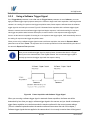
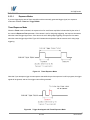
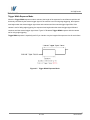
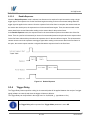
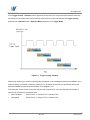
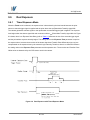
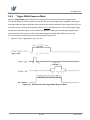
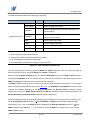
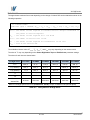
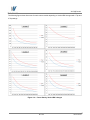
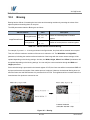
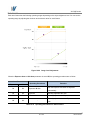
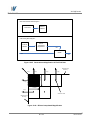
VH GigE series 9.7 Acquisition Timing Chart Figure 9.11 shows a timing chart for frame acquisition and transmission. The chart assumes that exposure is triggered by an externally generated exposure start trigger signal, that the Trigger Activation parameter is set to Rising Edge and that the Exposure Mode parameter is set to Timed. As shown in the figure below, there is a slight delay between the rise of the exposure start trigger signal and the start of exposure. After the exposure time for a frame acquisition is complete, the camera begins reading out the acquired frame data from the imaging sensor into a frame buffer in the camera. When a sufficient amount of frame data has accumulated in the frame buffer, the camera will begin transmitting the data to your computer. This buffering technique avoids the need to exactly synchronize the clock used for sensor readout with the data transmission. The camera will begin transmitting data when it has determined that it can safely do so without over-running or under-running the buffer. Exposure Start Delay: the amount of time (including trigger jitter and latency) between the point where the trigger signal rises and the point where exposure actually begins Frame Readout time: the amount of time it takes to read out the frame data from the imaging sensor into the frame buffer Frame Transmission time: the amount of time it takes to transmit an acquired frame data from the frame buffer in the camera to your computer Transmission Start Delay: the amount of time between the point where the camera begins reading out the acquired frame data from the sensor and the point where it begins transmitting the acquired frame data from the buffer to your computer Figure 9.11 Timing Chart (not drawn to scale) 51 of 105 RA14-131-018