1
Introduction
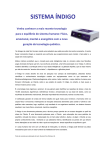
The Ajna Light was developed in 2014 to help people explore their intimate connection with the wisdom
of the universe.
In the early 19th century, a Czech anatomist Jan Purkyně was the first to document a hypnogogic effect,
during which various pattern appear at different rates of flicker. This hypnogogic effect occurs when we
transition between being awake and asleep, and is a form of trance or hypnosis. In the trance state, our
mental defenses are lowered, and we are open to a greater awareness. More recently, in the 1910s,
there was interest in this effect for generating a meditative effect, as each of the four brainwave patterns
(alpha - alert, beta - relaxed, delta - meditative and theta - sleep) are stimulated by specific flicker
frequencies.
The flicker effect has been studied since the 1960s using EEG. Similar to the use of binaural beats in
music for hypnotherapy, the use of a constant flicker rate in lights will induce a trance state and
entrainment of brainwaves. The Ajna Light uses this effect, but has other unique design characteristics
which take the process much further than previous technology.
The Ajna Light uses the latest high power LEDs to allow the hypnogogic trance state to be induced easily
and rapidly, and as soon as the Ajna Light stops playing the light pattern sequence, the receiver can
quickly come back to the normal alpha or beta brainwave condition without the side-effects of Ayahuasca
or LSD. The Ajna Light will take the user on a shamanic trance journey to connect to the root of their
being, stimulating the pineal gland to open up psychic vision in a harmonious natural and powerful way,
in balance with their own physiology
The pineal gland is a vestigial third eye which is located at the exact center of the brain. It has all the
characteristics of the two optical eyes we use for everyday vision. The pineal gland has the remnants of
the cornea and retina, and has the same light sensitive cells as the eyes. In the 1970s Fritz-Albert Popp,
whilst working at the University of Marburg in Germany showed that the spectral distribution of the
emission was from 200 to 800nm, the visible and ultraviolet wavelengths. He showed that they were
generated and detected by the vibration of DNA in the cell's nucleus, at 4GHz. It is thought that these
bio photons form a light based communication between all the cells in the body, including bacteria in the
gut (which make up 90% of the 100 trillion cells in the body).
-3-
Back to index