1
6 Discussion
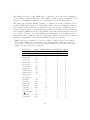
A GRLIB template design has been developed for the Cyclone V SoC FPGA implemented on the Terasic SoCKit board running at 70 MHz. It includes several GRLIB
IP-cores, as well as an AHB-to-AXI bridge and a newly developed AXI-to-AHB bridge,
connecting the FPGA fabric to the Altera HPS present on the chip.
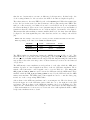
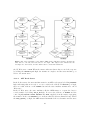
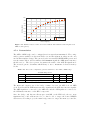
The developed AXI-to-AHB bridge has a theoretical average transfer efficiency of between 3.6 and 13.5 bits per clock cycle for 32-bit transfers. The efficiency is dependent
on the transfer burst length where the maximum burst length of 16 is the most efficient.
The efficiency is further reduced if the AHB bus is busy at the time of transfer.
The template design demonstrates how the GRLIB IP-cores can be connected to the
Altera HPS. With this knowledge, GRLIB users can reduce their power consumption
and their board sizes by switching to SoC FPGAs; compared to using the current setup
consisting of separate microprocessor and FPGA chips.
It is important to note that it is not mandatory to include the LEON3 processor in the
design. The LEON3 processor can be deselected during the configuration of the design
if it is not needed. Not including the LEON3 processor reduces the total area usage of
the design by around 45 %.
6.1 Possible Uses
There are several possible uses for the template design and the bridges developed during
this project. The main use for the template design is to demonstrate that the GRLIB
IP-cores such as the SpaceWire controller can be used and interfaced to the Altera HPS.
One major benefit with the GRLIB IP-cores is that they are portable between FPGA
vendors. The portability means that the bridges can be implemented on similar SoC
FPGAs, which implement a hard processor to FPGA AXI interface, such as the Xilinx
Zynq-7000 or the Microsemi SmartFusion2 [19, 20]. No such porting effort has been
made during this project.
The AXI bus uses a lot of area due to its crossbar structure. If area is a limiting factor, it
could be possible to implement an AHB subsystem for non-critical peripherals to reduce
the total area utilization. This AHB subsystem could then be connected to the main
AXI bus using the AXI-to-AHB bridge.
6.2 Further Development
Even though the design is functional, it can still be improved. One change which could
be implemented would be to add control registers to the bridges, which would allow for
38