1
5/22/99
7. Observing Procedures and Check Lists
49
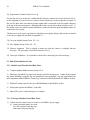
7.9 Final Telescope Focusing
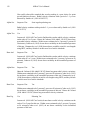
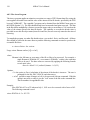
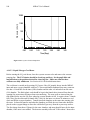
Step 1. Focusing in the infrared. Set the camera as in Section 7.8.
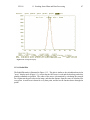
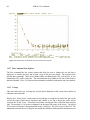
Optimize focus for best appearance and fit FWHM
Step 2. TV focusing. At the IRTF, the relay optics mirror should be in the low mag position. The
relay lens should be approximately in the center of its range (use a 1/4 inch allen wrench to loosen
the large screw under the relay optics assembly). Slide the TV on the mounting shelf to obtain best
focus.
At the S.O. 2.3-m, the TV should be mounted with no spacers. Put the relay optics mirror in the high
mag position. Then adjust the position of the relay lens loosening the large screw under the optics
assembly to provide the best image.
7.10 Autoguiding at IRTF
7.11 Autoguiding at UKIRT
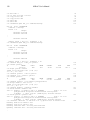
7.12 Observing Times
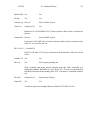
Setup, First Clear Night
.25 hr
Adjust guide TV pupil position and focus. This can be done in daylight with the dome
open or at night with the dome lights on.
.25 hr Adjust dichroic mirror. This can be done either in daylight or at night with the dome
open or closed.
.25 hr Initial visible bright star acquisition and focus. This must be done in twilight or
darkness. This is a major task only with Steward Observatory telescopes.
.5 hr
Set chopper throw with visible star. This requires darkness.
.25 hr IR focus. Adjust TV relay optics focus at camera if necessary. Locate IR center on
TV screen.
.15 Set nod beam.
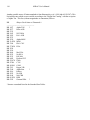
Setup, Each Night
.25 hr
Recheck IR focus.
Observation Sequence
.15 hr
Record pictures of a calibration star at wavelength of next source observation.
Typically 12 5-second on-source integrations in chop-nod mode with a sequence of 12