1
Bind Rules
Using the userattr Keyword With Inheritance
When you use the userattr keyword to associate the entry used to bind with the
target entry, the ACI applies only to the target specified and not to the entries
below it. In some circumstances, you might want to extend the application of the
ACI several levels below the targeted entry. This is possible by using the parent
keyword, and specifying the number of levels below the target that should inherit
the ACI.
When you use the userattr keyword in association with the parent keyword, the
syntax is as follows:
userattr = "parent[inheritance_level].attribute#bindType"
where :
•
inheritance_level is a comma separated list that indicates how many levels
below the target will inherit the ACI. You can include five levels [0,1,2,3,4]
below the targeted entry; zero (0) indicates the targeted entry.
•
attribute is the attribute targeted by the userattr or groupattr keyword.
•
bindType can be either USERDN or GROUPDN. The LDAPURL and ROLEDN bind types
are not supported with inheritance.
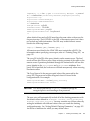
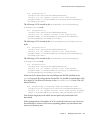
For example,
userattr = "parent[0,1].manager#USERDN"
This bind rule is evaluated to be true if the bindDN matches the manager attribute
of the targeted entry. The permissions granted when the bind rule is evaluated to
be true apply to the target entry and to all entries immediately below it.
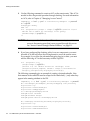
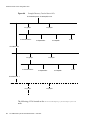
Example With userattr Inheritance
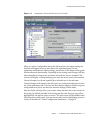
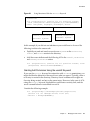
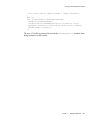
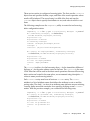
The example in the following figure indicates that user bjensen is allowed to read
and search the cn=Profiles entry as well as the first level of child entries which
includes cn=mail and cn=news.
204
Sun ONE Directory Server Administration Guide • June 2003