1
Safety Recommendations
For your safety and the safety of others, read and understand
the safety recommendations before operating any percussion tool.
Always wear protective equipment and clothing.
!
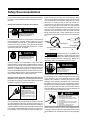
WARNING
Impact resistant eye protection
must be worn while operating
or working near this tool.
throttle moves freely and returns to closed position). Being
careful not to endanger adjacent personnel, clear the air hose
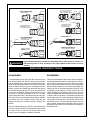
of accumulated dust and moisture. Attachment of a quickdisconnect air coupling directly to the inlet threads of a
percussion tool can cause wear and failure of the coupling.
Should the coupling fail, severe injury can result from the
hose end violently whipping about. If a quick-disconnect air
coupling is used, separate the coupling from the tool with a
whip hose (1.5 feet minimum). Only use a whip hose with
fittings of hardened steel or other material which is at least
comparably resistant to shock. Do not use hose to lift or lower
tool.
For additional information on eye protection, refer to Federal
OSHA Regulations, 29 CFR, Section 1910.133, Eye and
Face Protection, and ANSI Z87.1, Occupational and Educational Eye and Face Protection. This standard is available
from the American National Standards Institute, Inc., 11 West
42nd Street, New York, NY 10036.
!
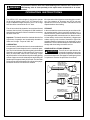
CAUTION
Personal hearing protection is
recommended when operating
or working near this tool.
Hearing protection is recommended in high noise areas
(above 85 dBA). Close proximity of additional tools, reflective
surfaces, process noises, and resonant structures can substantially contribute to the sound level experienced by the
operator. For additional information on hearing protection,
refer to Federal OSHA Regulations, 29 CFR, Section 1910.95,
Occupational Noise Exposure, and American National Standards Institute, ANSI S12.6, Hearing Protectors.
Gloves and other protective clothing should be worn as
required. Properly fitted gloves cushion vibration and protect
the fingers from pinching, scuffing and scraping and must be
used when guiding the chisel on a workpiece.
!
WARNING
Compressed air hazard.
Compressed air can cause loss
of eyesight, bleeding or injection
of foreign material into the body
or blood.
Never use compressed air to clean
off clothing or direct it at any person.
Cleco percussion tools are designed to operate on 90 psig
(6.2 bar) maximum air pressure. Excessive air pressure can
damage the plunger and increases sound levels. Installation
of a filter-regulator-lubricator in the air supply line ahead of the
tool is highly recommended. Before the tool is connected to
the air supply, check the throttle for proper operation (i.e.,
2
Whip Hose
Coupling Nipple
Coupling Nipple
Quick Disconnect Coupling
Do not use!
Quick Disconnect Coupling
OK
Cracked chisels or implements are
hazardous. Visually inspect the chisel
or implement for cracks before use. Make a practice of having
all chisels magnifluxed before resharpening. Destroy and
discard any chisel or implement that shows a crack.
!
WARNING
!
WARNING
Explosive Hazard.
Use only nonsparking chisels or
implements in explosive or
flammable environments.
Correct selection of the chisel or other implement is important. Dull edges on the chisel or moil point cause the energy
of the percussion blow to be absorbed by the tool itself,
instead of the workpiece, increasing the chance of chisel
breakage. When operating percussion tools in explosive or
flammable environments, use only non-sparking chisels or
implements such as those made from beryllium copper. Also,
do not use cupped rivet sets with Cleco percussion tools to
drive nails. Blows not centered on the nail can cause the nail
to ricochet off the work and strike the user.
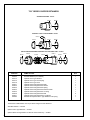
!
WARNING
Impact Hazard. Ejected chisels can cause
serious injury or even death.
Disconnect air before changing chisels.
Do not operate unless chisel is in contact
with workpiece.
Do not point tool in direction of any person.
Use safety retainers on tool and retainer
type chisels.
Erect barriers to protect persons in
surrounding or lower work areas.
Before removing a tool from service, after completing a job,
or changing chisels or other bits, make sure the air line is shut
off and drained of air. This will prevent the tool from operating
if