1
Honda Code Breaker
Coolant Sensor (TW)
Code: 6 P0117 Low Input,
P0118 High Input
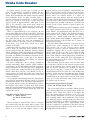
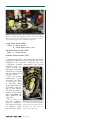
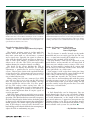
Figure 5: The permanent magnet CYL and TDC sensors inside
the lower half of the distributor are electrically identical and
should both produce the same resistance reading.
This occurs when when the roll pin that secures the
CYL/TDC reluctor to the distributor shaft rusts away.
The reluctor may not spin with the distributor shaft;
but the pickup coil for the igniter in the top of the
distributor still functions, producing its signal. The
sensors test fine with an ohmmeter, but produce no
AC signal because there is no reluctor movement.
Turn the key on, then hold a heavy duty trigger
type soldering gun next to the base of the distributor.
If the magnetic pulse of the soldering gun causes the
injectors work but they do not work when you crank
the engine, replace the distributor as a unit.
Later models use two or three sensors integral
with the distributor. Again, if one sensor reads 400
ohms, they should all read 400 ohms. In most cases
the sensor (if separate, such as the CYL sensor on
Preludes) or distributor needs replacing if these
codes are set. Refer to the article on Honda ignition
systems in the November 1998 Import Service for
more information on this.
Code 9 very often appears after replacing the timing
belt on 1988-1989 Prelude models (and also the 198889 Acura Integra). There are two sensors in the distributor: CRK and TDC; and one CYL sensor driven by
the exhaust camshaft. The ECU knows when these signals should occur in relation to each other. The CRK
and TDC sensors are both in the distributor, so they are
unlikely to get out of time. But if the cam belt is incorrectly installed or jumps a tooth, the ECU will recognize the CYL sensor is no longer in sync with the CRK
and TDC sensors. If the code was not there before timing belt replacement, the likely cause is a cam belt that
is off by one or more teeth between the intake and
exhaust cams. Recheck the timing belt installation.
If a car comes in with a broken timing belt, always
remove the distributor to see whether it spins by
hand. If the top bearing has frozen, it is very capable of snapping the cam belt.
30
The coolant sensor is under the distributor on
most models. On 1985-89 Accords and 1985-87
Preludes, it's on top of the thermostat housing,
and it's the sensor closest to the valve cover. It
unfortunately has the same size and shape connector (read: “easily confused”) as the coolant fan
timer temperature sensor right next to it. The sensors, however are not interchangeable. The TW
sensor is a negative temperature coefficient sensor, while the fan timer sensor is an open/closed
switch. Switching the sensor connectors will set
Code 6.
Coolant sensors are very hard to catch in the act of
failing. Common complaints are a hard hot restart or
the engine will not restart at all. The coolant sensor
has a 5 volt reference from a R/W or Y/G signal wire
depending on year and model, and a Br/B or G/W
ground wire. When the engine is fully warmed up
there should be about 0.5 volts on the signal wire
and about 3.0-4.0 on a very cold engine. It should
never read 0 or 5 volts when plugged in; these
extremes will set a code.
In the case of a hot restart complaint, warm the
engine to operating temperature, monitoring the TW
sensor voltage. Shut off the engine, then restart the
engine while watching your voltmeter as you crank
the engine after waiting five minutes. It should still
be around 0.5-0.6 volts. If it shot up to 3.8 volts (or
so) and the engine floods (long injector pulse),
replace the coolant sensor. In most cases, Code 6
requires replacement of the TW sensor.
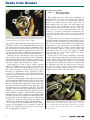
Figure 6: The coolant (TW) sensor is right next to the cooling fan
sensor on this early PGM-FI Accord. Their harness connectors
are interchangeable, which can lead to problems. The green harness connector (closest to the valve cover) is attached to the
coolant sensor.
March 1999