1
V.
AUTOMOTIVE VACUUM SYSTEMS
A.
HOW AN ENGINE GENERATES VACUUM
Gasoline engines create vacuum as a byproduct of normal operating.
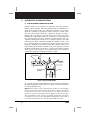
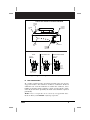
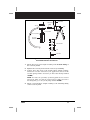
During engine operation, when the pistons inside the cylinders move
down on the intake stroke, the combustion chamber area (volume)
inside the cylinders is greatly increased (see Figure 1). This action
decreases the pressure inside the combustion chamber creating a
partial void or vacuum (an area with fewer air molecules per square
inch than the surrounding outside air.) A mixture of air and fuel from
the carburetor/fuel injectors and intake manifold rushes into the
cylinders through the intake valve to fill this partial void. The
continuous movement of the pistons within the cylinders creates a need
for a constant supply of air and fuel to fill the partial void created
inside the cylinders on the intake strokes. The continuous flow of air
and fuel through the intake manifold creates a low pressure (vacuum)
inside the manifold. The low pressure (vacuum) in the intake manifold
exists as long as the engine is in operation. This is how vacuum is
generated in an internal combustion (gasoline) engine.
FUEL INJECTOR
VACUUM PORT
EXHAUST
INTAKE MANIFOLD
COMBUSTION
CHAMBER
PISTON
Figure 1. Piston Intake Stroke
In a gasoline-operated engine/vehicle the vacuum that is generated in
the intake manifold is used to operate a number of vacuum-actuated or
vacuum-controlled devices.
NOTE: Diesel engines, because of their design, produce less vacuum than
gasoline engines. The vacuum produced by a diesel engine is insufficient
to operate vacuum devices. If vacuum devices are added to a diesel
system, an electrical or mechanical vacuum pump is used to operate these
devices. Regardless of how vacuum is generated, the principle of operation
of vacuum devices is the same. The hand vacuum pump can be used to
test vacuum operated devices on both gasoline and Diesel systems.
4
3660