1
VI. VACUUM MOTOR/ACTUATOR OPERATION AND TESTING
A.
VACUUM MOTOR/ACTUATOR DESCRIPTION AND OPERATION
A vacuum motor/actuator is a device that uses vacuum to perform a
mechanical function. An automobile engine uses vacuum motors/
actuators to perform many functions. Typical functions performed by
vacuum motors/actuators are:
•
Opening and closing the heater and air conditioning duct doors
•
Raising the EGR valve pintle off it’s seat to recirculate exhaust gas
back into the system
•
Activating the vacuum advance unit to advance distributor spark
advance timing
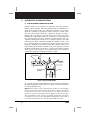
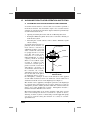
A vacuum motor/actuator is a
partially sealed container (on
VACUUM PORT
most vehicles container is
cylindrical in shape). One side
SPRING
of the container is sealed, and
is equipped with a vacuum
port. The other side of the
container is covered by a
DIAPHRAM
rubber diaphragm, or a piston
a spring, with an attached
shaft or a lever. When engine
vacuum is applied to the
container's vacuum port, a
partial vacuum (lower than
LEVER
atmospheric pressure) is
created in the sealed section of
the container. As a result,
atmospheric pressure exerts a
Figure 3. Typical Vacuum
force on the side of the piston
Motor/Actuator
or diaphragm that is open to
the atmosphere, causing it to move in the direction of the applied
vacuum. This mechanical action is is utilized to activate whatever is
attached to the shaft or lever on the diaphragm (see Figure 3).
The amount of force applied by atmospheric pressure to the diaphragm
is calculated by multiplying the pressure difference between
atmospheric pressure and the pressure within the container times the
surface area of the diaphragm or piston: Atmospheric Pressure Container Pressure X Surface area = Force
The hand vacuum pump can be used to perform a wide range of tests
such as measuring the amount of vacuum in a system or device,
detecting a leak in a system or a fluctuating vacuum supply. The pump
can also be used for testing the function of a variety of vacuumoperated devices.
3660
7