1
D.
APPLYING VACUUM
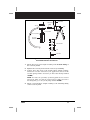
1.
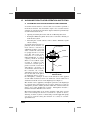
Connect the vacuum pump's vacuum fitting to the component or
system to be tested.
2.
Squeeze and release the pump handle, and read the amount of
vacuum indicated on the vacuum gauge.
3.
Continue squeezing and releasing the pump handle until the
desired amount of vacuum is shown on the vacuum gauge.
E.
TROUBLESHOOTING VACUUM SYSTEMS
NOTE: This manual describes common general test procedures used by
service personnel and technicians. Use the test procedures described in
this manual only as a guide. Always consult the vehicle's service
manual for more detailed testing instructions and specifications before
any diagnostic test or procedure is performed.
The intake manifold is a sealed system, and the air that enters the
system must be metered to maintain a balanced air/fuel mixture. On a
gasoline engine, this metering is controlled by the throttle plates. A
leak in any part of the vacuum system, including the intake manifold,
introduces unmetered air into the intake manifold, resulting in a
leaner air/fuel mixture (too much air/not enough fuel). A lean air/fuel
mixture can result in higher combustion temperature and engine
misfires. A vacuum leak will also reduce the total amount of vacuum
available to all vacuum-operated devices, and may severely effect their
operation.
The following are some possible symptoms/results of a vacuum leak:
•
Rough or uneven idle
•
Stalling
•
Pinging or knocking
•
Burned spark plugs
•
Burned exhaust valves
•
Faulty operation of vacuum-operated devices
F.
TESTING AND CHECKING VACUUM DEVICES AND COMPONENTS
Most problems in automobile vacuum systems result from disconnected
or leaking hoses, bad connectors, defective motor diaphragms or valves.
Pinched vacuum hoses or clogged valves may also restrict vacuum flow.
The first step in checking a vacuum system is to visually check all
vacuum hoses, lines and connectors for cuts, cracks and splits. Check for
collapsed or pinched vacuum hoses. Vacuum hoses have a tendency to
deteriorate because of harsh conditions within the engine compartment.
6
3660