1
Installation Issues / 29
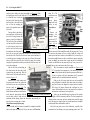
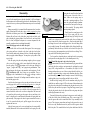
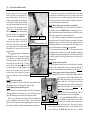
by the second in-line filter element, the water pump is added to boost
water flow to the watermaker.
Installing the silt reduction kit, especially the centrifugal pump, is not
as simple an undertaking as it might seem. Before rushing out to buy
one, consider whether you really need to go to the trouble and expense.
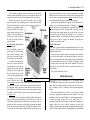
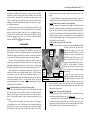
When is a 5-micron Prefilter Needed? The standard 30-micron prefilter does an adequate job of filtering the intake water under normal circumstances. A filter element in good condition will be removing
everything larger than 30-microns from the intake stream. This assures
that anything passing through the prefilter will be smaller than 30microns. This is a sufficiently small size to allow the particles to be
flushed on through the pump interior and membrane passages with the
reject brine flow. There is really no need for finer filtering under such
circumstances.
A problem arises when the intake water contains silt or other hard,
abrasive substances. Potential problem areas include estuaries, tidal
plains, coral reefs, and river mouths, to name just a few. If the watermaker will be used to process water with significant amounts of such
contaminants, the owner should seriously consider installing the optional
5-micron prefilter. It is important to realize, however, that the finer prefilter merely reduces the size of the particulate contaminants that are
passed through the watermaker—it does not eliminate them completely.
The problem with such contaminants, of course, is the greatly increased wear and tear on the watermaker’s seals and moving parts. More,
and larger, particles will cause more rapid and significant damage to the
pump. The fewer, smaller particles that are passed when the 5-micron
prefilter is added will continue to cause wear, but at a substantially reduced rate. Under such conditions, there is little question that the optional 5-micron prefilter will extend the life of the watermaker. On the
other hand, if the watermaker is used to process silty water for extended
periods of time, the owner should plan on replacing the seals at more
frequent intervals. Also, the watermaker should not be expected to “live”
as long as one that has been used only in “clean, open ocean seawater.”
When is a Booster Pump Needed? I seriously question the common
assumption that adding a second prefilter in the seawater intake line necessarily means adding an auxiliary booster pump, especially with the
smaller watermaker models like the
PowerSurvivor 35 and 40E.
The volume of water flow through these watermakers is so low (approximately 15-20 gallons per hour, or one quart per minute) that, in
most cases, cavitation should not rear its ugly head even with both filters
in line. Under optimum circumstances, the watermaker can draw enough
water to work without the need for a booster pump. I have a lot of faith in
those pumps.
Nevertheless, my penchant for imagining worse case scenarios for
everything installed on a boat leads me in a different direction. Realistically, I suspect that adding a second prefilter may bring many installation
configurations uncomfortably close to the point of cavitation. If short
runs of over-sized intake hoses are used, if the watermaker is at (or not
far above) the waterline, and if the filter elements are kept very clean, I
have little doubt that the
PowerSurvivor 35 and 40E would operate
well with both filters in line and no booster pump. Given another system
with long runs of standard hose, a watermaker mounted high above the
waterline, and a moderate accumulation of detriment in the prefilters, I
would not be surprised if problems developed.
With this said, it would be my recommendation that one should first
seriously consider whether a 5-micron prefilter is really needed. If it is
determined that the extra filtration is needed, a booster pump should also
be installed at the same time.
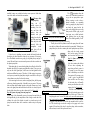
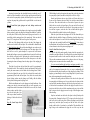
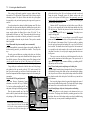
Installing a Booster Pump: The auxiliary booster water pump provided
by
in its “Silt Reduction Kit” is a centrifugal water pump. A centrifugal pump has certain advantages. It can be dead-headed (have its
output blocked) without damage and it adapts well to the variable flow
rate requirements of a watermaker. On the other hand, the installer
should be aware of the potential problems with improperly installed centrifugal pumps.
In stark contrast to the capabilities of the positive displacement pump
in the watermaker, a centrifugal pump is not self-priming. If there is air
in its intake line, it may fail to pump. It also depends on the fluid it is
pumping for lubrication and must not be run dry for very long. The
March Model 893-04 pump shipped by
can tolerate no more than
thirty minutes of dry running before damage is likely.
For both of the foregoing reasons, the centrifugal pump in the “Silt
Reduction Kit” must be installed so that it meets the following conditions:
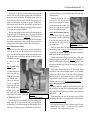
1.
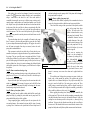
It must be installed so that it is at least one foot below the waterline of the vessel at all times. Sailboat owners need to consider both starboard and port tacks under sail
2.
The pump should be mounted with the inlet horizontal and the
outlet pointing either up, or sideways