1
50YEW Series Units - 60Hz Puron®
R e v. : 2 1 J u l y, 2 0 1 0
Electrical - Controls
Controls
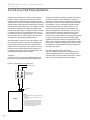
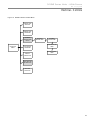
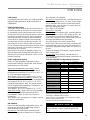
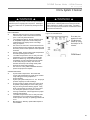
User interface: Figure 8 shows the factory installed and
wired panel-mounted user interface for customizing the
MPC programming. A large dot-matrix style 2” x 2” [5 x 5
cm] back-lit display is controlled by four arrow keys and a
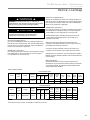
select key. The main screen, as shown in figure 9, displays
current outdoor and water temperatures, and allows the
user to change settings by selecting one of the menus
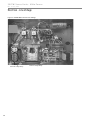
from the bottom of the screen (see figure 11 50YEW User
Interface Menu). A special installer set up mode allows the
technician to change some of the default MPC parameters.
The installer menu may only be accessed when the unit is
placed in the off mode. Holding the up and down buttons at
the same time will cause the interface to enter the installer
setup mode. See figure 12 (interface installer menu) The
user interface includes a time schedule for DHW generation,
Fahrenheit/Celsius selection, vacation mode for DHW, and
other user preference options.
50YEW Series Control Features
The advantage of a programmable controller, as outlined
above, is the ability to integrate complex decision-making
tasks with the standard heat pump (CXM) controls and
communicate with a user interface. Below is a list of
standard features that are included in the 50YEW series
controls.
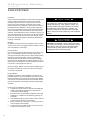
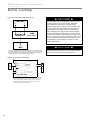
CAUTION!
CAUTION: Maximum leaving water temperature of the
YEW series equipment is 145°F [63°C]. For domestic
hot water tank temperatures or heating buffer tank
temperatures above 130°F [54°C], pump and pipe sizing is
critical to insure that the flow rate through the heat pump
is sufficient to maintain leaving water temperatures below
the maximum temperature, and to provide water flow
rates within the ranges shown in the performance section
of this manual.
Figure 8: 50YEW User Interface
Arrow Keys
Select Key
Outdoor temperature reset: The heat pump capacity and
water temperature delivery to the heating system must
be designed for local weather conditions, usually at the
99.6% outdoor temperature. Therefore, 99.6% of the
heating season, the heating load is less than it is at design
conditions. As the outdoor temperature decreases, the
heat loss of the structure increases, which requires more
capacity from the heating system. If the water temperature
is reduced as the outdoor air temperature increases (and
vise-versa), the heat pump operates at higher COP most of
the year. The MPC has a built in algorithm that adjusts the
buffer tank temperature based upon outdoor air temperature
to maximize efficiency and comfort. Temperature settings
may be adjusted at the user interface if factory defaults are
not sufficient.
Figure 9: 50YEW User Interface Main Screen
The base setpoint for energizing the compressor in the
heating mode is determined by subtracting one-half the
heating differential value (HTD) from the buffer tank heating
temperature setpoint. The HTD is the differential used for
controlling setpoint. For example, if the buffer tank setpoint
is 100°F [38°C], and the HTD is 6°F [3°C], the compressor
will be energized at 97°F [36°C] and will be turned off
at 103°F [39°C]. The HTD is the difference between the
compressor “call” (97°F [36°C]) and the “satisfied” (103°F
[39°C]) temperature. The buffer tank temperature may then
be reduced by the outdoor temperature reset function,
depending on the current outdoor air temperature (OAT)
value. The valid range for the buffer tank heating setpoint is
70-140°F [21-60°C], with a default value of 100°F [38°C]. The
valid range for the heating differential value (HTD) is 4-20°F
[2-11°C], adjustable in 2°F [1°C] increments, with a default
value of 6°F [3°C].
17