1
18
INSTALLATION INSTRUCTIONS
As an example, let's use a hypothetical `93 350 Chevrolet LT1 engine build-up...standard gap is .050" for an unmodified LT1. We'll add 150hp Nitrous, so we must lower the gap about .012" to .038". We then decide to add
the Spark1 and, using our guidelines as outlined above, we can now open the gap up .002"-.005" to about
.040"- .043".....following this basic guideline should get you very close. Further experimentation may be
necessary, but by starting with a larger gap than thought necessary to reduce the risk of detonation, you should
be safe. Other issues that may require a smaller gap are if the plug boot does not fit snug over the plug. If you
pull the plugs and see black streaks that will not wipe of where the plug boot sits then you have flashover. This
will also show up as misfires under high boost conditions. If you have this problem in addition to lowing the plug
gap you can use a silicon dielectric grease in the boot.
4. What heat range should I use for my spark plugs?
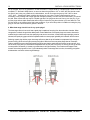
The heat range refers to how much heat a spark plug is capable of removing from the combustion chamber. When
compression is raised, along with the added power comes added heat. Since spark plugs must remove heat and a
modified engine makes more heat, the spark plug must remove more heat. A colder heat range spark plug must be
selected, and spark plug gaps should be adjusted smaller to ensure proper ignitability in this denser air/fuel mixture.
Selecting a spark plug with the proper heat range will ensure that the tip will maintain a temperature high enough to
prevent fouling, yet be cool enough to prevent pre-ignition. While there are many other things that can cause preignition, selecting the proper heat range spark plug will ensure that the spark plug itself is not a hot-spot source. As a
rule of thumb, every time you increase the compression ratio by one point, or for every 75-100 hp you add, go at least
one step colder. Remember, it is better to go colder than is thought necessary. The worst that can happen in this
scenario is that the plugs will foul out. If you inadvertently select a heat range that is too hot, the resulting pre-ignition
and detonation can cause serious engine damage.
ADVANCED ENGINE MANAGEMENT INC. 2205 W. 126th STREET, UNIT A, HAWTHORNE, CA 90250