1
CH1YSLEH SE1VICE MANUAL
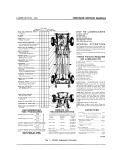
14—FRONT WHEEL SUSPENSION
Fig. 17—Camber Angle Axis Inclination
54x249
NOTE: Front suspension parts are heat treated,
if they are damaged or bent, they should be
replaced. Under no circumstances should these
parts be heated in order to straighten.
Before checking front wheel alignment, the
following inspections should be made to determine the necessity for repair or replacement
of parts.
Inflate all tires to recommended pressure.
Check adjustment of front wheel bearings. (Refer to "Servicing the Steering Knuckles" Paragraph 8, of this Section.) Check tire wear as
outlined in "Wheels and Tires" Section X I I I .
Check upper and lower ball joints, tie rod
ends and idler arm for excessive looseness.
Check for bent frame and rear spring " U "
bolts for tightness or shifted axle housing.
S E C O N D A R Y SCREW
Fig. 19—Checking Camber (Tool C-3409)
Grasp the front and rear bumper at center
and jounce car up and down several times. This
will place the torsion bar springs and shock
absorbers in their "normal" unloaded position.
The car must remain in the "normal unloaded
position" while checking camber, caster and
steering axis inclination.
Negative Caster is amount in degrees that the
axis of the ball joint leans from vertical toward
front of car (Fig. 16).
Positive Caster is the amount of degrees that
ball joints lean toward rear of car.
Camber is amount that front wheels lean outward or inward from the vertical, when viewed
from front of car (Fig. 17). With positive cam-
PRIMARY S C R E W
/
/
'^ x.25C
Fig. 18—Checking Caster—Right Wheel
:
Fig. 20—Removing Shims to Adjust Camber or Caster