1
DON 1500 SELF-PROPELLED COMBINE
MANUFACTURER:
Tractoroexport
Rostselmash
Rostov-On-Don, U.S.S.R.
RETAIL PRICE:
$109,890.00 (March, 1988, f.o.b. Humboldt, Sask., with a 11.5 ft
(3.5 m) pickup on a 13 ft (4.0 m) pickup header, feeder reverser,
loss monitor, heater, a/c, and straw chopper).
DISTRIBUTOR:
Belarus Equipment of Canada Ltd.
225 - 6th Avenue East,
P.O. Box 3665
Regina, Saskatchewan
S4P 3N8
Phone: (306) 757-5617
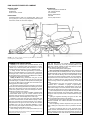
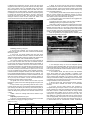
FIGURE 1. Don 1500: (1) Cylinder, (2) Concave, (3) Rear Beater, (4) Straw Walkers,
(5) Cleaning Shoe, (6) Tailings Return.
SUMMARY AND CONCLUSIONS
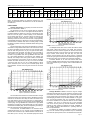
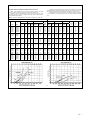
Capacity: In the capacity tests, the MOG feedrate* at 3%
total grain loss in Harrington barley was 500 lb/min (13.6 t/h).
In wheat crops, combine capacity was 625 lb/min (17.1 t/h) in
Columbus wheat and 800 lb/min (21.8 t/h) in Katepwa wheat.
In barley, the Don 1500 had approximately 1.35 times the
capacity of the PAMI Reference II combine when compared at
3% total grain loss. In wheat, at 3% total loss, the capacity of the
Don 1500 was about 1.15 times that of the Reference II combine
in Columbus and 1.25 times in Katepwa.
Quality of Work: Pickup performance was good. In most
crops, it picked cleanly and although it fed the crop quite high
on the table auger, no problems were experienced. Feeding was
very good. The table auger, front feeder drum and feeder chain
were aggressive and seldom plugged.
The stone trap provided good stone protection. Some larger
stones and roots were stopped between the table auger and front
feeding drum. Most stones and roots were trapped in the pocket
in front of the cylinder. Stones, which went through the combine,
caused minor damage to the concave.
Threshing was good. To obtain acceptable unthreshed loss
in hard-to-thresh wheat crops, the concave clearance had to
be reduced from the factory’s suggested settings, and concave
blanks were needed. Grain damage was low in all crops.
Separation of grain from straw was good. Straw walker loss
was low for canola and flax, but either limited capacity or was a
major part of the total loss in wheat and barley crops. Cleaning
shoe performance was good. The shoe could be set to achieve
acceptable loss in all crops at reasonable feedrates. In some
crops, the clean grain sample contained foreign material, which
the shoe should have been able to remove.
Grain handling was good. The 185 Imperial bushel (6.7 m³)
*MOG feedrate (Material-Other-than-Grain Feedrate) is the mass of straw and chaff
passing through the combine per unit of time.
Page
2
grain tank filled evenly. The unloader, although hydraulically
positioned, unloaded only in the fully extended position. A full
grain tank of wheat unloaded in about 150 seconds. The tank
vibrator aided in unloading damp grain.
No straw spreading device was supplied.
Ease of Operation and Adjustment: Operator comfort was
fair. The cab was quiet and relatively dust free. The air conditioner
provided adequate cooling. A heater was supplied after the harvest
season. The seat and steering column were adjustable, but did
not provide a convenient operating position for some operators.
The operator had a clear view forward, to the left, and along the
left side, but visibility along the right side was restricted. View
of the incoming windrow was partially blocked by the steering
wheel.
Instrumentation was good. All important functions were
monitored with a combination of gauges, a digital display,
warning lights and audio alarm. The digital display could not be
read in direct sunlight. The controls were fair. Some controls were
inconveniently placed and some did not respond adequately.
Loss monitor performance was good. Both the shoe and straw
walker loss were monitored. The lowest monitor sensitivity was
too high for most crops and monitor overload activated annoying
warnings.
Lighting for nighttime harvesting was good. The Don 1500
was not equipped with amber four-way flashers.
Handling was good. The steering was slower than most North
American combines. The combine was stable in the field and
when transporting.
Ease of adjusting combine components was good, and the
ease of setting the components to suit crop conditions was also
good.
The ease of unplugging was very good. The feeder had a
unique reverser, which worked well. The cylinder did not plug.
Ease of cleaning was good. The grain tank was easy to clean, but
the body collected a lot of chaff. Access doors were provided for