1
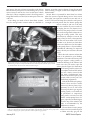
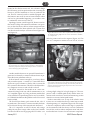
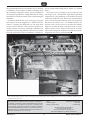
gine prior to the next cold start. You might not be able to hear the electric pump turn on while driving, but you will notice it turn on and run for a few seconds upon vehicle shut down. This is completely normal – the storage tank is being lled with hot coolant one last time prior to the next cold start. A few things you need to know about these systems. First, the storage tank’s location makes it vulnerable to damage, even after a minor collision. So keep that in mind when working on engine coolant leak complaints after a fender bender. Second, there is a potential for burns from hot coolant when the system is opened during service. Even several hours after you expect the coolant to be nice and cool, it is NOT. This tank will keep the coolant hot well past an overnight cold soak period. Plus, the electric pump that moves coolant in and out of the tank may run with the IP power switch off, so unplug the two wire electrical connector for this pump (which is located next to the storage tank) whenever servicing the cooling system. That said, the ECM may attempt to activate the pump while you have it disconnected, and that will cause either a DTC P1151 or P2601 to set. Be sure you clear those codes later. (While we’re on the subject of this pump, there is a Toyota bulletin, T-SB-0087-08 addressing an improved pump, should your customer’s become noisy.) Third, this tank contains coolant that needs to be included in your ushing procedures. The tank is the lowest point in the gas engine’s cooling system, so Figure 3: The view you are most likely to see from under the vehicle. The yellow petcock allows for traditional draining of the radiator and tank draining. A temp sensor helps the ECM determine outlet temperature when the pump is turned block won’t do. You need to open the on, and the control valve directs the coolant towards the engine. yellow petcock (Figure 3) in the bottom of the storage tank in order to do a complete ush and ll (unless you use a factory scan tool that can send a bi-directional command to the ECM to open up the system while you use your coolant ushing equipment). With all this hardware (pumps, control valves and hot coolant reservoirs), there is plenty of opportunity for an air lock when servicing a hybrid’s gas engine’s cooling system, so an Airlift tool is paramount in importance, along with a scan tool to run the electric coolant pump. Don’t forget to open the air bleed (Figure 4) in the top of the radiator (left side) as recommended by the OEM service manual. The mechanical water pumps Figure 4: With the plastic trim cover removed from the upper radiator support, you will nd a 6 mm hex tting in an air bleed valve in the top left of the radiator. Open this while running the electric pump with a on these cars are somewhat prone scan tool, to help purge the system of air when a coolant rell is being performed. to failure once they get past the January 2011 2 MACS Service Reports