1
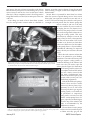
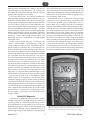
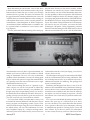
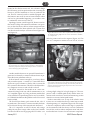
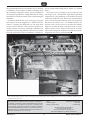
100K mile point. I happened to be visiting a shop in Jackson Mississippi on a day when a tech was replacing one. The subject of coolant brand and type came up. Here we go again with a potential can of worms! If you can’t already tell, I favor factory recommendations, especially on things that are not old hat to me. Hybrids haven’t become old hat to me yet, so we had the parts chaser run to the local Toyota dealer to get the coolant they use. Guess what we were given? Universal Brand X coolant! I really wanted what the manual said to use. To quote the Toyota TIS (Technical Information System) – “Use only ‘TOYOTA Super Long Life Coolant’ or similar high quality ethylene glycol based non-silicate, non-amine, non-nitrite, and non-borate coolant with long-life hybrid organic acid technology. Coolant with long-life hybrid organic acid technology consists of a combination of low phosphates and organic acids.” The key words would be “long life,” “non-silicate” and “HOAT” (hybrid organic acid technology). Using the wrong coolant can, at the very least, reduce that long coolant service life we expect these days, not to mention present the potential for long-term degradation of cooling system components. Heater cores, for example, have tubes so thin that high mineral tap water or high silicate antifreeze can cause leaks down the road. Since the same type of Toyota coolant is used to cool the hybrid power electronics (inverters and converters), it would be good to use exactly what Toyota says to use. After all, the jury has not yet returned on the effects of alternative coolants on these major components, hoses and seals. Considering the price for an inverter/converter (not hundreds but thousands of dollars), wouldn’t it be nice to have a couple gallons of “the right stuff” on your parts shelf, to feed the engine cooling system AND the hybrid power electronics cooling system? One more thing, while we’re on the subject of hybrid cooling systems – it’s important to note that the hoses, coolant and pumps for the gas engine cooling system are very similar looking to the cooling system components for the hybrid power electronics. Be careful not to confuse the two. The bottom portion of the Gen II Prius radiator contains a separate (and isolated) section to cool the hybrid power electronics. The petcock for draining engine coolant (also yellow) is located just above this section of the engine’s radiator. two) with a meter between chassis ground and an orange cable. This voltage is limited to extremely low current, and is there strictly for diagnostic purposes (much like the low current that’s always present to ensure an airbag is properly connected in a SIR circuit). As mentioned in Part 1 of this report, the proper high voltage power down procedure, along with leak checked Class 0/1000 volt rubber gloves (with leather covers to protect them) and a Category III/1000 volt multimeter (Figure 5) are mandatory when working on hybrids. Make sure that not only is your meter rated for hybrids, but that your leads and probes are as well. If you encounter a DTC that indicates a leaky high voltage cable or component (such as the electric A/C compressor) you may not be able to visually determine where the problem is. The leak may be a pinhole size intrusion in a high voltage cable. Unlike leaky spark plug wires that can be tested with a ne mist of water while power braking the engine, you can’t do such a stress test with a hybrid’s high voltage cables. With the system properly powered down you can, however, connect a special meter (sometimes called a mega ohm meter) between an insulated terminal and chassis ground. Hybrid HVAC Diagnostics A general note on diagnostics with any hybrid – neither the high voltage DC nor the high voltage AC systems use a chassis ground, or common/neutral circuit, as we nd in typical automotive 12-volt systems or 115/230 volt residential electrical system. All HV circuits are isolated from chassis ground, although you may measure around ½ of the total high voltage in the vehicle (201 volts divided by January 2011 Figure 5: Not only is the Fluke 1587 multimeter a Category III/1000 volt meter suitable for hybrids, it also has a insulation test feature for detecting high resistance leaks in the insulation of cables or components. 3 MACS Service Reports