1
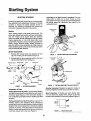
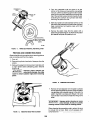
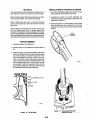
3. Clean base of boring bar before bar is set up.
Deposits under boring bar will cause it to tilt and
the cylinder will be distorted after boring.
4. Makean initial rough cut, followed byafinishcut.
Then hone cylinder bore to the specified oversize.
Deglazing Cylinder Bores
Deglaze the cylinder bores if there are no scuff marks
and no wear or out of round beyond specifications
before installing new rings. Deglazing gives a fine
finish, but does not enlarge cylinder diameter, so the
original pistons with new rings may still be used.
The reason for deglazing a cylinder is to provide
cavities to hold oil during piston ring break-in.
1. Wipe cylinder bores with a clean cloth which has
been dipped in clean, light engine oil.
Honing Cylinders (Using Precision Hones)
Refer to hone manufacturer's recommended grit size
to produce specified surface finish of 20 to 40 RMS.
Too rough of a finish will wear out the rings and too
smooth of a finish can retard piston ring seating.
2. Use a brush type deglazing tool with coated
bristle tips to produce a crosshatch pattern in the
cylinder bore.
3. Use a slow speed drill to drive the deglazing tool.
1. Position block solidly for either vertical or hori-
zontal honing. Use either a drill press or heavyduty drill which operates at approximately 250 to
450 rpm.
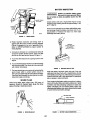
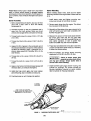
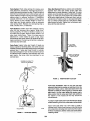
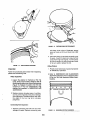
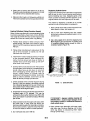
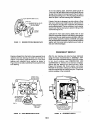
Move deglazing tool up and down in cylinder (10 to
12 complete strokes) rapidly enough to obtain a
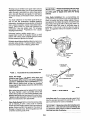
crosshatch pattern (Figure 19).
2. Follow hone manufacturer's instructions for the
use of oil or lubricant on stones. Do not use
lubricants with a dry hone.
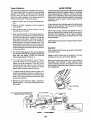
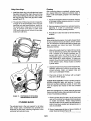
3. Insert hone in boreand adjust stones to fit snugly
to the narrowest section. When adjusted correctly, the hone should not shake or chatter in
cylinder bore, but will drag freely up and down
when hone is not running.
4 Connect drill to hone and start drill. Feel out bore
for high spots, which cause an increased drag on
stones Move hone up and down in bore with
short overlapping strokes about 40 times per
minute. Usually bottom of cylinder must be
worked out first because i t is smaller. As cylinder
takes a uniform diameter, move hone up and
down all the way through cylinder bore.
5. Check diameter of the cylindner regularly during
honing. A dial bore gauge is the easiest method
FIGURE 19. CROSS HATCHING
but a telescoping gauge can be used. Check size
at six places in bore: measure twiceat top. middle
and bottom at 90-degree angles.
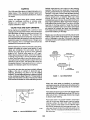
6. Crosshatch formed by the stones should form an
included angle of 23 degrees. This can be
achieved by moving the rotating hone (250to450
rpm) up and down in cylinder boreabout 40 times
per minute.
7. Clean cylinder bores thoroughly with soap, water
and clean rags. A clean white rag should not
become soiled on wall after cleaning is complete.
Do not use a solvent or gasoline since they wash
oil from the walls but leave the metal particles.
8. Dry crankcase and coat it with oil.
Improper cylinder cleaning will
result in engine damage. Do not
use gasoline, solvents, or commercial cleaners to
clean cylinder bores.
4. Clean cylinder bore thoroughly with soap, water
and clean rags. Continue cleaning until a clean
white rag shows no discoloring when wiped
through cylinder bore.
Redistribution or publication of this document,
by any means, is strictly prohibited.
,