1
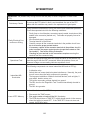
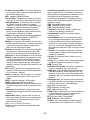
Venturi Air Valve Vacuum (VAVV): An amplified
air valve vacuum signal coming from the venturi
area of the mixer, directly exposed to airflow before the addition of vaporized gas.
Volt/Ohmmeter (VOM): A combination meter used
to measure voltage and resistance in an electrical
circuit. Available in both analog and digital types.
May also referred to as AVOM and DVOM.
Voltage: The electrical pressure that causes current to flow in a circuit. Measured in volts.
Voltage Drop: A lowering of the voltage in a circuit
when resistance or electrical load is added.
Voltmeter: A meter that uses a needle to point to a
value on a scale of numbers usually of the low
impedance type; used to measure voltage and
resistance.
VSS: Engine Speed Sensor
w.c.: Water Column. Expressed in inches, water
column is a measure of pressure.
Xylene: C6H4 (CH3)2. Any of three toxic, flammable,
and oily isomeric aromatic hydrocarbons that are
dimethyl homologues of benzene and usually obtained from petroleum or Natural Gas distillates.
ZEV: Zero Emission Engine.
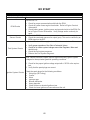
Regulator: An assembly used to reduce and control the pressure of a liquid or vapor.
Resistance: The opposition to the flow of current in
an electrical circuit. Measured in ohms.
Rest Pressure: Fuel pressure maintained within
the system after engine shutdown.
Rich Mixture: An air to fuel ratio below the stoichiometric ratio; too much fuel.
SAE: Society of Automotive Engineers.
scfh: Standard Cubic Feet per Hour.
Secondary Circuit: The high-voltage output side of
the ignition coil.
SEFI or SFI: Sequential Electronic Fuel Injection or
Sequential Fuel Injection.
Sensors: Devices that provide the control module
with engine information as needed to properly
control engine function.
Spark Line: The portion of an oscilloscope pattern
that represents the time during which the air/fuel
mixture is being burned in the combustion chamber.
Splice: An electrical term for the joining of two or
more conductors at a single point.
Stoichiometric Ratio: An ideal fuel/air ratio for
combustion in which all of the fuel and most of
the oxygen will be burned.
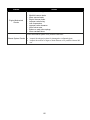
Sulfur Oxides: Chemical compounds where sulfur
is bonded to oxygen produced by the combustion
of gasoline or any other fuel that contains sulfur.
As sulfur oxides combine with water in the atmosphere to form sulfuric acid.
System Pressure: The fuel pressure maintained in
the system during normal engine operation.
Tap: An electrical term for a type of splice where
the original circuit is not interrupted.
TBI: Throttle Body Injection. Any of several injection systems that have the fuel injector(s)
mounted in a centrally located throttle body.
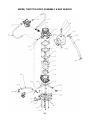
Throttle Body: Controls engine rpm by adjusting
the engine manifold vacuum to the mixer. Consists of a housing shaft, throttle liner and butterfly
valve.
TLEV: Transitional Low Emission Engine.
TMAP: Combined Air Inlet and Manifold Pressure
Sensor.
Toluene: A liquid aromatic hydrocarbon C7H8.
TPS: Throttle Position Sensor.
TSB: Technical Service Bulletin.
ULEV: Ultra Low Emission Engine.
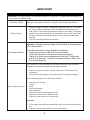
USB: Universal Serial Bus. A plug or interface supplied on most personal computers.
Vaporization: A process in which liquid changes
states into gas.
345