1
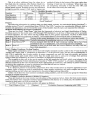
A white cloth passed down the bore should show no marks! Do not bother to polish the piston dome, as it will have no effect. For best results, put 1000 miles on the motor before using full throttle. The best pistons are (in this order): 1. KJKH replacements, which are slightly too tall for your cylinders, but will work fine with a thin (1/ 16" or so) shim of aluminum stock under the cylinders as a spacer. Be sure that the pistons are at least .020" down from the top of the cylinder at their highest travel! 2. Stock late (1955-73) pistons, or repro using late, thin (1/ 16") compression rings. 3. Stock early & military pistons using thick e/32") compression rings. Rings For best results your ring end gaps should come as close as possible to the minimum specs listed in our data table. Most ring sets will fall on the loose end of factory specs (.020" or so). If you have a loose set (all .015" or more), try to average them out - don't put both the tight compression rings in one cylinder. You may wish to use the next oversize ring set (that is, use a set of .020" oversize rings with your .010" oversize pistons, etc.). This will tighten up the end gap - more than you think! Adding .010" to the ring size will close up the gap by .031" (formula for circumference of a circle: C = I1 * D). In all cases this will require you to carefully file or grind material from the end of each ring in order to obtain the proper minimum end gap. If you don't have a ring compressor use popsicle sticks or something soft to get the rings in - not a screw-driver! Even small marks on the rings perma nently damage them. Compression All side-valve designs are limited to fairly low compression by the chamber shape. More compres sion will help, up to about 6.5-1 (if it can be done without hurting breathing). Besides high-compression heads, another way this can be done is by milling some material right off the top of the cylinders. For some very complicated reasons, this works better than you think. The amount to remove is just enough to leave .021" between the top of the cylinder and the top of the piston at TDC. This will bring the piston to .040" of the un derside of the head when at TDC (assuming a head gasket thickness of .019"; use you own gasket thick ness to do the math). If you're going to put in fresh pistons, bore the cylinders now, put in the new pistons, then measure the distance between the piston and the cylinder's top surface at TDC. Subtract .021", and mill off the figure you have left. For example: May 15, 2005 Distance from piston to cylinder top (@ TDC): .075" Subtract clearance: .021" .054" Remainder to mill off top surface: If you prefer not to go through the measurements, I'll cut out the math, and say that in almost all cases it is safe & advisable to cut .030" off the top gasket surface (any big automotive machine shop can do this). This must be done before any valve seat work or relieving! Big Valves A larger intake valve is very useful. A WR or K valve is easy to install by cutting the existing seat to about the same size as the valve head (be sure the seat angle is cut correctly - the WR is 30°, the K is 45°, like you have now). You can make a good valve from auto parts (see Page 16). 18071-41V valves (available from KNS Cycle) are lighter than stock, and come with complete instructions and all necessary parts. In some cases, one edge of the new valve will just touch the pocket in the head (directly above it) when the valve is fully open. A little metal can be easily re moved from the pocket with a Dremel tool to cure this. Cut your existing seats to the same size as the OD of the new valve head, at the same angle (300is best for air-flow; if possible, re-cut the valve to 30° 1st). Narrow the seat from the inside @ 70° to .080" width. If they're in good condition, your old exhaust valves can be improved by narrowing the seat area to about .100" wide (from the inside). Use a shallow angle to remove as much metal as possible without cutting into the radius where the stem joins the head. Use a 200stone (or the factory relief cutter) to narrow the seats in the cylinders from the outside to 1.58" OD (smaller than the valve OD), and then from the inside with a 700stone to .080" wide. Oil H-D's new bikes all come with 20W50 oil - I like it for all-round use. It makes the motor easier to kick over in cold weather. For hot weather, (over 80°), use H-D 105. If not available, use a good Pennsylvania type 60 wt. Such as Kendall, Quaker State, Wolfs Head, Valvoline, etc. The best oil is marked "For Service SG" on the can (this is the highest current test standard). For low temperatures, use 40 wt. Change the oil at least every 2000 miles, more often if you have no air cleaner; change the filter (if you have one) every other oil change. If you want to know what's going on in your pump, don't bother with a 100 lb. gauge screwed directly to the motor - your normal reading will not exceed 113 of the scale, the vibration will shorten the life of the gauge, and you won't be able to read it unless you hang half-way off the bike. "45 Perfonnance", by VICTORY LIBRARY Page 5 of40