1
a
Model 89033
Operation
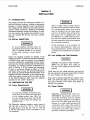
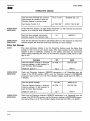
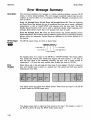
Data Ready: When the Distortion Analyzer is ready
to send any information except error codes or the
Status Byte.
HP-IB Code Error: When the Distortion Analyzer
receives an invalid Data message. (This condition
always causes a Require Service message to be sent.)
NOTE
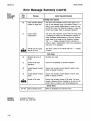
The “ - - - - ”display indicates a transient
condition. After nine attempts to make a
measurement, it is replaced by Error 31
which causes the Require Service message
to be sent.
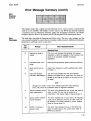
Instrument Error: When any Error is being
displayed by the Distortion Analyzer including HPIB Code error, Error 24.
3-28. Selecting the Service Request
Condition
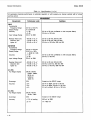
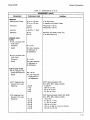
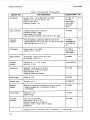
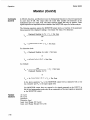
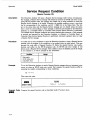
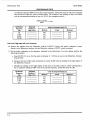
Use Special Function 22, Service Request Condition,
to enable the Distortion Analyzer to issue the Require
Service message on any of the conditions above (except HP-IB code errors which always cause the Require Service message to be sent). The Service
Request Condition Special Function is entered from
HP-IB. The conditions enabled by Special Function
22 are always disabled by the Clear message. A
description of the Service Request Condition Special
Function and the procedure for enabling the various
conditions are given under Service Request Condition
in the Detailed Operation Instructions. Normally,
device subroutines for the Distortion Analyzer can
be implemented simply by triggering measurements
then reading the output data. In certain applications,
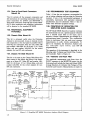
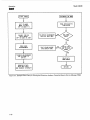
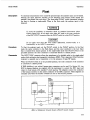
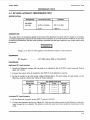
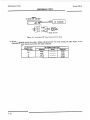
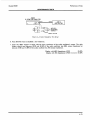
the controller must perform other tasks while controlling the Distortion Analyzer. Figure 3-7 illustrates a
flow chart for developing device subroutines using
the instrument’s ability to issue the Require Service
message when data is ready. This sub-routine structure frees the controller to process other routines
until the Distortion Analyzer is ready with data.
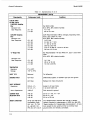
3-29. Sending the Status Byte Message
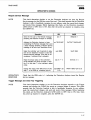
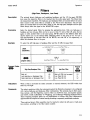
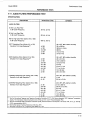
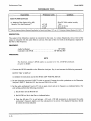
The Status Byte message consists of one %bit byte
in which 3 of the bits are set according to the enabled
conditions described above under Sending the Require
Service Message. If one or more of the three conditions described above are both enabled and present,
all the bits corresponding to the conditions and also
bit 7, the RQS bit, will be set true (and the Require
Service message is sent). If one of the above conditions occurs but has not been enabled by Special
Function 22, neither the bit corresponding to the
condition nor the RQS bit will be set (and the Require
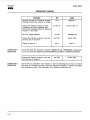
Service message will not be sent). The bit pattern of
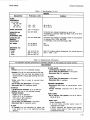
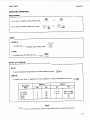
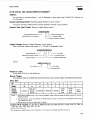
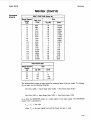
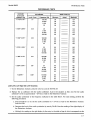
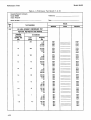
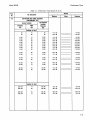
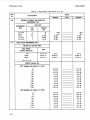
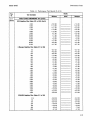
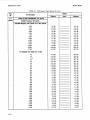
the Status Byte is shown in the table labeled “Status
Byte:”, on the following pages.
Once the Distortion Analyzer receives the serial poll
enable bus command (SPE), it is no longer allowed
to alter the Status Byte. When addressed to talk
(following SPE), the Distortion Analyzer sends the
Status Byte message.
NOTE
Since the Distortion Analyzer cannot alter
the Status Byte while in serial poll mode,
it is not possible to continually request the
Status Byte while waiting for a condition
to cause a bit to be set.
After the Status Byte message has been sent it will
be cleared if the Serial Poll Disable (SPD) bus command is received, if the Abort message is received,
or if the Distortion Analyzer is unaddressed to talk.
Regardless of whether or not the Status Byte message
has been sent, the Status Byte and any Require
Service message pending will be cleared if a Clear
message is received. If the instrument is set to Talk
Only, the Status Byte is cleared each time the onebyte Data message is issued to the bus.
3-30. Sending the Status Bit Message
The Distortion Analyzer does not respond to a Parallel Poll Enable (PPE) bus command, and thus cannot
send the Status Bit Message.
3-31. Receiving the Abort Message
The Abort Message is the means by which the controller sets the Interface Clear (IFC) bus control line
true. When the Abort message is received, the
Distortion Analyzer becomes unaddressed and stops
talking or listening.
3-27