1
Eurex Exchange’s T7
Eurex Frankfurt AG
Functional Reference
V 2.5.1
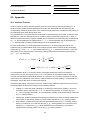
For Options, the Volume, Delta and Vega statistics can thus be represented as formulas:
Volume = #BC + #BP + #SC + #SP
Delta
= ( #BC – #SC ) – ( #BP – #SP )
Vega
= ( #BC + #BP ) – ( #SC + #SP )
where #BC is the number of bought call contracts, #BP is the number of bought put contracts, #SC is
the number of sold call contracts and #SP is the number of sold put contracts.
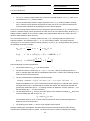
For Futures, these statistics can be represented as follows:
Volume = #BF + #SF
Delta
= #BF – #SF
Vega
N/A
where #BF is the number of bought futures contracts, and #SF is the number of sold futures contracts.
The Delta statistics and the Vega statistics can be negative. Therefore, it is the absolute values of the
Delta statistics and of the Vega statistics that are checked against their respective limits.
The Percent statistic sums up a value that is calculated comparing the traded volume of the quote to
the original total size of the quote. For complex instruments it is important to note that it is the traded
volume of the quote in the complex instrument itself and not the traded leg volumes that are
considered for the Percent statistic.
The idea of the Percent statistic is to have a volume statistics that however gives equal weight to
quotes with different quantities in different instruments.
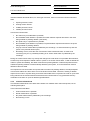
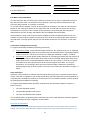
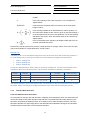
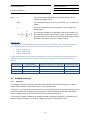
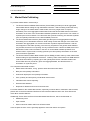
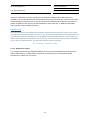
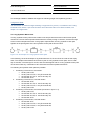
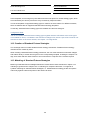
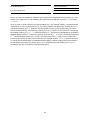
The Percent statistic is defined as:
∑
where the summing is done over all the executions of the session’s quotes.
The calculated percentage value for each executed volume is rounded to the nearest integer value
(e.g. 2.4% is rounded to 2%, and 2.5% is rounded to 3%), before being added to the Percent statistic.
49