1
Portland Community College - Aviation Maintenance Technology – Critical Thinking and Problem-Solving Outcomes Assessment
AMT Core Outcomes - Critical Thinking and Problem Solving
Question: How well is the Aviation Maintenance Technology program curriculum designed
to facilitate program students achieving Critical Thinking and Problem Solving skills?
Response:
Critical Thinking and Problem Solving skills are key components to the incredibly safe
aviation industry in the United States. Even though there is a high degree of government
regulation of the aviation industry, safety is not a result of only lock-step adherence to rule
after rule. Safe aircraft operations occur hour after flight hour, day after day because of
individuals and teams of personnel that are able to summon up imaginative yet critical
thought toward the resolution of problems that present themselves. The students of the
Aviation Maintenance Technology program receive multiple opportunities, in nearly every
course, to demonstrate Critical Thinking and Problem Solving skills.
Central to operating aircraft safely, from the AMT’s perspective, is the airworthiness of each
component and part of an aircraft, as complex as an aircraft turbine engine or as seemingly
simple as a bolt or rivet. The condition of Airworthiness of an aircraft or component part is
determined by the aviation maintenance technician using standards established both by the
manufacturer of the component and the aviation governing agency. Airworthiness means
the aircraft (or its component part) conforms to its type design (or properly altered condition)
and is in a condition for safe operation. (FAA definition)
The skills of critical evaluation and problem resolution are imperative for the success of our
students within the aviation industry. These skills are also helpful in life. To the end that
Critical Thinking and Problem-Solving skills are mandatory in the aviation industry, the AMT
program dedicates two degree and certificate outcomes to them.
•
Make independent and accurate airworthiness judgments in the process of inspecting
and maintaining aircraft structures and powerplants in accordance with applicable
airworthiness requirements.
•
Troubleshoot aircraft structures, powerplants and their associated systems with a
discerning recognition of the specific malfunction within the scope of the overall aircraft
and associated systems and accomplish the correct maintenance action that will allow
approval for return-to-service of the affected items.
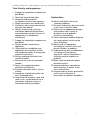
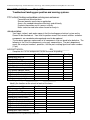
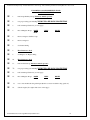
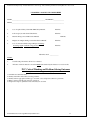
The six example project summaries that follow were examined by the full SAC of the AMT
program. Each project was evaluated against the PCC Core Outcomes skill statements for
Critical Thinking and Problem-Solving by the presenting instructor. Then, with some
preliminary description by the instructor of the project context, each project was discussed in
the SAC forum. Finally, each project was assigned several numbered skill descriptions,
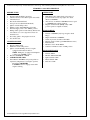
highlighting the skill demonstrated by students accomplishing the project. The PCC list of
skill statements taken from the PCC website at http://www.pcc.edu/resources/academic/coreoutcomes/co-criticalthinking-problemsolving.html was numbered for simplified recording during
the work sessions. The lists and table are included for clarification to the reader
AviationMaintenanceTechnologyLAPlanCompleted2010.docx
3