1
care and maintenance
if you have any doubts about any component
of your vertical rescue system, do not use it.
Inspection and maintenance increase the
likelihood but do not guarantee having a safe
vertical rescue system. Inspection and maintenance
offer no additional warranty rights above those
contained in this manual. Keep all inspection and
maintenance documentation and records.
Before each use
L IMPORTANT: Check every component of
your vertical rescue system, including: 1) harness,
2) connectors, 3) controlled descent device,
4) rope, 5) anchorage connector, 6) anchorage,
and 7) rescue transfer unit (if your system contains
this component). Only you can ensure that every
component of your vertical rescue system is safe
and ready to use.
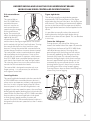
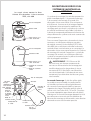
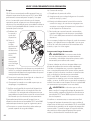
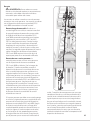
Checking a DEUS 3000 Series descent device
before use
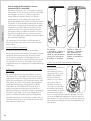
1) Check the rope path and the entire drive wheel to
make sure it is smooth and does not have any burrs
that could snag or interfere with rope. (Tracing the
rope path with your finger is a good way check the
rope path.)
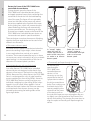
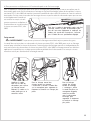
2) Check the condition of the Drive Wheel Stabilizer
Triangle. If this part has been marked or damaged
by deflection of the Drive Wheel, it indicates the
device was subjected to an impact load. Retire the
device and return it to 3M for factory service.
3) Check the main body to be sure all bolts are tight.
4) Check that the sliding cam slides back and forth
easily and smoothly.
5) Check that the control dial rotates smoothly and
easily between the full-stop and full-open positions,
and that it stops at each end.
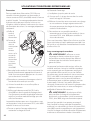
6) With the control dial in the full-stop position, check
that the drive wheel does not turn by hand.
7) With the control dial in the full-go position, check
that the drive wheel turns freely by hand.
ENGLISH
LWARNING: If any of these inspections fail or
8) Check that the back cover opens and closes
smoothly, that when it is closed it lies smooth and
flat against the main body, and that it fully traps and
contains the rope within the rope path.
9) Check the main body to ensure it has not suffered
any bends or cracks. Especially check the carabiner
attachment hole.
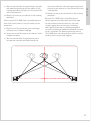
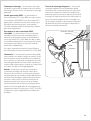
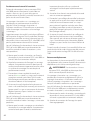
10) With rope properly threaded through the descent
device, the back cover closed and secured with
a carabiner, and the control dial in the full “go”
position, verify that rope can be easily pulled
through the device when the tensioned side of the
rope crosses the centerline of the descent device.
Your DEUS 3000 Series controlled descent device will
provide years of service if you take good care of it.
Inspect it before and after each use. Keep it clean (wipe
it free of dirt with a wet cloth and mild solution of
water and detergent, then rinse lightly and let air dry).
Store it in a closed bag in a clean, dry place.
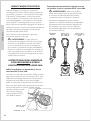
Checking a DEUS rope before use
L IMPORTANT: Ropes degrade whether
they are used or not. Therefore, a rope should be
checked before each use. It is the responsibility of
the user to decide if a rope is safe to use. If you have
doubts, do not use the rope. Check:
1) The mantle (outside covering) of the rope by
performing a visual and tactile inspection. Check
for frayed fibers, cuts, abrasion, fibers pulled from
the braid, and dirt. UV degradation from sunlight
will cause rope fibers to become brittle and
disintegrate. All of these things indicate wear or
damage.
2) The kern (core) of the rope by performing a
tactile inspection. Run the rope through your
fingers checking for soft spots that indicate
damage to the core fibers.
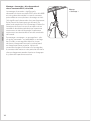
3) Knots and end-terminations on the rope by
performing a visual and tactile inspection. Look
for cuts, abrasion, excessive tightening of knots,
broken stitches in sewn eyes, and dirt. All of these
things indicate wear or damage.
21