1
3. Sharing hierarchy
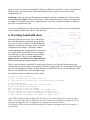
The problem from the previous chapter is solved by the class
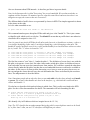
hierarchy in this picture. Customer A is now explicitly represented
by its own class. Recall from above that the amount of service
provided to each class is at least the minimum of the amount it
requests and the amount assigned to it. This applies to htb classes
that are not parents of other htb classes. We call these leaf classes.
For htb classes that are parents of other htb classes, which we call
interior classes, the rule is that the amount of service is at least the minumum of the amount
assigned to it and the sum of the amount requested by its children. In this case we assign 40kbps to
customer A. That means that if A requests less than the allocated rate for WWW, the excess will be
used for A's other traffic (if there is demand for it), at least until the sum is 40kbps.
Notes: Packet classification rules can assign to inner nodes too. Then you have to attach other filter
list to inner node. Finally you should reach leaf or special 1:0 class. The rate supplied for a parent
should be the sum of the rates of its children.
The commands are now as follows:
tc
tc
tc
tc
tc
class
class
class
class
class
add
add
add
add
add
dev
dev
dev
dev
dev
eth0
eth0
eth0
eth0
eth0
parent
parent
parent
parent
parent
1: classid 1:1 htb rate 100kbps ceil 100kbps
1:1 classid 1:2 htb rate 40kbps ceil 100kbps
1:2 classid 1:10 htb rate 30kbps ceil 100kbps
1:2 classid 1:11 htb rate 10kbps ceil 100kbps
1:1 classid 1:12 htb rate 60kbps ceil 100kbps
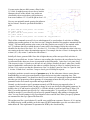
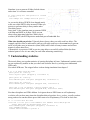
We now turn to the graph showing the results of the
hierarchical solution. When A's WWW traffic stops,
its assigned bandwidth is reallocated to A's other
traffic so that A's total bandwidth is still the assigned
40kbps.
If A were to request less than 40kbs in total then the
excess would be given to B.
4. Rate ceiling
The ceil argument specifies the maximum bandwidth
that a class can use. This limits how much bandwidth
that class can borrow. The default ceil is the same as
the rate. (That's why we had to specify it in the examples above to show borrowing.) We now change
the ceil 100kbps for classes 1:2 (A) and 1:11 (A's other) from the previous chapter to ceil 60kbps and
ceil 20kbps.
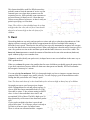
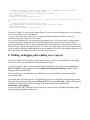
The graph at right differs from the previous one at time 3 (when WWW traffic stops) because A/other
is limited to 20kbps. Therefore customer A gets only 20kbps in total and the unused 20kbps is allocated
to B.
The second difference is at time 15 when B stops. Without the ceil, all of its bandwidth was given to A,
but now A is only allowed to use 60kbps, so the remaining 40kbps goes unused.