1
ProShake User’s Manual
layer may be represented by more than one material layer. As an alternative, users may find it
more efficient to enter material data directly on the Summary Data form.
Depth to Water Table
Enter the depth to the water table, if any. Use U.S. or metric units - the other will be calculated
automatically when you move to the next data field. ProShake uses this depth, along with the
layer thickness and unit weight data, to compute effective vertical stresses. If left blank,
ProShake will assume that no groundwater exists in the entire profile. ProShake will compute
initial porewater pressures as zero above and hydrostatic below the water table.
Layer Information
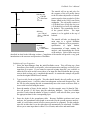
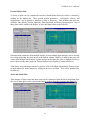
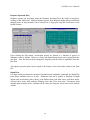
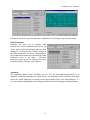
The main portion of the Soil Profile window contains a series of tabbed forms that allow you to
enter material property data for each material layer. The active material layer form is indicated by
the tab label.
Material Name
Enter the alphanumeric description of your choice, or leave it blank. The material name will be
stored in the Analysis Summary in the Report. The length of the description is limited to 20
characters.
Thickness
Enter the layer thickness in feet or in meters - the other will be calculated automatically. Because
ProShake computes ground motions at layer boundaries, you'll want to select layer thicknesses to
provide a layer boundary at each depth at which ground motions are to be computed. This may
require specification of adjacent layers with identical properties.
Unit Weight
Enter the unit weight in pcf or in kN/m3 - the other will be calculated automatically. Moist unit
weights should be used for layers above the water table. Because porewater moves with the soil
during earthquake shaking, saturated unit weights should be used below the water table.
Maximum Shear Modulus
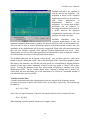
Enter the maximum shear modulus, if available, either in ksf or in MPa - the other will be
calculated automatically. If you enter unit weight and maximum shear modulus, the
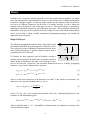
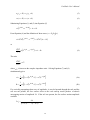
corresponding shear wave velocity will be computed from
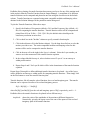
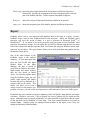
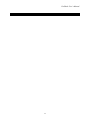
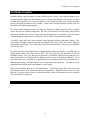
vs = G ρ =
Gg
γ
where Gmax is maximum shear modulus, ρ is density, γ is unit weight, and g is the acceleration of
gravity.
17