1
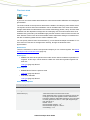
Rainwater tanks are most efficient when the retained water supplies multiple water demands
within a household, eg toilet flushing, garden irrigation, filling or topping-up swimming pools,
clothes washing and other appropriate non-potable uses.
Tank construction
Rainwater tanks are usually constructed from plastic, or galvanised steel, and are located
above-ground adjacent to the sides of a dwelling or building. Where space is limited, tanks can
also be installed below-ground, under-floor and in-slab - in these situations, tanks are often
constructed from concrete or impermeable plastic membranes.
Restrictions
In many areas health departments do not expressly prohibit rainwater tanks supplying drinking
water, however, guidelines typically recommend avoiding drinking rainwater where a
reticulated potable supply is available.
There are restrictions on which node inputs and outputs you can connect together. See Urban
Developer node connection rules (page 94).
Multiple tanks
In the current version of Urban Developer, you can connect more than one tank to a supply
point; however this model type is not currently supported and may give inaccurate results. If
you need to model a multiple-tank installation, the best workaround is to regard the entire
installation as a single tank, and adjust initial levels, first-flush volumes etc, accordingly.
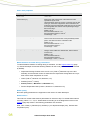
Tank (Urban Developer type)
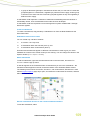
Conceptually, the operation of a rainwater tank is identical to the operation of any tank-based
storage infrastructure. The simulation scheme developed for Urban Developer is generic in its
applicability to all forms of tank-based storage.
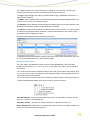
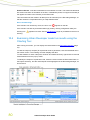
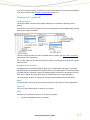
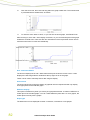
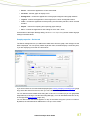
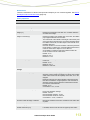
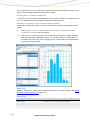
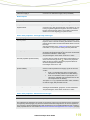
The tank allows for the inflow of rainwater as well as the provision of trickle top-up, triggered to
start and stop at a user-specified tank level.
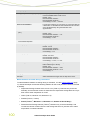
Inputs
• Inflow: Tank inflow is usually from a roof node (page 103) or other impervious area
(page 97).There is no direct input capability for "topping-up" the tank; topup is controlled
by a parameter in the tank property editor (see below).
The top-up function takes water from the mains supply, however in this version, the
mains supply usage due to trickle top-up is not tracked in the mains supply aggregation.
This functionality will be added in future versions of Urban Developer
Outputs
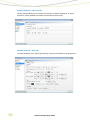
• Supply out: The tank volume extracted from a Water Use (page 117) node per unit
time.
Link type (page 59): Demand
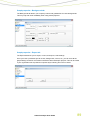
• Spill: The volume flowing out of the tank when the detention volume is exceeded.
Link type (page 59): Runoff
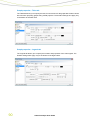
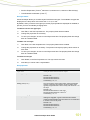
• Detention outflow: The flow from the overflow pipe at the invert of the detention
volume, during a flood event.
112
Urban Developer User Guide