1
points.
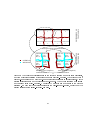
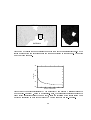
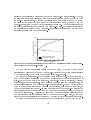
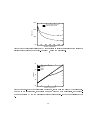
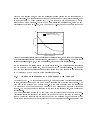
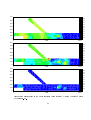
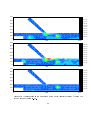
Generally speaking, in all the simulations the bigger error is located around the island,
that is the region mostly rened in all the the adapted meshes. Moreover, the results
plotted in gs.26-27 show that both globally and locally the error indicator 3 performs
better in computing the water elevation and gives better global results in computing the
velocity eld.
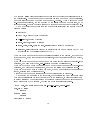
error indicator
none
1
2
3
(%)
6.1
3.1
2.6
0.5
v (m/s)
0.17
0.06
0.08
0.03
v direction (rad)
0.22
0.08
0.18
0.03
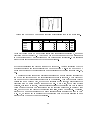
Table 1: Average error of the computed solution.
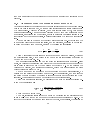
The maximum relative error in the water elevation is 5 % and is located behind the island;
this value is lower than 8 % and 10 % obtained by the other criteria. In particular, the
error indicator 1 show large errors both at the corner of the enlargement and at the left
inow corner. The error indicator 2 show a large error at the left inow corner The global
behavior of 3 is even better, showing in most of the domain an error of 0.5 %, versus 2-5
% given by the other criteria.
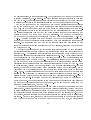
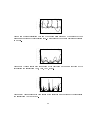
The error in the magnitude of the velocity suggest more or less the same remarks. The
maximum error induced by the criteria 1 is slightly larger than the others, but it is
strongly conned around the island. The other indicators lead to a relevant error also
near to the right inow corner of the secondary channel.
The numerical tests show that mesh adaption is a very reliable tool for numerical simulation of shallow water steady ows. Any error indicator yield to numerical results that are
strongly improved with respect to a uniform mesh, with a minor increase in the computational eort. The mesh renement-coarsening technique is almost decoupled from the
numerical integration aspects. Last, but not least, the initial mesh generation does not
require any a priori knowledge of the oweld, as any quite regular background grid is
automatically rened to an almost optimal one.
Although the numerical results have been obtained for a test case that has been thought to
include more scenarios, general conclusions can be hardly drawn. However, it is possible
to say that all error indicators do their own job, detecting regions where truncation error is
relevant. The local mass conservation criteria performs better in the considered test case,
yielding always to lower error in a global sense. The reason of this behavior is probably
50