1
2.
2.1
INSTALLATION
Selecting the installation location
The best location for installation of the units of the Snifter is in a section of duct
where the particulate has an even distribution and the flow is as laminar as
possible. This is to ensure that the sensor rod comes into contact with a
representative flow of particles.
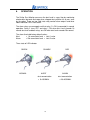
The ideal position would be in a section of duct that has no bends, valves,
dampers or other obstructions for a distance equal to at least three duct
diameters downstream or upstream (preferable 5 x duct diameter). See figure
1.
Figure 1. Recommended distances to duct bends (DN=Duct Diameter)
In some applications, a compromise must be made and the sensor will have to
be fitted in a position that satisfies the majority of above requirements. The
Snifter must be attached to metal ductwork so that they will be electrically
shielded from interference and be provided with a ground reference.
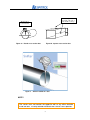
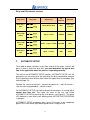
1. The unit shall be installed in a position, where the gas flow passes the
sensor rod in a 90° angle.
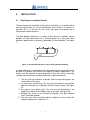
2. In round cross-section ducts, the unit can be installed in any position
above the horizontal axis (between 9 o’clock and 3 o’clock). See figure
2a.
3. For square cross-section ducts, the unit must be positioned in the
middle of the top or in the middle of one of the sides. See figure 2b.
4. Although the sensor is not affected by vibration, very high vibration
levels should be avoided.
5. The units must not be installed in direct sunlight or in areas where the
ambient temperature is above 60 °C.
4