1
Why measure quality?
‘G ood design is about
creating a space that
functions well, both
now and in the future.
It should also be
attractive, providing an
inspirational and special
space for people. If not
designed well, poorly
defined spaces will
be created that may
cause conflict between
different activities and
users, such as younger
and older people. If
spaces lack character
and identity people will
not want to use them.’
Measuring quality means involving a variety of interested people to define
how well a space works. Through this process you can learn about the
requirements of different groups of people to understand if their needs
are being met. It will identify both good and bad characteristics and
stimulate new ideas for improvements and how it could be managed.
This process will help to develop good relations between the users and
the people who run the space and will help you prioritise improvement.
By measuring quality you are basing such decisions on good evidence.
CABE Space, It’s our space: a guide for
community groups, 2007
Spaceshaper is designed for people who have a willingness to bring about
change for a space, since using the toolkit will encourage discussion on how
the site can be improved. Spaceshaper is used for assessing existing sites but
can also be used when planning new sites. The toolkit should be regarded as
part of a process of consultation, not instead of it and not as a one-off activity.
If you are applying for funding – or protecting existing budgets – you will be
asked to provide evidence to demonstrate how any money spent on it would
make a difference to local people. By measuring quality you will be able to track
the changes before and after improvements. Spaceshaper compliments existing
tools for measuring quality (see page 19). Specifically it can be used for:
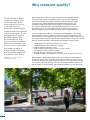
© Elizabeth Hoehnke
– identifying the strengths and weaknesses of a space
– establishing what is most important to people
– comparing different people’s views
– measuring how well the space meets everyone’s needs
– stimulating new ideas for improvements
– tracking changes in people’s views over time
– bringing staff and users together in a structured way to discuss the space.