1
50
CHAPTER 8. COMPILING AND RUNNING OASIS3
TOYCLIM coupling algorithm
The coupling algorithm between the TOYCLIM component models toyoce, toyatm, and toyche is described here.
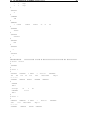
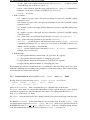
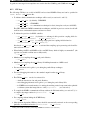
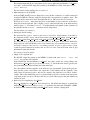
Table 8.1 lists the coupling fields exchanged between those 3 model components, giving the symbolic
name used in each component and indicating whether the model produces the field (src) or receives it
(tgt).
Field1
Field2
Field3
Field4
Field5
Field6
Field7
Field8
Field9
Field10
Field11
toyoce
SOSSTSST (src)
SOICECOV (src)
SOALBEDO (tgt)
SONSHLDO (tgt)
SOSHFLDO
SOWAFLDO (tgt)
SORUNOFF (tgt)
SOZOTAUX (tgt)
SOMETAUY (tgt)
toyatm
SISUTESU (tgt)
SIICECOV (tgt)
CONSFTOT (src)
COSHFTOT (src)
COWATFLU (src)
CORUNOFF (src)
COZOTAUX (src)
COMETAUY (src)
COSENHFL (src)
COTHSHSU (tgt)
toyche
SOSENHFL (tgt)
SOTHSHSU (src)
restart
fldo1.nc
fldo1.nc
SOALBEDO.nc
flda1.nc
flda1.nc
flda1.nc
flda2.nc
flda2.nc
flda3.nc
flda4.nc
function
F1
F1
F2
F2
F2
F2
F3
F3
F1
F1
Table 8.1: Coupling and I/O fields of the TOYCLIM coupled model. The symbolic name used in each toy model is
given and it is indicated whether the model produces the field (src) or receives it (tgt). The function used
to create the field in the initial restart file is also given.
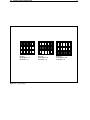
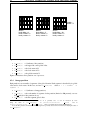
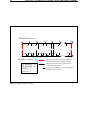
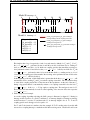
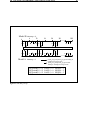
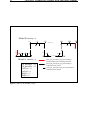
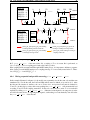
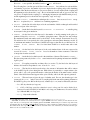
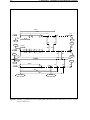
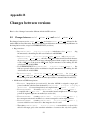
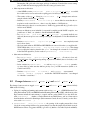
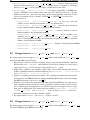
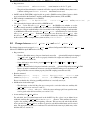
Figure 8.1 illustrates the coupling algorithm between the 3 TOYCLIM toy models for F ield 1 , F ield3 ,
F ield4 , F ield10 , and F ield11 .
F ield1 is sent from toyoce component to toyatm component at the coupling frequency dtF 1 defined
by the user in the configuring file namcouple. As interpolation is needed between toyoce and toyatm
grids, this exchange must go through OASIS3 interpolation process. In the namcouple, F ield 1 field
status must therefore be EXP ORT ED and the interpolation must be defined. If the user wants the
field to be also automatically written to files before being sent (below the prism put), and after being
received (below the prism get), he can choose the field status EXP OU T . In toyoce and toyatm codes, the
prism put and prism get routines are respectively called every timestep with an argument corresponding
to the time at the beginning of the timestep. The lag of F ield 1 , defined as 4 hours (14400 seconds) in
the namcouple, is automatically added to the prism put time argument; the prism put called at the toyoce
timestep preceeding the coupling period therefore matches the prism get called in toyatm at the coupling
period.
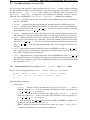
At the beginning of the run (i.e. at time = 0), the toyoce prism put for F ield 1 is not activated (as a positive
lag is defined for F ield1 ) and OASIS3 automatically read F ield 1 in its coupling restart file, fldo1.nc, and
sends it to toyatm component after interpolation. The different functions used to create the fields in the
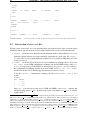
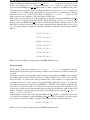
initial restart file are also indicated in table 8.1. They are defined as follows:
F1 = 2 + cos[π ∗ acos(cos(θ)cos(φ))]
F2 = 2 + cos2 (θ)cos(2φ)
F3 = 2 + sin16 (2φ)cos(16φ)
F1 represents a global dipole reaching its maximum and minimum values at the equator, respectively at the
date-line and at the Greenwich meridian. F 2 represents two dipoles reaching respectively their maximum
and minimum values at the equator, respectively at the date-line and at 90 o W, and at the Greenwich
meridian and at 90o E; it is similar to a spherical harmonic with l = 2 and m = 2, where l is the sherical