1
RTEMS C User’s Guide
Edition 4.7.3, for RTEMS 4.7.3
8 August 2008
On-Line Applications Research Corporation
On-Line Applications Research Corporation
TEXinfo 2006-10-04.17
c 1988 - 2006.
COPYRIGHT On-Line Applications Research Corporation (OAR).
The authors have used their best efforts in preparing this material. These efforts include
the development, research, and testing of the theories and programs to determine their
effectiveness. No warranty of any kind, expressed or implied, with regard to the software
or the material contained in this document is provided. No liability arising out of the
application or use of any product described in this document is assumed. The authors
reserve the right to revise this material and to make changes from time to time in the
content hereof without obligation to notify anyone of such revision or changes.
The RTEMS Project is hosted at http://www.rtems.com. Any inquiries concerning
RTEMS, its related support components, its documentation, or any custom services for
RTEMS should be directed to the contacts listed on that site. A current list of RTEMS
Support Providers is at http://www.rtems.com/support.html.
Preface
1
Preface
In recent years, the cost required to develop a software product has increased significantly
while the target hardware costs have decreased. Now a larger portion of money is expended
in developing, using, and maintaining software. The trend in computing costs is the complete dominance of software over hardware costs. Because of this, it is necessary that formal
disciplines be established to increase the probability that software is characterized by a high
degree of correctness, maintainability, and portability. In addition, these disciplines must
promote practices that aid in the consistent and orderly development of a software system
within schedule and budgetary constraints. To be effective, these disciplines must adopt
standards which channel individual software efforts toward a common goal.
The push for standards in the software development field has been met with various degrees
of success. The Microprocessor Operating Systems Interfaces (MOSI) effort has experienced
only limited success. As popular as the UNIX operating system has grown, the attempt to
develop a standard interface definition to allow portable application development has only
recently begun to produce the results needed in this area. Unfortunately, very little effort
has been expended to provide standards addressing the needs of the real-time community.
Several organizations have addressed this need during recent years.
The Real Time Executive Interface Definition (RTEID) was developed by Motorola with
technical input from Software Components Group. RTEID was adopted by the VMEbus
International Trade Association (VITA) as a baseline draft for their proposed standard
multiprocessor, real-time executive interface, Open Real-Time Kernel Interface Definition
(ORKID). These two groups are currently working together with the IEEE P1003.4 committee to insure that the functionality of their proposed standards is adopted as the real-time
extensions to POSIX.
This emerging standard defines an interface for the development of real-time software to
ease the writing of real-time application programs that are directly portable across multiple
real-time executive implementations. This interface includes both the source code interfaces
and run-time behavior as seen by a real-time application. It does not include the details
of how a kernel implements these functions. The standard’s goal is to serve as a complete
definition of external interfaces so that application code that conforms to these interfaces
will execute properly in all real-time executive environments. With the use of a standards
compliant executive, routines that acquire memory blocks, create and manage message
queues, establish and use semaphores, and send and receive signals need not be redeveloped
for a different real-time environment as long as the new environment is compliant with the
standard. Software developers need only concentrate on the hardware dependencies of the
real-time system. Furthermore, most hardware dependencies for real-time applications can
be localized to the device drivers.
A compliant executive provides simple and flexible real-time multiprocessing. It easily lends
itself to both tightly-coupled and loosely-coupled configurations (depending on the system
hardware configuration). Objects such as tasks, queues, events, signals, semaphores, and
memory blocks can be designated as global objects and accessed by any task regardless of
which processor the object and the accessing task reside.
2
RTEMS C User’s Guide
The acceptance of a standard for real-time executives will produce the same advantages
enjoyed from the push for UNIX standardization by AT&T’s System V Interface Definition
and IEEE’s POSIX efforts. A compliant multiprocessing executive will allow close coupling
between UNIX systems and real-time executives to provide the many benefits of the UNIX
development environment to be applied to real-time software development. Together they
provide the necessary laboratory environment to implement real-time, distributed, embedded systems using a wide variety of computer architectures.
A study was completed in 1988, within the Research, Development, and Engineering Center,
U.S. Army Missile Command, which compared the various aspects of the Ada programming
language as they related to the application of Ada code in distributed and/or multiple processing systems. Several critical conclusions were derived from the study. These conclusions
have a major impact on the way the Army develops application software for embedded applications. These impacts apply to both in-house software development and contractor
developed software.
A conclusion of the analysis, which has been previously recognized by other agencies attempting to utilize Ada in a distributed or multiprocessing environment, is that the Ada
programming language does not adequately support multiprocessing. Ada does provide a
mechanism for multi-tasking, however, this capability exists only for a single processor system. The language also does not have inherent capabilities to access global named variables,
flags or program code. These critical features are essential in order for data to be shared
between processors. However, these drawbacks do have workarounds which are sometimes
awkward and defeat the intent of software maintainability and portability goals.
Another conclusion drawn from the analysis, was that the run time executives being delivered with the Ada compilers were too slow and inefficient to be used in modern missile
systems. A run time executive is the core part of the run time system code, or operating system code, that controls task scheduling, input/output management and memory
management. Traditionally, whenever efficient executive (also known as kernel) code was
required by the application, the user developed in-house software. This software was usually
written in assembly language for optimization.
Because of this shortcoming in the Ada programming language, software developers in
research and development and contractors for project managed systems, are mandated by
technology to purchase and utilize off-the-shelf third party kernel code. The contractor,
and eventually the Government, must pay a licensing fee for every copy of the kernel code
used in an embedded system.
The main drawback to this development environment is that the Government does not
own, nor has the right to modify code contained within the kernel. V&V techniques in this
situation are more difficult than if the complete source code were available. Responsibility
for system failures due to faulty software is yet another area to be resolved under this
environment.
The Guidance and Control Directorate began a software development effort to address
these problems. A project to develop an experimental run time kernel was begun that
will eliminate the major drawbacks of the Ada programming language mentioned above.
The Real Time Executive for Multiprocessor Systems (RTEMS) provides full capabilities for
management of tasks, interrupts, time, and multiple processors in addition to those features
Preface
3
typical of generic operating systems. The code is Government owned, so no licensing fees are
necessary. RTEMS has been implemented in both the Ada and C programming languages.
It has been ported to the following processor families:
•
•
•
•
•
•
•
•
•
•
•
•
•
Intel i386 and above
Motorola MC68xxx
Motorola MC683xx
Motorola ColdFire
ARM
MIPS
PowerPC
SPARC
Hitachi SH
Hitachi H8/300
Texas Instruments C3x/C4x
OpenCores OR32
UNIX
Support for other processor families, including RISC, CISC, and DSP, is planned. Since
almost all of RTEMS is written in a high level language, ports to additional processor
families require minimal effort.
RTEMS multiprocessor support is capable of handling either homogeneous or heterogeneous
systems. The kernel automatically compensates for architectural differences (byte swapping,
etc.) between processors. This allows a much easier transition from one processor family
to another without a major system redesign.
Since the proposed standards are still in draft form, RTEMS cannot and does not claim
compliance. However, the status of the standard is being carefully monitored to guarantee
that RTEMS provides the functionality specified in the standard. Once approved, RTEMS
will be made compliant.
This document is a detailed users guide for a functionally compliant real-time multiprocessor
executive. It describes the user interface and run-time behavior of Release 4.7.3 of the C
interface to RTEMS.
4
RTEMS C User’s Guide
Chapter 1: Overview
5
1 Overview
1.1 Introduction
RTEMS, Real-Time Executive for Multiprocessor Systems, is a real-time executive (kernel) which provides a high performance environment for embedded military applications
including the following features:
•
•
•
•
•
•
•
•
•
multitasking capabilities
homogeneous and heterogeneous multiprocessor systems
event-driven, priority-based, preemptive scheduling
optional rate monotonic scheduling
intertask communication and synchronization
priority inheritance
responsive interrupt management
dynamic memory allocation
high level of user configurability
This manual describes the usage of RTEMS for applications written in the C programming
language. Those implementation details that are processor dependent are provided in the
Applications Supplement documents. A supplement document which addresses specific
architectural issues that affect RTEMS is provided for each processor type that is supported.
1.2 Real-time Application Systems
Real-time application systems are a special class of computer applications. They have a
complex set of characteristics that distinguish them from other software problems. Generally, they must adhere to more rigorous requirements. The correctness of the system
depends not only on the results of computations, but also on the time at which the results
are produced. The most important and complex characteristic of real-time application systems is that they must receive and respond to a set of external stimuli within rigid and
critical time constraints referred to as deadlines. Systems can be buried by an avalanche of
interdependent, asynchronous or cyclical event streams.
Deadlines can be further characterized as either hard or soft based upon the value of the
results when produced after the deadline has passed. A deadline is hard if the results have
no value or if their use will result in a catastrophic event. In contrast, results which are
produced after a soft deadline may have some value.
Another distinguishing requirement of real-time application systems is the ability to coordinate or manage a large number of concurrent activities. Since software is a synchronous
entity, this presents special problems. One instruction follows another in a repeating synchronous cycle. Even though mechanisms have been developed to allow for the processing
of external asynchronous events, the software design efforts required to process and manage
these events and tasks are growing more complicated.
The design process is complicated further by spreading this activity over a set of processors
instead of a single processor. The challenges associated with designing and building real-
6
RTEMS C User’s Guide
time application systems become very complex when multiple processors are involved. New
requirements such as interprocessor communication channels and global resources that must
be shared between competing processors are introduced. The ramifications of multiple
processors complicate each and every characteristic of a real-time system.
1.3 Real-time Executive
Fortunately, real-time operating systems or real-time executives serve as a cornerstone on
which to build the application system. A real-time multitasking executive allows an application to be cast into a set of logical, autonomous processes or tasks which become quite
manageable. Each task is internally synchronous, but different tasks execute independently,
resulting in an asynchronous processing stream. Tasks can be dynamically paused for many
reasons resulting in a different task being allowed to execute for a period of time. The executive also provides an interface to other system components such as interrupt handlers and
device drivers. System components may request the executive to allocate and coordinate
resources, and to wait for and trigger synchronizing conditions. The executive system calls
effectively extend the CPU instruction set to support efficient multitasking. By causing
tasks to travel through well-defined state transitions, system calls permit an application to
demand-switch between tasks in response to real-time events.
By proper grouping of responses to stimuli into separate tasks, a system can now asynchronously switch between independent streams of execution, directly responding to external stimuli as they occur. This allows the system design to meet critical performance
specifications which are typically measured by guaranteed response time and transaction
throughput. The multiprocessor extensions of RTEMS provide the features necessary to
manage the extra requirements introduced by a system distributed across several processors. It removes the physical barriers of processor boundaries from the world of the system
designer, enabling more critical aspects of the system to receive the required attention.
Such a system, based on an efficient real-time, multiprocessor executive, is a more realistic
model of the outside world or environment for which it is designed. As a result, the system
will always be more logical, efficient, and reliable.
By using the directives provided by RTEMS, the real-time applications developer is freed
from the problem of controlling and synchronizing multiple tasks and processors. In addition, one need not develop, test, debug, and document routines to manage memory, pass
messages, or provide mutual exclusion. The developer is then able to concentrate solely
on the application. By using standard software components, the time and cost required to
develop sophisticated real-time applications is significantly reduced.
1.4 RTEMS Application Architecture
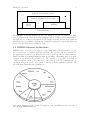
One important design goal of RTEMS was to provide a bridge between two critical layers
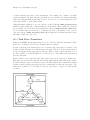
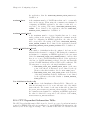
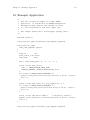
of typical real-time systems. As shown in the following figure, RTEMS serves as a buffer
between the project dependent application code and the target hardware. Most hardware
dependencies for real-time applications can be localized to the low level device drivers.
Chapter 1: Overview
7
Application Dependent Software
Standard Application Components
Device
Drivers
RTEMS
Target Hardware
The RTEMS I/O interface manager provides an efficient tool for incorporating these hardware dependencies into the system while simultaneously providing a general mechanism to
the application code that accesses them. A well designed real-time system can benefit from
this architecture by building a rich library of standard application components which can
be used repeatedly in other real-time projects.
1.5 RTEMS Internal Architecture
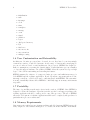
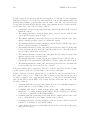
RTEMS can be viewed as a set of layered components that work in harmony to provide
a set of services to a real-time application system. The executive interface presented to
the application is formed by grouping directives into logical sets called resource managers.
Functions utilized by multiple managers such as scheduling, dispatching, and object management are provided in the executive core. The executive core depends on a small set
of CPU dependent routines. Together these components provide a powerful run time environment that promotes the development of efficient real-time application systems. The
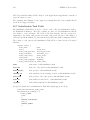
following figure illustrates this organization:
Subsequent chapters present a detailed description of the capabilities provided by each of
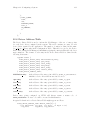
the following RTEMS managers:
8
RTEMS C User’s Guide
•
•
•
•
•
•
•
•
•
•
•
•
•
•
•
•
•
initialization
task
interrupt
clock
timer
semaphore
message
event
signal
partition
region
dual ported memory
I/O
fatal error
rate monotonic
user extensions
multiprocessing
1.6 User Customization and Extensibility
As thirty-two bit microprocessors have decreased in cost, they have become increasingly
common in a variety of embedded systems. A wide range of custom and general-purpose
processor boards are based on various thirty-two bit processors. RTEMS was designed to
make no assumptions concerning the characteristics of individual microprocessor families
or of specific support hardware. In addition, RTEMS allows the system developer a high
degree of freedom in customizing and extending its features.
RTEMS assumes the existence of a supported microprocessor and sufficient memory for
both RTEMS and the real-time application. Board dependent components such as clocks,
interrupt controllers, or I/O devices can be easily integrated with RTEMS. The customization and extensibility features allow RTEMS to efficiently support as many environments
as possible.
1.7 Portability
The issue of portability was the major factor in the creation of RTEMS. Since RTEMS is
designed to isolate the hardware dependencies in the specific board support packages, the
real-time application should be easily ported to any other processor. The use of RTEMS
allows the development of real-time applications which can be completely independent of a
particular microprocessor architecture.
1.8 Memory Requirements
Since memory is a critical resource in many real-time embedded systems, RTEMS was specifically designed to allow unused managers to be excluded from the run-time environment.
Chapter 1: Overview
9
This allows the application designer the flexibility to tailor RTEMS to most efficiently meet
system requirements while still satisfying even the most stringent memory constraints. As
a result, the size of the RTEMS executive is application dependent. A worksheet is provided in the Memory Requirements chapter of the Applications Supplement document for
a specific target processor. The worksheet is used to calculate the memory requirements
of a custom RTEMS run-time environment. The following managers may be optionally
excluded:
•
•
•
•
•
•
•
•
•
•
•
•
•
clock
timer
semaphore
message
event
signal
partition
region
dual ported memory
I/O
rate monotonic
fatal error
multiprocessing
RTEMS utilizes memory for both code and data space. Although RTEMS’ data space must
be in RAM, its code space can be located in either ROM or RAM.
1.9 Audience
This manual was written for experienced real-time software developers. Although some
background is provided, it is assumed that the reader is familiar with the concepts of task
management as well as intertask communication and synchronization. Since directives, user
related data structures, and examples are presented in C, a basic understanding of the C
programming language is required to fully understand the material presented. However,
because of the similarity of the Ada and C RTEMS implementations, users will find that
the use and behavior of the two implementations is very similar. A working knowledge
of the target processor is helpful in understanding some of RTEMS’ features. A thorough
understanding of the executive cannot be obtained without studying the entire manual
because many of RTEMS’ concepts and features are interrelated. Experienced RTEMS
users will find that the manual organization facilitates its use as a reference document.
1.10 Conventions
The following conventions are used in this manual:
• Significant words or phrases as well as all directive names are printed in bold type.
• Items in bold capital letters are constants defined by RTEMS. Each language interface provided by RTEMS includes a file containing the standard set of constants,
10
RTEMS C User’s Guide
data types, and structure definitions which can be incorporated into the user application.
• A number of type definitions are provided by RTEMS and can be found in rtems.h.
• The characters "0x" preceding a number indicates that the number is in hexadecimal
format. Any other numbers are assumed to be in decimal format.
1.11 Manual Organization
This first chapter has presented the introductory and background material for the RTEMS
executive. The remaining chapters of this manual present a detailed description of RTEMS
and the environment, including run time behavior, it creates for the user.
A chapter is dedicated to each manager and provides a detailed discussion of each RTEMS
manager and the directives which it provides. The presentation format for each directive
includes the following sections:
• Calling sequence
• Directive status codes
• Description
• Notes
The following provides an overview of the remainder of this manual:
Chapter 2
Key Concepts: presents an introduction to the ideas which are common across multiple RTEMS managers.
Chapter 3:
RTEMS Data Types: describes the fundamental data types shared
by the services in the RTEMS Classic API.
Chapter 4:
Initialization Manager: describes the functionality and directives provided by the Initialization Manager.
Chapter 5:
Task Manager: describes the functionality and directives provided
by the Task Manager.
Chapter 6:
Interrupt Manager: describes the functionality and directives provided by the Interrupt Manager.
Chapter 7:
Clock Manager: describes the functionality and directives provided
by the Clock Manager.
Chapter 8:
Timer Manager: describes the functionality and directives provided
by the Timer Manager.
Chapter 9:
Semaphore Manager: describes the functionality and directives provided by the Semaphore Manager.
Chapter 10:
Message Manager: describes the functionality and directives provided
by the Message Manager.
Chapter 11:
Event Manager: describes the functionality and directives provided
by the Event Manager.
Chapter 1: Overview
11
Chapter 12:
Signal Manager: describes the functionality and directives provided
by the Signal Manager.
Chapter 13:
Partition Manager: describes the functionality and directives provided by the Partition Manager.
Chapter 14:
Region Manager: describes the functionality and directives provided
by the Region Manager.
Chapter 15:
Dual-Ported Memory Manager: describes the functionality and directives provided by the Dual-Ported Memory Manager.
Chapter 16:
I/O Manager: describes the functionality and directives provided by
the I/O Manager.
Chapter 17:
Fatal Error Manager: describes the functionality and directives provided by the Fatal Error Manager.
Chapter 18:
Scheduling Concepts: details the RTEMS scheduling algorithm and
task state transitions.
Chapter 19:
Rate Monotonic Manager: describes the functionality and directives
provided by the Rate Monotonic Manager.
Chapter 20:
Board Support Packages: defines the functionality required of usersupplied board support packages.
Chapter 21:
User Extensions: shows the user how to extend RTEMS to incorporate custom features.
Chapter 22:
Configuring a System: details the process by which one tailors
RTEMS for a particular single-processor or multiprocessor application.
Chapter 23:
Multiprocessing Manager: presents a conceptual overview of the multiprocessing capabilities provided by RTEMS as well as describing
the Multiprocessing Communications Interface Layer and Multiprocessing Manager directives.
Chapter 24:
Directive Status Codes: provides a definition of each of the directive
status codes referenced in this manual.
Chapter 25:
Example Application: provides a template for simple RTEMS applications.
Chapter 26:
Glossary: defines terms used throughout this manual.
12
RTEMS C User’s Guide
Chapter 2: Key Concepts
13
2 Key Concepts
2.1 Introduction
The facilities provided by RTEMS are built upon a foundation of very powerful concepts.
These concepts must be understood before the application developer can efficiently utilize
RTEMS. The purpose of this chapter is to familiarize one with these concepts.
2.2 Objects
RTEMS provides directives which can be used to dynamically create, delete, and manipulate
a set of predefined object types. These types include tasks, message queues, semaphores,
memory regions, memory partitions, timers, ports, and rate monotonic periods. The objectoriented nature of RTEMS encourages the creation of modular applications built upon reusable "building block" routines.
All objects are created on the local node as required by the application and have an RTEMS
assigned ID. All objects have a user-assigned name. Although a relationship exists between
an object’s name and its RTEMS assigned ID, the name and ID are not identical. Object
names are completely arbitrary and selected by the user as a meaningful "tag" which may
commonly reflect the object’s use in the application. Conversely, object IDs are designed
to facilitate efficient object manipulation by the executive.
2.2.1 Object Names
An object name is an unsigned thirty-two bit entity associated with the object by the user.
The data type rtems_name is used to store object names.
Although not required by RTEMS, object names are often composed of four ASCII characters which help identify that object. For example, a task which causes a light to blink
might be called "LITE". The rtems_build_name routine is provided to build an object
name from four ASCII characters. The following example illustrates this:
rtems_object_name my_name;
my_name = rtems_build_name( ’L’, ’I’, ’T’, ’E’ );
However, it is not required that the application use ASCII characters to build object names.
For example, if an application requires one-hundred tasks, it would be difficult to assign
meaningful ASCII names to each task. A more convenient approach would be to name them
the binary values one through one-hundred, respectively.
14
RTEMS C User’s Guide
2.2.2 Object IDs
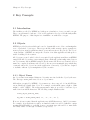
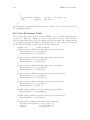
An object ID is a unique unsigned thirty-two bit entity composed of three parts: object
class, node, and index. The data type rtems_id is used to store object IDs.
31
26
Class
25
16
15
Node
0
Index
The most significant six bits are the object class. The next ten bits are the number of
the node on which this object was created. The node number is always one (1) in a single
processor system. The least significant sixteen bits form an identifier within a particular
object type. This identifier, called the object index, ranges in value from 1 to the maximum
number of objects configured for this object type.
The three components of an object ID make it possible to quickly locate any object in even
the most complicated multiprocessor system. Object ID’s are associated with an object by
RTEMS when the object is created and the corresponding ID is returned by the appropriate
object create directive. The object ID is required as input to all directives involving objects,
except those which create an object or obtain the ID of an object.
The object identification directives can be used to dynamically obtain a particular object’s
ID given its name. This mapping is accomplished by searching the name table associated
with this object type. If the name is non-unique, then the ID associated with the first
occurrence of the name will be returned to the application. Since object IDs are returned
when the object is created, the object identification directives are not necessary in a properly
designed single processor application.
In addition, services are provided to portably examine the three subcomponents of an
RTEMS ID. These services are prototyped as follows:
uint32_t rtems_get_class( rtems_id );
uint32_t rtems_get_node( rtems_id );
uint32_t rtems_get_index( rtems_id );
An object control block is a data structure defined by RTEMS which contains the information necessary to manage a particular object type. For efficiency reasons, the format of
each object type’s control block is different. However, many of the fields are similar in function. The number of each type of control block is application dependent and determined by
the values specified in the user’s Configuration Table. An object control block is allocated
at object create time and freed when the object is deleted. With the exception of user
extension routines, object control blocks are not directly manipulated by user applications.
2.3 Communication and Synchronization
In real-time multitasking applications, the ability for cooperating execution threads to communicate and synchronize with each other is imperative. A real-time executive should
provide an application with the following capabilities:
• Data transfer between cooperating tasks
Chapter 2: Key Concepts
15
• Data transfer between tasks and ISRs
• Synchronization of cooperating tasks
• Synchronization of tasks and ISRs
Most RTEMS managers can be used to provide some form of communication and/or synchronization. However, managers dedicated specifically to communication and synchronization provide well established mechanisms which directly map to the application’s varying
needs. This level of flexibility allows the application designer to match the features of a
particular manager with the complexity of communication and synchronization required.
The following managers were specifically designed for communication and synchronization:
• Semaphore
• Message Queue
• Event
• Signal
The semaphore manager supports mutual exclusion involving the synchronization of access
to one or more shared user resources. Binary semaphores may utilize the optional priority
inheritance algorithm to avoid the problem of priority inversion. The message manager
supports both communication and synchronization, while the event manager primarily provides a high performance synchronization mechanism. The signal manager supports only
asynchronous communication and is typically used for exception handling.
2.4 Time
The development of responsive real-time applications requires an understanding of how
RTEMS maintains and supports time-related operations. The basic unit of time in RTEMS
is known as a tick. The frequency of clock ticks is completely application dependent and
determines the granularity and accuracy of all interval and calendar time operations.
By tracking time in units of ticks, RTEMS is capable of supporting interval timing functions
such as task delays, timeouts, timeslicing, the delayed execution of timer service routines,
and the rate monotonic scheduling of tasks. An interval is defined as a number of ticks
relative to the current time. For example, when a task delays for an interval of ten ticks,
it is implied that the task will not execute until ten clock ticks have occurred. All intervals
are specified using data type rtems_interval.
A characteristic of interval timing is that the actual interval period may be a fraction of a
tick less than the interval requested. This occurs because the time at which the delay timer
is set up occurs at some time between two clock ticks. Therefore, the first countdown tick
occurs in less than the complete time interval for a tick. This can be a problem if the clock
granularity is large.
The rate monotonic scheduling algorithm is a hard real-time scheduling methodology. This
methodology provides rules which allows one to guarantee that a set of independent periodic
tasks will always meet their deadlines – even under transient overload conditions. The
rate monotonic manager provides directives built upon the Clock Manager’s interval timer
support routines.
16
RTEMS C User’s Guide
Interval timing is not sufficient for the many applications which require that time be kept
in wall time or true calendar form. Consequently, RTEMS maintains the current date and
time. This allows selected time operations to be scheduled at an actual calendar date and
time. For example, a task could request to delay until midnight on New Year’s Eve before
lowering the ball at Times Square. The data type rtems_time_of_day is used to specify
calendar time in RTEMS services. See Section 7.2.2 [Time and Date Data Structures],
page 65.
Obviously, the directives which use intervals or wall time cannot operate without some external mechanism which provides a periodic clock tick. This clock tick is typically provided
by a real time clock or counter/timer device.
2.5 Memory Management
RTEMS memory management facilities can be grouped into two classes: dynamic memory
allocation and address translation. Dynamic memory allocation is required by applications
whose memory requirements vary through the application’s course of execution. Address
translation is needed by applications which share memory with another CPU or an intelligent Input/Output processor. The following RTEMS managers provide facilities to manage
memory:
• Region
• Partition
• Dual Ported Memory
RTEMS memory management features allow an application to create simple memory pools
of fixed size buffers and/or more complex memory pools of variable size segments. The
partition manager provides directives to manage and maintain pools of fixed size entities
such as resource control blocks. Alternatively, the region manager provides a more general
purpose memory allocation scheme that supports variable size blocks of memory which
are dynamically obtained and freed by the application. The dual-ported memory manager
provides executive support for address translation between internal and external dual-ported
RAM address space.
Chapter 3: RTEMS Data Types
17
3 RTEMS Data Types
3.1 Introduction
This chapter contains a complete list of the RTEMS primitive data types in alphabetical
order. This is intended to be an overview and the user is encouraged to look at the appropriate chapters in the manual for more information about the usage of the various data
types.
3.2 List of Data Types
The following is a complete list of the RTEMS primitive data types in alphabetical order:
• rtems_address is the data type used to manage addresses. It is equivalent to a
"void *" pointer.
• rtems_asr is the return type for an RTEMS ASR.
• rtems_asr_entry is the address of the entry point to an RTEMS ASR.
• rtems_attribute is the data type used to manage the attributes for RTEMS objects. It is primarily used as an argument to object create routines to specify characteristics of the new object.
• rtems_boolean may only take on the values of TRUE and FALSE.
• rtems_context is the CPU dependent data structure used to manage the integer
and system register portion of each task’s context.
• rtems_context_fp is the CPU dependent data structure used to manage the floating
point portion of each task’s context.
• rtems_device_driver is the return type for a RTEMS device driver routine.
• rtems_device_driver_entry is the entry point to a RTEMS device driver routine.
• rtems_device_major_number is the data type used to manage device major numbers.
• rtems_device_minor_number is the data type used to manage device minor numbers.
• rtems_double is the RTEMS data type that corresponds to double precision floating
point on the target hardware.
• rtems_event_set is the data type used to manage and manipulate RTEMS event
sets with the Event Manager.
• rtems_extension is the return type for RTEMS user extension routines.
• rtems_fatal_extension is the entry point for a fatal error user extension handler
routine.
• rtems_id is the data type used to manage and manipulate RTEMS object IDs.
• rtems_interrupt_frame is the data structure that defines the format of the interrupt stack frame as it appears to a user ISR. This data structure may not be defined
on all ports.
• rtems_interrupt_level is the data structure used with the rtems_interrupt_
disable, rtems_interrupt_enable, and rtems_interrupt_flash routines. This
18
RTEMS C User’s Guide
•
•
•
•
•
•
•
•
•
•
•
•
•
•
•
•
•
•
data type is CPU dependent and usually corresponds to the contents of the processor
register containing the interrupt mask level.
rtems_interval is the data type used to manage and manipulate time intervals.
Intervals are non-negative integers used to measure the length of time in clock ticks.
rtems_isr is the return type of a function implementing an RTEMS ISR.
rtems_isr_entry is the address of the entry point to an RTEMS ISR. It is equivalent
to the entry point of the function implementing the ISR.
rtems_mp_packet_classes is the enumerated type which specifies the categories of
multiprocessing messages. For example, one of the classes is for messages that must
be processed by the Task Manager.
rtems_mode is the data type used to manage and dynamically manipulate the execution mode of an RTEMS task.
rtems_mpci_entry is the return type of an RTEMS MPCI routine.
rtems_mpci_get_packet_entry is the address of the entry point to the get packet
routine for an MPCI implementation.
rtems_mpci_initialization_entry is the address of the entry point to the initialization routine for an MPCI implementation.
rtems_mpci_receive_packet_entry is the address of the entry point to the receive
packet routine for an MPCI implementation.
rtems_mpci_return_packet_entry is the address of the entry point to the return
packet routine for an MPCI implementation.
rtems_mpci_send_packet_entry is the address of the entry point to the send packet
routine for an MPCI implementation.
rtems_mpci_table is the data structure containing the configuration information
for an MPCI.
rtems_name is the data type used to contain the name of a Classic API object. It
is an unsigned thirty-two bit integer which can be treated as a numeric value or
initialized using rtems_build_name to contain four ASCII characters.
rtems_option is the data type used to specify which behavioral options the caller
desires. It is commonly used with potentially blocking directives to specify whether
the caller is willing to block or return immediately with an error indicating that the
resource was not available.
rtems_packet_prefix is the data structure that defines the first bytes in every
packet sent between nodes in an RTEMS multiprocessor system. It contains routing
information that is expected to be used by the MPCI layer.
rtems_signal_set is the data type used to manage and manipulate RTEMS signal
sets with the Signal Manager.
rtems_signed8 is the data type that corresponds to signed eight bit integers. This
data type is defined by RTEMS in a manner that ensures it is portable across
different target processors.
rtems_signed16 is the data type that corresponds to signed sixteen bit integers.
This data type is defined by RTEMS in a manner that ensures it is portable across
different target processors.
Chapter 3: RTEMS Data Types
19
• rtems_signed32 is the data type that corresponds to signed thirty-two bit integers.
This data type is defined by RTEMS in a manner that ensures it is portable across
different target processors.
• rtems_signed64 is the data type that corresponds to signed sixty-four bit integers.
This data type is defined by RTEMS in a manner that ensures it is portable across
different target processors.
• rtems_single is the RTEMS data type that corresponds to single precision floating
point on the target hardware.
• rtems_status_codes is the
• rtems_task is the return type for an RTEMS Task.
• rtems_task_argument is the data type for the argument passed to each RTEMS
task. In RTEMS 4.7 and older, this is an unsigned thirty-two bit integer. In RTEMS
4.8 and newer, this is based upon the C99 type uintptr_t which is guaranteed to
be an integer large enough to hold a pointer on the target architecture.
• rtems_task_begin_extension is the entry point for a task beginning execution
user extension handler routine.
• rtems_task_create_extension is the entry point for a task creation execution user
extension handler routine.
• rtems_task_delete_extension is the entry point for a task deletion user extension
handler routine.
• rtems_task_entry is the address of the entry point to an RTEMS ASR. It is equivalent to the entry point of the function implementing the ASR.
• rtems_task_exitted_extension is the entry point for a task exitted user extension
handler routine.
• rtems_task_priority is the data type used to manage and manipulate task priorities.
• rtems_task_restart_extension is the entry point for a task restart user extension
handler routine.
• rtems_task_start_extension is the entry point for a task start user extension
handler routine.
• rtems_task_switch_extension is the entry point for a task context switch user
extension handler routine.
• rtems_tcb is the data structure associated with each task in an RTEMS system.
• rtems_time_of_day is the data structure used to manage and manipulate calendar
time in RTEMS.
• rtems_timer_service_routine is the return type for an RTEMS Timer Service
Routine.
• rtems_timer_service_routine_entry is the address of the entry point to an
RTEMS TSR. It is equivalent to the entry point of the function implementing the
TSR.
• rtems_vector_number is the data type used to manage and manipulate interrupt
vector numbers.
20
RTEMS C User’s Guide
Chapter 4: Initialization Manager
21
4 Initialization Manager
4.1 Introduction
The initialization manager is responsible for initiating and shutting down RTEMS. Initiating RTEMS involves creating and starting all configured initialization tasks, and for
invoking the initialization routine for each user-supplied device driver. In a multiprocessor
configuration, this manager also initializes the interprocessor communications layer. The
directives provided by the initialization manager are:
• rtems_initialize_executive - Initialize RTEMS
• rtems_initialize_executive_early - Initialize RTEMS and do NOT Start Multitasking
• rtems_initialize_executive_late - Complete Initialization and Start Multitasking
• rtems_shutdown_executive - Shutdown RTEMS
4.2 Background
4.2.1 Initialization Tasks
Initialization task(s) are the mechanism by which RTEMS transfers initial control to the
user’s application. Initialization tasks differ from other application tasks in that they are
defined in the User Initialization Tasks Table and automatically created and started by
RTEMS as part of its initialization sequence. Since the initialization tasks are scheduled
using the same algorithm as all other RTEMS tasks, they must be configured at a priority
and mode which will insure that they will complete execution before other application
tasks execute. Although there is no upper limit on the number of initialization tasks, an
application is required to define at least one.
A typical initialization task will create and start the static set of application tasks. It
may also create any other objects used by the application. Initialization tasks which only
perform initialization should delete themselves upon completion to free resources for other
tasks. Initialization tasks may transform themselves into a "normal" application task. This
transformation typically involves changing priority and execution mode. RTEMS does not
automatically delete the initialization tasks.
4.2.2 The System Initialization Task
The System Initialization Task is responsible for initializing all device drivers. As a result,
this task has a higher priority than all other tasks to insure that no application tasks executes
until all device drivers are initialized. After device initialization in a single processor system,
this task will delete itself.
The System Initialization Task must have enough stack space to successfully execute the
initialization routines for all device drivers and, in multiprocessor configurations, the Multiprocessor Communications Interface Layer initialization routine. The CPU Configuration
Table contains a field which allows the application or BSP to increase the default amount
of stack space allocated for this task.
22
RTEMS C User’s Guide
In multiprocessor configurations, the System Initialization Task does not delete itself after
initializing the device drivers. Instead it transforms itself into the Multiprocessing Server
which initializes the Multiprocessor Communications Interface Layer, verifies multiprocessor
system consistency, and processes all requests from remote nodes.
4.2.3 The Idle Task
The Idle Task is the lowest priority task in a system and executes only when no other task
is ready to execute. This task consists of an infinite loop and will be preempted when any
other task is made ready to execute.
4.2.4 Initialization Manager Failure
The rtems_ifatal_error_occurred directive will be called from rtems_initialize_
executive for any of the following reasons:
• If either the Configuration Table or the CPU Dependent Information Table is not
provided.
• If the starting address of the RTEMS RAM Workspace, supplied by the application
in the Configuration Table, is NULL or is not aligned on a four-byte boundary.
• If the size of the RTEMS RAM Workspace is not large enough to initialize and
configure the system.
• If the interrupt stack size specified is too small.
• If multiprocessing is configured and the node entry in the Multiprocessor Configuration Table is not between one and the maximum nodes entry.
• If a multiprocessor system is being configured and no Multiprocessor Communications Interface is specified.
• If no user initialization tasks are configured. At least one initialization task must
be configured to allow RTEMS to pass control to the application at the end of the
executive initialization sequence.
• If any of the user initialization tasks cannot be created or started successfully.
4.3 Operations
4.3.1 Initializing RTEMS
The rtems_initialize_executive directive is called by the board support package at the
completion of its initialization sequence. RTEMS assumes that the board support package successfully completed its initialization activities. The rtems_initialize_executive
directive completes the initialization sequence by performing the following actions:
• Initializing internal RTEMS variables;
• Allocating system resources;
• Creating and starting the System Initialization Task;
• Creating and starting the Idle Task;
• Creating and starting the user initialization task(s); and
• Initiating multitasking.
Chapter 4: Initialization Manager
23
This directive MUST be called before any other RTEMS directives. The effect of calling
any RTEMS directives before rtems_initialize_executive is unpredictable. Many of
RTEMS actions during initialization are based upon the contents of the Configuration
Table and CPU Dependent Information Table. For more information regarding the format
and contents of these tables, please refer to the chapter Configuring a System.
The final step in the initialization sequence is the initiation of multitasking. When the
scheduler and dispatcher are enabled, the highest priority, ready task will be dispatched
to run. Control will not be returned to the board support package after multitasking is
enabled until rtems_shutdown_executive the directive is called.
The rtems_initialize_executive directive provides a conceptually simple way to initialize RTEMS. However, in certain cases, this mechanism cannot be used.
The
rtems_initialize_executive_early and rtems_initialize_executive_late directives
are provided as an alternative mechanism for initializing RTEMS. The rtems_initialize_
executive_early directive returns to the caller BEFORE initiating multitasking. The
rtems_initialize_executive_late directive is invoked to start multitasking. It is critical that only one of the RTEMS initialization sequences be used in an application.
4.3.2 Shutting Down RTEMS
The rtems_shutdown_executive directive is invoked by the application to end multitasking
and return control to the board support package. The board support package resumes
execution at the code immediately following the invocation of the rtems_initialize_
executive directive.
4.4 Directives
This section details the initialization manager’s directives. A subsection is dedicated to each
of this manager’s directives and describes the calling sequence, related constants, usage, and
status codes.
24
RTEMS C User’s Guide
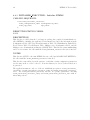
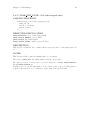
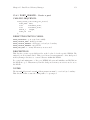
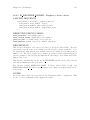
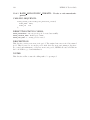
4.4.1 INITIALIZE EXECUTIVE - Initialize RTEMS
CALLING SEQUENCE:
void rtems_initialize_executive(
rtems_configuration_table *configuration_table,
rtems_cpu_table
*cpu_table
);
DIRECTIVE STATUS CODES:
NONE
DESCRIPTION:
This directive is called when the board support package has completed its initialization to
allow RTEMS to initialize the application environment based upon the information in the
Configuration Table, CPU Dependent Information Table, User Initialization Tasks Table,
Device Driver Table, User Extension Table, Multiprocessor Configuration Table, and the
Multiprocessor Communications Interface (MPCI) Table. This directive starts multitasking
and does not return to the caller until the rtems_shutdown_executive directive is invoked.
NOTES:
This directive MUST be the first RTEMS directive called and it DOES NOT RETURN to
the caller until the rtems_shutdown_executive is invoked.
This directive causes all nodes in the system to verify that certain configuration parameters
are the same as those of the local node. If an inconsistency is detected, then a fatal error
is generated.
The application must use only one of the two initialization sequences: rtems_initialize_
executive or rtems_initialize_executive_early and rtems_initialize_executive_
late. The rtems_initialize_executive directive is logically equivalent to invoking
rtems_initialize_executive_early and rtems_initialize_executive_late with no
intervening actions.
Chapter 4: Initialization Manager
25
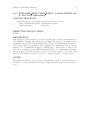
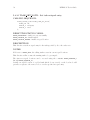
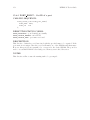
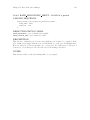
4.4.2 INITIALIZE EXECUTIVE EARLY - Initialize RTEMS and
do NOT Start Multitasking
CALLING SEQUENCE:
rtems_interrupt_level rtems_initialize_executive_early(
rtems_configuration_table *configuration_table,
rtems_cpu_table
*cpu_table
);
DIRECTIVE STATUS CODES:
NONE
DESCRIPTION:
This directive is called when the board support package has completed its initialization to
allow RTEMS to initialize the application environment based upon the information in the
Configuration Table, CPU Dependent Information Table, User Initialization Tasks Table,
Device Driver Table, User Extension Table, Multiprocessor Configuration Table, and the
Multiprocessor Communications Interface (MPCI) Table. This directive returns to the
caller after completing the basic RTEMS initialization but before multitasking is initiated.
The interrupt level in place when the directive is invoked is returned to the caller. This
interrupt level should be the same one passed to rtems_initialize_executive_late.
NOTES:
The application must use only one of the two initialization sequences: rtems_initialize_
executive or rtems_initialize_executive_early and rtems_initialize_executive_
late.
26
RTEMS C User’s Guide
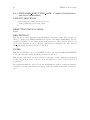
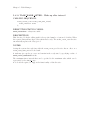
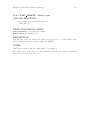
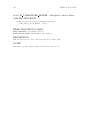
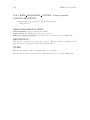
4.4.3 INITIALIZE EXECUTIVE LATE - Complete Initialization
and Start Multitasking
CALLING SEQUENCE:
void rtems_initialize_executive_late(
rtems_interrupt_level bsp_level
);
DIRECTIVE STATUS CODES:
NONE
DESCRIPTION:
This directive is called after the rtems_initialize_executive_early directive has been
called to complete the RTEMS initialization sequence and initiate multitasking. The interrupt level returned by the rtems_initialize_executive_early directive should be in
bsp level and this value is restored as part of this directive returning to the caller after the
rtems_shutdown_executive directive is invoked.
NOTES:
This directive MUST be the second RTEMS directive called and it DOES NOT RETURN
to the caller until the rtems_shutdown_executive is invoked.
This directive causes all nodes in the system to verify that certain configuration parameters
are the same as those of the local node. If an inconsistency is detected, then a fatal error
is generated.
The application must use only one of the two initialization sequences: rtems_initialize_
executive or rtems_initialize_executive_early and rtems_initialize_executive_
late.
Chapter 4: Initialization Manager
27
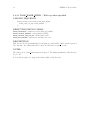
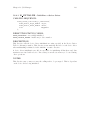
4.4.4 SHUTDOWN EXECUTIVE - Shutdown RTEMS
CALLING SEQUENCE:
void rtems_shutdown_executive(
uint32_t result
);
DIRECTIVE STATUS CODES:
NONE
DESCRIPTION:
This directive is called when the application wishes to shutdown RTEMS and return control
to the board support package. The board support package resumes execution at the code
immediately following the invocation of the rtems_initialize_executive directive.
NOTES:
This directive MUST be the last RTEMS directive invoked by an application and it DOES
NOT RETURN to the caller.
This directive should not be invoked until the executive has successfully completed initialization.
28
RTEMS C User’s Guide
Chapter 5: Task Manager
29
5 Task Manager
5.1 Introduction
The task manager provides a comprehensive set of directives to create, delete, and administer tasks. The directives provided by the task manager are:
•
•
•
•
•
•
•
•
•
•
•
•
•
•
•
•
•
•
rtems_task_create - Create a task
rtems_task_ident - Get ID of a task
rtems_task_start - Start a task
rtems_task_restart - Restart a task
rtems_task_delete - Delete a task
rtems_task_suspend - Suspend a task
rtems_task_resume - Resume a task
rtems_task_is_suspended - Determine if a task is suspended
rtems_task_set_priority - Set task priority
rtems_task_mode - Change current task’s mode
rtems_task_get_note - Get task notepad entry
rtems_task_set_note - Set task notepad entry
rtems_task_wake_after - Wake up after interval
rtems_task_wake_when - Wake up when specified
rtems_iterate_over_all_threads - Iterate Over Tasks
rtems_task_variable_add - Associate per task variable
rtems_task_variable_get - Obtain value of a a per task variable
rtems_task_variable_delete - Remove per task variable
5.2 Background
5.2.1 Task Definition
Many definitions of a task have been proposed in computer literature. Unfortunately, none
of these definitions encompasses all facets of the concept in a manner which is operating
system independent. Several of the more common definitions are provided to enable each
user to select a definition which best matches their own experience and understanding of
the task concept:
•
•
•
•
•
a "dispatchable" unit.
an entity to which the processor is allocated.
an atomic unit of a real-time, multiprocessor system.
single threads of execution which concurrently compete for resources.
a sequence of closely related computations which can execute concurrently with
other computational sequences.
From RTEMS’ perspective, a task is the smallest thread of execution which can compete on
its own for system resources. A task is manifested by the existence of a task control block
(TCB).
30
RTEMS C User’s Guide
5.2.2 Task Control Block
The Task Control Block (TCB) is an RTEMS defined data structure which contains all
the information that is pertinent to the execution of a task. During system initialization,
RTEMS reserves a TCB for each task configured. A TCB is allocated upon creation of the
task and is returned to the TCB free list upon deletion of the task.
The TCB’s elements are modified as a result of system calls made by the application in
response to external and internal stimuli. TCBs are the only RTEMS internal data structure
that can be accessed by an application via user extension routines. The TCB contains a
task’s name, ID, current priority, current and starting states, execution mode, set of notepad
locations, TCB user extension pointer, scheduling control structures, as well as data required
by a blocked task.
A task’s context is stored in the TCB when a task switch occurs. When the task regains
control of the processor, its context is restored from the TCB. When a task is restarted,
the initial state of the task is restored from the starting context area in the task’s TCB.
5.2.3 Task States
A task may exist in one of the following five states:
• executing - Currently scheduled to the CPU
• ready - May be scheduled to the CPU
• blocked - Unable to be scheduled to the CPU
• dormant - Created task that is not started
• non-existent - Uncreated or deleted task
An active task may occupy the executing, ready, blocked or dormant state, otherwise the
task is considered non-existent. One or more tasks may be active in the system simultaneously. Multiple tasks communicate, synchronize, and compete for system resources with
each other via system calls. The multiple tasks appear to execute in parallel, but actually
each is dispatched to the CPU for periods of time determined by the RTEMS scheduling
algorithm. The scheduling of a task is based on its current state and priority.
5.2.4 Task Priority
A task’s priority determines its importance in relation to the other tasks executing on the
same processor. RTEMS supports 255 levels of priority ranging from 1 to 255. The data
type rtems_task_priority is used to store task priorities.
Tasks of numerically smaller priority values are more important tasks than tasks of numerically larger priority values. For example, a task at priority level 5 is of higher privilege
than a task at priority level 10. There is no limit to the number of tasks assigned to the
same priority.
Each task has a priority associated with it at all times. The initial value of this priority is
assigned at task creation time. The priority of a task may be changed at any subsequent
time.
Chapter 5: Task Manager
31
Priorities are used by the scheduler to determine which ready task will be allowed to execute.
In general, the higher the logical priority of a task, the more likely it is to receive processor
execution time.
5.2.5 Task Mode
A task’s execution mode is a combination of the following four components:
• preemption
• ASR processing
• timeslicing
• interrupt level
It is used to modify RTEMS’ scheduling process and to alter the execution environment of
the task. The data type rtems_task_mode is used to manage the task execution mode.
The preemption component allows a task to determine when control of the processor is
relinquished. If preemption is disabled (RTEMS_NO_PREEMPT), the task will retain control of
the processor as long as it is in the executing state – even if a higher priority task is made
ready. If preemption is enabled (RTEMS_PREEMPT) and a higher priority task is made ready,
then the processor will be taken away from the current task immediately and given to the
higher priority task.
The timeslicing component is used by the RTEMS scheduler to determine how the processor
is allocated to tasks of equal priority. If timeslicing is enabled (RTEMS_TIMESLICE), then
RTEMS will limit the amount of time the task can execute before the processor is allocated
to another ready task of equal priority. The length of the timeslice is application dependent
and specified in the Configuration Table. If timeslicing is disabled (RTEMS_NO_TIMESLICE),
then the task will be allowed to execute until a task of higher priority is made ready. If
RTEMS_NO_PREEMPT is selected, then the timeslicing component is ignored by the scheduler.
The asynchronous signal processing component is used to determine when received signals
are to be processed by the task. If signal processing is enabled (RTEMS_ASR), then signals
sent to the task will be processed the next time the task executes. If signal processing
is disabled (RTEMS_NO_ASR), then all signals received by the task will remain posted until
signal processing is enabled. This component affects only tasks which have established a
routine to process asynchronous signals.
The interrupt level component is used to determine which interrupts will be enabled when
the task is executing. RTEMS_INTERRUPT_LEVEL(n) specifies that the task will execute at
interrupt level n.
• RTEMS_PREEMPT - enable preemption (default)
• RTEMS_NO_PREEMPT - disable preemption
• RTEMS_NO_TIMESLICE - disable timeslicing (default)
• RTEMS_TIMESLICE - enable timeslicing
• RTEMS_ASR - enable ASR processing (default)
• RTEMS_NO_ASR - disable ASR processing
• RTEMS_INTERRUPT_LEVEL(0) - enable all interrupts (default)
32
RTEMS C User’s Guide
• RTEMS_INTERRUPT_LEVEL(n) - execute at interrupt level n
The set of default modes may be selected by specifying the RTEMS_DEFAULT_MODES constant.
5.2.6 Accessing Task Arguments
All RTEMS tasks are invoked with a single argument which is specified when they are
started or restarted. The argument is commonly used to communicate startup information
to the task. The simplest manner in which to define a task which accesses it argument is:
rtems_task user_task(
rtems_task_argument argument
);
Application tasks requiring more information may view this single argument as an index
into an array of parameter blocks.
5.2.7 Floating Point Considerations
Creating a task with the RTEMS_FLOATING_POINT attribute flag results in additional memory
being allocated for the TCB to store the state of the numeric coprocessor during task
switches. This additional memory is NOT allocated for RTEMS_NO_FLOATING_POINT tasks.
Saving and restoring the context of a RTEMS_FLOATING_POINT task takes longer than that of
a RTEMS_NO_FLOATING_POINT task because of the relatively large amount of time required
for the numeric coprocessor to save or restore its computational state.
Since RTEMS was designed specifically for embedded military applications which are floating point intensive, the executive is optimized to avoid unnecessarily saving and restoring
the state of the numeric coprocessor. The state of the numeric coprocessor is only saved
when a RTEMS_FLOATING_POINT task is dispatched and that task was not the last task to
utilize the coprocessor. In a system with only one RTEMS_FLOATING_POINT task, the state
of the numeric coprocessor will never be saved or restored.
Although the overhead imposed by RTEMS_FLOATING_POINT tasks is minimal, some applications may wish to completely avoid the overhead associated with RTEMS_FLOATING_POINT
tasks and still utilize a numeric coprocessor. By preventing a task from being preempted
while performing a sequence of floating point operations, a RTEMS_NO_FLOATING_POINT task
can utilize the numeric coprocessor without incurring the overhead of a RTEMS_FLOATING_
POINT context switch. This approach also avoids the allocation of a floating point context
area. However, if this approach is taken by the application designer, NO tasks should be
created as RTEMS_FLOATING_POINT tasks. Otherwise, the floating point context will not be
correctly maintained because RTEMS assumes that the state of the numeric coprocessor
will not be altered by RTEMS_NO_FLOATING_POINT tasks.
If the supported processor type does not have hardware floating capabilities or a standard
numeric coprocessor, RTEMS will not provide built-in support for hardware floating point
on that processor. In this case, all tasks are considered RTEMS_NO_FLOATING_POINT whether
created as RTEMS_FLOATING_POINT or RTEMS_NO_FLOATING_POINT tasks. A floating point
emulation software library must be utilized for floating point operations.
On some processors, it is possible to disable the floating point unit dynamically. If this
capability is supported by the target processor, then RTEMS will utilize this capability to
Chapter 5: Task Manager
33
enable the floating point unit only for tasks which are created with the RTEMS_FLOATING_
POINT attribute. The consequence of a RTEMS_NO_FLOATING_POINT task attempting to
access the floating point unit is CPU dependent but will generally result in an exception
condition.
5.2.8 Per Task Variables
Per task variables are used to support global variables whose value may be unique to a task.
After indicating that a variable should be treated as private (i.e. per-task) the task can
access and modify the variable, but the modifications will not appear to other tasks, and
other tasks’ modifications to that variable will not affect the value seen by the task. This
is accomplished by saving and restoring the variable’s value each time a task switch occurs
to or from the calling task.
The value seen by other tasks, including those which have not added the variable to their
set and are thus accessing the variable as a common location shared among tasks, can not
be affected by a task once it has added a variable to its local set. Changes made to the
variable by other tasks will not affect the value seen by a task which has added the variable
to its private set.
This feature can be used when a routine is to be spawned repeatedly as several independent
tasks. Although each task will have its own stack, and thus separate stack variables, they
will all share the same static and global variables. To make a variable not shareable (i.e. a
"global" variable that is specific to a single task), the tasks can call rtems_task_variable_
add to make a separate copy of the variable for each task, but all at the same physical
address.
Task variables increase the context switch time to and from the tasks that own them so
it is desirable to minimize the number of task variables. One efficient method is to have
a single task variable that is a pointer to a dynamically allocated structure containing the
task’s private "global" data.
A critical point with per-task variables is that each task must separately request that the
same global variable is per-task private.
5.2.9 Building a Task Attribute Set
In general, an attribute set is built by a bitwise OR of the desired components. The set of
valid task attribute components is listed below:
• RTEMS_NO_FLOATING_POINT - does not use coprocessor (default)
• RTEMS_FLOATING_POINT - uses numeric coprocessor
• RTEMS_LOCAL - local task (default)
• RTEMS_GLOBAL - global task
Attribute values are specifically designed to be mutually exclusive, therefore bitwise OR
and addition operations are equivalent as long as each attribute appears exactly once in
the component list. A component listed as a default is not required to appear in the
component list, although it is a good programming practice to specify default components.
If all defaults are desired, then RTEMS_DEFAULT_ATTRIBUTES should be used.
34
RTEMS C User’s Guide
This example demonstrates the attribute set parameter needed to create a local task which
utilizes the numeric coprocessor. The attribute set parameter could be RTEMS_FLOATING_
POINT or RTEMS_LOCAL | RTEMS_FLOATING_POINT. The attribute set parameter can be set
to RTEMS_FLOATING_POINT because RTEMS_LOCAL is the default for all created tasks. If the
task were global and used the numeric coprocessor, then the attribute set parameter would
be RTEMS_GLOBAL | RTEMS_FLOATING_POINT.
5.2.10 Building a Mode and Mask
In general, a mode and its corresponding mask is built by a bitwise OR of the desired
components. The set of valid mode constants and each mode’s corresponding mask constant
is listed below:
• RTEMS_PREEMPT is masked by RTEMS_PREEMPT_MASK and enables preemption
• RTEMS_NO_PREEMPT is masked by RTEMS_PREEMPT_MASK and disables preemption
• RTEMS_NO_TIMESLICE is masked by RTEMS_TIMESLICE_MASK and disables timeslicing
• RTEMS_TIMESLICE is masked by RTEMS_TIMESLICE_MASK and enables timeslicing
• RTEMS_ASR is masked by RTEMS_ASR_MASK and enables ASR processing
• RTEMS_NO_ASR is masked by RTEMS_ASR_MASK and disables ASR processing
• RTEMS_INTERRUPT_LEVEL(0) is masked by RTEMS_INTERRUPT_MASK and enables all
interrupts
• RTEMS_INTERRUPT_LEVEL(n) is masked by RTEMS_INTERRUPT_MASK and sets interrupts level n
Mode values are specifically designed to be mutually exclusive, therefore bitwise OR and addition operations are equivalent as long as each mode appears exactly once in the component
list. A mode component listed as a default is not required to appear in the mode component
list, although it is a good programming practice to specify default components. If all defaults are desired, the mode RTEMS_DEFAULT_MODES and the mask RTEMS_ALL_MODE_MASKS
should be used.
The following example demonstrates the mode and mask parameters used with the
rtems_task_mode directive to place a task at interrupt level 3 and make it non-preemptible.
The mode should be set to RTEMS_INTERRUPT_LEVEL(3) | RTEMS_NO_PREEMPT to indicate
the desired preemption mode and interrupt level, while the mask parameter should be set
to RTEMS_INTERRUPT_MASK | RTEMS_NO_PREEMPT_MASK to indicate that the calling task’s
interrupt level and preemption mode are being altered.
5.3 Operations
5.3.1 Creating Tasks
The rtems_task_create directive creates a task by allocating a task control block, assigning
the task a user-specified name, allocating it a stack and floating point context area, setting
a user-specified initial priority, setting a user-specified initial mode, and assigning it a task
ID. Newly created tasks are initially placed in the dormant state. All RTEMS tasks execute
in the most privileged mode of the processor.
Chapter 5: Task Manager
35
5.3.2 Obtaining Task IDs
When a task is created, RTEMS generates a unique task ID and assigns it to the created
task until it is deleted. The task ID may be obtained by either of two methods. First, as the
result of an invocation of the rtems_task_create directive, the task ID is stored in a user
provided location. Second, the task ID may be obtained later using the rtems_task_ident
directive. The task ID is used by other directives to manipulate this task.
5.3.3 Starting and Restarting Tasks
The rtems_task_start directive is used to place a dormant task in the ready state. This
enables the task to compete, based on its current priority, for the processor and other system
resources. Any actions, such as suspension or change of priority, performed on a task prior
to starting it are nullified when the task is started.
With the rtems_task_start directive the user specifies the task’s starting address and
argument. The argument is used to communicate some startup information to the task.
As part of this directive, RTEMS initializes the task’s stack based upon the task’s initial
execution mode and start address. The starting argument is passed to the task in accordance
with the target processor’s calling convention.
The rtems_task_restart directive restarts a task at its initial starting address with its
original priority and execution mode, but with a possibly different argument. The new
argument may be used to distinguish between the original invocation of the task and subsequent invocations. The task’s stack and control block are modified to reflect their original
creation values. Although references to resources that have been requested are cleared,
resources allocated by the task are NOT automatically returned to RTEMS. A task cannot
be restarted unless it has previously been started (i.e. dormant tasks cannot be restarted).
All restarted tasks are placed in the ready state.
5.3.4 Suspending and Resuming Tasks
The rtems_task_suspend directive is used to place either the caller or another task into
a suspended state. The task remains suspended until a rtems_task_resume directive is
issued. This implies that a task may be suspended as well as blocked waiting either to
acquire a resource or for the expiration of a timer.
The rtems_task_resume directive is used to remove another task from the suspended state.
If the task is not also blocked, resuming it will place it in the ready state, allowing it to once
again compete for the processor and resources. If the task was blocked as well as suspended,
this directive clears the suspension and leaves the task in the blocked state.
Suspending a task which is already suspended or resuming a task which is not suspended
is considered an error. The rtems_task_is_suspended can be used to determine if a task
is currently suspended.
5.3.5 Delaying the Currently Executing Task
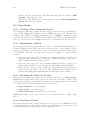
The rtems_task_wake_after directive creates a sleep timer which allows a task to go to
sleep for a specified interval. The task is blocked until the delay interval has elapsed, at
which time the task is unblocked. A task calling the rtems_task_wake_after directive
36
RTEMS C User’s Guide
with a delay interval of RTEMS_YIELD_PROCESSOR ticks will yield the processor to any other
ready task of equal or greater priority and remain ready to execute.
The rtems_task_wake_when directive creates a sleep timer which allows a task to go to
sleep until a specified date and time. The calling task is blocked until the specified date
and time has occurred, at which time the task is unblocked.
5.3.6 Changing Task Priority
The rtems_task_set_priority directive is used to obtain or change the current priority
of either the calling task or another task. If the new priority requested is RTEMS_CURRENT_
PRIORITY or the task’s actual priority, then the current priority will be returned and the
task’s priority will remain unchanged. If the task’s priority is altered, then the task will be
scheduled according to its new priority.
The rtems_task_restart directive resets the priority of a task to its original value.
5.3.7 Changing Task Mode
The rtems_task_mode directive is used to obtain or change the current execution mode of
the calling task. A task’s execution mode is used to enable preemption, timeslicing, ASR
processing, and to set the task’s interrupt level.
The rtems_task_restart directive resets the mode of a task to its original value.
5.3.8 Notepad Locations
RTEMS provides sixteen notepad locations for each task. Each notepad location may
contain a note consisting of four bytes of information. RTEMS provides two directives,
rtems_task_set_note and rtems_task_get_note, that enable a user to access and change
the notepad locations. The rtems_task_set_note directive enables the user to set a task’s
notepad entry to a specified note. The rtems_task_get_note directive allows the user to
obtain the note contained in any one of the sixteen notepads of a specified task.
5.3.9 Task Deletion
RTEMS provides the rtems_task_delete directive to allow a task to delete itself or any
other task. This directive removes all RTEMS references to the task, frees the task’s control
block, removes it from resource wait queues, and deallocates its stack as well as the optional
floating point context. The task’s name and ID become inactive at this time, and any
subsequent references to either of them is invalid. In fact, RTEMS may reuse the task ID
for another task which is created later in the application.
Unexpired delay timers (i.e. those used by rtems_task_wake_after and rtems_task_
wake_when) and timeout timers associated with the task are automatically deleted, however, other resources dynamically allocated by the task are NOT automatically returned
to RTEMS. Therefore, before a task is deleted, all of its dynamically allocated resources
should be deallocated by the user. This may be accomplished by instructing the task to
delete itself rather than directly deleting the task. Other tasks may instruct a task to delete
itself by sending a "delete self" message, event, or signal, or by restarting the task with
special arguments which instruct the task to delete itself.
Chapter 5: Task Manager
37
5.4 Directives
This section details the task manager’s directives. A subsection is dedicated to each of this
manager’s directives and describes the calling sequence, related constants, usage, and status
codes.
38
RTEMS C User’s Guide
5.4.1 TASK CREATE - Create a task
CALLING SEQUENCE:
rtems_status_code rtems_task_create(
rtems_name
name,
rtems_task_priority initial_priority,
size_t
stack_size,
rtems_mode
initial_modes,
rtems_attribute
attribute_set,
rtems_id
*id
);
DIRECTIVE STATUS CODES:
RTEMS_SUCCESSFUL - task created successfully
RTEMS_INVALID_ADDRESS - id is NULL
RTEMS_INVALID_NAME - invalid task name
RTEMS_INVALID_PRIORITY - invalid task priority
RTEMS_MP_NOT_CONFIGURED - multiprocessing not configured
RTEMS_TOO_MANY - too many tasks created
RTEMS_UNSATISFIED - not enough memory for stack/FP context
RTEMS_TOO_MANY - too many global objects
DESCRIPTION:
This directive creates a task which resides on the local node. It allocates and initializes a
TCB, a stack, and an optional floating point context area. The mode parameter contains
values which sets the task’s initial execution mode. The RTEMS_FLOATING_POINT attribute
should be specified if the created task is to use a numeric coprocessor. For performance
reasons, it is recommended that tasks not using the numeric coprocessor should specify the
RTEMS_NO_FLOATING_POINT attribute. If the RTEMS_GLOBAL attribute is specified, the task
can be accessed from remote nodes. The task id, returned in id, is used in other task related
directives to access the task. When created, a task is placed in the dormant state and can
only be made ready to execute using the directive rtems_task_start.
NOTES:
This directive will not cause the calling task to be preempted.
Valid task priorities range from a high of 1 to a low of 255.
If the requested stack size is less than RTEMS_MINIMUM_STACK_SIZE bytes, then RTEMS will
use RTEMS_MINIMUM_STACK_SIZE as the stack size. The value of RTEMS_MINIMUM_STACK_
SIZE is processor dependent. Application developers should consider the stack usage of the
device drivers when calculating the stack size required for tasks which utilize the driver.
The following task attribute constants are defined by RTEMS:
• RTEMS_NO_FLOATING_POINT - does not use coprocessor (default)
• RTEMS_FLOATING_POINT - uses numeric coprocessor
• RTEMS_LOCAL - local task (default)
Chapter 5: Task Manager
39
• RTEMS_GLOBAL - global task
The following task mode constants are defined by RTEMS:
•
•
•
•
•
•
•
•
RTEMS_PREEMPT - enable preemption (default)
RTEMS_NO_PREEMPT - disable preemption
RTEMS_NO_TIMESLICE - disable timeslicing (default)
RTEMS_TIMESLICE - enable timeslicing
RTEMS_ASR - enable ASR processing (default)
RTEMS_NO_ASR - disable ASR processing
RTEMS_INTERRUPT_LEVEL(0) - enable all interrupts (default)
RTEMS_INTERRUPT_LEVEL(n) - execute at interrupt level n
The interrupt level portion of the task execution mode supports a maximum of 256 interrupt
levels. These levels are mapped onto the interrupt levels actually supported by the target
processor in a processor dependent fashion.
Tasks should not be made global unless remote tasks must interact with them. This avoids
the system overhead incurred by the creation of a global task. When a global task is created,
the task’s name and id must be transmitted to every node in the system for insertion in the
local copy of the global object table.
The total number of global objects, including tasks, is limited by the maximum global objects field in the Configuration Table.
40
RTEMS C User’s Guide
5.4.2 TASK IDENT - Get ID of a task
CALLING SEQUENCE:
rtems_status_code rtems_task_ident(
rtems_name name,
uint32_t
node,
rtems_id
*id
);
DIRECTIVE STATUS CODES:
RTEMS_SUCCESSFUL - task identified successfully
RTEMS_INVALID_ADDRESS - id is NULL
RTEMS_INVALID_NAME - invalid task name
RTEMS_INVALID_NODE - invalid node id
DESCRIPTION:
This directive obtains the task id associated with the task name specified in name. A task
may obtain its own id by specifying RTEMS_SELF or its own task name in name. If the task
name is not unique, then the task id returned will match one of the tasks with that name.
However, this task id is not guaranteed to correspond to the desired task. The task id,
returned in id, is used in other task related directives to access the task.
NOTES:
This directive will not cause the running task to be preempted.
If node is RTEMS_SEARCH_ALL_NODES, all nodes are searched with the local node being
searched first. All other nodes are searched with the lowest numbered node searched first.
If node is a valid node number which does not represent the local node, then only the tasks
exported by the designated node are searched.
This directive does not generate activity on remote nodes. It accesses only the local copy
of the global object table.
Chapter 5: Task Manager
41
5.4.3 TASK START - Start a task
CALLING SEQUENCE:
rtems_status_code rtems_task_start(
rtems_id
id,
rtems_task_entry
entry_point,
rtems_task_argument argument
);
DIRECTIVE STATUS CODES:
RTEMS_SUCCESSFUL - ask started successfully
RTEMS_INVALID_ADDRESS - invalid task entry point
RTEMS_INVALID_ID - invalid task id
RTEMS_INCORRECT_STATE - task not in the dormant state
RTEMS_ILLEGAL_ON_REMOTE_OBJECT - cannot start remote task
DESCRIPTION:
This directive readies the task, specified by tid, for execution based on the priority and
execution mode specified when the task was created. The starting address of the task is
given in entry point. The task’s starting argument is contained in argument. This argument
can be a single value or used as an index into an array of parameter blocks.
NOTES:
The calling task will be preempted if its preemption mode is enabled and the task being
started has a higher priority.
Any actions performed on a dormant task such as suspension or change of priority are
nullified when the task is initiated via the rtems_task_start directive.
42
RTEMS C User’s Guide
5.4.4 TASK RESTART - Restart a task
CALLING SEQUENCE:
rtems_status_code rtems_task_restart(
rtems_id
id,
rtems_task_argument argument
);
DIRECTIVE STATUS CODES:
RTEMS_SUCCESSFUL - task restarted successfully
RTEMS_INVALID_ID - task id invalid
RTEMS_INCORRECT_STATE - task never started
RTEMS_ILLEGAL_ON_REMOTE_OBJECT - cannot restart remote task
DESCRIPTION:
This directive resets the task specified by id to begin execution at its original starting
address. The task’s priority and execution mode are set to the original creation values. If
the task is currently blocked, RTEMS automatically makes the task ready. A task can be
restarted from any state, except the dormant state.
The task’s starting argument is contained in argument. This argument can be a single
value or an index into an array of parameter blocks. This new argument may be used
to distinguish between the initial rtems_task_start of the task and any ensuing calls to
rtems_task_restart of the task. This can be beneficial in deleting a task. Instead of
deleting a task using the rtems_task_delete directive, a task can delete another task by
restarting that task, and allowing that task to release resources back to RTEMS and then
delete itself.
NOTES:
If id is RTEMS_SELF, the calling task will be restarted and will not return from this directive.
The calling task will be preempted if its preemption mode is enabled and the task being
restarted has a higher priority.
The task must reside on the local node, even if the task was created with the RTEMS_GLOBAL
option.
Chapter 5: Task Manager
43
5.4.5 TASK DELETE - Delete a task
CALLING SEQUENCE:
rtems_status_code rtems_task_delete(
rtems_id id
);
DIRECTIVE STATUS CODES:
RTEMS_SUCCESSFUL - task restarted successfully
RTEMS_INVALID_ID - task id invalid
RTEMS_ILLEGAL_ON_REMOTE_OBJECT - cannot restart remote task
DESCRIPTION:
This directive deletes a task, either the calling task or another task, as specified by id.
RTEMS stops the execution of the task and reclaims the stack memory, any allocated delay
or timeout timers, the TCB, and, if the task is RTEMS_FLOATING_POINT, its floating point
context area. RTEMS does not reclaim the following resources: region segments, partition
buffers, semaphores, timers, or rate monotonic periods.
NOTES:
A task is responsible for releasing its resources back to RTEMS before deletion. To insure
proper deallocation of resources, a task should not be deleted unless it is unable to execute
or does not hold any RTEMS resources. If a task holds RTEMS resources, the task should
be allowed to deallocate its resources before deletion. A task can be directed to release
its resources and delete itself by restarting it with a special argument or by sending it a
message, an event, or a signal.
Deletion of the current task (RTEMS_SELF) will force RTEMS to select another task to
execute.
When a global task is deleted, the task id must be transmitted to every node in the system
for deletion from the local copy of the global object table.
The task must reside on the local node, even if the task was created with the RTEMS_GLOBAL
option.
44
RTEMS C User’s Guide
5.4.6 TASK SUSPEND - Suspend a task
CALLING SEQUENCE:
rtems_status_code rtems_task_suspend(
rtems_id id
);
DIRECTIVE STATUS CODES:
RTEMS_SUCCESSFUL - task restarted successfully
RTEMS_INVALID_ID - task id invalid
RTEMS_ALREADY_SUSPENDED - task already suspended
DESCRIPTION:
This directive suspends the task specified by id from further execution by placing it in the
suspended state. This state is additive to any other blocked state that the task may already
be in. The task will not execute again until another task issues the rtems_task_resume
directive for this task and any blocked state has been removed.
NOTES:
The requesting task can suspend itself by specifying RTEMS_SELF as id. In this case, the task
will be suspended and a successful return code will be returned when the task is resumed.
Suspending a global task which does not reside on the local node will generate a request to
the remote node to suspend the specified task.
If the task specified by id is already suspended, then the RTEMS_ALREADY_SUSPENDED status
code is returned.
Chapter 5: Task Manager
45
5.4.7 TASK RESUME - Resume a task
CALLING SEQUENCE:
rtems_status_code rtems_task_resume(
rtems_id id
);
DIRECTIVE STATUS CODES:
RTEMS_SUCCESSFUL - task restarted successfully
RTEMS_INVALID_ID - task id invalid
RTEMS_INCORRECT_STATE - task not suspended
DESCRIPTION:
This directive removes the task specified by id from the suspended state. If the task is in
the ready state after the suspension is removed, then it will be scheduled to run. If the
task is still in a blocked state after the suspension is removed, then it will remain in that
blocked state.
NOTES:
The running task may be preempted if its preemption mode is enabled and the local task
being resumed has a higher priority.
Resuming a global task which does not reside on the local node will generate a request to
the remote node to resume the specified task.
If the task specified by id is not suspended, then the RTEMS_INCORRECT_STATE status code
is returned.
46
RTEMS C User’s Guide
5.4.8 TASK IS SUSPENDED - Determine if a task is Suspended
CALLING SEQUENCE:
rtems_status_code rtems_task_is_suspended(
rtems_id id
);
DIRECTIVE STATUS CODES:
RTEMS_SUCCESSFUL - task is NOT suspended
RTEMS_ALREADY_SUSPENDED - task is currently suspended
RTEMS_INVALID_ID - task id invalid
RTEMS_ILLEGAL_ON_REMOTE_OBJECT - not supported on remote tasks
DESCRIPTION:
This directive returns a status code indicating whether or not the specified task is currently
suspended.
NOTES:
This operation is not currently supported on remote tasks.
Chapter 5: Task Manager
47
5.4.9 TASK SET PRIORITY - Set task priority
CALLING SEQUENCE:
rtems_status_code rtems_task_set_priority(
rtems_id
id,
rtems_task_priority new_priority,
rtems_task_priority *old_priority
);
DIRECTIVE STATUS CODES:
RTEMS_SUCCESSFUL - task priority set successfully
RTEMS_INVALID_ID - invalid task id
RTEMS_INVALID_ADDRESS - invalid return argument pointer
RTEMS_INVALID_PRIORITY - invalid task priority
DESCRIPTION:
This directive manipulates the priority of the task specified by id. An id of RTEMS_SELF is
used to indicate the calling task. When new priority is not equal to RTEMS_CURRENT_
PRIORITY, the specified task’s previous priority is returned in old priority. When
new priority is RTEMS_CURRENT_PRIORITY, the specified task’s current priority is returned
in old priority. Valid priorities range from a high of 1 to a low of 255.
NOTES:
The calling task may be preempted if its preemption mode is enabled and it lowers its own
priority or raises another task’s priority.
Setting the priority of a global task which does not reside on the local node will generate a
request to the remote node to change the priority of the specified task.
If the task specified by id is currently holding any binary semaphores which use the priority
inheritance algorithm, then the task’s priority cannot be lowered immediately. If the task’s
priority were lowered immediately, then priority inversion results. The requested lowering
of the task’s priority will occur when the task has released all priority inheritance binary
semaphores. The task’s priority can be increased regardless of the task’s use of priority
inheritance binary semaphores.
48
RTEMS C User’s Guide
5.4.10 TASK MODE - Change the current task mode
CALLING SEQUENCE:
rtems_status_code rtems_task_mode(
rtems_mode mode_set,
rtems_mode mask,
rtems_mode *previous_mode_set
);
DIRECTIVE STATUS CODES:
RTEMS_SUCCESSFUL - task mode set successfully
RTEMS_INVALID_ADDRESS - previous_mode_set is NULL
DESCRIPTION:
This directive manipulates the execution mode of the calling task. A task’s execution mode
enables and disables preemption, timeslicing, asynchronous signal processing, as well as
specifying the current interrupt level. To modify an execution mode, the mode class(es)
to be changed must be specified in the mask parameter and the desired mode(s) must be
specified in the mode parameter.
NOTES:
The calling task will be preempted if it enables preemption and a higher priority task is
ready to run.
Enabling timeslicing has no effect if preemption is disabled. For a task to be timesliced,
that task must have both preemption and timeslicing enabled.
A task can obtain its current execution mode, without modifying it, by calling this directive
with a mask value of RTEMS_CURRENT_MODE.
To temporarily disable the processing of a valid ASR, a task should call this directive with
the RTEMS_NO_ASR indicator specified in mode.
The set of task mode constants and each mode’s corresponding mask constant is provided
in the following table:
•
•
•
•
•
•
•
RTEMS_PREEMPT is masked by RTEMS_PREEMPT_MASK and enables preemption
RTEMS_NO_PREEMPT is masked by RTEMS_PREEMPT_MASK and disables preemption
RTEMS_NO_TIMESLICE is masked by RTEMS_TIMESLICE_MASK and disables timeslicing
RTEMS_TIMESLICE is masked by RTEMS_TIMESLICE_MASK and enables timeslicing
RTEMS_ASR is masked by RTEMS_ASR_MASK and enables ASR processing
RTEMS_NO_ASR is masked by RTEMS_ASR_MASK and disables ASR processing
RTEMS_INTERRUPT_LEVEL(0) is masked by RTEMS_INTERRUPT_MASK and enables all
interrupts
• RTEMS_INTERRUPT_LEVEL(n) is masked by RTEMS_INTERRUPT_MASK and sets interrupts level n
Chapter 5: Task Manager
49
5.4.11 TASK GET NOTE - Get task notepad entry
CALLING SEQUENCE:
rtems_status_code rtems_task_get_note(
rtems_id id,
uint32_t notepad,
uint32_t *note
);
DIRECTIVE STATUS CODES:
RTEMS_SUCCESSFUL - note obtained successfully
RTEMS_INVALID_ADDRESS - note is NULL
RTEMS_INVALID_ID - invalid task id
RTEMS_INVALID_NUMBER - invalid notepad location
DESCRIPTION:
This directive returns the note contained in the notepad location of the task specified by
id.
NOTES:
This directive will not cause the running task to be preempted.
If id is set to RTEMS_SELF, the calling task accesses its own notepad.
The sixteen notepad locations can be accessed using the constants RTEMS_NOTEPAD_0
through RTEMS_NOTEPAD_15.
Getting a note of a global task which does not reside on the local node will generate a
request to the remote node to obtain the notepad entry of the specified task.
50
RTEMS C User’s Guide
5.4.12 TASK SET NOTE - Set task notepad entry
CALLING SEQUENCE:
rtems_status_code rtems_task_set_note(
rtems_id id,
uint32_t notepad,
uint32_t note
);
DIRECTIVE STATUS CODES:
RTEMS_SUCCESSFUL - task’s note set successfully
RTEMS_INVALID_ID - invalid task id
RTEMS_INVALID_NUMBER - invalid notepad location
DESCRIPTION:
This directive sets the notepad entry for the task specified by id to the value note.
NOTES:
If id is set to RTEMS_SELF, the calling task accesses its own notepad locations.
This directive will not cause the running task to be preempted.
The sixteen notepad locations can be accessed using the constants RTEMS_NOTEPAD_0
through RTEMS_NOTEPAD_15.
Setting a notepad location of a global task which does not reside on the local node will
generate a request to the remote node to set the specified notepad entry.
Chapter 5: Task Manager
51
5.4.13 TASK WAKE AFTER - Wake up after interval
CALLING SEQUENCE:
rtems_status_code rtems_task_wake_after(
rtems_interval ticks
);
DIRECTIVE STATUS CODES:
RTEMS_SUCCESSFUL - always successful
DESCRIPTION:
This directive blocks the calling task for the specified number of system clock ticks. When
the requested interval has elapsed, the task is made ready. The rtems_clock_tick directive
automatically updates the delay period.
NOTES:
Setting the system date and time with the rtems_clock_set directive has no effect on a
rtems_task_wake_after blocked task.
A task may give up the processor and remain in the ready state by specifying a value of
RTEMS_YIELD_PROCESSOR in ticks.
The maximum timer interval that can be specified is the maximum value which can be
represented by the uint32 t type.
A clock tick is required to support the functionality of this directive.
52
RTEMS C User’s Guide
5.4.14 TASK WAKE WHEN - Wake up when specified
CALLING SEQUENCE:
rtems_status_code rtems_task_wake_when(
rtems_time_of_day *time_buffer
);
DIRECTIVE STATUS CODES:
RTEMS_SUCCESSFUL - awakened at date/time successfully
RTEMS_INVALID_ADDRESS - time_buffer is NULL
RTEMS_INVALID_TIME_OF_DAY - invalid time buffer
RTEMS_NOT_DEFINED - system date and time is not set
DESCRIPTION:
This directive blocks a task until the date and time specified in time buffer. At the requested
date and time, the calling task will be unblocked and made ready to execute.
NOTES:
The ticks portion of time buffer structure is ignored. The timing granularity of this directive
is a second.
A clock tick is required to support the functionality of this directive.
Chapter 5: Task Manager
53
5.4.15 ITERATE OVER ALL THREADS - Iterate Over Tasks
CALLING SEQUENCE:
typedef void (*rtems_per_thread_routine)(
Thread_Control *the_thread
);
void rtems_iterate_over_all_threads(
rtems_per_thread_routine routine
);
DIRECTIVE STATUS CODES: NONE
DESCRIPTION:
This directive iterates over all of the existant threads in the system and invokes routine
on each of them. The user should be careful in accessing the contents of the_thread.
This routine is intended for use in diagnostic utilities and is not intented for routine use in
an operational system.
NOTES:
There is NO protection while this routine is called. Thus it is possible that the_thread
could be deleted while this is operating. By not having protection, the user is free to invoke
support routines from the C Library which require semaphores for data structures.
54
RTEMS C User’s Guide
5.4.16 TASK VARIABLE ADD - Associate per task variable
CALLING SEQUENCE:
rtems_status_code rtems_task_variable_add(
rtems_id tid,
void
**task_variable,
void
(*dtor)(void *)
);
DIRECTIVE STATUS CODES:
RTEMS_SUCCESSFUL - per task variable added successfully
RTEMS_INVALID_ADDRESS - task_variable is NULL
RTEMS_INVALID_ID - invalid task id
RTEMS_NO_MEMORY - invalid task id
RTEMS_ILLEGAL_ON_REMOTE_OBJECT - not supported on remote tasks
DESCRIPTION:
This directive adds the memory location specified by the ptr argument to the context of the
given task. The variable will then be private to the task. The task can access and modify the
variable, but the modifications will not appear to other tasks, and other tasks’ modifications
to that variable will not affect the value seen by the task. This is accomplished by saving
and restoring the variable’s value each time a task switch occurs to or from the calling task.
If the dtor argument is non-NULL it specifies the address of a ‘destructor’ function which
will be called when the task is deleted. The argument passed to the destructor function is
the task’s value of the variable.
NOTES:
Task variables increase the context switch time to and from the tasks that own them so
it is desirable to minimize the number of task variables. One efficient method is to have
a single task variable that is a pointer to a dynamically allocated structure containing the
task’s private ‘global’ data. In this case the destructor function could be ‘free’.
Chapter 5: Task Manager
55
5.4.17 TASK VARIABLE GET - Obtain value of a per task
variable
CALLING SEQUENCE:
rtems_status_code rtems_task_variable_get(
rtems_id tid,
void
**task_variable,
void
**task_variable_value
);
DIRECTIVE STATUS CODES:
RTEMS_SUCCESSFUL - per task variable added successfully
RTEMS_INVALID_ADDRESS - task_variable is NULL
RTEMS_INVALID_ADDRESS - task_variable_value is NULL
RTEMS_INVALID_ADDRESS - task_variable is not found
RTEMS_NO_MEMORY - invalid task id
RTEMS_ILLEGAL_ON_REMOTE_OBJECT - not supported on remote tasks
DESCRIPTION:
This directive looks up the private value of a task variable for a specified task and stores
that value in the location pointed to by the result argument. The specified task is usually
not the calling task, which can get its private value by directly accessing the variable.
NOTES:
If you change memory which task_variable_value points to, remember to declare that
memory as volatile, so that the compiler will optimize it correctly. In this case both the
pointer task_variable_value and data referenced by task_variable_value should be
considered volatile.
56
RTEMS C User’s Guide
5.4.18 TASK VARIABLE DELETE - Remove per task variable
CALLING SEQUENCE:
rtems_status_code rtems_task_variable_delete(
rtems_id tid,
void
**task_variable
);
DIRECTIVE STATUS CODES:
RTEMS_SUCCESSFUL - per task variable added successfully
RTEMS_INVALID_ID - invalid task id
RTEMS_NO_MEMORY - invalid task id
RTEMS_INVALID_ADDRESS - task_variable is NULL
RTEMS_ILLEGAL_ON_REMOTE_OBJECT - not supported on remote tasks
DESCRIPTION:
This directive removes the given location from a task’s context.
NOTES:
NONE
Chapter 6: Interrupt Manager
57
6 Interrupt Manager
6.1 Introduction
Any real-time executive must provide a mechanism for quick response to externally generated interrupts to satisfy the critical time constraints of the application. The interrupt
manager provides this mechanism for RTEMS. This manager permits quick interrupt response times by providing the critical ability to alter task execution which allows a task
to be preempted upon exit from an ISR. The interrupt manager includes the following
directive:
• rtems_interrupt_catch - Establish an ISR
• rtems_interrupt_disable - Disable Interrupts
• rtems_interrupt_enable - Enable Interrupts
• rtems_interrupt_flash - Flash Interrupt
• rtems_interrupt_is_in_progress - Is an ISR in Progress
6.2 Background
6.2.1 Processing an Interrupt
The interrupt manager allows the application to connect a function to a hardware interrupt vector. When an interrupt occurs, the processor will automatically vector to RTEMS.
RTEMS saves and restores all registers which are not preserved by the normal C calling
convention for the target processor and invokes the user’s ISR. The user’s ISR is responsible for processing the interrupt, clearing the interrupt if necessary, and device specific
manipulation.
The rtems_interrupt_catch directive connects a procedure to an interrupt vector. The
vector number is managed using the rtems_vector_number data type.
The interrupt service routine is assumed to abide by these conventions and have a prototype
similar to the following:
rtems_isr user_isr(
rtems_vector_number vector
);
The vector number argument is provided by RTEMS to allow the application to identify
the interrupt source. This could be used to allow a single routine to service interrupts
from multiple instances of the same device. For example, a single routine could service
interrupts from multiple serial ports and use the vector number to identify which port
requires servicing.
To minimize the masking of lower or equal priority level interrupts, the ISR should perform
the minimum actions required to service the interrupt. Other non-essential actions should
be handled by application tasks. Once the user’s ISR has completed, it returns control to
the RTEMS interrupt manager which will perform task dispatching and restore the registers
saved before the ISR was invoked.
58
RTEMS C User’s Guide
The RTEMS interrupt manager guarantees that proper task scheduling and dispatching are
performed at the conclusion of an ISR. A system call made by the ISR may have readied a
task of higher priority than the interrupted task. Therefore, when the ISR completes, the
postponed dispatch processing must be performed. No dispatch processing is performed as
part of directives which have been invoked by an ISR.
Applications must adhere to the following rule if proper task scheduling and dispatching is
to be performed:
The interrupt manager must be used for all ISRs which may be interrupted by the
highest priority ISR which invokes an RTEMS directive.
Consider a processor which allows a numerically low interrupt level to interrupt a numerically greater interrupt level. In this example, if an RTEMS directive is used in a level 4
ISR, then all ISRs which execute at levels 0 through 4 must use the interrupt manager.
Interrupts are nested whenever an interrupt occurs during the execution of another ISR.
RTEMS supports efficient interrupt nesting by allowing the nested ISRs to terminate without performing any dispatch processing. Only when the outermost ISR terminates will the
postponed dispatching occur.
6.2.2 RTEMS Interrupt Levels
Many processors support multiple interrupt levels or priorities. The exact number of interrupt levels is processor dependent. RTEMS internally supports 256 interrupt levels which
are mapped to the processor’s interrupt levels. For specific information on the mapping between RTEMS and the target processor’s interrupt levels, refer to the Interrupt Processing
chapter of the Applications Supplement document for a specific target processor.
6.2.3 Disabling of Interrupts by RTEMS
During the execution of directive calls, critical sections of code may be executed. When these
sections are encountered, RTEMS disables all maskable interrupts before the execution of
the section and restores them to the previous level upon completion of the section. RTEMS
has been optimized to insure that interrupts are disabled for a minimum length of time.
The maximum length of time interrupts are disabled by RTEMS is processor dependent and
is detailed in the Timing Specification chapter of the Applications Supplement document
for a specific target processor.
Non-maskable interrupts (NMI) cannot be disabled, and ISRs which execute at this level
MUST NEVER issue RTEMS system calls. If a directive is invoked, unpredictable results
may occur due to the inability of RTEMS to protect its critical sections. However, ISRs
that make no system calls may safely execute as non-maskable interrupts.
6.3 Operations
6.3.1 Establishing an ISR
The rtems_interrupt_catch directive establishes an ISR for the system. The address of
the ISR and its associated CPU vector number are specified to this directive. This directive
installs the RTEMS interrupt wrapper in the processor’s Interrupt Vector Table and the
Chapter 6: Interrupt Manager
59
address of the user’s ISR in the RTEMS’ Vector Table. This directive returns the previous
contents of the specified vector in the RTEMS’ Vector Table.
6.3.2 Directives Allowed from an ISR
Using the interrupt manager insures that RTEMS knows when a directive is being called
from an ISR. The ISR may then use system calls to synchronize itself with an application
task. The synchronization may involve messages, events or signals being passed by the ISR
to the desired task. Directives invoked by an ISR must operate only on objects which reside
on the local node. The following is a list of RTEMS system calls that may be made from
an ISR:
• Task Management
Although it is acceptable to operate on the RTEMS SELF task (e.g. the currently
executing task), while in an ISR, this will refer to the interrupted task. Most of the
time, it is an application implementation error to use RTEMS SELF from an ISR.
- rtems task get note,
rtems task set note,
rtems task suspend,
rtems task resume
• Clock and Timer Management
- rtems clock get, rtems clock tick
- rtems timer fire after, rtems timer fire when, rtems timer cancel
• Message, Event, and Signal Management
- rtems message queue send, rtems message queue urgent
- rtems event send
- rtems signal send
• Semaphore Management
- rtems semaphore release
• Dual-Ported Memory Management
- rtems port external to internal, rtems port internal to external
• IO Management
The following services are safe to call from an ISR if and only if the device driver
service invoked is also safe. The IO Manager itself is safe but the invoked driver
entry point may or may not be.
- rtems io initialize,
rtems io open,
rtems io close,
rtems io read,
rtems io write, rtems io control
• Fatal Error Management
- rtems fatal error occurred
• Multiprocessing
- rtems multiprocessing announce
6.4 Directives
This section details the interrupt manager’s directives. A subsection is dedicated to each of
this manager’s directives and describes the calling sequence, related constants, usage, and
status codes.
60
RTEMS C User’s Guide
6.4.1 INTERRUPT CATCH - Establish an ISR
CALLING SEQUENCE:
rtems_status_code rtems_interrupt_catch(
rtems_isr_entry
new_isr_handler,
rtems_vector_number vector,
rtems_isr_entry
*old_isr_handler
);
DIRECTIVE STATUS CODES:
RTEMS_SUCCESSFUL - ISR established successfully
RTEMS_INVALID_NUMBER - illegal vector number
RTEMS_INVALID_ADDRESS - illegal ISR entry point or invalid old_isr_handler
DESCRIPTION:
This directive establishes an interrupt service routine (ISR) for the specified interrupt vector
number. The new_isr_handler parameter specifies the entry point of the ISR. The entry
point of the previous ISR for the specified vector is returned in old_isr_handler.
To release an interrupt vector, pass the old handler’s address obtained when the vector was
first capture.
NOTES:
This directive will not cause the calling task to be preempted.
Chapter 6: Interrupt Manager
61
6.4.2 INTERRUPT DISABLE - Disable Interrupts
CALLING SEQUENCE:
void rtems_interrupt_disable(
rtems_interrupt_level level
);
/* this is implemented as a macro and sets level as a side-effect */
DIRECTIVE STATUS CODES:
NONE
DESCRIPTION:
This directive disables all maskable interrupts and returns the previous level. A later
invocation of the rtems_interrupt_enable directive should be used to restore the interrupt
level.
NOTES:
This directive will not cause the calling task to be preempted.
This directive is implemented as a macro which modifies the level parameter.
62
RTEMS C User’s Guide
6.4.3 INTERRUPT ENABLE - Enable Interrupts
CALLING SEQUENCE:
void rtems_interrupt_enable(
rtems_interrupt_level level
);
DIRECTIVE STATUS CODES:
NONE
DESCRIPTION:
This directive enables maskable interrupts to the level which was returned by a previous
call to rtems_interrupt_disable. Immediately prior to invoking this directive, maskable
interrupts should be disabled by a call to rtems_interrupt_disable and will be enabled
when this directive returns to the caller.
NOTES:
This directive will not cause the calling task to be preempted.
Chapter 6: Interrupt Manager
63
6.4.4 INTERRUPT FLASH - Flash Interrupts
CALLING SEQUENCE:
void rtems_interrupt_flash(
rtems_interrupt_level level
);
DIRECTIVE STATUS CODES:
NONE
DESCRIPTION:
This directive temporarily enables maskable interrupts to the level which was returned by
a previous call to rtems_interrupt_disable. Immediately prior to invoking this directive,
maskable interrupts should be disabled by a call to rtems_interrupt_disable and will be
redisabled when this directive returns to the caller.
NOTES:
This directive will not cause the calling task to be preempted.
64
RTEMS C User’s Guide
6.4.5 INTERRUPT IS IN PROGRESS - Is an ISR in Progress
CALLING SEQUENCE:
rtems_boolean rtems_interrupt_is_in_progress( void );
DIRECTIVE STATUS CODES:
NONE
DESCRIPTION:
This directive returns TRUE if the processor is currently servicing an interrupt and FALSE
otherwise. A return value of TRUE indicates that the caller is an interrupt service routine,
NOT a task. The directives available to an interrupt service routine are restricted.
NOTES:
This directive will not cause the calling task to be preempted.
Chapter 7: Clock Manager
65
7 Clock Manager
7.1 Introduction
The clock manager provides support for time of day and other time related capabilities.
The directives provided by the clock manager are:
• rtems_clock_set - Set system date and time
• rtems_clock_get - Get system date and time information
• rtems_clock_tick - Announce a clock tick
7.2 Background
7.2.1 Required Support
For the features provided by the clock manager to be utilized, periodic timer interrupts
are required. Therefore, a real-time clock or hardware timer is necessary to create the
timer interrupts. The rtems_clock_tick directive is normally called by the timer ISR to
announce to RTEMS that a system clock tick has occurred. Elapsed time is measured in
ticks. A tick is defined to be an integral number of microseconds which is specified by the
user in the Configuration Table.
7.2.2 Time and Date Data Structures
The clock facilities of the clock manager operate upon calendar time. These directives
utilize the following date and time structure for the native time and date format:
struct rtems_tod_control {
uint32_t year;
/* greater than 1987 */
uint32_t month; /* 1 - 12 */
uint32_t day;
/* 1 - 31 */
uint32_t hour;
/* 0 - 23 */
uint32_t minute; /* 0 - 59 */
uint32_t second; /* 0 - 59 */
uint32_t ticks; /* elapsed between seconds */
};
typedef struct rtems_tod_control rtems_time_of_day;
The native date and time format is the only format supported when setting the system date
and time using the rtems_clock_get directive. Some applications expect to operate on a
"UNIX-style" date and time data structure. The rtems_clock_get directive can optionally
return the current date and time in the following structure:
typedef struct {
uint32_t seconds;
/* seconds since RTEMS epoch*/
uint32_t microseconds; /* since last second
*/
} rtems_clock_time_value;
The seconds field in this structure is the number of seconds since the RTEMS epoch of
January 1, 1988.
66
RTEMS C User’s Guide
7.2.3 Clock Tick and Timeslicing
Timeslicing is a task scheduling discipline in which tasks of equal priority are executed for
a specific period of time before control of the CPU is passed to another task. It is also
sometimes referred to as the automatic round-robin scheduling algorithm. The length of
time allocated to each task is known as the quantum or timeslice.
The system’s timeslice is defined as an integral number of ticks, and is specified in the
Configuration Table. The timeslice is defined for the entire system of tasks, but timeslicing
is enabled and disabled on a per task basis.
The rtems_clock_tick directive implements timeslicing by decrementing the running
task’s time-remaining counter when both timeslicing and preemption are enabled. If the
task’s timeslice has expired, then that task will be preempted if there exists a ready task of
equal priority.
7.2.4 Delays
A sleep timer allows a task to delay for a given interval or up until a given time, and
then wake and continue execution. This type of timer is created automatically by the
rtems_task_wake_after and rtems_task_wake_when directives and, as a result, does not
have an RTEMS ID. Once activated, a sleep timer cannot be explicitly deleted. Each task
may activate one and only one sleep timer at a time.
7.2.5 Timeouts
Timeouts are a special type of timer automatically created when the timeout option is
used on the rtems_message_queue_receive, rtems_event_receive, rtems_semaphore_
obtain and rtems_region_get_segment directives. Each task may have one and only one
timeout active at a time. When a timeout expires, it unblocks the task with a timeout
status code.
7.3 Operations
7.3.1 Announcing a Tick
RTEMS provides the rtems_clock_tick directive which is called from the user’s real-time
clock ISR to inform RTEMS that a tick has elapsed. The tick frequency value, defined
in microseconds, is a configuration parameter found in the Configuration Table. RTEMS
divides one million microseconds (one second) by the number of microseconds per tick to
determine the number of calls to the rtems_clock_tick directive per second. The frequency
of rtems_clock_tick calls determines the resolution (granularity) for all time dependent
RTEMS actions. For example, calling rtems_clock_tick ten times per second yields a
higher resolution than calling rtems_clock_tick two times per second. The rtems_clock_
tick directive is responsible for maintaining both calendar time and the dynamic set of
timers.
7.3.2 Setting the Time
The rtems_clock_set directive allows a task or an ISR to set the date and time maintained
by RTEMS. If setting the date and time causes any outstanding timers to pass their deadline,
then the expired timers will be fired during the invocation of the rtems_clock_set directive.
Chapter 7: Clock Manager
67
7.3.3 Obtaining the Time
The rtems_clock_get directive allows a task or an ISR to obtain the current date and time
or date and time related information. The current date and time can be returned in either
native or UNIX-style format. Additionally, the application can obtain date and time related
information such as the number of seconds since the RTEMS epoch, the number of ticks
since the executive was initialized, and the number of ticks per second. The information
returned by the rtems_clock_get directive is dependent on the option selected by the
caller. This is specified using one of the following constants associated with the enumerated
type rtems_clock_get_options:
• RTEMS_CLOCK_GET_TOD - obtain native style date and time
• RTEMS_CLOCK_GET_TIME_VALUE - obtain UNIX-style date and time
• RTEMS_CLOCK_GET_TICKS_SINCE_BOOT - obtain number of ticks since RTEMS was
initialized
• RTEMS_CLOCK_GET_SECONDS_SINCE_EPOCH - obtain number of seconds since RTEMS
epoch
• RTEMS_CLOCK_GET_TICKS_PER_SECOND - obtain number of clock ticks per second
Calendar time operations will return an error code if invoked before the date and time have
been set.
7.4 Directives
This section details the clock manager’s directives. A subsection is dedicated to each of
this manager’s directives and describes the calling sequence, related constants, usage, and
status codes.
68
RTEMS C User’s Guide
7.4.1 CLOCK SET - Set system date and time
CALLING SEQUENCE:
rtems_status_code rtems_clock_set(
rtems_time_of_day *time_buffer
);
DIRECTIVE STATUS CODES:
RTEMS_SUCCESSFUL - date and time set successfully
RTEMS_INVALID_ADDRESS - time_buffer is NULL
RTEMS_INVALID_CLOCK - invalid time of day
DESCRIPTION:
This directive sets the system date and time. The date, time, and ticks in the time buffer
structure are all range-checked, and an error is returned if any one is out of its valid range.
NOTES:
Years before 1988 are invalid.
The system date and time are based on the configured tick rate (number of microseconds
in a tick).
Setting the time forward may cause a higher priority task, blocked waiting on a specific
time, to be made ready. In this case, the calling task will be preempted after the next clock
tick.
Re-initializing RTEMS causes the system date and time to be reset to an uninitialized state.
Another call to rtems_clock_set is required to re-initialize the system date and time to
application specific specifications.
Chapter 7: Clock Manager
69
7.4.2 CLOCK GET - Get system date and time information
CALLING SEQUENCE:
rtems_status_code rtems_clock_get(
rtems_clock_get_options option,
void
*time_buffer
);
DIRECTIVE STATUS CODES:
RTEMS_SUCCESSFUL - current time obtained successfully
RTEMS_NOT_DEFINED - system date and time is not set
RTEMS_INVALID_ADDRESS - time_buffer is NULL
DESCRIPTION:
This directive obtains the system date and time. If the caller is attempting to obtain
the date and time (i.e. option is set to either RTEMS_CLOCK_GET_SECONDS_SINCE_EPOCH,
RTEMS_CLOCK_GET_TOD, or RTEMS_CLOCK_GET_TIME_VALUE) and the date and time has not
been set with a previous call to rtems_clock_set, then the RTEMS_NOT_DEFINED status
code is returned. The caller can always obtain the number of ticks per second (option
is RTEMS_CLOCK_GET_TICKS_PER_SECOND) and the number of ticks since the executive was
initialized option is RTEMS_CLOCK_GET_TICKS_SINCE_BOOT).
The option argument may taken on any value of the enumerated type rtems_clock_get_
options. The data type expected for time_buffer is based on the value of option as
indicated below:
•
•
•
•
•
RTEMS_CLOCK_GET_TOD - (rtems time of day *)
RTEMS_CLOCK_GET_TIME_VALUE - (rtems clock time value *)
RTEMS_CLOCK_GET_TICKS_SINCE_BOOT - (rtems interval *)
RTEMS_CLOCK_GET_SECONDS_SINCE_EPOCH - (rtems interval *)
RTEMS_CLOCK_GET_TICKS_PER_SECOND - (rtems interval *)
NOTES:
This directive is callable from an ISR.
This directive will not cause the running task to be preempted. Re-initializing RTEMS
causes the system date and time to be reset to an uninitialized state. Another call to
rtems_clock_set is required to re-initialize the system date and time to application specific
specifications.
70
RTEMS C User’s Guide
7.4.3 CLOCK TICK - Announce a clock tick
CALLING SEQUENCE:
rtems_status_code rtems_clock_tick( void );
DIRECTIVE STATUS CODES:
RTEMS_SUCCESSFUL - clock tick processed successfully
DESCRIPTION:
This directive announces to RTEMS that a system clock tick has occurred. The directive is
usually called from the timer interrupt ISR of the local processor. This directive maintains
the system date and time, decrements timers for delayed tasks, timeouts, rate monotonic
periods, and implements timeslicing.
NOTES:
This directive is typically called from an ISR.
The microseconds per tick and ticks per timeslice parameters in the Configuration Table
contain the number of microseconds per tick and number of ticks per timeslice, respectively.
Chapter 8: Timer Manager
71
8 Timer Manager
8.1 Introduction
The timer manager provides support for timer facilities. The directives provided by the
timer manager are:
•
•
•
•
•
•
•
•
•
•
rtems_timer_create - Create a timer
rtems_timer_ident - Get ID of a timer
rtems_timer_cancel - Cancel a timer
rtems_timer_delete - Delete a timer
rtems_timer_fire_after - Fire timer after interval
rtems_timer_fire_when - Fire timer when specified
rtems_timer_initiate_server - Initiate server for task-based timers
rtems_timer_server_fire_after - Fire task-based timer after interval
rtems_timer_server_fire_when - Fire task-based timer when specified
rtems_timer_reset - Reset an interval timer
8.2 Background
8.2.1 Required Support
A clock tick is required to support the functionality provided by this manager.
8.2.2 Timers
A timer is an RTEMS object which allows the application to schedule operations to occur
at specific times in the future. User supplied timer service routines are invoked by either the
rtems_clock_tick directive or a special Timer Server task when the timer fires. Timer service routines may perform any operations or directives which normally would be performed
by the application code which invoked the rtems_clock_tick directive.
The timer can be used to implement watchdog routines which only fire to denote that an
application error has occurred. The timer is reset at specific points in the application to
insure that the watchdog does not fire. Thus, if the application does not reset the watchdog
timer, then the timer service routine will fire to indicate that the application has failed to
reach a reset point. This use of a timer is sometimes referred to as a "keep alive" or a
"deadman" timer.
8.2.3 Timer Server
The Timer Server task is responsible for executing the timer service routines associated with
all task-based timers. This task executes at a priority higher than any RTEMS application
task, and is created non-preemptible, and thus can be viewed logically as the lowest priority
interrupt.
By providing a mechanism where timer service routines execute in task rather than interrupt
space, the application is allowed a bit more flexibility in what operations a timer service
72
RTEMS C User’s Guide
routine can perform. For example, the Timer Server can be configured to have a floating
point context in which case it would be safe to perform floating point operations from a taskbased timer. Most of the time, executing floating point instructions from an interrupt service
routine is not considered safe. However, since the Timer Server task is non-preemptible,
only directives allowed from an ISR can be called in the timer service routine.
The Timer Server is designed to remain blocked until a task-based timer fires. This reduces
the execution overhead of the Timer Server.
8.2.4 Timer Service Routines
The timer service routine should adhere to C calling conventions and have a prototype
similar to the following:
rtems_timer_service_routine user_routine(
rtems_id
timer_id,
void
*user_data
);
Where the timer id parameter is the RTEMS object ID of the timer which is being fired
and user data is a pointer to user-defined information which may be utilized by the timer
service routine. The argument user data may be NULL.
8.3 Operations
8.3.1 Creating a Timer
The rtems_timer_create directive creates a timer by allocating a Timer Control Block
(TMCB), assigning the timer a user-specified name, and assigning it a timer ID. Newly
created timers do not have a timer service routine associated with them and are not active.
8.3.2 Obtaining Timer IDs
When a timer is created, RTEMS generates a unique timer ID and assigns it to the created
timer until it is deleted. The timer ID may be obtained by either of two methods. First, as
the result of an invocation of the rtems_timer_create directive, the timer ID is stored in a
user provided location. Second, the timer ID may be obtained later using the rtems_timer_
ident directive. The timer ID is used by other directives to manipulate this timer.
8.3.3 Initiating an Interval Timer
The rtems_timer_fire_after and rtems_timer_server_fire_after directives initiate a
timer to fire a user provided timer service routine after the specified number of clock ticks
have elapsed. When the interval has elapsed, the timer service routine will be invoked
from the rtems_clock_tick directive if it was initiated by the rtems_timer_fire_after
directive and from the Timer Server task if initiated by the rtems_timer_server_fire_
after directive.
8.3.4 Initiating a Time of Day Timer
The rtems_timer_fire_when and rtems_timer_server_fire_when directive initiate a
timer to fire a user provided timer service routine when the specified time of day has been
reached. When the interval has elapsed, the timer service routine will be invoked from the
Chapter 8: Timer Manager
73
rtems_clock_tick directive by the rtems_timer_fire_when directive and from the Timer
Server task if initiated by the rtems_timer_server_fire_when directive.
8.3.5 Canceling a Timer
The rtems_timer_cancel directive is used to halt the specified timer. Once canceled, the
timer service routine will not fire unless the timer is reinitiated. The timer can be reinitiated
using the rtems_timer_reset, rtems_timer_fire_after, and rtems_timer_fire_when
directives.
8.3.6 Resetting a Timer
The rtems_timer_reset directive is used to restore an interval timer initiated by a previous invocation of rtems_timer_fire_after or rtems_timer_server_fire_after to its
original interval length. If the timer has not been used or the last usage of this timer was by
the rtems_timer_fire_when or rtems_timer_server_fire_when directive, then an error
is returned. The timer service routine is not changed or fired by this directive.
8.3.7 Initiating the Timer Server
The rtems_timer_initiate_server directive is used to allocate and start the execution
of the Timer Server task. The application can specify both the stack size and attributes of
the Timer Server. The Timer Server executes at a priority higher than any application task
and thus the user can expect to be preempted as the result of executing the rtems_timer_
initiate_server directive.
8.3.8 Deleting a Timer
The rtems_timer_delete directive is used to delete a timer. If the timer is running and
has not expired, the timer is automatically canceled. The timer’s control block is returned
to the TMCB free list when it is deleted. A timer can be deleted by a task other than the
task which created the timer. Any subsequent references to the timer’s name and ID are
invalid.
8.4 Directives
This section details the timer manager’s directives. A subsection is dedicated to each of
this manager’s directives and describes the calling sequence, related constants, usage, and
status codes.
74
RTEMS C User’s Guide
8.4.1 TIMER CREATE - Create a timer
CALLING SEQUENCE:
rtems_status_code rtems_timer_create(
rtems_name name,
rtems_id
*id
);
DIRECTIVE STATUS CODES:
RTEMS_SUCCESSFUL - timer created successfully
RTEMS_INVALID_ADDRESS - id is NULL
RTEMS_INVALID_NAME - invalid timer name
RTEMS_TOO_MANY - too many timers created
DESCRIPTION:
This directive creates a timer. The assigned timer id is returned in id. This id is used to
access the timer with other timer manager directives. For control and maintenance of the
timer, RTEMS allocates a TMCB from the local TMCB free pool and initializes it.
NOTES:
This directive will not cause the calling task to be preempted.
Chapter 8: Timer Manager
75
8.4.2 TIMER IDENT - Get ID of a timer
CALLING SEQUENCE:
rtems_status_code rtems_timer_ident(
rtems_name name,
rtems_id
*id
);
DIRECTIVE STATUS CODES:
RTEMS_SUCCESSFUL - timer identified successfully
RTEMS_INVALID_ADDRESS - id is NULL
RTEMS_INVALID_NAME - timer name not found
DESCRIPTION:
This directive obtains the timer id associated with the timer name to be acquired. If the
timer name is not unique, then the timer id will match one of the timers with that name.
However, this timer id is not guaranteed to correspond to the desired timer. The timer id
is used to access this timer in other timer related directives.
NOTES:
This directive will not cause the running task to be preempted.
76
RTEMS C User’s Guide
8.4.3 TIMER CANCEL - Cancel a timer
CALLING SEQUENCE:
rtems_status_code rtems_timer_cancel(
rtems_id id
);
DIRECTIVE STATUS CODES:
RTEMS_SUCCESSFUL - timer canceled successfully
RTEMS_INVALID_ID - invalid timer id
DESCRIPTION:
This directive cancels the timer id. This timer will be reinitiated by the next invocation of
rtems_timer_reset, rtems_timer_fire_after, or rtems_timer_fire_when with this id.
NOTES:
This directive will not cause the running task to be preempted.
Chapter 8: Timer Manager
77
8.4.4 TIMER DELETE - Delete a timer
CALLING SEQUENCE:
rtems_status_code rtems_timer_delete(
rtems_id id
);
DIRECTIVE STATUS CODES:
RTEMS_SUCCESSFUL - timer deleted successfully
RTEMS_INVALID_ID - invalid timer id
DESCRIPTION:
This directive deletes the timer specified by id. If the timer is running, it is automatically
canceled. The TMCB for the deleted timer is reclaimed by RTEMS.
NOTES:
This directive will not cause the running task to be preempted.
A timer can be deleted by a task other than the task which created the timer.
78
RTEMS C User’s Guide
8.4.5 TIMER FIRE AFTER - Fire timer after interval
CALLING SEQUENCE:
rtems_status_code rtems_timer_fire_after(
rtems_id
id,
rtems_interval
ticks,
rtems_timer_service_routine_entry routine,
void
*user_data
);
DIRECTIVE STATUS CODES:
RTEMS_SUCCESSFUL - timer initiated successfully
RTEMS_INVALID_ADDRESS - routine is NULL
RTEMS_INVALID_ID - invalid timer id
RTEMS_INVALID_NUMBER - invalid interval
DESCRIPTION:
This directive initiates the timer specified by id. If the timer is running, it is automatically
canceled before being initiated. The timer is scheduled to fire after an interval ticks clock
ticks has passed. When the timer fires, the timer service routine routine will be invoked
with the argument user data.
NOTES:
This directive will not cause the running task to be preempted.
Chapter 8: Timer Manager
79
8.4.6 TIMER FIRE WHEN - Fire timer when specified
CALLING SEQUENCE:
rtems_status_code rtems_timer_fire_when(
rtems_id
id,
rtems_time_of_day
*wall_time,
rtems_timer_service_routine_entry routine,
void
*user_data
);
DIRECTIVE STATUS CODES:
RTEMS_SUCCESSFUL - timer initiated successfully
RTEMS_INVALID_ADDRESS - routine is NULL
RTEMS_INVALID_ADDRESS - wall_time is NULL
RTEMS_INVALID_ID - invalid timer id
RTEMS_NOT_DEFINED - system date and time is not set
RTEMS_INVALID_CLOCK - invalid time of day
DESCRIPTION:
This directive initiates the timer specified by id. If the timer is running, it is automatically
canceled before being initiated. The timer is scheduled to fire at the time of day specified
by wall time. When the timer fires, the timer service routine routine will be invoked with
the argument user data.
NOTES:
This directive will not cause the running task to be preempted.
80
RTEMS C User’s Guide
8.4.7 TIMER INITIATE SERVER - Initiate server for task-based
timers
CALLING SEQUENCE:
rtems_status_code rtems_timer_initiate_server(
uint32_t
priority,
uint32_t
stack_size,
rtems_attribute attribute_set
)
);
DIRECTIVE STATUS CODES:
RTEMS_SUCCESSFUL - Timer Server initiated successfully
RTEMS_TOO_MANY - too many tasks created
DESCRIPTION:
This directive initiates the Timer Server task. This task is responsible for executing all
timers initiated via the rtems_timer_server_fire_after or rtems_timer_server_fire_
when directives.
NOTES:
This directive could cause the calling task to be preempted.
The Timer Server task is created using the rtems_task_create service and must be accounted for when configuring the system.
Even through this directive invokes the rtems_task_create and rtems_task_start directives, it should only fail due to resource allocation problems.
Chapter 8: Timer Manager
81
8.4.8 TIMER SERVER FIRE AFTER - Fire task-based timer
after interval
CALLING SEQUENCE:
rtems_status_code rtems_timer_server_fire_after(
rtems_id
id,
rtems_interval
ticks,
rtems_timer_service_routine_entry routine,
void
*user_data
);
DIRECTIVE STATUS CODES:
RTEMS_SUCCESSFUL - timer initiated successfully
RTEMS_INVALID_ADDRESS - routine is NULL
RTEMS_INVALID_ID - invalid timer id
RTEMS_INVALID_NUMBER - invalid interval
RTEMS_INCORRECT_STATE - Timer Server not initiated
DESCRIPTION:
This directive initiates the timer specified by id and specifies that when it fires it will be
executed by the Timer Server.
If the timer is running, it is automatically canceled before being initiated. The timer is
scheduled to fire after an interval ticks clock ticks has passed. When the timer fires, the
timer service routine routine will be invoked with the argument user data.
NOTES:
This directive will not cause the running task to be preempted.
82
RTEMS C User’s Guide
8.4.9 TIMER SERVER FIRE WHEN - Fire task-based timer
when specified
CALLING SEQUENCE:
rtems_status_code rtems_timer_server_fire_when(
rtems_id
id,
rtems_time_of_day
*wall_time,
rtems_timer_service_routine_entry routine,
void
*user_data
);
DIRECTIVE STATUS CODES:
RTEMS_SUCCESSFUL - timer initiated successfully
RTEMS_INVALID_ADDRESS - routine is NULL
RTEMS_INVALID_ADDRESS - wall_time is NULL
RTEMS_INVALID_ID - invalid timer id
RTEMS_NOT_DEFINED - system date and time is not set
RTEMS_INVALID_CLOCK - invalid time of day
RTEMS_INCORRECT_STATE - Timer Server not initiated
DESCRIPTION:
This directive initiates the timer specified by id and specifies that when it fires it will be
executed by the Timer Server.
If the timer is running, it is automatically canceled before being initiated. The timer is
scheduled to fire at the time of day specified by wall time. When the timer fires, the timer
service routine routine will be invoked with the argument user data.
NOTES:
This directive will not cause the running task to be preempted.
Chapter 8: Timer Manager
83
8.4.10 TIMER RESET - Reset an interval timer
CALLING SEQUENCE:
rtems_status_code rtems_timer_reset(
rtems_id
id
);
DIRECTIVE STATUS CODES:
RTEMS_SUCCESSFUL - timer reset successfully
RTEMS_INVALID_ID - invalid timer id
RTEMS_NOT_DEFINED - attempted to reset a when or newly created timer
DESCRIPTION:
This directive resets the timer associated with id. This timer must have been previously initiated with either the rtems_timer_fire_after or rtems_timer_server_fire_after directive. If active the timer is canceled, after which the timer is reinitiated using the same interval and timer service routine which the original rtems_timer_fire_after rtems_timer_
server_fire_after directive used.
NOTES:
If the timer has not been used or the last usage of this timer was by a rtems_timer_fire_
when or rtems_timer_server_fire_when directive, then the RTEMS_NOT_DEFINED error is
returned.
Restarting a cancelled after timer results in the timer being reinitiated with its previous
timer service routine and interval.
This directive will not cause the running task to be preempted.
84
RTEMS C User’s Guide
Chapter 9: Semaphore Manager
85
9 Semaphore Manager
9.1 Introduction
The semaphore manager utilizes standard Dijkstra counting semaphores to provide synchronization and mutual exclusion capabilities. The directives provided by the semaphore
manager are:
•
•
•
•
•
•
rtems_semaphore_create - Create a semaphore
rtems_semaphore_ident - Get ID of a semaphore
rtems_semaphore_delete - Delete a semaphore
rtems_semaphore_obtain - Acquire a semaphore
rtems_semaphore_release - Release a semaphore
rtems_semaphore_flush - Unblock all tasks waiting on a semaphore
9.2 Background
A semaphore can be viewed as a protected variable whose value can be modified only
with the rtems_semaphore_create, rtems_semaphore_obtain, and rtems_semaphore_
release directives. RTEMS supports both binary and counting semaphores. A binary
semaphore is restricted to values of zero or one, while a counting semaphore can assume
any non-negative integer value.
A binary semaphore can be used to control access to a single resource. In particular, it
can be used to enforce mutual exclusion for a critical section in user code. In this instance,
the semaphore would be created with an initial count of one to indicate that no task is
executing the critical section of code. Upon entry to the critical section, a task must issue
the rtems_semaphore_obtain directive to prevent other tasks from entering the critical
section. Upon exit from the critical section, the task must issue the rtems_semaphore_
release directive to allow another task to execute the critical section.
A counting semaphore can be used to control access to a pool of two or more resources.
For example, access to three printers could be administered by a semaphore created with
an initial count of three. When a task requires access to one of the printers, it issues the
rtems_semaphore_obtain directive to obtain access to a printer. If a printer is not currently
available, the task can wait for a printer to become available or return immediately. When
the task has completed printing, it should issue the rtems_semaphore_release directive
to allow other tasks access to the printer.
Task synchronization may be achieved by creating a semaphore with an initial count of
zero. One task waits for the arrival of another task by issuing a rtems_semaphore_obtain
directive when it reaches a synchronization point. The other task performs a corresponding rtems_semaphore_release operation when it reaches its synchronization point, thus
unblocking the pending task.
9.2.1 Nested Resource Access
Deadlock occurs when a task owning a binary semaphore attempts to acquire that same
semaphore and blocks as result. Since the semaphore is allocated to a task, it cannot be
86
RTEMS C User’s Guide
deleted. Therefore, the task that currently holds the semaphore and is also blocked waiting
for that semaphore will never execute again.
RTEMS addresses this problem by allowing the task holding the binary semaphore to obtain
the same binary semaphore multiple times in a nested manner. Each rtems_semaphore_
obtain must be accompanied with a rtems_semaphore_release. The semaphore will only
be made available for acquisition by other tasks when the outermost rtems_semaphore_
obtain is matched with a rtems_semaphore_release.
Simple binary semaphores do not allow nested access and so can be used for task synchronization.
9.2.2 Priority Inversion
Priority inversion is a form of indefinite postponement which is common in multitasking,
preemptive executives with shared resources. Priority inversion occurs when a high priority
tasks requests access to shared resource which is currently allocated to low priority task.
The high priority task must block until the low priority task releases the resource. This
problem is exacerbated when the low priority task is prevented from executing by one or
more medium priority tasks. Because the low priority task is not executing, it cannot
complete its interaction with the resource and release that resource. The high priority task
is effectively prevented from executing by lower priority tasks.
9.2.3 Priority Inheritance
Priority inheritance is an algorithm that calls for the lower priority task holding a resource
to have its priority increased to that of the highest priority task blocked waiting for that
resource. Each time a task blocks attempting to obtain the resource, the task holding the
resource may have its priority increased.
RTEMS supports priority inheritance for local, binary semaphores that use the priority task
wait queue blocking discipline. When a task of higher priority than the task holding the
semaphore blocks, the priority of the task holding the semaphore is increased to that of the
blocking task. When the task holding the task completely releases the binary semaphore
(i.e. not for a nested release), the holder’s priority is restored to the value it had before any
higher priority was inherited.
The RTEMS implementation of the priority inheritance algorithm takes into account the
scenario in which a task holds more than one binary semaphore. The holding task will
execute at the priority of the higher of the highest ceiling priority or at the priority of the
highest priority task blocked waiting for any of the semaphores the task holds. Only when
the task releases ALL of the binary semaphores it holds will its priority be restored to the
normal value.
9.2.4 Priority Ceiling
Priority ceiling is an algorithm that calls for the lower priority task holding a resource to
have its priority increased to that of the highest priority task which will EVER block waiting
for that resource. This algorithm addresses the problem of priority inversion although it
avoids the possibility of changing the priority of the task holding the resource multiple
times. The priority ceiling algorithm will only change the priority of the task holding the
Chapter 9: Semaphore Manager
87
resource a maximum of one time. The ceiling priority is set at creation time and must be
the priority of the highest priority task which will ever attempt to acquire that semaphore.
RTEMS supports priority ceiling for local, binary semaphores that use the priority task wait
queue blocking discipline. When a task of lower priority than the ceiling priority successfully
obtains the semaphore, its priority is raised to the ceiling priority. When the task holding
the task completely releases the binary semaphore (i.e. not for a nested release), the holder’s
priority is restored to the value it had before any higher priority was put into effect.
The need to identify the highest priority task which will attempt to obtain a particular
semaphore can be a difficult task in a large, complicated system. Although the priority
ceiling algorithm is more efficient than the priority inheritance algorithm with respect to the
maximum number of task priority changes which may occur while a task holds a particular
semaphore, the priority inheritance algorithm is more forgiving in that it does not require
this apriori information.
The RTEMS implementation of the priority ceiling algorithm takes into account the scenario
in which a task holds more than one binary semaphore. The holding task will execute at the
priority of the higher of the highest ceiling priority or at the priority of the highest priority
task blocked waiting for any of the semaphores the task holds. Only when the task releases
ALL of the binary semaphores it holds will its priority be restored to the normal value.
9.2.5 Building a Semaphore Attribute Set
In general, an attribute set is built by a bitwise OR of the desired attribute components.
The following table lists the set of valid semaphore attributes:
•
•
•
•
•
•
•
•
•
•
•
RTEMS_FIFO - tasks wait by FIFO (default)
RTEMS_PRIORITY - tasks wait by priority
RTEMS_BINARY_SEMAPHORE - restrict values to 0 and 1
RTEMS_COUNTING_SEMAPHORE - no restriction on values (default)
RTEMS_SIMPLE_BINARY_SEMAPHORE - restrict values to 0 and 1, do not allow nested
access, allow deletion of locked semaphore.
RTEMS_NO_INHERIT_PRIORITY - do not use priority inheritance (default)
RTEMS_INHERIT_PRIORITY - use priority inheritance
RTEMS_PRIORITY_CEILING - use priority ceiling
RTEMS_NO_PRIORITY_CEILING - do not use priority ceiling (default)
RTEMS_LOCAL - local task (default)
RTEMS_GLOBAL - global task
Attribute values are specifically designed to be mutually exclusive, therefore bitwise OR
and addition operations are equivalent as long as each attribute appears exactly once in the
component list. An attribute listed as a default is not required to appear in the attribute
list, although it is a good programming practice to specify default attributes. If all defaults
are desired, the attribute RTEMS_DEFAULT_ATTRIBUTES should be specified on this call.
This example demonstrates the attribute set parameter needed to create a local semaphore
with the task priority waiting queue discipline. The attribute set parameter passed to
the rtems_semaphore_create directive could be either RTEMS_PRIORITY or RTEMS_LOCAL
88
RTEMS C User’s Guide
| RTEMS_PRIORITY. The attribute set parameter can be set to RTEMS_PRIORITY because
RTEMS_LOCAL is the default for all created tasks. If a similar semaphore were to be known
globally, then the attribute set parameter would be RTEMS_GLOBAL | RTEMS_PRIORITY.
9.2.6 Building a SEMAPHORE OBTAIN Option Set
In general, an option is built by a bitwise OR of the desired option components. The set of
valid options for the rtems_semaphore_obtain directive are listed in the following table:
• RTEMS_WAIT - task will wait for semaphore (default)
• RTEMS_NO_WAIT - task should not wait
Option values are specifically designed to be mutually exclusive, therefore bitwise OR and
addition operations are equivalent as long as each attribute appears exactly once in the
component list. An option listed as a default is not required to appear in the list, although
it is a good programming practice to specify default options. If all defaults are desired, the
option RTEMS_DEFAULT_OPTIONS should be specified on this call.
This example demonstrates the option parameter needed to poll for a semaphore. The
option parameter passed to the rtems_semaphore_obtain directive should be RTEMS_NO_
WAIT.
9.3 Operations
9.3.1 Creating a Semaphore
The rtems_semaphore_create directive creates a binary or counting semaphore with a userspecified name as well as an initial count. If a binary semaphore is created with a count
of zero (0) to indicate that it has been allocated, then the task creating the semaphore is
considered the current holder of the semaphore. At create time the method for ordering
waiting tasks in the semaphore’s task wait queue (by FIFO or task priority) is specified.
Additionally, the priority inheritance or priority ceiling algorithm may be selected for local,
binary semaphores that use the priority task wait queue blocking discipline. If the priority
ceiling algorithm is selected, then the highest priority of any task which will attempt to
obtain this semaphore must be specified. RTEMS allocates a Semaphore Control Block
(SMCB) from the SMCB free list. This data structure is used by RTEMS to manage the
newly created semaphore. Also, a unique semaphore ID is generated and returned to the
calling task.
9.3.2 Obtaining Semaphore IDs
When a semaphore is created, RTEMS generates a unique semaphore ID and assigns it to
the created semaphore until it is deleted. The semaphore ID may be obtained by either
of two methods. First, as the result of an invocation of the rtems_semaphore_create
directive, the semaphore ID is stored in a user provided location. Second, the semaphore
ID may be obtained later using the rtems_semaphore_ident directive. The semaphore ID
is used by other semaphore manager directives to access this semaphore.
9.3.3 Acquiring a Semaphore
The rtems_semaphore_obtain directive is used to acquire the specified semaphore. A
simplified version of the rtems_semaphore_obtain directive can be described as follows:
Chapter 9: Semaphore Manager
89
if semaphore’s count is greater than zero
then decrement semaphore’s count
else wait for release of semaphore
return SUCCESSFUL
When the semaphore cannot be immediately acquired, one of the following situations applies:
• By default, the calling task will wait forever to acquire the semaphore.
• Specifying RTEMS_NO_WAIT forces an immediate return with an error status code.
• Specifying a timeout limits the interval the task will wait before returning with an
error status code.
If the task waits to acquire the semaphore, then it is placed in the semaphore’s task wait
queue in either FIFO or task priority order. If the task blocked waiting for a binary
semaphore using priority inheritance and the task’s priority is greater than that of the
task currently holding the semaphore, then the holding task will inherit the priority of
the blocking task. All tasks waiting on a semaphore are returned an error code when the
semaphore is deleted.
When a task successfully obtains a semaphore using priority ceiling and the priority ceiling
for this semaphore is greater than that of the holder, then the holder’s priority will be
elevated.
9.3.4 Releasing a Semaphore
The rtems_semaphore_release directive is used to release the specified semaphore. A
simplified version of the rtems_semaphore_release directive can be described as follows:
if no tasks are waiting on this semaphore
then increment semaphore’s count
else assign semaphore to a waiting task
return SUCCESSFUL
If this is the outermost release of a binary semaphore that uses priority inheritance or
priority ceiling and the task does not currently hold any other binary semaphores, then the
task performing the rtems_semaphore_release will have its priority restored to its normal
value.
9.3.5 Deleting a Semaphore
The rtems_semaphore_delete directive removes a semaphore from the system and frees
its control block. A semaphore can be deleted by any local task that knows the semaphore’s
ID. As a result of this directive, all tasks blocked waiting to acquire the semaphore will be
readied and returned a status code which indicates that the semaphore was deleted. Any
subsequent references to the semaphore’s name and ID are invalid.
90
RTEMS C User’s Guide
9.4 Directives
This section details the semaphore manager’s directives. A subsection is dedicated to each
of this manager’s directives and describes the calling sequence, related constants, usage,
and status codes.
Chapter 9: Semaphore Manager
91
9.4.1 SEMAPHORE CREATE - Create a semaphore
CALLING SEQUENCE:
rtems_status_code rtems_semaphore_create(
rtems_name
name,
uint32_t
count,
rtems_attribute
attribute_set,
rtems_task_priority priority_ceiling,
rtems_id
*id
);
DIRECTIVE STATUS CODES:
RTEMS_SUCCESSFUL - semaphore created successfully
RTEMS_INVALID_NAME - invalid semaphore name
RTEMS_INVALID_ADDRESS - id is NULL
RTEMS_TOO_MANY - too many semaphores created
RTEMS_NOT_DEFINED - invalid attribute set
RTEMS_INVALID_NUMBER - invalid starting count for binary semaphore
RTEMS_MP_NOT_CONFIGURED - multiprocessing not configured
RTEMS_TOO_MANY - too many global objects
DESCRIPTION:
This directive creates a semaphore which resides on the local node. The created semaphore
has the user-defined name specified in name and the initial count specified in count. For
control and maintenance of the semaphore, RTEMS allocates and initializes a SMCB. The
RTEMS-assigned semaphore id is returned in id. This semaphore id is used with other
semaphore related directives to access the semaphore.
Specifying PRIORITY in attribute set causes tasks waiting for a semaphore to be serviced
according to task priority. When FIFO is selected, tasks are serviced in First In-First Out
order.
NOTES:
This directive will not cause the calling task to be preempted.
The priority inheritance and priority ceiling algorithms are only supported for local, binary
semaphores that use the priority task wait queue blocking discipline.
The following semaphore attribute constants are defined by RTEMS:
• RTEMS_FIFO - tasks wait by FIFO (default)
• RTEMS_PRIORITY - tasks wait by priority
• RTEMS_BINARY_SEMAPHORE - restrict values to 0 and 1
• RTEMS_COUNTING_SEMAPHORE - no restriction on values (default)
• RTEMS_SIMPLE_BINARY_SEMAPHORE - restrict values to 0 and 1, block on nested access, allow deletion of locked semaphore.
• RTEMS_NO_INHERIT_PRIORITY - do not use priority inheritance (default)
92
RTEMS C User’s Guide
•
•
•
•
•
RTEMS_INHERIT_PRIORITY - use priority inheritance
RTEMS_PRIORITY_CEILING - use priority ceiling
RTEMS_NO_PRIORITY_CEILING - do not use priority ceiling (default)
RTEMS_LOCAL - local task (default)
RTEMS_GLOBAL - global task
Semaphores should not be made global unless remote tasks must interact with the created
semaphore. This is to avoid the system overhead incurred by the creation of a global
semaphore. When a global semaphore is created, the semaphore’s name and id must be
transmitted to every node in the system for insertion in the local copy of the global object
table.
The total number of global objects, including semaphores, is limited by the maximum global objects field in the Configuration Table.
Chapter 9: Semaphore Manager
93
9.4.2 SEMAPHORE IDENT - Get ID of a semaphore
CALLING SEQUENCE:
rtems_status_code rtems_semaphore_ident(
rtems_name name,
uint32_t
node,
rtems_id
*id
);
DIRECTIVE STATUS CODES:
RTEMS_SUCCESSFUL - semaphore identified successfully
RTEMS_INVALID_NAME - semaphore name not found
RTEMS_INVALID_NODE - invalid node id
DESCRIPTION:
This directive obtains the semaphore id associated with the semaphore name. If the
semaphore name is not unique, then the semaphore id will match one of the semaphores
with that name. However, this semaphore id is not guaranteed to correspond to the desired
semaphore. The semaphore id is used by other semaphore related directives to access the
semaphore.
NOTES:
This directive will not cause the running task to be preempted.
If node is RTEMS_SEARCH_ALL_NODES, all nodes are searched with the local node being
searched first. All other nodes are searched with the lowest numbered node searched first.
If node is a valid node number which does not represent the local node, then only the
semaphores exported by the designated node are searched.
This directive does not generate activity on remote nodes. It accesses only the local copy
of the global object table.
94
RTEMS C User’s Guide
9.4.3 SEMAPHORE DELETE - Delete a semaphore
CALLING SEQUENCE:
rtems_status_code rtems_semaphore_delete(
rtems_id id
);
DIRECTIVE STATUS CODES:
RTEMS_SUCCESSFUL - semaphore deleted successfully
RTEMS_INVALID_ID - invalid semaphore id
RTEMS_ILLEGAL_ON_REMOTE_OBJECT - cannot delete remote semaphore
RTEMS_RESOURCE_IN_USE - binary semaphore is in use
DESCRIPTION:
This directive deletes the semaphore specified by id. All tasks blocked waiting to acquire the
semaphore will be readied and returned a status code which indicates that the semaphore
was deleted. The SMCB for this semaphore is reclaimed by RTEMS.
NOTES:
The calling task will be preempted if it is enabled by the task’s execution mode and a
higher priority local task is waiting on the deleted semaphore. The calling task will NOT
be preempted if all of the tasks that are waiting on the semaphore are remote tasks.
The calling task does not have to be the task that created the semaphore. Any local task
that knows the semaphore id can delete the semaphore.
When a global semaphore is deleted, the semaphore id must be transmitted to every node
in the system for deletion from the local copy of the global object table.
The semaphore must reside on the local node, even if the semaphore was created with the
RTEMS_GLOBAL option.
Proxies, used to represent remote tasks, are reclaimed when the semaphore is deleted.
Chapter 9: Semaphore Manager
95
9.4.4 SEMAPHORE OBTAIN - Acquire a semaphore
CALLING SEQUENCE:
rtems_status_code
rtems_id
uint32_t
rtems_interval
);
rtems_semaphore_obtain(
id,
option_set,
timeout
DIRECTIVE STATUS CODES:
RTEMS_SUCCESSFUL - semaphore obtained successfully
RTEMS_UNSATISFIED - semaphore not available
RTEMS_TIMEOUT - timed out waiting for semaphore
RTEMS_OBJECT_WAS_DELETED - semaphore deleted while waiting
RTEMS_INVALID_ID - invalid semaphore id
DESCRIPTION:
This directive acquires the semaphore specified by id. The RTEMS_WAIT and RTEMS_NO_WAIT
components of the options parameter indicate whether the calling task wants to wait for
the semaphore to become available or return immediately if the semaphore is not currently
available. With either RTEMS_WAIT or RTEMS_NO_WAIT, if the current semaphore count
is positive, then it is decremented by one and the semaphore is successfully acquired by
returning immediately with a successful return code.
If the calling task chooses to return immediately and the current semaphore count is zero
or negative, then a status code is returned indicating that the semaphore is not available.
If the calling task chooses to wait for a semaphore and the current semaphore count is zero
or negative, then it is decremented by one and the calling task is placed on the semaphore’s
wait queue and blocked. If the semaphore was created with the RTEMS_PRIORITY attribute,
then the calling task is inserted into the queue according to its priority. However, if the
semaphore was created with the RTEMS_FIFO attribute, then the calling task is placed at
the rear of the wait queue. If the binary semaphore was created with the RTEMS_INHERIT_
PRIORITY attribute, then the priority of the task currently holding the binary semaphore
is guaranteed to be greater than or equal to that of the blocking task. If the binary
semaphore was created with the RTEMS_PRIORITY_CEILING attribute, a task successfully
obtains the semaphore, and the priority of that task is greater than the ceiling priority for
this semaphore, then the priority of the task obtaining the semaphore is elevated to that of
the ceiling.
The timeout parameter specifies the maximum interval the calling task is willing to be
blocked waiting for the semaphore. If it is set to RTEMS_NO_TIMEOUT, then the calling task
will wait forever. If the semaphore is available or the RTEMS_NO_WAIT option component is
set, then timeout is ignored.
NOTES:
The following semaphore acquisition option constants are defined by RTEMS:
• RTEMS_WAIT - task will wait for semaphore (default)
96
RTEMS C User’s Guide
• RTEMS_NO_WAIT - task should not wait
Attempting to obtain a global semaphore which does not reside on the local node will
generate a request to the remote node to access the semaphore. If the semaphore is not
available and RTEMS_NO_WAIT was not specified, then the task must be blocked until the
semaphore is released. A proxy is allocated on the remote node to represent the task until
the semaphore is released.
A clock tick is required to support the timeout functionality of this directive.
Chapter 9: Semaphore Manager
97
9.4.5 SEMAPHORE RELEASE - Release a semaphore
CALLING SEQUENCE:
rtems_status_code rtems_semaphore_release(
rtems_id id
);
DIRECTIVE STATUS CODES:
RTEMS_SUCCESSFUL - semaphore released successfully
RTEMS_INVALID_ID - invalid semaphore id
RTEMS_NOT_OWNER_OF_RESOURCE - calling task does not own semaphore
DESCRIPTION:
This directive releases the semaphore specified by id. The semaphore count is incremented
by one. If the count is zero or negative, then the first task on this semaphore’s wait queue is
removed and unblocked. The unblocked task may preempt the running task if the running
task’s preemption mode is enabled and the unblocked task has a higher priority than the
running task.
NOTES:
The calling task may be preempted if it causes a higher priority task to be made ready for
execution.
Releasing a global semaphore which does not reside on the local node will generate a request
telling the remote node to release the semaphore.
If the task to be unblocked resides on a different node from the semaphore, then the
semaphore allocation is forwarded to the appropriate node, the waiting task is unblocked,
and the proxy used to represent the task is reclaimed.
The outermost release of a local, binary, priority inheritance or priority ceiling semaphore
may result in the calling task having its priority lowered. This will occur if the calling task
holds no other binary semaphores and it has inherited a higher priority.
98
RTEMS C User’s Guide
9.4.6 SEMAPHORE FLUSH - Unblock all tasks waiting on a
semaphore
CALLING SEQUENCE:
rtems_status_code rtems_semaphore_flush(
rtems_id id
);
DIRECTIVE STATUS CODES:
RTEMS_SUCCESSFUL - semaphore released successfully
RTEMS_INVALID_ID - invalid semaphore id
RTEMS_ILLEGAL_ON_REMOTE_OBJECT - not supported for remote semaphores
DESCRIPTION:
This directive unblocks all tasks waiting on the semaphore specified by id. Since there are
tasks blocked on the semaphore, the semaphore’s count is not changed by this directive
and thus is zero before and after this directive is executed. Tasks which are unblocked as
the result of this directive will return from the rtems_semaphore_release directive with a
status code of RTEMS_UNSATISFIED to indicate that the semaphore was not obtained.
This directive may unblock any number of tasks. Any of the unblocked tasks may preempt
the running task if the running task’s preemption mode is enabled and an unblocked task
has a higher priority than the running task.
NOTES:
The calling task may be preempted if it causes a higher priority task to be made ready for
execution.
If the task to be unblocked resides on a different node from the semaphore, then the waiting
task is unblocked, and the proxy used to represent the task is reclaimed.
Chapter 10: Message Manager
99
10 Message Manager
10.1 Introduction
The message manager provides communication and synchronization capabilities using
RTEMS message queues. The directives provided by the message manager are:
•
•
•
•
•
•
•
•
rtems_message_queue_create - Create a queue
rtems_message_queue_ident - Get ID of a queue
rtems_message_queue_delete - Delete a queue
rtems_message_queue_send - Put message at rear of a queue
rtems_message_queue_urgent - Put message at front of a queue
rtems_message_queue_broadcast - Broadcast N messages to a queue
rtems_message_queue_receive - Receive message from a queue
rtems_message_queue_get_number_pending - Get number of messages pending on
a queue
• rtems_message_queue_flush - Flush all messages on a queue
10.2 Background
10.2.1 Messages
A message is a variable length buffer where information can be stored to support communication. The length of the message and the information stored in that message are
user-defined and can be actual data, pointer(s), or empty.
10.2.2 Message Queues
A message queue permits the passing of messages among tasks and ISRs. Message queues
can contain a variable number of messages. Normally messages are sent to and received
from the queue in FIFO order using the rtems_message_queue_send directive. However,
the rtems_message_queue_urgent directive can be used to place messages at the head of
a queue in LIFO order.
Synchronization can be accomplished when a task can wait for a message to arrive at a
queue. Also, a task may poll a queue for the arrival of a message.
The maximum length message which can be sent is set on a per message queue basis.
10.2.3 Building a Message Queue Attribute Set
In general, an attribute set is built by a bitwise OR of the desired attribute components.
The set of valid message queue attributes is provided in the following table:
•
•
•
•
RTEMS_FIFO - tasks wait by FIFO (default)
RTEMS_PRIORITY - tasks wait by priority
RTEMS_LOCAL - local message queue (default)
RTEMS_GLOBAL - global message queue
100
RTEMS C User’s Guide
An attribute listed as a default is not required to appear in the attribute list, although it is
a good programming practice to specify default attributes. If all defaults are desired, the
attribute RTEMS_DEFAULT_ATTRIBUTES should be specified on this call.
This example demonstrates the attribute set parameter needed to create a local message
queue with the task priority waiting queue discipline. The attribute set parameter to the
rtems_message_queue_create directive could be either RTEMS_PRIORITY or RTEMS_LOCAL
| RTEMS_PRIORITY. The attribute set parameter can be set to RTEMS_PRIORITY because
RTEMS_LOCAL is the default for all created message queues. If a similar message queue
were to be known globally, then the attribute set parameter would be RTEMS_GLOBAL |
RTEMS_PRIORITY.
10.2.4 Building a MESSAGE QUEUE RECEIVE Option Set
In general, an option is built by a bitwise OR of the desired option components. The set
of valid options for the rtems_message_queue_receive directive are listed in the following
table:
• RTEMS_WAIT - task will wait for a message (default)
• RTEMS_NO_WAIT - task should not wait
An option listed as a default is not required to appear in the option OR list, although it
is a good programming practice to specify default options. If all defaults are desired, the
option RTEMS_DEFAULT_OPTIONS should be specified on this call.
This example demonstrates the option parameter needed to poll for a message to arrive.
The option parameter passed to the rtems_message_queue_receive directive should be
RTEMS_NO_WAIT.
10.3 Operations
10.3.1 Creating a Message Queue
The rtems_message_queue_create directive creates a message queue with the user-defined
name. The user specifies the maximum message size and maximum number of messages
which can be placed in the message queue at one time. The user may select FIFO or task
priority as the method for placing waiting tasks in the task wait queue. RTEMS allocates
a Queue Control Block (QCB) from the QCB free list to maintain the newly created queue
as well as memory for the message buffer pool associated with this message queue. RTEMS
also generates a message queue ID which is returned to the calling task.
For GLOBAL message queues, the maximum message size is effectively limited to the longest
message which the MPCI is capable of transmitting.
10.3.2 Obtaining Message Queue IDs
When a message queue is created, RTEMS generates a unique message queue ID. The
message queue ID may be obtained by either of two methods. First, as the result of an
invocation of the rtems_message_queue_create directive, the queue ID is stored in a user
provided location. Second, the queue ID may be obtained later using the rtems_message_
queue_ident directive. The queue ID is used by other message manager directives to access
this message queue.
Chapter 10: Message Manager
101
10.3.3 Receiving a Message
The rtems_message_queue_receive directive attempts to retrieve a message from the
specified message queue. If at least one message is in the queue, then the message is
removed from the queue, copied to the caller’s message buffer, and returned immediately
along with the length of the message. When messages are unavailable, one of the following
situations applies:
• By default, the calling task will wait forever for the message to arrive.
• Specifying the RTEMS_NO_WAIT option forces an immediate return with an error
status code.
• Specifying a timeout limits the period the task will wait before returning with an
error status.
If the task waits for a message, then it is placed in the message queue’s task wait queue in
either FIFO or task priority order. All tasks waiting on a message queue are returned an
error code when the message queue is deleted.
10.3.4 Sending a Message
Messages can be sent to a queue with the rtems_message_queue_send and rtems_message_
queue_urgent directives. These directives work identically when tasks are waiting to receive
a message. A task is removed from the task waiting queue, unblocked, and the message is
copied to a waiting task’s message buffer.
When no tasks are waiting at the queue, rtems_message_queue_send places the message
at the rear of the message queue, while rtems_message_queue_urgent places the message
at the front of the queue. The message is copied to a message buffer from this message
queue’s buffer pool and then placed in the message queue. Neither directive can successfully
send a message to a message queue which has a full queue of pending messages.
10.3.5 Broadcasting a Message
The rtems_message_queue_broadcast directive sends the same message to every task
waiting on the specified message queue as an atomic operation. The message is copied
to each waiting task’s message buffer and each task is unblocked. The number of tasks
which were unblocked is returned to the caller.
10.3.6 Deleting a Message Queue
The rtems_message_queue_delete directive removes a message queue from the system and
frees its control block as well as the memory associated with this message queue’s message
buffer pool. A message queue can be deleted by any local task that knows the message
queue’s ID. As a result of this directive, all tasks blocked waiting to receive a message
from the message queue will be readied and returned a status code which indicates that the
message queue was deleted. Any subsequent references to the message queue’s name and ID
are invalid. Any messages waiting at the message queue are also deleted and deallocated.
102
RTEMS C User’s Guide
10.4 Directives
This section details the message manager’s directives. A subsection is dedicated to each of
this manager’s directives and describes the calling sequence, related constants, usage, and
status codes.
Chapter 10: Message Manager
103
10.4.1 MESSAGE QUEUE CREATE - Create a queue
CALLING SEQUENCE:
rtems_status_code rtems_message_queue_create(
rtems_name
name,
uint32_t
count,
uint32_t
max_message_size,
rtems_attribute
attribute_set,
rtems_id
*id
);
DIRECTIVE STATUS CODES:
RTEMS_SUCCESSFUL - queue created successfully
RTEMS_INVALID_NAME - invalid queue name
RTEMS_INVALID_ADDRESS - id is NULL
RTEMS_INVALID_NUMBER - invalid message count
RTEMS_INVALID_SIZE - invalid message size
RTEMS_TOO_MANY - too many queues created
RTEMS_UNSATISFIED - unable to allocate message buffers
RTEMS_MP_NOT_CONFIGURED - multiprocessing not configured
RTEMS_TOO_MANY - too many global objects
DESCRIPTION:
This directive creates a message queue which resides on the local node with the user-defined
name specified in name. For control and maintenance of the queue, RTEMS allocates and
initializes a QCB. Memory is allocated from the RTEMS Workspace for the specified count
of messages, each of max message size bytes in length. The RTEMS-assigned queue id,
returned in id, is used to access the message queue.
Specifying RTEMS_PRIORITY in attribute set causes tasks waiting for a message to be serviced according to task priority. When RTEMS_FIFO is specified, waiting tasks are serviced
in First In-First Out order.
NOTES:
This directive will not cause the calling task to be preempted.
The following message queue attribute constants are defined by RTEMS:
•
•
•
•
RTEMS_FIFO - tasks wait by FIFO (default)
RTEMS_PRIORITY - tasks wait by priority
RTEMS_LOCAL - local message queue (default)
RTEMS_GLOBAL - global message queue
Message queues should not be made global unless remote tasks must interact with the
created message queue. This is to avoid the system overhead incurred by the creation of a
global message queue. When a global message queue is created, the message queue’s name
and id must be transmitted to every node in the system for insertion in the local copy of
the global object table.
104
RTEMS C User’s Guide
For GLOBAL message queues, the maximum message size is effectively limited to the longest
message which the MPCI is capable of transmitting.
The total number of global objects, including message queues, is limited by the maximum global objects field in the configuration table.
Chapter 10: Message Manager
105
10.4.2 MESSAGE QUEUE IDENT - Get ID of a queue
CALLING SEQUENCE:
rtems_status_code rtems_message_queue_ident(
rtems_name name,
uint32_t
node,
rtems_id
*id
);
DIRECTIVE STATUS CODES:
RTEMS_SUCCESSFUL - queue identified successfully
RTEMS_INVALID_ADDRESS - id is NULL
RTEMS_INVALID_NAME - queue name not found
RTEMS_INVALID_NODE - invalid node id
DESCRIPTION:
This directive obtains the queue id associated with the queue name specified in name. If
the queue name is not unique, then the queue id will match one of the queues with that
name. However, this queue id is not guaranteed to correspond to the desired queue. The
queue id is used with other message related directives to access the message queue.
NOTES:
This directive will not cause the running task to be preempted.
If node is RTEMS_SEARCH_ALL_NODES, all nodes are searched with the local node being
searched first. All other nodes are searched with the lowest numbered node searched first.
If node is a valid node number which does not represent the local node, then only the
message queues exported by the designated node are searched.
This directive does not generate activity on remote nodes. It accesses only the local copy
of the global object table.
106
RTEMS C User’s Guide
10.4.3 MESSAGE QUEUE DELETE - Delete a queue
CALLING SEQUENCE:
rtems_status_code rtems_message_queue_delete(
rtems_id id
);
DIRECTIVE STATUS CODES:
RTEMS_SUCCESSFUL - queue deleted successfully
RTEMS_INVALID_ID - invalid queue id
RTEMS_ILLEGAL_ON_REMOTE_OBJECT - cannot delete remote queue
DESCRIPTION:
This directive deletes the message queue specified by id. As a result of this directive, all
tasks blocked waiting to receive a message from this queue will be readied and returned a
status code which indicates that the message queue was deleted. If no tasks are waiting,
but the queue contains messages, then RTEMS returns these message buffers back to the
system message buffer pool. The QCB for this queue as well as the memory for the message
buffers is reclaimed by RTEMS.
NOTES:
The calling task will be preempted if its preemption mode is enabled and one or more local
tasks with a higher priority than the calling task are waiting on the deleted queue. The
calling task will NOT be preempted if the tasks that are waiting are remote tasks.
The calling task does not have to be the task that created the queue, although the task and
queue must reside on the same node.
When the queue is deleted, any messages in the queue are returned to the free message
buffer pool. Any information stored in those messages is lost.
When a global message queue is deleted, the message queue id must be transmitted to every
node in the system for deletion from the local copy of the global object table.
Proxies, used to represent remote tasks, are reclaimed when the message queue is deleted.
Chapter 10: Message Manager
107
10.4.4 MESSAGE QUEUE SEND - Put message at rear of a
queue
CALLING SEQUENCE:
rtems_status_code rtems_message_queue_send(
rtems_id id,
void
*buffer,
size_t
size
);
DIRECTIVE STATUS CODES:
RTEMS_SUCCESSFUL - message sent successfully
RTEMS_INVALID_ID - invalid queue id
RTEMS_INVALID_SIZE - invalid message size
RTEMS_INVALID_ADDRESS - buffer is NULL
RTEMS_UNSATISFIED - out of message buffers
RTEMS_TOO_MANY - queue’s limit has been reached
DESCRIPTION:
This directive sends the message buffer of size bytes in length to the queue specified by id.
If a task is waiting at the queue, then the message is copied to the waiting task’s buffer
and the task is unblocked. If no tasks are waiting at the queue, then the message is copied
to a message buffer which is obtained from this message queue’s message buffer pool. The
message buffer is then placed at the rear of the queue.
NOTES:
The calling task will be preempted if it has preemption enabled and a higher priority task
is unblocked as the result of this directive.
Sending a message to a global message queue which does not reside on the local node will
generate a request to the remote node to post the message on the specified message queue.
If the task to be unblocked resides on a different node from the message queue, then the
message is forwarded to the appropriate node, the waiting task is unblocked, and the proxy
used to represent the task is reclaimed.
108
RTEMS C User’s Guide
10.4.5 MESSAGE QUEUE URGENT - Put message at front of a
queue
CALLING SEQUENCE:
rtems_status_code rtems_message_queue_urgent(
rtems_id id,
void
*buffer,
size_t
size
);
DIRECTIVE STATUS CODES:
RTEMS_SUCCESSFUL - message sent successfully
RTEMS_INVALID_ID - invalid queue id
RTEMS_INVALID_SIZE - invalid message size
RTEMS_INVALID_ADDRESS - buffer is NULL
RTEMS_UNSATISFIED - out of message buffers
RTEMS_TOO_MANY - queue’s limit has been reached
DESCRIPTION:
This directive sends the message buffer of size bytes in length to the queue specified by id.
If a task is waiting on the queue, then the message is copied to the task’s buffer and the task
is unblocked. If no tasks are waiting on the queue, then the message is copied to a message
buffer which is obtained from this message queue’s message buffer pool. The message buffer
is then placed at the front of the queue.
NOTES:
The calling task will be preempted if it has preemption enabled and a higher priority task
is unblocked as the result of this directive.
Sending a message to a global message queue which does not reside on the local node will
generate a request telling the remote node to post the message on the specified message
queue.
If the task to be unblocked resides on a different node from the message queue, then the
message is forwarded to the appropriate node, the waiting task is unblocked, and the proxy
used to represent the task is reclaimed.
Chapter 10: Message Manager
109
10.4.6 MESSAGE QUEUE BROADCAST - Broadcast N
messages to a queue
CALLING SEQUENCE:
rtems_status_code rtems_message_queue_broadcast(
rtems_id id,
void
*buffer,
size_t
size,
uint32_t *count
);
DIRECTIVE STATUS CODES:
RTEMS_SUCCESSFUL - message broadcasted successfully
RTEMS_INVALID_ID - invalid queue id
RTEMS_INVALID_ADDRESS - buffer is NULL
RTEMS_INVALID_ADDRESS - count is NULL
RTEMS_INVALID_SIZE - invalid message size
DESCRIPTION:
This directive causes all tasks that are waiting at the queue specified by id to be unblocked
and sent the message contained in buffer. Before a task is unblocked, the message buffer of
size byes in length is copied to that task’s message buffer. The number of tasks that were
unblocked is returned in count.
NOTES:
The calling task will be preempted if it has preemption enabled and a higher priority task
is unblocked as the result of this directive.
The execution time of this directive is directly related to the number of tasks waiting on
the message queue, although it is more efficient than the equivalent number of invocations
of rtems_message_queue_send.
Broadcasting a message to a global message queue which does not reside on the local node
will generate a request telling the remote node to broadcast the message to the specified
message queue.
When a task is unblocked which resides on a different node from the message queue, a copy
of the message is forwarded to the appropriate node, the waiting task is unblocked, and the
proxy used to represent the task is reclaimed.
110
RTEMS C User’s Guide
10.4.7 MESSAGE QUEUE RECEIVE - Receive message from a
queue
CALLING SEQUENCE:
rtems_status_code rtems_message_queue_receive(
rtems_id
id,
void
*buffer,
size_t
*size,
uint32_t
option_set,
rtems_interval timeout
);
DIRECTIVE STATUS CODES:
RTEMS_SUCCESSFUL - message received successfully
RTEMS_INVALID_ID - invalid queue id
RTEMS_INVALID_ADDRESS - buffer is NULL
RTEMS_INVALID_ADDRESS - size is NULL
RTEMS_UNSATISFIED - queue is empty
RTEMS_TIMEOUT - timed out waiting for message
RTEMS_OBJECT_WAS_DELETED - queue deleted while waiting
DESCRIPTION:
This directive receives a message from the message queue specified in id. The RTEMS_WAIT
and RTEMS_NO_WAIT options of the options parameter allow the calling task to specify
whether to wait for a message to become available or return immediately. For either option,
if there is at least one message in the queue, then it is copied to buffer, size is set to return
the length of the message in bytes, and this directive returns immediately with a successful
return code.
If the calling task chooses to return immediately and the queue is empty, then a status
code indicating this condition is returned. If the calling task chooses to wait at the message
queue and the queue is empty, then the calling task is placed on the message wait queue
and blocked. If the queue was created with the RTEMS_PRIORITY option specified, then the
calling task is inserted into the wait queue according to its priority. But, if the queue was
created with the RTEMS_FIFO option specified, then the calling task is placed at the rear of
the wait queue.
A task choosing to wait at the queue can optionally specify a timeout value in the timeout
parameter. The timeout parameter specifies the maximum interval to wait before the calling
task desires to be unblocked. If it is set to RTEMS_NO_TIMEOUT, then the calling task will
wait forever.
NOTES:
The following message receive option constants are defined by RTEMS:
• RTEMS_WAIT - task will wait for a message (default)
• RTEMS_NO_WAIT - task should not wait
Chapter 10: Message Manager
111
Receiving a message from a global message queue which does not reside on the local node
will generate a request to the remote node to obtain a message from the specified message
queue. If no message is available and RTEMS_WAIT was specified, then the task must be
blocked until a message is posted. A proxy is allocated on the remote node to represent the
task until the message is posted.
A clock tick is required to support the timeout functionality of this directive.
112
RTEMS C User’s Guide
10.4.8 MESSAGE QUEUE GET NUMBER PENDING - Get
number of messages pending on a queue
CALLING SEQUENCE:
rtems_status_code rtems_message_queue_get_number_pending(
rtems_id id,
uint32_t *count
);
DIRECTIVE STATUS CODES:
RTEMS_SUCCESSFUL - number of messages pending returned successfully
RTEMS_INVALID_ADDRESS - count is NULL
RTEMS_INVALID_ID - invalid queue id
DESCRIPTION:
This directive returns the number of messages pending on this message queue in count. If
no messages are present on the queue, count is set to zero.
NOTES:
Getting the number of pending messages on a global message queue which does not reside
on the local node will generate a request to the remote node to actually obtain the pending
message count for the specified message queue.
Chapter 10: Message Manager
113
10.4.9 MESSAGE QUEUE FLUSH - Flush all messages on a
queue
CALLING SEQUENCE:
rtems_status_code rtems_message_queue_flush(
rtems_id id,
uint32_t *count
);
DIRECTIVE STATUS CODES:
RTEMS_SUCCESSFUL - message queue flushed successfully
RTEMS_INVALID_ADDRESS - count is NULL
RTEMS_INVALID_ID - invalid queue id
DESCRIPTION:
This directive removes all pending messages from the specified queue id. The number of
messages removed is returned in count. If no messages are present on the queue, count is
set to zero.
NOTES:
Flushing all messages on a global message queue which does not reside on the local node
will generate a request to the remote node to actually flush the specified message queue.
114
RTEMS C User’s Guide
Chapter 11: Event Manager
115
11 Event Manager
11.1 Introduction
The event manager provides a high performance method of intertask communication and
synchronization. The directives provided by the event manager are:
• rtems_event_send - Send event set to a task
• rtems_event_receive - Receive event condition
11.2 Background
11.2.1 Event Sets
An event flag is used by a task (or ISR) to inform another task of the occurrence of a
significant situation. Thirty-two event flags are associated with each task. A collection of
one or more event flags is referred to as an event set. The data type rtems_event_set is
used to manage event sets.
The application developer should remember the following key characteristics of event operations when utilizing the event manager:
•
•
•
•
•
•
Events provide a simple synchronization facility.
Events are aimed at tasks.
Tasks can wait on more than one event simultaneously.
Events are independent of one another.
Events do not hold or transport data.
Events are not queued. In other words, if an event is sent more than once to a task
before being received, the second and subsequent send operations to that same task
have no effect.
An event set is posted when it is directed (or sent) to a task. A pending event is an event
that has been posted but not received. An event condition is used to specify the event set
which the task desires to receive and the algorithm which will be used to determine when the
request is satisfied. An event condition is satisfied based upon one of two algorithms which
are selected by the user. The RTEMS_EVENT_ANY algorithm states that an event condition is
satisfied when at least a single requested event is posted. The RTEMS_EVENT_ALL algorithm
states that an event condition is satisfied when every requested event is posted.
11.2.2 Building an Event Set or Condition
An event set or condition is built by a bitwise OR of the desired events. The set of valid
events is RTEMS_EVENT_0 through RTEMS_EVENT_31. If an event is not explicitly specified in
the set or condition, then it is not present. Events are specifically designed to be mutually
exclusive, therefore bitwise OR and addition operations are equivalent as long as each event
appears exactly once in the event set list.
For example, when sending the event set consisting of RTEMS_EVENT_6, RTEMS_EVENT_15,
and RTEMS_EVENT_31, the event parameter to the rtems_event_send directive should be
RTEMS_EVENT_6 | RTEMS_EVENT_15 | RTEMS_EVENT_31.
116
RTEMS C User’s Guide
11.2.3 Building an EVENT RECEIVE Option Set
In general, an option is built by a bitwise OR of the desired option components. The set of
valid options for the rtems_event_receive directive are listed in the following table:
• RTEMS_WAIT - task will wait for event (default)
• RTEMS_NO_WAIT - task should not wait
• RTEMS_EVENT_ALL - return after all events (default)
• RTEMS_EVENT_ANY - return after any events
Option values are specifically designed to be mutually exclusive, therefore bitwise OR and
addition operations are equivalent as long as each option appears exactly once in the component list. An option listed as a default is not required to appear in the option list, although
it is a good programming practice to specify default options. If all defaults are desired, the
option RTEMS_DEFAULT_OPTIONS should be specified on this call.
This example demonstrates the option parameter needed to poll for all events in a particular
event condition to arrive. The option parameter passed to the rtems_event_receive directive should be either RTEMS_EVENT_ALL | RTEMS_NO_WAIT or RTEMS_NO_WAIT. The option
parameter can be set to RTEMS_NO_WAIT because RTEMS_EVENT_ALL is the default condition
for rtems_event_receive.
11.3 Operations
11.3.1 Sending an Event Set
The rtems_event_send directive allows a task (or an ISR) to direct an event set to a target
task. Based upon the state of the target task, one of the following situations applies:
• Target Task is Blocked Waiting for Events
- If the waiting task’s input event condition is satisfied, then the task is made
ready for execution.
- If the waiting task’s input event condition is not satisfied, then the event set
is posted but left pending and the task remains blocked.
• Target Task is Not Waiting for Events
- The event set is posted and left pending.
11.3.2 Receiving an Event Set
The rtems_event_receive directive is used by tasks to accept a specific input event condition. The task also specifies whether the request is satisfied when all requested events
are available or any single requested event is available. If the requested event condition is
satisfied by pending events, then a successful return code and the satisfying event set are
returned immediately. If the condition is not satisfied, then one of the following situations
applies:
• By default, the calling task will wait forever for the event condition to be satisfied.
• Specifying the RTEMS_NO_WAIT option forces an immediate return with an error
status code.
Chapter 11: Event Manager
117
• Specifying a timeout limits the period the task will wait before returning with an
error status code.
11.3.3 Determining the Pending Event Set
A task can determine the pending event set by calling the rtems_event_receive directive
with a value of RTEMS_PENDING_EVENTS for the input event condition. The pending events
are returned to the calling task but the event set is left unaltered.
11.3.4 Receiving all Pending Events
A task can receive all of the currently pending events by calling the rtems_event_receive
directive with a value of RTEMS_ALL_EVENTS for the input event condition and RTEMS_NO_
WAIT | RTEMS_EVENT_ANY for the option set. The pending events are returned to the calling
task and the event set is cleared. If no events are pending then the RTEMS_UNSATISFIED
status code will be returned.
11.4 Directives
This section details the event manager’s directives. A subsection is dedicated to each of
this manager’s directives and describes the calling sequence, related constants, usage, and
status codes.
118
RTEMS C User’s Guide
11.4.1 EVENT SEND - Send event set to a task
CALLING SEQUENCE:
rtems_status_code rtems_event_send (
rtems_id
id,
rtems_event_set event_in
);
DIRECTIVE STATUS CODES:
RTEMS_SUCCESSFUL - event set sent successfully
RTEMS_INVALID_ID - invalid task id
DESCRIPTION:
This directive sends an event set, event in, to the task specified by id. If a blocked task’s
input event condition is satisfied by this directive, then it will be made ready. If its input
event condition is not satisfied, then the events satisfied are updated and the events not
satisfied are left pending. If the task specified by id is not blocked waiting for events, then
the events sent are left pending.
NOTES:
Specifying RTEMS_SELF for id results in the event set being sent to the calling task.
Identical events sent to a task are not queued. In other words, the second, and subsequent,
posting of an event to a task before it can perform an rtems_event_receive has no effect.
The calling task will be preempted if it has preemption enabled and a higher priority task
is unblocked as the result of this directive.
Sending an event set to a global task which does not reside on the local node will generate
a request telling the remote node to send the event set to the appropriate task.
Chapter 11: Event Manager
119
11.4.2 EVENT RECEIVE - Receive event condition
CALLING SEQUENCE:
rtems_status_code rtems_event_receive (
rtems_event_set event_in,
rtems_option
option_set,
rtems_interval
ticks,
rtems_event_set *event_out
);
DIRECTIVE STATUS CODES:
RTEMS_SUCCESSFUL - event received successfully
RTEMS_UNSATISFIED - input event not satisfied (RTEMS_NO_WAIT)
RTEMS_INVALID_ADDRESS - event_out is NULL
RTEMS_TIMEOUT - timed out waiting for event
DESCRIPTION:
This directive attempts to receive the event condition specified in event in. If event in is
set to RTEMS_PENDING_EVENTS, then the current pending events are returned in event out
and left pending. The RTEMS_WAIT and RTEMS_NO_WAIT options in the option set parameter
are used to specify whether or not the task is willing to wait for the event condition to be
satisfied. RTEMS_EVENT_ANY and RTEMS_EVENT_ALL are used in the option set parameter
are used to specify whether a single event or the complete event set is necessary to satisfy
the event condition. The event out parameter is returned to the calling task with the value
that corresponds to the events in event in that were satisfied.
If pending events satisfy the event condition, then event out is set to the satisfied events
and the pending events in the event condition are cleared. If the event condition is not
satisfied and RTEMS_NO_WAIT is specified, then event out is set to the currently satisfied
events. If the calling task chooses to wait, then it will block waiting for the event condition.
If the calling task must wait for the event condition to be satisfied, then the timeout
parameter is used to specify the maximum interval to wait. If it is set to RTEMS_NO_TIMEOUT,
then the calling task will wait forever.
NOTES:
This directive only affects the events specified in event in. Any pending events that do not
correspond to any of the events specified in event in will be left pending.
The following event receive option constants are defined by RTEMS:
•
•
•
•
RTEMS_WAIT task will wait for event (default)
RTEMS_NO_WAIT task should not wait
RTEMS_EVENT_ALL return after all events (default)
RTEMS_EVENT_ANY return after any events
A clock tick is required to support the functionality of this directive.
120
RTEMS C User’s Guide
Chapter 12: Signal Manager
121
12 Signal Manager
12.1 Introduction
The signal manager provides the capabilities required for asynchronous communication.
The directives provided by the signal manager are:
• rtems_signal_catch - Establish an ASR
• rtems_signal_send - Send signal set to a task
12.2 Background
12.2.1 Signal Manager Definitions
The signal manager allows a task to optionally define an asynchronous signal routine (ASR).
An ASR is to a task what an ISR is to an application’s set of tasks. When the processor is
interrupted, the execution of an application is also interrupted and an ISR is given control.
Similarly, when a signal is sent to a task, that task’s execution path will be "interrupted" by
the ASR. Sending a signal to a task has no effect on the receiving task’s current execution
state.
A signal flag is used by a task (or ISR) to inform another task of the occurrence of a
significant situation. Thirty-two signal flags are associated with each task. A collection of
one or more signals is referred to as a signal set. The data type rtems_signal_set is used
to manipulate signal sets.
A signal set is posted when it is directed (or sent) to a task. A pending signal is a signal
that has been sent to a task with a valid ASR, but has not been processed by that task’s
ASR.
12.2.2 A Comparison of ASRs and ISRs
The format of an ASR is similar to that of an ISR with the following exceptions:
• ISRs are scheduled by the processor hardware. ASRs are scheduled by RTEMS.
• ISRs do not execute in the context of a task and may invoke only a subset of
directives. ASRs execute in the context of a task and may execute any directive.
• When an ISR is invoked, it is passed the vector number as its argument. When an
ASR is invoked, it is passed the signal set as its argument.
• An ASR has a task mode which can be different from that of the task. An ISR does
not execute as a task and, as a result, does not have a task mode.
12.2.3 Building a Signal Set
A signal set is built by a bitwise OR of the desired signals. The set of valid signals is
RTEMS_SIGNAL_0 through RTEMS_SIGNAL_31. If a signal is not explicitly specified in the
signal set, then it is not present. Signal values are specifically designed to be mutually
exclusive, therefore bitwise OR and addition operations are equivalent as long as each
signal appears exactly once in the component list.
122
RTEMS C User’s Guide
This example demonstrates the signal parameter used when sending the signal set consisting
of RTEMS_SIGNAL_6, RTEMS_SIGNAL_15, and RTEMS_SIGNAL_31. The signal parameter provided to the rtems_signal_send directive should be RTEMS_SIGNAL_6 | RTEMS_SIGNAL_15
| RTEMS_SIGNAL_31.
12.2.4 Building an ASR Mode
In general, an ASR’s mode is built by a bitwise OR of the desired mode components. The set
of valid mode components is the same as those allowed with the task create and task mode
directives. A complete list of mode options is provided in the following table:
•
•
•
•
•
•
•
RTEMS_PREEMPT is masked by RTEMS_PREEMPT_MASK and enables preemption
RTEMS_NO_PREEMPT is masked by RTEMS_PREEMPT_MASK and disables preemption
RTEMS_NO_TIMESLICE is masked by RTEMS_TIMESLICE_MASK and disables timeslicing
RTEMS_TIMESLICE is masked by RTEMS_TIMESLICE_MASK and enables timeslicing
RTEMS_ASR is masked by RTEMS_ASR_MASK and enables ASR processing
RTEMS_NO_ASR is masked by RTEMS_ASR_MASK and disables ASR processing
RTEMS_INTERRUPT_LEVEL(0) is masked by RTEMS_INTERRUPT_MASK and enables all
interrupts
• RTEMS_INTERRUPT_LEVEL(n) is masked by RTEMS_INTERRUPT_MASK and sets interrupts level n
Mode values are specifically designed to be mutually exclusive, therefore bitwise OR and
addition operations are equivalent as long as each mode appears exactly once in the component list. A mode component listed as a default is not required to appear in the mode list,
although it is a good programming practice to specify default components. If all defaults
are desired, the mode DEFAULT MODES should be specified on this call.
This example demonstrates the mode parameter used with the rtems_signal_catch to
establish an ASR which executes at interrupt level three and is non-preemptible. The mode
should be set to RTEMS_INTERRUPT_LEVEL(3) | RTEMS_NO_PREEMPT to indicate the desired
processor mode and interrupt level.
12.3 Operations
12.3.1 Establishing an ASR
The rtems_signal_catch directive establishes an ASR for the calling task. The address of
the ASR and its execution mode are specified to this directive. The ASR’s mode is distinct
from the task’s mode. For example, the task may allow preemption, while that task’s ASR
may have preemption disabled. Until a task calls rtems_signal_catch the first time, its
ASR is invalid, and no signal sets can be sent to the task.
A task may invalidate its ASR and discard all pending signals by calling rtems_signal_
catch with a value of NULL for the ASR’s address. When a task’s ASR is invalid, new
signal sets sent to this task are discarded.
A task may disable ASR processing (RTEMS_NO_ASR) via the task mode directive. When a
task’s ASR is disabled, the signals sent to it are left pending to be processed later when the
ASR is enabled.
Chapter 12: Signal Manager
123
Any directive that can be called from a task can also be called from an ASR. A task is only
allowed one active ASR. Thus, each call to rtems_signal_catch replaces the previous one.
Normally, signal processing is disabled for the ASR’s execution mode, but if signal processing
is enabled for the ASR, the ASR must be reentrant.
12.3.2 Sending a Signal Set
The rtems_signal_send directive allows both tasks and ISRs to send signals to a target
task. The target task and a set of signals are specified to the rtems_signal_send directive.
The sending of a signal to a task has no effect on the execution state of that task. If the task
is not the currently running task, then the signals are left pending and processed by the
task’s ASR the next time the task is dispatched to run. The ASR is executed immediately
before the task is dispatched. If the currently running task sends a signal to itself or is sent
a signal from an ISR, its ASR is immediately dispatched to run provided signal processing
is enabled.
If an ASR with signals enabled is preempted by another task or an ISR and a new signal
set is sent, then a new copy of the ASR will be invoked, nesting the preempted ASR. Upon
completion of processing the new signal set, control will return to the preempted ASR. In
this situation, the ASR must be reentrant.
Like events, identical signals sent to a task are not queued. In other words, sending the
same signal multiple times to a task (without any intermediate signal processing occurring
for the task), has the same result as sending that signal to that task once.
12.3.3 Processing an ASR
Asynchronous signals were designed to provide the capability to generate software interrupts. The processing of software interrupts parallels that of hardware interrupts. As a
result, the differences between the formats of ASRs and ISRs is limited to the meaning of
the single argument passed to an ASR. The ASR should have the following calling sequence
and adhere to C calling conventions:
rtems_asr user_routine(
rtems_signal_set signals
);
When the ASR returns to RTEMS the mode and execution path of the interrupted task (or
ASR) is restored to the context prior to entering the ASR.
12.4 Directives
This section details the signal manager’s directives. A subsection is dedicated to each of
this manager’s directives and describes the calling sequence, related constants, usage, and
status codes.
124
RTEMS C User’s Guide
12.4.1 SIGNAL CATCH - Establish an ASR
CALLING SEQUENCE:
rtems_status_code rtems_signal_catch(
rtems_asr_entry asr_handler,
rtems_mode mode
);
DIRECTIVE STATUS CODES:
RTEMS_SUCCESSFUL - always successful
DESCRIPTION:
This directive establishes an asynchronous signal routine (ASR) for the calling task. The
asr handler parameter specifies the entry point of the ASR. If asr handler is NULL, the
ASR for the calling task is invalidated and all pending signals are cleared. Any signals sent
to a task with an invalid ASR are discarded. The mode parameter specifies the execution
mode for the ASR. This execution mode supersedes the task’s execution mode while the
ASR is executing.
NOTES:
This directive will not cause the calling task to be preempted.
The following task mode constants are defined by RTEMS:
•
•
•
•
•
•
•
RTEMS_PREEMPT is masked by RTEMS_PREEMPT_MASK and enables preemption
RTEMS_NO_PREEMPT is masked by RTEMS_PREEMPT_MASK and disables preemption
RTEMS_NO_TIMESLICE is masked by RTEMS_TIMESLICE_MASK and disables timeslicing
RTEMS_TIMESLICE is masked by RTEMS_TIMESLICE_MASK and enables timeslicing
RTEMS_ASR is masked by RTEMS_ASR_MASK and enables ASR processing
RTEMS_NO_ASR is masked by RTEMS_ASR_MASK and disables ASR processing
RTEMS_INTERRUPT_LEVEL(0) is masked by RTEMS_INTERRUPT_MASK and enables all
interrupts
• RTEMS_INTERRUPT_LEVEL(n) is masked by RTEMS_INTERRUPT_MASK and sets interrupts level n
Chapter 12: Signal Manager
125
12.4.2 SIGNAL SEND - Send signal set to a task
CALLING SEQUENCE:
rtems_status_code rtems_signal_send(
rtems_id
id,
rtems_signal_set signal_set
);
DIRECTIVE STATUS CODES:
RTEMS_SUCCESSFUL - signal sent successfully
RTEMS_INVALID_ID - task id invalid
RTEMS_INVALID_NUMBER - empty signal set
RTEMS_NOT_DEFINED - ASR invalid
DESCRIPTION:
This directive sends a signal set to the task specified in id. The signal set parameter contains
the signal set to be sent to the task.
If a caller sends a signal set to a task with an invalid ASR, then an error code is returned
to the caller. If a caller sends a signal set to a task whose ASR is valid but disabled, then
the signal set will be caught and left pending for the ASR to process when it is enabled. If
a caller sends a signal set to a task with an ASR that is both valid and enabled, then the
signal set is caught and the ASR will execute the next time the task is dispatched to run.
NOTES:
Sending a signal set to a task has no effect on that task’s state. If a signal set is sent to a
blocked task, then the task will remain blocked and the signals will be processed when the
task becomes the running task.
Sending a signal set to a global task which does not reside on the local node will generate
a request telling the remote node to send the signal set to the specified task.
126
RTEMS C User’s Guide
Chapter 13: Partition Manager
127
13 Partition Manager
13.1 Introduction
The partition manager provides facilities to dynamically allocate memory in fixed-size units.
The directives provided by the partition manager are:
•
•
•
•
•
rtems_partition_create - Create a partition
rtems_partition_ident - Get ID of a partition
rtems_partition_delete - Delete a partition
rtems_partition_get_buffer - Get buffer from a partition
rtems_partition_return_buffer - Return buffer to a partition
13.2 Background
13.2.1 Partition Manager Definitions
A partition is a physically contiguous memory area divided into fixed-size buffers that can
be dynamically allocated and deallocated.
Partitions are managed and maintained as a list of buffers. Buffers are obtained from the
front of the partition’s free buffer chain and returned to the rear of the same chain. When a
buffer is on the free buffer chain, RTEMS uses two pointers of memory from each buffer as
the free buffer chain. When a buffer is allocated, the entire buffer is available for application
use. Therefore, modifying memory that is outside of an allocated buffer could destroy the
free buffer chain or the contents of an adjacent allocated buffer.
13.2.2 Building a Partition Attribute Set
In general, an attribute set is built by a bitwise OR of the desired attribute components.
The set of valid partition attributes is provided in the following table:
• RTEMS_LOCAL - local task (default)
• RTEMS_GLOBAL - global task
Attribute values are specifically designed to be mutually exclusive, therefore bitwise OR
and addition operations are equivalent as long as each attribute appears exactly once in the
component list. An attribute listed as a default is not required to appear in the attribute
list, although it is a good programming practice to specify default attributes. If all defaults
are desired, the attribute RTEMS_DEFAULT_ATTRIBUTES should be specified on this call. The
attribute set parameter should be RTEMS_GLOBAL to indicate that the partition is to be
known globally.
13.3 Operations
13.3.1 Creating a Partition
The rtems_partition_create directive creates a partition with a user-specified name.
The partition’s name, starting address, length and buffer size are all specified to the
rtems_partition_create directive. RTEMS allocates a Partition Control Block (PTCB)
128
RTEMS C User’s Guide
from the PTCB free list. This data structure is used by RTEMS to manage the newly
created partition. The number of buffers in the partition is calculated based upon the specified partition length and buffer size, and returned to the calling task along with a unique
partition ID.
13.3.2 Obtaining Partition IDs
When a partition is created, RTEMS generates a unique partition ID and assigned it to
the created partition until it is deleted. The partition ID may be obtained by either of two
methods. First, as the result of an invocation of the rtems_partition_create directive,
the partition ID is stored in a user provided location. Second, the partition ID may be
obtained later using the rtems_partition_ident directive. The partition ID is used by
other partition manager directives to access this partition.
13.3.3 Acquiring a Buffer
A buffer can be obtained by calling the rtems_partition_get_buffer directive. If a buffer
is available, then it is returned immediately with a successful return code. Otherwise, an
unsuccessful return code is returned immediately to the caller. Tasks cannot block to wait
for a buffer to become available.
13.3.4 Releasing a Buffer
Buffers are returned to a partition’s free buffer chain with the rtems_partition_return_
buffer directive. This directive returns an error status code if the returned buffer was not
previously allocated from this partition.
13.3.5 Deleting a Partition
The rtems_partition_delete directive allows a partition to be removed and returned to
RTEMS. When a partition is deleted, the PTCB for that partition is returned to the PTCB
free list. A partition with buffers still allocated cannot be deleted. Any task attempting to
do so will be returned an error status code.
13.4 Directives
This section details the partition manager’s directives. A subsection is dedicated to each of
this manager’s directives and describes the calling sequence, related constants, usage, and
status codes.
Chapter 13: Partition Manager
129
13.4.1 PARTITION CREATE - Create a partition
CALLING SEQUENCE:
rtems_status_code rtems_partition_create(
rtems_name
name,
void
*starting_address,
uint32_t
length,
uint32_t
buffer_size,
rtems_attribute attribute_set,
rtems_id
*id
);
DIRECTIVE STATUS CODES:
RTEMS_SUCCESSFUL - partition created successfully
RTEMS_INVALID_NAME - invalid partition name
RTEMS_TOO_MANY - too many partitions created
RTEMS_INVALID_ADDRESS - address not on four byte boundary
RTEMS_INVALID_ADDRESS - starting_address is NULL
RTEMS_INVALID_ADDRESS - id is NULL
RTEMS_INVALID_SIZE - length or buffer size is 0
RTEMS_INVALID_SIZE - length is less than the buffer size
RTEMS_INVALID_SIZE - buffer size not a multiple of 4
RTEMS_MP_NOT_CONFIGURED - multiprocessing not configured
RTEMS_TOO_MANY - too many global objects
DESCRIPTION:
This directive creates a partition of fixed size buffers from a physically contiguous memory
space which starts at starting address and is length bytes in size. Each allocated buffer is
to be of buffer_size in bytes. The assigned partition id is returned in id. This partition
id is used to access the partition with other partition related directives. For control and
maintenance of the partition, RTEMS allocates a PTCB from the local PTCB free pool
and initializes it.
NOTES:
This directive will not cause the calling task to be preempted.
The starting_address must be properly aligned for the target architecture.
Th buffer_size parameter must be a multiple of the CPU alignment factor. Additionally,
buffer_size must be large enough to hold two pointers on the target architecture. This is
required for RTEMS to manage the buffers when they are free.
Memory from the partition is not used by RTEMS to store the Partition Control Block.
The following partition attribute constants are defined by RTEMS:
• RTEMS_LOCAL - local task (default)
• RTEMS_GLOBAL - global task
130
RTEMS C User’s Guide
The PTCB for a global partition is allocated on the local node. The memory space used for
the partition must reside in shared memory. Partitions should not be made global unless
remote tasks must interact with the partition. This is to avoid the overhead incurred by
the creation of a global partition. When a global partition is created, the partition’s name
and id must be transmitted to every node in the system for insertion in the local copy of
the global object table.
The total number of global objects, including partitions, is limited by the maximum global objects field in the Configuration Table.
Chapter 13: Partition Manager
131
13.4.2 PARTITION IDENT - Get ID of a partition
CALLING SEQUENCE:
rtems_status_code rtems_partition_ident(
rtems_name name,
uint32_t
node,
rtems_id
*id
);
DIRECTIVE STATUS CODES:
RTEMS_SUCCESSFUL - partition identified successfully
RTEMS_INVALID_ADDRESS - id is NULL
RTEMS_INVALID_NAME - partition name not found
RTEMS_INVALID_NODE - invalid node id
DESCRIPTION:
This directive obtains the partition id associated with the partition name. If the partition
name is not unique, then the partition id will match one of the partitions with that name.
However, this partition id is not guaranteed to correspond to the desired partition. The
partition id is used with other partition related directives to access the partition.
NOTES:
This directive will not cause the running task to be preempted.
If node is RTEMS_SEARCH_ALL_NODES, all nodes are searched with the local node being
searched first. All other nodes are searched with the lowest numbered node searched first.
If node is a valid node number which does not represent the local node, then only the
partitions exported by the designated node are searched.
This directive does not generate activity on remote nodes. It accesses only the local copy
of the global object table.
132
RTEMS C User’s Guide
13.4.3 PARTITION DELETE - Delete a partition
CALLING SEQUENCE:
rtems_status_code rtems_partition_delete(
rtems_id id
);
DIRECTIVE STATUS CODES:
RTEMS_SUCCESSFUL - partition deleted successfully
RTEMS_INVALID_ID - invalid partition id
RTEMS_RESOURCE_IN_USE - buffers still in use
RTEMS_ILLEGAL_ON_REMOTE_OBJECT - cannot delete remote partition
DESCRIPTION:
This directive deletes the partition specified by id. The partition cannot be deleted if any of
its buffers are still allocated. The PTCB for the deleted partition is reclaimed by RTEMS.
NOTES:
This directive will not cause the calling task to be preempted.
The calling task does not have to be the task that created the partition. Any local task
that knows the partition id can delete the partition.
When a global partition is deleted, the partition id must be transmitted to every node in
the system for deletion from the local copy of the global object table.
The partition must reside on the local node, even if the partition was created with the
RTEMS_GLOBAL option.
Chapter 13: Partition Manager
133
13.4.4 PARTITION GET BUFFER - Get buffer from a partition
CALLING SEQUENCE:
rtems_status_code rtems_partition_get_buffer(
rtems_id
id,
void
**buffer
);
DIRECTIVE STATUS CODES:
RTEMS_SUCCESSFUL - buffer obtained successfully
RTEMS_INVALID_ADDRESS - buffer is NULL
RTEMS_INVALID_ID - invalid partition id
RTEMS_UNSATISFIED - all buffers are allocated
DESCRIPTION:
This directive allows a buffer to be obtained from the partition specified in id. The address
of the allocated buffer is returned in buffer.
NOTES:
This directive will not cause the running task to be preempted.
All buffers begin on a four byte boundary.
A task cannot wait on a buffer to become available.
Getting a buffer from a global partition which does not reside on the local node will generate
a request telling the remote node to allocate a buffer from the specified partition.
134
RTEMS C User’s Guide
13.4.5 PARTITION RETURN BUFFER - Return buffer to a
partition
CALLING SEQUENCE:
rtems_status_code rtems_partition_return_buffer(
rtems_id id,
void
*buffer
);
DIRECTIVE STATUS CODES:
RTEMS_SUCCESSFUL - buffer returned successfully
RTEMS_INVALID_ADDRESS - buffer is NULL
RTEMS_INVALID_ID - invalid partition id
RTEMS_INVALID_ADDRESS - buffer address not in partition
DESCRIPTION:
This directive returns the buffer specified by buffer to the partition specified by id.
NOTES:
This directive will not cause the running task to be preempted.
Returning a buffer to a global partition which does not reside on the local node will generate
a request telling the remote node to return the buffer to the specified partition.
Chapter 14: Region Manager
135
14 Region Manager
14.1 Introduction
The region manager provides facilities to dynamically allocate memory in variable sized
units. The directives provided by the region manager are:
•
•
•
•
•
•
•
•
rtems_region_create - Create a region
rtems_region_ident - Get ID of a region
rtems_region_delete - Delete a region
rtems_region_extend - Add memory to a region
rtems_region_get_segment - Get segment from a region
rtems_region_return_segment - Return segment to a region
rtems_region_get_segment_size - Obtain size of a segment
rtems_region_resize_segment - Change size of a segment
14.2 Background
14.2.1 Region Manager Definitions
A region makes up a physically contiguous memory space with user-defined boundaries from
which variable-sized segments are dynamically allocated and deallocated. A segment is a
variable size section of memory which is allocated in multiples of a user-defined page size.
This page size is required to be a multiple of four greater than or equal to four. For example,
if a request for a 350-byte segment is made in a region with 256-byte pages, then a 512-byte
segment is allocated.
Regions are organized as doubly linked chains of variable sized memory blocks. Memory
requests are allocated using a first-fit algorithm. If available, the requester receives the
number of bytes requested (rounded up to the next page size). RTEMS requires some overhead from the region’s memory for each segment that is allocated. Therefore, an application
should only modify the memory of a segment that has been obtained from the region. The
application should NOT modify the memory outside of any obtained segments and within
the region’s boundaries while the region is currently active in the system.
Upon return to the region, the free block is coalesced with its neighbors (if free) on both
sides to produce the largest possible unused block.
14.2.2 Building an Attribute Set
In general, an attribute set is built by a bitwise OR of the desired attribute components.
The set of valid region attributes is provided in the following table:
• RTEMS_FIFO - tasks wait by FIFO (default)
• RTEMS_PRIORITY - tasks wait by priority
Attribute values are specifically designed to be mutually exclusive, therefore bitwise OR
and addition operations are equivalent as long as each attribute appears exactly once in the
component list. An attribute listed as a default is not required to appear in the attribute
136
RTEMS C User’s Guide
list, although it is a good programming practice to specify default attributes. If all defaults
are desired, the attribute RTEMS_DEFAULT_ATTRIBUTES should be specified on this call.
This example demonstrates the attribute set parameter needed to create a region with the
task priority waiting queue discipline. The attribute set parameter to the rtems_region_
create directive should be RTEMS_PRIORITY.
14.2.3 Building an Option Set
In general, an option is built by a bitwise OR of the desired option components. The set of
valid options for the rtems_region_get_segment directive are listed in the following table:
• RTEMS_WAIT - task will wait for segment (default)
• RTEMS_NO_WAIT - task should not wait
Option values are specifically designed to be mutually exclusive, therefore bitwise OR and
addition operations are equivalent as long as each option appears exactly once in the component list. An option listed as a default is not required to appear in the option list, although
it is a good programming practice to specify default options. If all defaults are desired, the
option RTEMS_DEFAULT_OPTIONS should be specified on this call.
This example demonstrates the option parameter needed to poll for a segment. The option
parameter passed to the rtems_region_get_segment directive should be RTEMS_NO_WAIT.
14.3 Operations
14.3.1 Creating a Region
The rtems_region_create directive creates a region with the user-defined name. The user
may select FIFO or task priority as the method for placing waiting tasks in the task wait
queue. RTEMS allocates a Region Control Block (RNCB) from the RNCB free list to
maintain the newly created region. RTEMS also generates a unique region ID which is
returned to the calling task.
It is not possible to calculate the exact number of bytes available to the user since RTEMS
requires overhead for each segment allocated. For example, a region with one segment that
is the size of the entire region has more available bytes than a region with two segments that
collectively are the size of the entire region. This is because the region with one segment
requires only the overhead for one segment, while the other region requires the overhead for
two segments.
Due to automatic coalescing, the number of segments in the region dynamically changes.
Therefore, the total overhead required by RTEMS dynamically changes.
14.3.2 Obtaining Region IDs
When a region is created, RTEMS generates a unique region ID and assigns it to the
created region until it is deleted. The region ID may be obtained by either of two methods.
First, as the result of an invocation of the rtems_region_create directive, the region ID is
stored in a user provided location. Second, the region ID may be obtained later using the
rtems_region_ident directive. The region ID is used by other region manager directives
to access this region.
Chapter 14: Region Manager
137
14.3.3 Adding Memory to a Region
The rtems_region_extend directive may be used to add memory to an existing region.
The caller specifies the size in bytes and starting address of the memory being added.
NOTE: Please see the release notes or RTEMS source code for information regarding restrictions on the location of the memory being added in relation to memory already in the
region.
14.3.4 Acquiring a Segment
The rtems_region_get_segment directive attempts to acquire a segment from a specified
region. If the region has enough available free memory, then a segment is returned successfully to the caller. When the segment cannot be allocated, one of the following situations
applies:
• By default, the calling task will wait forever to acquire the segment.
• Specifying the RTEMS_NO_WAIT option forces an immediate return with an error
status code.
• Specifying a timeout limits the interval the task will wait before returning with an
error status code.
If the task waits for the segment, then it is placed in the region’s task wait queue in either
FIFO or task priority order. All tasks waiting on a region are returned an error when the
message queue is deleted.
14.3.5 Releasing a Segment
When a segment is returned to a region by the rtems_region_return_segment directive,
it is merged with its unallocated neighbors to form the largest possible segment. The first
task on the wait queue is examined to determine if its segment request can now be satisfied.
If so, it is given a segment and unblocked. This process is repeated until the first task’s
segment request cannot be satisfied.
14.3.6 Obtaining the Size of a Segment
The rtems_region_get_segment_size directive returns the size in bytes of the specified
segment. The size returned includes any "extra" memory included in the segment because
of rounding up to a page size boundary.
14.3.7 Changing the Size of a Segment
The rtems_region_resize_segment directive is used to change the size in bytes of the
specified segment. The size may be increased or decreased. When increasing the size of a
segment, it is possible that the request cannot be satisfied. This directive is used to support
the realloc() function in the Standard C Library.
14.3.8 Deleting a Region
A region can be removed from the system and returned to RTEMS with the rtems_region_
delete directive. When a region is deleted, its control block is returned to the RNCB free
list. A region with segments still allocated is not allowed to be deleted. Any task attempting
to do so will be returned an error. As a result of this directive, all tasks blocked waiting to
138
RTEMS C User’s Guide
obtain a segment from the region will be readied and returned a status code which indicates
that the region was deleted.
14.4 Directives
This section details the region manager’s directives. A subsection is dedicated to each of
this manager’s directives and describes the calling sequence, related constants, usage, and
status codes.
Chapter 14: Region Manager
139
14.4.1 REGION CREATE - Create a region
CALLING SEQUENCE:
rtems_status_code rtems_region_create(
rtems_name
name,
void
*starting_address,
uint32_t
length,
uint32_t
page_size,
rtems_attribute attribute_set,
rtems_id
*id
);
DIRECTIVE STATUS CODES:
RTEMS_SUCCESSFUL - region created successfully
RTEMS_INVALID_NAME - invalid region name
RTEMS_INVALID_ADDRESS - id is NULL
RTEMS_INVALID_ADDRESS - starting_address is NULL
RTEMS_INVALID_ADDRESS - address not on four byte boundary
RTEMS_TOO_MANY - too many regions created
RTEMS_INVALID_SIZE - invalid page size
DESCRIPTION:
This directive creates a region from a physically contiguous memory space which starts at
starting address and is length bytes long. Segments allocated from the region will be a
multiple of page size bytes in length. The assigned region id is returned in id. This region
id is used as an argument to other region related directives to access the region.
For control and maintenance of the region, RTEMS allocates and initializes an RNCB from
the RNCB free pool. Thus memory from the region is not used to store the RNCB. However,
some overhead within the region is required by RTEMS each time a segment is constructed
in the region.
Specifying RTEMS_PRIORITY in attribute set causes tasks waiting for a segment to be
serviced according to task priority. Specifying RTEMS_FIFO in attribute set or selecting
RTEMS_DEFAULT_ATTRIBUTES will cause waiting tasks to be serviced in First In-First Out
order.
The starting_address parameter must be aligned on a four byte boundary. The page_
size parameter must be a multiple of four greater than or equal to eight.
NOTES:
This directive will not cause the calling task to be preempted.
The following region attribute constants are defined by RTEMS:
• RTEMS_FIFO - tasks wait by FIFO (default)
• RTEMS_PRIORITY - tasks wait by priority
140
RTEMS C User’s Guide
14.4.2 REGION IDENT - Get ID of a region
CALLING SEQUENCE:
rtems_status_code rtems_region_ident(
rtems_name name,
rtems_id
*id
);
DIRECTIVE STATUS CODES:
RTEMS_SUCCESSFUL - region identified successfully
RTEMS_INVALID_ADDRESS - id is NULL
RTEMS_INVALID_NAME - region name not found
DESCRIPTION:
This directive obtains the region id associated with the region name to be acquired. If the
region name is not unique, then the region id will match one of the regions with that name.
However, this region id is not guaranteed to correspond to the desired region. The region
id is used to access this region in other region manager directives.
NOTES:
This directive will not cause the running task to be preempted.
Chapter 14: Region Manager
141
14.4.3 REGION DELETE - Delete a region
CALLING SEQUENCE:
rtems_status_code rtems_region_delete(
rtems_id id
);
DIRECTIVE STATUS CODES:
RTEMS_SUCCESSFUL - region deleted successfully
RTEMS_INVALID_ID - invalid region id
RTEMS_RESOURCE_IN_USE - segments still in use
DESCRIPTION:
This directive deletes the region specified by id. The region cannot be deleted if any of its
segments are still allocated. The RNCB for the deleted region is reclaimed by RTEMS.
NOTES:
This directive will not cause the calling task to be preempted.
The calling task does not have to be the task that created the region. Any local task that
knows the region id can delete the region.
142
RTEMS C User’s Guide
14.4.4 REGION EXTEND - Add memory to a region
CALLING SEQUENCE:
rtems_status_code rtems_region_extend(
rtems_id id,
void
*starting_address,
uint32_t length
);
DIRECTIVE STATUS CODES:
RTEMS_SUCCESSFUL - region extended successfully
RTEMS_INVALID_ADDRESS - starting_address is NULL
RTEMS_INVALID_ID - invalid region id
RTEMS_INVALID_ADDRESS - invalid address of area to add
DESCRIPTION:
This directive adds the memory which starts at starting address for length bytes to the
region specified by id.
NOTES:
This directive will not cause the calling task to be preempted.
The calling task does not have to be the task that created the region. Any local task that
knows the region id can extend the region.
Chapter 14: Region Manager
143
14.4.5 REGION GET SEGMENT - Get segment from a region
CALLING SEQUENCE:
rtems_status_code rtems_region_get_segment(
rtems_id
id,
uint32_t
size,
rtems_option
option_set,
rtems_interval
timeout,
void
**segment
);
DIRECTIVE STATUS CODES:
RTEMS_SUCCESSFUL - segment obtained successfully
RTEMS_INVALID_ADDRESS - segment is NULL
RTEMS_INVALID_ID - invalid region id
RTEMS_INVALID_SIZE - request is for zero bytes or exceeds the size of maximum segment
which is possible for this region
RTEMS_UNSATISFIED - segment of requested size not available
RTEMS_TIMEOUT - timed out waiting for segment
RTEMS_OBJECT_WAS_DELETED - semaphore deleted while waiting
DESCRIPTION:
This directive obtains a variable size segment from the region specified by id. The address
of the allocated segment is returned in segment. The RTEMS_WAIT and RTEMS_NO_WAIT
components of the options parameter are used to specify whether the calling tasks wish to
wait for a segment to become available or return immediately if no segment is available.
For either option, if a sufficiently sized segment is available, then the segment is successfully
acquired by returning immediately with the RTEMS_SUCCESSFUL status code.
If the calling task chooses to return immediately and a segment large enough is not available, then an error code indicating this fact is returned. If the calling task chooses to
wait for the segment and a segment large enough is not available, then the calling task is
placed on the region’s segment wait queue and blocked. If the region was created with the
RTEMS_PRIORITY option, then the calling task is inserted into the wait queue according to
its priority. However, if the region was created with the RTEMS_FIFO option, then the calling
task is placed at the rear of the wait queue.
The timeout parameter specifies the maximum interval that a task is willing to wait to
obtain a segment. If timeout is set to RTEMS_NO_TIMEOUT, then the calling task will wait
forever.
NOTES:
The actual length of the allocated segment may be larger than the requested size because
a segment size is always a multiple of the region’s page size.
The following segment acquisition option constants are defined by RTEMS:
• RTEMS_WAIT - task will wait for semaphore (default)
144
RTEMS C User’s Guide
• RTEMS_NO_WAIT - task should not wait
A clock tick is required to support the timeout functionality of this directive.
Chapter 14: Region Manager
145
14.4.6 REGION RETURN SEGMENT - Return segment to a
region
CALLING SEQUENCE:
rtems_status_code rtems_region_return_segment(
rtems_id id,
void
*segment
);
DIRECTIVE STATUS CODES:
RTEMS_SUCCESSFUL - segment returned successfully
RTEMS_INVALID_ADDRESS - segment is NULL
RTEMS_INVALID_ID - invalid region id
RTEMS_INVALID_ADDRESS - segment address not in region
DESCRIPTION:
This directive returns the segment specified by segment to the region specified by id. The
returned segment is merged with its neighbors to form the largest possible segment. The
first task on the wait queue is examined to determine if its segment request can now be
satisfied. If so, it is given a segment and unblocked. This process is repeated until the first
task’s segment request cannot be satisfied.
NOTES:
This directive will cause the calling task to be preempted if one or more local tasks are
waiting for a segment and the following conditions exist:
• a waiting task has a higher priority than the calling task
• the size of the segment required by the waiting task is less than or equal to the size
of the segment returned.
146
RTEMS C User’s Guide
14.4.7 REGION GET SEGMENT SIZE - Obtain size of a
segment
CALLING SEQUENCE:
rtems_status_code rtems_region_get_segment_size(
rtems_id id,
void
*segment,
size_t
*size
);
DIRECTIVE STATUS CODES:
RTEMS_SUCCESSFUL - segment obtained successfully
RTEMS_INVALID_ADDRESS - segment is NULL
RTEMS_INVALID_ADDRESS - size is NULL
RTEMS_INVALID_ID - invalid region id
RTEMS_INVALID_ADDRESS - segment address not in region
DESCRIPTION:
This directive obtains the size in bytes of the specified segment.
NOTES:
The actual length of the allocated segment may be larger than the requested size because
a segment size is always a multiple of the region’s page size.
Chapter 14: Region Manager
147
14.4.8 REGION RESIZE SEGMENT - Change size of a segment
CALLING SEQUENCE:
rtems_status_code rtems_region_resize_segment(
rtems_id
id,
void
*segment,
size_t
size,
size_t
*old_size
);
DIRECTIVE STATUS CODES:
RTEMS_SUCCESSFUL - segment obtained successfully
RTEMS_INVALID_ADDRESS - segment is NULL
RTEMS_INVALID_ADDRESS - old_size is NULL
RTEMS_INVALID_ID - invalid region id
RTEMS_INVALID_ADDRESS - segment address not in region RTEMS_UNSATISFIED - unable to
make segment larger
DESCRIPTION:
This directive is used to increase or decrease the size of a segment. When increasing the size
of a segment, it is possible that there is not memory available contiguous to the segment.
In this case, the request is unsatisfied.
NOTES:
If an attempt to increase the size of a segment fails, then the application may want to
allocate a new segment of the desired size, copy the contents of the original segment to the
new, larger segment and then return the original segment.
148
RTEMS C User’s Guide
Chapter 15: Dual-Ported Memory Manager
149
15 Dual-Ported Memory Manager
15.1 Introduction
The dual-ported memory manager provides a mechanism for converting addresses between
internal and external representations for multiple dual-ported memory areas (DPMA). The
directives provided by the dual-ported memory manager are:
• rtems_port_create - Create a port
• rtems_port_ident - Get ID of a port
• rtems_port_delete - Delete a port
• rtems_port_external_to_internal - Convert external to internal address
• rtems_port_internal_to_external - Convert internal to external address
15.2 Background
A dual-ported memory area (DPMA) is an contiguous block of RAM owned by a particular
processor but which can be accessed by other processors in the system. The owner accesses
the memory using internal addresses, while other processors must use external addresses.
RTEMS defines a port as a particular mapping of internal and external addresses.
There are two system configurations in which dual-ported memory is commonly found. The
first is tightly-coupled multiprocessor computer systems where the dual-ported memory is
shared between all nodes and is used for inter-node communication. The second configuration is computer systems with intelligent peripheral controllers. These controllers typically
utilize the DPMA for high-performance data transfers.
15.3 Operations
15.3.1 Creating a Port
The rtems_port_create directive creates a port into a DPMA with the user-defined name.
The user specifies the association between internal and external representations for the port
being created. RTEMS allocates a Dual-Ported Memory Control Block (DPCB) from the
DPCB free list to maintain the newly created DPMA. RTEMS also generates a unique dualported memory port ID which is returned to the calling task. RTEMS does not initialize
the dual-ported memory area or access any memory within it.
15.3.2 Obtaining Port IDs
When a port is created, RTEMS generates a unique port ID and assigns it to the created
port until it is deleted. The port ID may be obtained by either of two methods. First, as the
result of an invocation of the rtems_port_create directive, the task ID is stored in a user
provided location. Second, the port ID may be obtained later using the rtems_port_ident
directive. The port ID is used by other dual-ported memory manager directives to access
this port.
150
RTEMS C User’s Guide
15.3.3 Converting an Address
The rtems_port_external_to_internal directive is used to convert an address from external to internal representation for the specified port. The rtems_port_internal_to_
external directive is used to convert an address from internal to external representation
for the specified port. If an attempt is made to convert an address which lies outside the
specified DPMA, then the address to be converted will be returned.
15.3.4 Deleting a DPMA Port
A port can be removed from the system and returned to RTEMS with the rtems_port_
delete directive. When a port is deleted, its control block is returned to the DPCB free
list.
15.4 Directives
This section details the dual-ported memory manager’s directives. A subsection is dedicated
to each of this manager’s directives and describes the calling sequence, related constants,
usage, and status codes.
Chapter 15: Dual-Ported Memory Manager
151
15.4.1 PORT CREATE - Create a port
CALLING SEQUENCE:
rtems_status_code rtems_port_create(
rtems_name name,
void
*internal_start,
void
*external_start,
uint32_t
length,
rtems_id
*id
);
DIRECTIVE STATUS CODES:
RTEMS_SUCCESSFUL - port created successfully
RTEMS_INVALID_NAME - invalid port name
RTEMS_INVALID_ADDRESS - address not on four byte boundary
RTEMS_INVALID_ADDRESS - id is NULL
RTEMS_TOO_MANY - too many DP memory areas created
DESCRIPTION:
This directive creates a port which resides on the local node for the specified DPMA. The
assigned port id is returned in id. This port id is used as an argument to other dual-ported
memory manager directives to convert addresses within this DPMA.
For control and maintenance of the port, RTEMS allocates and initializes an DPCB from
the DPCB free pool. Thus memory from the dual-ported memory area is not used to store
the DPCB.
NOTES:
The internal address and external address parameters must be on a four byte boundary.
This directive will not cause the calling task to be preempted.
152
RTEMS C User’s Guide
15.4.2 PORT IDENT - Get ID of a port
CALLING SEQUENCE:
rtems_status_code rtems_port_ident(
rtems_name name,
rtems_id
*id
);
DIRECTIVE STATUS CODES:
RTEMS_SUCCESSFUL - port identified successfully
RTEMS_INVALID_ADDRESS - id is NULL
RTEMS_INVALID_NAME - port name not found
DESCRIPTION:
This directive obtains the port id associated with the specified name to be acquired. If the
port name is not unique, then the port id will match one of the DPMAs with that name.
However, this port id is not guaranteed to correspond to the desired DPMA. The port id is
used to access this DPMA in other dual-ported memory area related directives.
NOTES:
This directive will not cause the running task to be preempted.
Chapter 15: Dual-Ported Memory Manager
153
15.4.3 PORT DELETE - Delete a port
CALLING SEQUENCE:
rtems_status_code rtems_port_delete(
rtems_id id
);
DIRECTIVE STATUS CODES:
RTEMS_SUCCESSFUL - port deleted successfully
RTEMS_INVALID_ID - invalid port id
DESCRIPTION:
This directive deletes the dual-ported memory area specified by id. The DPCB for the
deleted dual-ported memory area is reclaimed by RTEMS.
NOTES:
This directive will not cause the calling task to be preempted.
The calling task does not have to be the task that created the port. Any local task that
knows the port id can delete the port.
154
RTEMS C User’s Guide
15.4.4 PORT EXTERNAL TO INTERNAL - Convert external to
internal address
CALLING SEQUENCE:
rtems_status_code rtems_port_external_to_internal(
rtems_id
id,
void
*external,
void
**internal
);
DIRECTIVE STATUS CODES:
RTEMS_INVALID_ADDRESS - internal is NULL
RTEMS_SUCCESSFUL - successful conversion
DESCRIPTION:
This directive converts a dual-ported memory address from external to internal representation for the specified port. If the given external address is invalid for the specified port,
then the internal address is set to the given external address.
NOTES:
This directive is callable from an ISR.
This directive will not cause the calling task to be preempted.
Chapter 15: Dual-Ported Memory Manager
155
15.4.5 PORT INTERNAL TO EXTERNAL - Convert internal to
external address
CALLING SEQUENCE:
rtems_status_code rtems_port_internal_to_external(
rtems_id
id,
void
*internal,
void
**external
);
DIRECTIVE STATUS CODES:
RTEMS_INVALID_ADDRESS - external is NULL
RTEMS_SUCCESSFUL - successful conversion
DESCRIPTION:
This directive converts a dual-ported memory address from internal to external representation so that it can be passed to owner of the DPMA represented by the specified port.
If the given internal address is an invalid dual-ported address, then the external address is
set to the given internal address.
NOTES:
This directive is callable from an ISR.
This directive will not cause the calling task to be preempted.
156
RTEMS C User’s Guide
Chapter 16: I/O Manager
157
16 I/O Manager
16.1 Introduction
The input/output interface manager provides a well-defined mechanism for accessing device
drivers and a structured methodology for organizing device drivers. The directives provided
by the I/O manager are:
• rtems_io_initialize - Initialize a device driver
• rtems_io_register_name - Register a device name
• rtems_io_register_driver - Register a device name
• rtems_io_unregister_driver - Unregister a device name
• rtems_io_lookup_name - Look up a device name
• rtems_io_open - Open a device
• rtems_io_close - Close a device
• rtems_io_read - Read from a device
• rtems_io_write - Write to a device
• rtems_io_control - Special device services
16.2 Background
16.2.1 Device Driver Table
Each application utilizing the RTEMS I/O manager must specify the address of a Device
Driver Table in its Configuration Table. This table contains each device driver’s entry points
that is to be initialised by RTEMS during initialization. Each device driver may contain
the following entry points:
• Initialization
• Open
• Close
• Read
• Write
• Control
If the device driver does not support a particular entry point, then that entry in the Configuration Table should be NULL. RTEMS will return RTEMS_SUCCESSFUL as the executive’s
and zero (0) as the device driver’s return code for these device driver entry points.
Applications can register and unregister drivers with the RTEMS I/O manager avoiding
the need to have all drivers statically defined and linked into this table.
The ‘confdefs.h’ entry CONFIGURE_MAXIMUM_DRIVERS configures the number of driver slots
available to the application.
158
RTEMS C User’s Guide
16.2.2 Major and Minor Device Numbers
Each call to the I/O manager must provide a device’s major and minor numbers as arguments. The major number is the index of the requested driver’s entry points in the Device
Driver Table, and is used to select a specific device driver. The exact usage of the minor
number is driver specific, but is commonly used to distinguish between a number of devices
controlled by the same driver.
The data types rtems_device_major_number and rtems_device_minor_number are used
to manipulate device major and minor numbers, respectively.
16.2.3 Device Names
The I/O Manager provides facilities to associate a name with a particular device. Directives
are provided to register the name of a device and to look up the major/minor number pair
associated with a device name.
16.2.4 Device Driver Environment
Application developers, as well as device driver developers, must be aware of the following
regarding the RTEMS I/O Manager:
• A device driver routine executes in the context of the invoking task. Thus if the
driver blocks, the invoking task blocks.
• The device driver is free to change the modes of the invoking task, although the
driver should restore them to their original values.
• Device drivers may be invoked from ISRs.
• Only local device drivers are accessible through the I/O manager.
• A device driver routine may invoke all other RTEMS directives, including I/O directives, on both local and global objects.
Although the RTEMS I/O manager provides a framework for device drivers, it makes no
assumptions regarding the construction or operation of a device driver.
16.2.5 Runtime Driver Registration
Board support package and application developers can select wether a device driver is
statically entered into the default device table or registered at runtime.
Dynamic registration helps applications where:
1. The BSP and kernel libraries are common to a range of applications for a specific
target platform. An application may be built upon a common library with all
drivers. The application selects and registers the drivers. Uniform driver name
lookup protects the application.
2. The type and range of drivers may vary as the application probes a bus during
initialization.
3. Support for hot swap bus system such as Compact PCI.
4. Support for runtime loadable driver modules.
Chapter 16: I/O Manager
159
16.2.6 Device Driver Interface
When an application invokes an I/O manager directive, RTEMS determines which device
driver entry point must be invoked. The information passed by the application to RTEMS
is then passed to the correct device driver entry point. RTEMS will invoke each device
driver entry point assuming it is compatible with the following prototype:
rtems_device_driver io_entry(
rtems_device_major_number major,
rtems_device_minor_number minor,
void
*argument_block
);
The format and contents of the parameter block are device driver and entry point dependent.
It is recommended that a device driver avoid generating error codes which conflict with those
used by application components. A common technique used to generate driver specific error
codes is to make the most significant part of the status indicate a driver specific code.
16.2.7 Device Driver Initialization
RTEMS automatically initializes all device drivers when multitasking is initiated via the
rtems_initialize_executive directive. RTEMS initializes the device drivers by invoking
each device driver initialization entry point with the following parameters:
major
the major device number for this device driver.
minor
zero.
argument block
will point to the Configuration Table.
The returned status will be ignored by RTEMS. If the driver cannot successfully initialize
the device, then it should invoke the fatal error occurred directive.
16.3 Operations
16.3.1 Register and Lookup Name
The rtems_io_register directive associates a name with the specified device (i.e. major/minor number pair). Device names are typically registered as part of the device
driver initialization sequence. The rtems_io_lookup directive is used to determine the
major/minor number pair associated with the specified device name. The use of these directives frees the application from being dependent on the arbitrary assignment of major
numbers in a particular application. No device naming conventions are dictated by RTEMS.
16.3.2 Accessing an Device Driver
The I/O manager provides directives which enable the application program to utilize device
drivers in a standard manner. There is a direct correlation between the RTEMS I/O
manager directives rtems_io_initialize, rtems_io_open, rtems_io_close, rtems_io_
read, rtems_io_write, and rtems_io_control and the underlying device driver entry
points.
160
RTEMS C User’s Guide
16.4 Directives
This section details the I/O manager’s directives. A subsection is dedicated to each of this
manager’s directives and describes the calling sequence, related constants, usage, and status
codes.
Chapter 16: I/O Manager
161
16.4.1 IO REGISTER DRIVER - Register a device driver
CALLING SEQUENCE:
rtems_status_code rtems_io_register_driver(
rtems_device_major_number
major,
rtems_driver_address_table *driver_table,
rtems_device_major_number *registered_major
);
DIRECTIVE STATUS CODES:
RTEMS_SUCCESSFUL - successfully registered
RTEMS_INVALID_NUMBER - invalid major device number
RTEMS_TOO_MANY - no available major device table slot
RTEMS_RESOURCE_IN_USE - major device number entry in use
DESCRIPTION:
This directive attempts to add a new device driver to the Device Driver Table. The user
can specify a specific major device number via the directive’s major parameter, or let
the registration routine find the next available major device number by specifing a major
number of 0. The selected major device number is returned via the registered_major
directive parameter. The directive automatically allocation major device numbers from the
highest value down.
This directive automatically invokes the IO INITIALIZE directive if the driver address
table has an initialization and open entry.
The directive returns RTEMS˙TOO MANY if Device Driver Table is full, and
RTEMS˙RESOURCE IN USE if a specific major device number is requested and it is already in use.
NOTES:
The Device Driver Table size is specified in the Configuration Table condiguration. This
needs to be set to maximum size the application requires.
162
RTEMS C User’s Guide
16.4.2 IO UNREGISTER DRIVER - Unregister a device driver
CALLING SEQUENCE:
rtems_status_code rtems_io_unregister_driver(
rtems_device_major_number
major
);
DIRECTIVE STATUS CODES:
RTEMS_SUCCESSFUL - successfully registered
RTEMS_INVALID_NUMBER - invalid major device number
DESCRIPTION:
This directive removes a device driver from the Device Driver Table.
NOTES:
Currently no specific checks are made and the driver is not closed.
Chapter 16: I/O Manager
163
16.4.3 IO INITIALIZE - Initialize a device driver
CALLING SEQUENCE:
rtems_status_code rtems_io_initialize(
rtems_device_major_number major,
rtems_device_minor_number minor,
void
*argument
);
DIRECTIVE STATUS CODES:
RTEMS_SUCCESSFUL - successfully initialized
RTEMS_INVALID_NUMBER - invalid major device number
DESCRIPTION:
This directive calls the device driver initialization routine specified in the Device Driver
Table for this major number. This directive is automatically invoked for each device driver
when multitasking is initiated via the initialize executive directive.
A device driver initialization module is responsible for initializing all hardware and data
structures associated with a device. If necessary, it can allocate memory to be used during
other operations.
NOTES:
This directive may or may not cause the calling task to be preempted. This is dependent
on the device driver being initialized.
164
RTEMS C User’s Guide
16.4.4 IO REGISTER NAME - Register a device
CALLING SEQUENCE:
rtems_status_code rtems_io_register_name(
const char
*name,
rtems_device_major_number major,
rtems_device_minor_number minor
);
DIRECTIVE STATUS CODES:
RTEMS_SUCCESSFUL - successfully initialized
RTEMS_TOO_MANY - too many devices registered
DESCRIPTION:
This directive associates name with the specified major/minor number pair.
NOTES:
This directive will not cause the calling task to be preempted.
Chapter 16: I/O Manager
165
16.4.5 IO LOOKUP NAME - Lookup a device
CALLING SEQUENCE:
rtems_status_code rtems_io_lookup_name(
const char
*name,
rtems_driver_name_t
*device_info
);
DIRECTIVE STATUS CODES:
RTEMS_SUCCESSFUL - successfully initialized
RTEMS_UNSATISFIED - name not registered
DESCRIPTION:
This directive returns the major/minor number pair associated with the given device name
in device_info.
NOTES:
This directive will not cause the calling task to be preempted.
166
RTEMS C User’s Guide
16.4.6 IO OPEN - Open a device
CALLING SEQUENCE:
rtems_status_code rtems_io_open(
rtems_device_major_number major,
rtems_device_minor_number minor,
void
*argument
);
DIRECTIVE STATUS CODES:
RTEMS_SUCCESSFUL - successfully initialized
RTEMS_INVALID_NUMBER - invalid major device number
DESCRIPTION:
This directive calls the device driver open routine specified in the Device Driver Table for
this major number. The open entry point is commonly used by device drivers to provide
exclusive access to a device.
NOTES:
This directive may or may not cause the calling task to be preempted. This is dependent
on the device driver being invoked.
Chapter 16: I/O Manager
167
16.4.7 IO CLOSE - Close a device
CALLING SEQUENCE:
rtems_status_code rtems_io_close(
rtems_device_major_number major,
rtems_device_minor_number minor,
void
*argument
);
DIRECTIVE STATUS CODES:
RTEMS_SUCCESSFUL - successfully initialized
RTEMS_INVALID_NUMBER - invalid major device number
DESCRIPTION:
This directive calls the device driver close routine specified in the Device Driver Table for
this major number. The close entry point is commonly used by device drivers to relinquish
exclusive access to a device.
NOTES:
This directive may or may not cause the calling task to be preempted. This is dependent
on the device driver being invoked.
168
RTEMS C User’s Guide
16.4.8 IO READ - Read from a device
CALLING SEQUENCE:
rtems_status_code rtems_io_read(
rtems_device_major_number major,
rtems_device_minor_number minor,
void
*argument
);
DIRECTIVE STATUS CODES:
RTEMS_SUCCESSFUL - successfully initialized
RTEMS_INVALID_NUMBER - invalid major device number
DESCRIPTION:
This directive calls the device driver read routine specified in the Device Driver Table for this
major number. Read operations typically require a buffer address as part of the argument
parameter block. The contents of this buffer will be replaced with data from the device.
NOTES:
This directive may or may not cause the calling task to be preempted. This is dependent
on the device driver being invoked.
Chapter 16: I/O Manager
169
16.4.9 IO WRITE - Write to a device
CALLING SEQUENCE:
rtems_status_code rtems_io_write(
rtems_device_major_number major,
rtems_device_minor_number minor,
void
*argument
);
DIRECTIVE STATUS CODES:
RTEMS_SUCCESSFUL - successfully initialized
RTEMS_INVALID_NUMBER - invalid major device number
DESCRIPTION:
This directive calls the device driver write routine specified in the Device Driver Table
for this major number. Write operations typically require a buffer address as part of the
argument parameter block. The contents of this buffer will be sent to the device.
NOTES:
This directive may or may not cause the calling task to be preempted. This is dependent
on the device driver being invoked.
170
RTEMS C User’s Guide
16.4.10 IO CONTROL - Special device services
CALLING SEQUENCE:
rtems_status_code rtems_io_control(
rtems_device_major_number major,
rtems_device_minor_number minor,
void
*argument
);
DIRECTIVE STATUS CODES:
RTEMS_SUCCESSFUL - successfully initialized
RTEMS_INVALID_NUMBER - invalid major device number
DESCRIPTION:
This directive calls the device driver I/O control routine specified in the Device Driver Table
for this major number. The exact functionality of the driver entry called by this directive
is driver dependent. It should not be assumed that the control entries of two device drivers
are compatible. For example, an RS-232 driver I/O control operation may change the baud
rate of a serial line, while an I/O control operation for a floppy disk driver may cause a seek
operation.
NOTES:
This directive may or may not cause the calling task to be preempted. This is dependent
on the device driver being invoked.
Chapter 17: Fatal Error Manager
171
17 Fatal Error Manager
17.1 Introduction
The fatal error manager processes all fatal or irrecoverable errors. The directive provided
by the fatal error manager is:
• rtems_fatal_error_occurred - Invoke the fatal error handler
17.2 Background
The fatal error manager is called upon detection of an irrecoverable error condition by either
RTEMS or the application software. Fatal errors can be detected from three sources:
• the executive (RTEMS)
• user system code
• user application code
RTEMS automatically invokes the fatal error manager upon detection of an error it considers
to be fatal. Similarly, the user should invoke the fatal error manager upon detection of a
fatal error.
Each status or dynamic user extension set may include a fatal error handler. The fatal error
handler in the static extension set can be used to provide access to debuggers and monitors
which may be present on the target hardware. If any user-supplied fatal error handlers are
installed, the fatal error manager will invoke them. If no user handlers are configured or
if all the user handler return control to the fatal error manager, then the RTEMS default
fatal error handler is invoked. If the default fatal error handler is invoked, then the system
state is marked as failed.
Although the precise behavior of the default fatal error handler is processor specific, in
general, it will disable all maskable interrupts, place the error code in a known processor
dependent place (generally either on the stack or in a register), and halt the processor. The
precise actions of the RTEMS fatal error are discussed in the Default Fatal Error Processing
chapter of the Applications Supplement document for a specific target processor.
17.3 Operations
17.3.1 Announcing a Fatal Error
The rtems_fatal_error_occurred directive is invoked when a fatal error is detected. Before invoking any user-supplied fatal error handlers or the RTEMS fatal error handler,
the rtems_fatal_error_occurred directive stores useful information in the variable _
Internal_errors_What_happened. This structure contains three pieces of information:
• the source of the error (API or executive core),
• whether the error was generated internally by the executive, and a
• a numeric code to indicate the error type.
172
RTEMS C User’s Guide
The error type indicator is dependent on the source of the error and whether or not the
error was internally generated by the executive. If the error was generated from an API,
then the error code will be of that API’s error or status codes. The status codes for the
RTEMS API are in cpukit/rtems/include/rtems/rtems/status.h. Those for the POSIX API
can be found in <errno.h>.
The rtems_fatal_error_occurred directive is responsible for invoking an optional usersupplied fatal error handler and/or the RTEMS fatal error handler. All fatal error handlers
are passed an error code to describe the error detected.
Occasionally, an application requires more sophisticated fatal error processing such as passing control to a debugger. For these cases, a user-supplied fatal error handler can be specified
in the RTEMS configuration table. The User Extension Table field fatal contains the address of the fatal error handler to be executed when the rtems_fatal_error_occurred
directive is called. If the field is set to NULL or if the configured fatal error handler returns
to the executive, then the default handler provided by RTEMS is executed. This default
handler will halt execution on the processor where the error occurred.
17.4 Directives
This section details the fatal error manager’s directives. A subsection is dedicated to each
of this manager’s directives and describes the calling sequence, related constants, usage,
and status codes.
Chapter 17: Fatal Error Manager
173
17.4.1 FATAL ERROR OCCURRED - Invoke the fatal error
handler
CALLING SEQUENCE:
void volatile rtems_fatal_error_occurred(
uint32_t the_error
);
DIRECTIVE STATUS CODES
NONE
DESCRIPTION:
This directive processes fatal errors. If the FATAL error extension is defined in the configuration table, then the user-defined error extension is called. If configured and the provided
FATAL error extension returns, then the RTEMS default error handler is invoked. This
directive can be invoked by RTEMS or by the user’s application code including initialization
tasks, other tasks, and ISRs.
NOTES:
This directive supports local operations only.
Unless the user-defined error extension takes special actions such as restarting the calling
task, this directive WILL NOT RETURN to the caller.
The user-defined extension for this directive may wish to initiate a global shutdown.
174
RTEMS C User’s Guide
Chapter 18: Scheduling Concepts
175
18 Scheduling Concepts
18.1 Introduction
The concept of scheduling in real-time systems dictates the ability to provide immediate
response to specific external events, particularly the necessity of scheduling tasks to run
within a specified time limit after the occurrence of an event. For example, software embedded in life-support systems used to monitor hospital patients must take instant action
if a change in the patient’s status is detected.
The component of RTEMS responsible for providing this capability is appropriately called
the scheduler. The scheduler’s sole purpose is to allocate the all important resource of
processor time to the various tasks competing for attention. The RTEMS scheduler allocates
the processor using a priority-based, preemptive algorithm augmented to provide roundrobin characteristics within individual priority groups. The goal of this algorithm is to
guarantee that the task which is executing on the processor at any point in time is the one
with the highest priority among all tasks in the ready state.
There are two common methods of accomplishing the mechanics of this algorithm. Both
ways involve a list or chain of tasks in the ready state. One method is to randomly place
tasks in the ready chain forcing the scheduler to scan the entire chain to determine which
task receives the processor. The other method is to schedule the task by placing it in the
proper place on the ready chain based on the designated scheduling criteria at the time it
enters the ready state. Thus, when the processor is free, the first task on the ready chain
is allocated the processor. RTEMS schedules tasks using the second method to guarantee
faster response times to external events.
18.2 Scheduling Mechanisms
RTEMS provides four mechanisms which allow the user to impact the task scheduling
process:
•
•
•
•
user-selectable task priority level
task preemption control
task timeslicing control
manual round-robin selection
Each of these methods provides a powerful capability to customize sets of tasks to satisfy the
unique and particular requirements encountered in custom real-time applications. Although
each mechanism operates independently, there is a precedence relationship which governs
the effects of scheduling modifications. The evaluation order for scheduling characteristics
is always priority, preemption mode, and timeslicing. When reading the descriptions of
timeslicing and manual round-robin it is important to keep in mind that preemption (if
enabled) of a task by higher priority tasks will occur as required, overriding the other
factors presented in the description.
18.2.1 Task Priority and Scheduling
The most significant of these mechanisms is the ability for the user to assign a priority level
to each individual task when it is created and to alter a task’s priority at run-time. RTEMS
176
RTEMS C User’s Guide
provides 255 priority levels. Level 255 is the lowest priority and level 1 is the highest.
When a task is added to the ready chain, it is placed behind all other tasks of the same
priority. This rule provides a round-robin within priority group scheduling characteristic.
This means that in a group of equal priority tasks, tasks will execute in the order they
become ready or FIFO order. Even though there are ways to manipulate and adjust task
priorities, the most important rule to remember is:
The RTEMS scheduler will always select the highest priority task that is ready to
run when allocating the processor to a task.
18.2.2 Preemption
Another way the user can alter the basic scheduling algorithm is by manipulating the
preemption mode flag (RTEMS_PREEMPT_MASK) of individual tasks. If preemption is disabled
for a task (RTEMS_NO_PREEMPT), then the task will not relinquish control of the processor
until it terminates, blocks, or re-enables preemption. Even tasks which become ready to run
and possess higher priority levels will not be allowed to execute. Note that the preemption
setting has no effect on the manner in which a task is scheduled. It only applies once a task
has control of the processor.
18.2.3 Timeslicing
Timeslicing or round-robin scheduling is an additional method which can be used to alter
the basic scheduling algorithm. Like preemption, timeslicing is specified on a task by task
basis using the timeslicing mode flag (RTEMS_TIMESLICE_MASK). If timeslicing is enabled for
a task (RTEMS_TIMESLICE), then RTEMS will limit the amount of time the task can execute
before the processor is allocated to another task. Each tick of the real-time clock reduces the
currently running task’s timeslice. When the execution time equals the timeslice, RTEMS
will dispatch another task of the same priority to execute. If there are no other tasks of the
same priority ready to execute, then the current task is allocated an additional timeslice
and continues to run. Remember that a higher priority task will preempt the task (unless
preemption is disabled) as soon as it is ready to run, even if the task has not used up its
entire timeslice.
18.2.4 Manual Round-Robin
The final mechanism for altering the RTEMS scheduling algorithm is called manual roundrobin. Manual round-robin is invoked by using the rtems_task_wake_after directive with
a time interval of RTEMS_YIELD_PROCESSOR. This allows a task to give up the processor
and be immediately returned to the ready chain at the end of its priority group. If no
other tasks of the same priority are ready to run, then the task does not lose control of the
processor.
18.2.5 Dispatching Tasks
The dispatcher is the RTEMS component responsible for allocating the processor to a ready
task. In order to allocate the processor to one task, it must be deallocated or retrieved from
the task currently using it. This involves a concept called a context switch. To perform a
context switch, the dispatcher saves the context of the current task and restores the context
of the task which has been allocated to the processor. Saving and restoring a task’s context
is the storing/loading of all the essential information about a task to enable it to continue
Chapter 18: Scheduling Concepts
177
execution without any effects of the interruption. For example, the contents of a task’s
register set must be the same when it is given the processor as they were when it was taken
away. All of the information that must be saved or restored for a context switch is located
either in the TCB or on the task’s stacks.
Tasks that utilize a numeric coprocessor and are created with the RTEMS_FLOATING_POINT
attribute require additional operations during a context switch. These additional operations
are necessary to save and restore the floating point context of RTEMS_FLOATING_POINT tasks.
To avoid unnecessary save and restore operations, the state of the numeric coprocessor is
only saved when a RTEMS_FLOATING_POINT task is dispatched and that task was not the
last task to utilize the coprocessor.
18.3 Task State Transitions
Tasks in an RTEMS system must always be in one of the five allowable task states. These
states are: executing, ready, blocked, dormant, and non-existent.
A task occupies the non-existent state before a rtems_task_create has been issued on its
behalf. A task enters the non-existent state from any other state in the system when it
is deleted with the rtems_task_delete directive. While a task occupies this state it does
not have a TCB or a task ID assigned to it; therefore, no other tasks in the system may
reference this task.
When a task is created via the rtems_task_create directive it enters the dormant state.
This state is not entered through any other means. Although the task exists in the system,
it cannot actively compete for system resources. It will remain in the dormant state until it
is started via the rtems_task_start directive, at which time it enters the ready state. The
task is now permitted to be scheduled for the processor and to compete for other system
resources.
178
RTEMS C User’s Guide
A task occupies the blocked state whenever it is unable to be scheduled to run. A running
task may block itself or be blocked by other tasks in the system. The running task blocks
itself through voluntary operations that cause the task to wait. The only way a task can
block a task other than itself is with the rtems_task_suspend directive. A task enters the
blocked state due to any of the following conditions:
• A task issues a rtems_task_suspend directive which blocks either itself or another
task in the system.
• The running task issues a rtems_message_queue_receive directive with the wait
option and the message queue is empty.
• The running task issues an rtems_event_receive directive with the wait option
and the currently pending events do not satisfy the request.
• The running task issues a rtems_semaphore_obtain directive with the wait option
and the requested semaphore is unavailable.
• The running task issues a rtems_task_wake_after directive which blocks the task
for the given time interval. If the time interval specified is zero, the task yields the
processor and remains in the ready state.
• The running task issues a rtems_task_wake_when directive which blocks the task
until the requested date and time arrives.
• The running task issues a rtems_region_get_segment directive with the wait option and there is not an available segment large enough to satisfy the task’s request.
• The running task issues a rtems_rate_monotonic_period directive and must wait
for the specified rate monotonic period to conclude.
A blocked task may also be suspended. Therefore, both the suspension and the blocking
condition must be removed before the task becomes ready to run again.
A task occupies the ready state when it is able to be scheduled to run, but currently does not
have control of the processor. Tasks of the same or higher priority will yield the processor
by either becoming blocked, completing their timeslice, or being deleted. All tasks with the
same priority will execute in FIFO order. A task enters the ready state due to any of the
following conditions:
• A running task issues a rtems_task_resume directive for a task that is suspended
and the task is not blocked waiting on any resource.
• A running task issues a rtems_message_queue_send, rtems_message_queue_
broadcast, or a rtems_message_queue_urgent directive which posts a message
to the queue on which the blocked task is waiting.
• A running task issues an rtems_event_send directive which sends an event condition to a task which is blocked waiting on that event condition.
• A running task issues a rtems_semaphore_release directive which releases the
semaphore on which the blocked task is waiting.
• A timeout interval expires for a task which was blocked by a call to the rtems_task_
wake_after directive.
Chapter 18: Scheduling Concepts
179
• A timeout period expires for a task which blocked by a call to the rtems_task_
wake_when directive.
• A running task issues a rtems_region_return_segment directive which releases a
segment to the region on which the blocked task is waiting and a resulting segment
is large enough to satisfy the task’s request.
• A rate monotonic period expires for a task which blocked by a call to the
rtems_rate_monotonic_period directive.
• A timeout interval expires for a task which was blocked waiting on a message, event,
semaphore, or segment with a timeout specified.
• A running task issues a directive which deletes a message queue, a semaphore, or a
region on which the blocked task is waiting.
• A running task issues a rtems_task_restart directive for the blocked task.
• The running task, with its preemption mode enabled, may be made ready by issuing
any of the directives that may unblock a task with a higher priority. This directive
may be issued from the running task itself or from an ISR.
A ready task occupies the executing state when it has control of the CPU. A task
enters the executing state due to any of the following conditions:
• The task is the highest priority ready task in the system.
• The running task blocks and the task is next in the scheduling queue. The task
may be of equal priority as in round-robin scheduling or the task may possess the
highest priority of the remaining ready tasks.
• The running task may reenable its preemption mode and a task exists in the ready
queue that has a higher priority than the running task.
• The running task lowers its own priority and another task is of higher priority as a
result.
• The running task raises the priority of a task above its own and the running task is
in preemption mode.
180
RTEMS C User’s Guide
Chapter 19: Rate Monotonic Manager
181
19 Rate Monotonic Manager
19.1 Introduction
The rate monotonic manager provides facilities to implement tasks which execute in a
periodic fashion. The directives provided by the rate monotonic manager are:
•
•
•
•
•
•
rtems_rate_monotonic_create - Create a rate monotonic period
rtems_rate_monotonic_ident - Get ID of a period
rtems_rate_monotonic_cancel - Cancel a period
rtems_rate_monotonic_delete - Delete a rate monotonic period
rtems_rate_monotonic_period - Conclude current/Start next period
rtems_rate_monotonic_get_status - Obtain status information on period
19.2 Background
The rate monotonic manager provides facilities to manage the execution of periodic tasks.
This manager was designed to support application designers who utilize the Rate Monotonic
Scheduling Algorithm (RMS) to ensure that their periodic tasks will meet their deadlines,
even under transient overload conditions. Although designed for hard real-time systems,
the services provided by the rate monotonic manager may be used by any application which
requires periodic tasks.
19.2.1 Rate Monotonic Manager Required Support
A clock tick is required to support the functionality provided by this manager.
19.2.2 Rate Monotonic Manager Definitions
A periodic task is one which must be executed at a regular interval. The interval between
successive iterations of the task is referred to as its period. Periodic tasks can be characterized by the length of their period and execution time. The period and execution time of a
task can be used to determine the processor utilization for that task. Processor utilization
is the percentage of processor time used and can be calculated on a per-task or systemwide basis. Typically, the task’s worst-case execution time will be less than its period. For
example, a periodic task’s requirements may state that it should execute for 10 milliseconds every 100 milliseconds. Although the execution time may be the average, worst, or
best case, the worst-case execution time is more appropriate for use when analyzing system
behavior under transient overload conditions.
In contrast, an aperiodic task executes at irregular intervals and has only a soft deadline.
In other words, the deadlines for aperiodic tasks are not rigid, but adequate response times
are desirable. For example, an aperiodic task may process user input from a terminal.
Finally, a sporadic task is an aperiodic task with a hard deadline and minimum interarrival
time. The minimum interarrival time is the minimum period of time which exists between
successive iterations of the task. For example, a sporadic task could be used to process the
pressing of a fire button on a joystick. The mechanical action of the fire button ensures a
minimum time period between successive activations, but the missile must be launched by
a hard deadline.
182
RTEMS C User’s Guide
19.2.3 Rate Monotonic Scheduling Algorithm
The Rate Monotonic Scheduling Algorithm (RMS) is important to real-time systems designers because it allows one to guarantee that a set of tasks is schedulable. A set of tasks
is said to be schedulable if all of the tasks can meet their deadlines. RMS provides a set
of rules which can be used to perform a guaranteed schedulability analysis for a task set.
This analysis determines whether a task set is schedulable under worst-case conditions and
emphasizes the predictability of the system’s behavior. It has been proven that:
RMS is an optimal static priority algorithm for scheduling independent, preemptible, periodic tasks on a single processor.
RMS is optimal in the sense that if a set of tasks can be scheduled by any static priority
algorithm, then RMS will be able to schedule that task set. RMS bases it schedulability
analysis on the processor utilization level below which all deadlines can be met.
RMS calls for the static assignment of task priorities based upon their period. The shorter
a task’s period, the higher its priority. For example, a task with a 1 millisecond period
has higher priority than a task with a 100 millisecond period. If two tasks have the same
period, then RMS does not distinguish between the tasks. However, RTEMS specifies that
when given tasks of equal priority, the task which has been ready longest will execute first.
RMS’s priority assignment scheme does not provide one with exact numeric values for task
priorities. For example, consider the following task set and priority assignments:
Task
1
2
3
4
Period
(in milliseconds)
100
50
50
25
Priority
Low
Medium
Medium
High
RMS only calls for task 1 to have the lowest priority, task 4 to have the highest priority, and
tasks 2 and 3 to have an equal priority between that of tasks 1 and 4. The actual RTEMS
priorities assigned to the tasks must only adhere to those guidelines.
Many applications have tasks with both hard and soft deadlines. The tasks with hard
deadlines are typically referred to as the critical task set, with the soft deadline tasks being
the non-critical task set. The critical task set can be scheduled using RMS, with the noncritical tasks not executing under transient overload, by simply assigning priorities such
that the lowest priority critical task (i.e. longest period) has a higher priority than the
highest priority non-critical task. Although RMS may be used to assign priorities to the
non-critical tasks, it is not necessary. In this instance, schedulability is only guaranteed for
the critical task set.
19.2.4 Schedulability Analysis
RMS allows application designers to ensure that tasks can meet all deadlines, even under
transient overload, without knowing exactly when any given task will execute by applying
proven schedulability analysis rules.
Chapter 19: Rate Monotonic Manager
183
19.2.4.1 Assumptions
The schedulability analysis rules for RMS were developed based on the following assumptions:
• The requests for all tasks for which hard deadlines exist are periodic, with a constant
interval between requests.
• Each task must complete before the next request for it occurs.
• The tasks are independent in that a task does not depend on the initiation or
completion of requests for other tasks.
• The execution time for each task without preemption or interruption is constant
and does not vary.
• Any non-periodic tasks in the system are special. These tasks displace periodic
tasks while executing and do not have hard, critical deadlines.
Once the basic schedulability analysis is understood, some of the above assumptions can be
relaxed and the side-effects accounted for.
19.2.4.2 Processor Utilization Rule
The Processor Utilization Rule requires that processor utilization be calculated based upon
the period and execution time of each task. The fraction of processor time spent executing
task index is Time(index) / Period(index). The processor utilization can be calculated as
follows:
Utilization = 0
for index = 1 to maximum_tasks
Utilization = Utilization + (Time(index)/Period(index))
To ensure schedulability even under transient overload, the processor utilization must adhere
to the following rule:
Utilization = maximum_tasks * (2**(1/maximum_tasks) - 1)
As the number of tasks increases, the above formula approaches ln(2) for a worst-case utilization factor of approximately 0.693. Many tasks sets can be scheduled with a greater
utilization factor. In fact, the average processor utilization threshold for a randomly generated task set is approximately 0.88.
19.2.4.3 Processor Utilization Rule Example
This example illustrates the application of the Processor Utilization Rule to an application
with three critical periodic tasks. The following table details the RMS priority, period,
execution time, and processor utilization for each task:
Task
1
2
3
RMS
Priority
High
Medium
Low
Period
100
200
300
Execution
Time
15
50
100
Processor
Utilization
0.15
0.25
0.33
184
RTEMS C User’s Guide
The total processor utilization for this task set is 0.73 which is below the upper bound of 3
* (2**(1/3) - 1), or 0.779, imposed by the Processor Utilization Rule. Therefore, this task
set is guaranteed to be schedulable using RMS.
19.2.4.4 First Deadline Rule
If a given set of tasks do exceed the processor utilization upper limit imposed by the
Processor Utilization Rule, they can still be guaranteed to meet all their deadlines by
application of the First Deadline Rule. This rule can be stated as follows:
For a given set of independent periodic tasks, if each task meets its first deadline when all
tasks are started at the same time, then the deadlines will always be met for any combination
of start times.
A key point with this rule is that ALL periodic tasks are assumed to start at the exact same
instant in time. Although this assumption may seem to be invalid, RTEMS makes it quite
easy to ensure. By having a non-preemptible user initialization task, all application tasks,
regardless of priority, can be created and started before the initialization deletes itself. This
technique ensures that all tasks begin to compete for execution time at the same instant –
when the user initialization task deletes itself.
19.2.4.5 First Deadline Rule Example
The First Deadline Rule can ensure schedulability even when the Processor Utilization Rule
fails. The example below is a modification of the Processor Utilization Rule example where
task execution time has been increased from 15 to 25 units. The following table details the
RMS priority, period, execution time, and processor utilization for each task:
Task
1
2
3
RMS
Priority
High
Medium
Low
Period
100
200
300
Execution
Time
25
50
100
Processor
Utilization
0.25
0.25
0.33
The total processor utilization for the modified task set is 0.83 which is above the upper
bound of 3 * (2**(1/3) - 1), or 0.779, imposed by the Processor Utilization Rule. Therefore,
this task set is not guaranteed to be schedulable using RMS. However, the First Deadline
Rule can guarantee the schedulability of this task set. This rule calls for one to examine
each occurrence of deadline until either all tasks have met their deadline or one task failed to
meet its first deadline. The following table details the time of each deadline occurrence, the
maximum number of times each task may have run, the total execution time, and whether
all the deadlines have been met.
Deadline
Time
100
200
Task
1
1
2
Task
2
1
1
Task
3
1
1
Total
Execution Time
25 + 50 + 100 = 175
50 + 50 + 100 = 200
All Deadlines
Net?
NO
YES
The key to this analysis is to recognize when each task will execute. For example at time 100,
task 1 must have met its first deadline, but tasks 2 and 3 may also have begun execution.
Chapter 19: Rate Monotonic Manager
185
In this example, at time 100 tasks 1 and 2 have completed execution and thus have met
their first deadline. Tasks 1 and 2 have used (25 + 50) = 75 time units, leaving (100 - 75)
= 25 time units for task 3 to begin. Because task 3 takes 100 ticks to execute, it will not
have completed execution at time 100. Thus at time 100, all of the tasks except task 3 have
met their first deadline.
At time 200, task 1 must have met its second deadline and task 2 its first deadline. As a
result, of the first 200 time units, task 1 uses (2 * 25) = 50 and task 2 uses 50, leaving (200
- 100) time units for task 3. Task 3 requires 100 time units to execute, thus it will have
completed execution at time 200. Thus, all of the tasks have met their first deadlines at
time 200, and the task set is schedulable using the First Deadline Rule.
19.2.4.6 Relaxation of Assumptions
The assumptions used to develop the RMS schedulability rules are uncommon in most realtime systems. For example, it was assumed that tasks have constant unvarying execution
time. It is possible to relax this assumption, simply by using the worst-case execution time
of each task.
Another assumption is that the tasks are independent. This means that the tasks do not
wait for one another or contend for resources. This assumption can be relaxed by accounting
for the amount of time a task spends waiting to acquire resources. Similarly, each task’s
execution time must account for any I/O performed and any RTEMS directive calls.
In addition, the assumptions did not account for the time spent executing interrupt service
routines. This can be accounted for by including all the processor utilization by interrupt
service routines in the utilization calculation. Similarly, one should also account for the
impact of delays in accessing local memory caused by direct memory access and other
processors accessing local dual-ported memory.
The assumption that nonperiodic tasks are used only for initialization or failure-recovery
can be relaxed by placing all periodic tasks in the critical task set. This task set can be
scheduled and analyzed using RMS. All nonperiodic tasks are placed in the non-critical
task set. Although the critical task set can be guaranteed to execute even under transient
overload, the non-critical task set is not guaranteed to execute.
In conclusion, the application designer must be fully cognizant of the system and its run-time
behavior when performing schedulability analysis for a system using RMS. Every hardware
and software factor which impacts the execution time of each task must be accounted for
in the schedulability analysis.
19.2.4.7 Further Reading
For more information on Rate Monotonic Scheduling and its schedulability analysis, the
reader is referred to the following:
C. L. Liu and J. W. Layland. "Scheduling Algorithms for Multiprogramming in a
Hard Real Time Environment." Journal of the Association of Computing Machinery.
January 1973. pp. 46-61.
John Lehoczky, Lui Sha, and Ye Ding. "The Rate Monotonic Scheduling Algorithm: Exact Characterization and Average Case Behavior." IEEE Real-Time Systems Symposium. 1989. pp. 166-171.
186
RTEMS C User’s Guide
Lui Sha and John Goodenough. "Real-Time Scheduling Theory and Ada." IEEE
Computer. April 1990. pp. 53-62.
Alan Burns. "Scheduling hard real-time systems: a review." Software Engineering
Journal. May 1991. pp. 116-128.
19.3 Operations
19.3.1 Creating a Rate Monotonic Period
The rtems_rate_monotonic_create directive creates a rate monotonic period which is to
be used by the calling task to delineate a period. RTEMS allocates a Period Control Block
(PCB) from the PCB free list. This data structure is used by RTEMS to manage the newly
created rate monotonic period. RTEMS returns a unique period ID to the application which
is used by other rate monotonic manager directives to access this rate monotonic period.
19.3.2 Manipulating a Period
The rtems_rate_monotonic_period directive is used to establish and maintain periodic
execution utilizing a previously created rate monotonic period. Once initiated by the
rtems_rate_monotonic_period directive, the period is said to run until it either expires
or is reinitiated. The state of the rate monotonic period results in one of the following
scenarios:
• If the rate monotonic period is running, the calling task will be blocked for the
remainder of the outstanding period and, upon completion of that period, the period
will be reinitiated with the specified period.
• If the rate monotonic period is not currently running and has not expired, it is
initiated with a length of period ticks and the calling task returns immediately.
• If the rate monotonic period has expired before the task invokes the rtems_rate_
monotonic_period directive, the period will be initiated with a length of period
ticks and the calling task returns immediately with a timeout error status.
19.3.3 Obtaining the Status of a Period
If the rtems_rate_monotonic_period directive is invoked with a period of RTEMS_PERIOD_
STATUS ticks, the current state of the specified rate monotonic period will be returned. The
following table details the relationship between the period’s status and the directive status
code returned by the rtems_rate_monotonic_period directive:
• RTEMS_SUCCESSFUL - period is running
• RTEMS_TIMEOUT - period has expired
• RTEMS_NOT_DEFINED - period has never been initiated
Obtaining the status of a rate monotonic period does not alter the state or length of that
period.
19.3.4 Canceling a Period
The rtems_rate_monotonic_cancel directive is used to stop the period maintained by the
specified rate monotonic period. The period is stopped and the rate monotonic period can
be reinitiated using the rtems_rate_monotonic_period directive.
Chapter 19: Rate Monotonic Manager
187
19.3.5 Deleting a Rate Monotonic Period
The rtems_rate_monotonic_delete directive is used to delete a rate monotonic period. If
the period is running and has not expired, the period is automatically canceled. The rate
monotonic period’s control block is returned to the PCB free list when it is deleted. A rate
monotonic period can be deleted by a task other than the task which created the period.
19.3.6 Examples
The following sections illustrate common uses of rate monotonic periods to construct periodic tasks.
19.3.7 Simple Periodic Task
This example consists of a single periodic task which, after initialization, executes every
100 clock ticks.
188
RTEMS C User’s Guide
rtems_task Periodic_task(rtems_task_argument arg)
{
rtems_name
name;
rtems_id
period;
rtems_status_code status;
name = rtems_build_name( ’P’, ’E’, ’R’, ’D’ );
status = rtems_rate_monotonic_create( name, &period );
if ( status != RTEMS_STATUS_SUCCESSFUL ) {
printf( "rtems_monotonic_create failed with status of %d.\n", rc );
exit( 1 );
}
while ( 1 ) {
if ( rtems_rate_monotonic_period( period, 100 ) == RTEMS_TIMEOUT )
break;
/* Perform some periodic actions */
}
/* missed period so delete period and SELF */
status = rtems_rate_monotonic_delete( period );
if ( status != RTEMS_STATUS_SUCCESSFUL ) {
printf( "rtems_rate_monotonic_delete failed with status of %d.\n", status );
exit( 1 );
}
status = rtems_task_delete( SELF );
/* should not return */
printf( "rtems_task_delete returned with status of %d.\n", status );
exit( 1 );
}
The above task creates a rate monotonic period as part of its initialization. The first
time the loop is executed, the rtems_rate_monotonic_period directive will initiate the
period for 100 ticks and return immediately. Subsequent invocations of the rtems_rate_
monotonic_period directive will result in the task blocking for the remainder of the 100
tick period. If, for any reason, the body of the loop takes more than 100 ticks to execute,
the rtems_rate_monotonic_period directive will return the RTEMS_TIMEOUT status. If the
above task misses its deadline, it will delete the rate monotonic period and itself.
19.3.8 Task with Multiple Periods
This example consists of a single periodic task which, after initialization, performs two sets
of actions every 100 clock ticks. The first set of actions is performed in the first forty clock
Chapter 19: Rate Monotonic Manager
189
ticks of every 100 clock ticks, while the second set of actions is performed between the
fortieth and seventieth clock ticks. The last thirty clock ticks are not used by this task.
190
RTEMS C User’s Guide
rtems_task Periodic_task(rtems_task_argument arg)
{
rtems_name
name_1, name_2;
rtems_id
period_1, period_2;
rtems_status_code status;
name_1 = rtems_build_name( ’P’, ’E’, ’R’, ’1’ );
name_2 = rtems_build_name( ’P’, ’E’, ’R’, ’2’ );
(void ) rtems_rate_monotonic_create( name_1, &period_1 );
(void ) rtems_rate_monotonic_create( name_2, &period_2 );
while ( 1 ) {
if ( rtems_rate_monotonic_period( period_1, 100 ) == TIMEOUT )
break;
if ( rtems_rate_monotonic_period( period_2, 40 ) == TIMEOUT )
break;
/*
* Perform first set of actions between clock
* ticks 0 and 39 of every 100 ticks.
*/
if ( rtems_rate_monotonic_period( period_2, 30 ) == TIMEOUT )
break;
/*
* Perform second set of actions between clock 40 and 69
* of every 100 ticks. THEN ...
*
* Check to make sure we didn’t miss the period_2 period.
*/
if ( rtems_rate_monotonic_period( period_2, STATUS ) == TIMEOUT )
break;
(void) rtems_rate_monotonic_cancel( period_2 );
}
/* missed period so delete period and SELF */
(void ) rtems_rate_monotonic_delete( period_1 );
(void ) rtems_rate_monotonic_delete( period_2 );
(void ) task_delete( SELF );
}
Chapter 19: Rate Monotonic Manager
191
The above task creates two rate monotonic periods as part of its initialization. The first time
the loop is executed, the rtems_rate_monotonic_period directive will initiate the period 1
period for 100 ticks and return immediately. Subsequent invocations of the rtems_rate_
monotonic_period directive for period 1 will result in the task blocking for the remainder
of the 100 tick period. The period 2 period is used to control the execution time of the
two sets of actions within each 100 tick period established by period 1. The rtems_rate_
monotonic_cancel( period_2 ) call is performed to ensure that the period 2 period does
not expire while the task is blocked on the period 1 period. If this cancel operation were
not performed, every time the rtems_rate_monotonic_period( period_2, 40 ) call is executed, except for the initial one, a directive status of RTEMS_TIMEOUT is returned. It is
important to note that every time this call is made, the period 2 period will be initiated
immediately and the task will not block.
If, for any reason, the task misses any deadline, the rtems_rate_monotonic_period directive will return the RTEMS_TIMEOUT directive status. If the above task misses its deadline,
it will delete the rate monotonic periods and itself.
19.4 Directives
This section details the rate monotonic manager’s directives. A subsection is dedicated
to each of this manager’s directives and describes the calling sequence, related constants,
usage, and status codes.
192
RTEMS C User’s Guide
19.4.1 RATE MONOTONIC CREATE - Create a rate monotonic
period
CALLING SEQUENCE:
rtems_status_code rtems_rate_monotonic_create(
rtems_name name,
rtems_id
*id
);
DIRECTIVE STATUS CODES:
RTEMS_SUCCESSFUL - rate monotonic period created successfully
RTEMS_INVALID_NAME - invalid period name
RTEMS_TOO_MANY - too many periods created
DESCRIPTION:
This directive creates a rate monotonic period. The assigned rate monotonic id is returned
in id. This id is used to access the period with other rate monotonic manager directives.
For control and maintenance of the rate monotonic period, RTEMS allocates a PCB from
the local PCB free pool and initializes it.
NOTES:
This directive will not cause the calling task to be preempted.
Chapter 19: Rate Monotonic Manager
193
19.4.2 RATE MONOTONIC IDENT - Get ID of a period
CALLING SEQUENCE:
rtems_status_code rtems_rate_monotonic_ident(
rtems_name name,
rtems_id
*id
);
DIRECTIVE STATUS CODES:
RTEMS_SUCCESSFUL - period identified successfully
RTEMS_INVALID_NAME - period name not found
DESCRIPTION:
This directive obtains the period id associated with the period name to be acquired. If the
period name is not unique, then the period id will match one of the periods with that name.
However, this period id is not guaranteed to correspond to the desired period. The period
id is used to access this period in other rate monotonic manager directives.
NOTES:
This directive will not cause the running task to be preempted.
194
RTEMS C User’s Guide
19.4.3 RATE MONOTONIC CANCEL - Cancel a period
CALLING SEQUENCE:
rtems_status_code rtems_rate_monotonic_cancel(
rtems_id id
);
DIRECTIVE STATUS CODES:
RTEMS_SUCCESSFUL - period canceled successfully
RTEMS_INVALID_ID - invalid rate monotonic period id
RTEMS_NOT_OWNER_OF_RESOURCE - rate monotonic period not created by calling task
DESCRIPTION:
This directive cancels the rate monotonic period id. This period will be reinitiated by the
next invocation of rtems_rate_monotonic_period with id.
NOTES:
This directive will not cause the running task to be preempted.
The rate monotonic period specified by id must have been created by the calling task.
Chapter 19: Rate Monotonic Manager
195
19.4.4 RATE MONOTONIC DELETE - Delete a rate monotonic
period
CALLING SEQUENCE:
rtems_status_code rtems_rate_monotonic_delete(
rtems_id id
);
DIRECTIVE STATUS CODES:
RTEMS_SUCCESSFUL - period deleted successfully
RTEMS_INVALID_ID - invalid rate monotonic period id
DESCRIPTION:
This directive deletes the rate monotonic period specified by id. If the period is running, it
is automatically canceled. The PCB for the deleted period is reclaimed by RTEMS.
NOTES:
This directive will not cause the running task to be preempted.
A rate monotonic period can be deleted by a task other than the task which created the
period.
196
RTEMS C User’s Guide
19.4.5 RATE MONOTONIC PERIOD - Conclude current/Start
next period
CALLING SEQUENCE:
rtems_status_code rtems_rate_monotonic_period(
rtems_id
id,
rtems_interval length
);
DIRECTIVE STATUS CODES:
RTEMS_SUCCESSFUL - period initiated successfully
RTEMS_INVALID_ID - invalid rate monotonic period id
RTEMS_NOT_OWNER_OF_RESOURCE - period not created by calling task
RTEMS_NOT_DEFINED - period has never been initiated (only possible when period is set to
PERIOD STATUS)
RTEMS_TIMEOUT - period has expired
DESCRIPTION:
This directive initiates the rate monotonic period id with a length of period ticks. If id is
running, then the calling task will block for the remainder of the period before reinitiating
the period with the specified period. If id was not running (either expired or never initiated),
the period is immediately initiated and the directive returns immediately.
If invoked with a period of RTEMS_PERIOD_STATUS ticks, the current state of id will be
returned. The directive status indicates the current state of the period. This does not alter
the state or period of the period.
NOTES:
This directive will not cause the running task to be preempted.
Chapter 19: Rate Monotonic Manager
197
19.4.6 RATE MONOTONIC GET STATUS - Obtain status
information on period
CALLING SEQUENCE:
rtems_status_code rtems_rate_monotonic_get_status(
rtems_id
id,
rtems_rate_monotonic_period_status *status
);
DIRECTIVE STATUS CODES:
RTEMS_SUCCESSFUL - period initiated successfully
RTEMS_INVALID_ID - invalid rate monotonic period id
RTEMS_INVALID_ADDRESS - invalid address of status
DESCRIPTION:
This directive returns status information associated with the rate monotonic period id in
the following data structure:
typedef struct {
rtems_rate_monotonic_period_states state;
uint32_t
ticks_since_last_period;
uint32_t
ticks_executed_since_last_period;
} rtems_rate_monotonic_period_status;
If the period’s state is RATE_MONOTONIC_INACTIVE, both ticks since last period and
ticks executed since last period will be set to 0. Otherwise, ticks since last period
will contain the number of clock ticks which have occurred since the last invocation of the rtems_rate_monotonic_period directive.
Also in this case, the
ticks executed since last period will indicate how much processor time the owning task
has consumed since the invocation of the rtems_rate_monotonic_period directive.
NOTES:
This directive will not cause the running task to be preempted.
198
RTEMS C User’s Guide
Chapter 20: Board Support Packages
199
20 Board Support Packages
20.1 Introduction
A board support package (BSP) is a collection of user-provided facilities which interface
RTEMS and an application with a specific hardware platform. These facilities may include
hardware initialization, device drivers, user extensions, and a Multiprocessor Communications Interface (MPCI). However, a minimal BSP need only support processor reset and
initialization and, if needed, a clock tick.
20.2 Reset and Initialization
An RTEMS based application is initiated or re-initiated when the processor is reset. This
initialization code is responsible for preparing the target platform for the RTEMS application. Although the exact actions performed by the initialization code are highly processor
and target dependent, the logical functionality of these actions are similar across a variety
of processors and target platforms.
Normally, the application’s initialization is performed at two separate times: before
the call to rtems_initialize_executive (reset application initialization) and after
rtems_initialize_executive in the user’s initialization tasks (local and global application initialization). The order of the startup procedure is as follows:
1. Reset application initialization.
2. Call to rtems_initialize_executive
3. Local and global application initialization.
The reset application initialization code is executed first when the processor is reset. All
of the hardware must be initialized to a quiescent state by this software before initializing
RTEMS. When in quiescent state, devices do not generate any interrupts or require any
servicing by the application. Some of the hardware components may be initialized in this
code as well as any application initialization that does not involve calls to RTEMS directives.
The processor’s Interrupt Vector Table which will be used by the application may need
to be set to the required value by the reset application initialization code. Because interrupts are enabled automatically by RTEMS as part of the rtems_initialize_executive
directive, the Interrupt Vector Table MUST be set before this directive is invoked to insure
correct interrupt vectoring. The processor’s Interrupt Vector Table must be accessible by
RTEMS as it will be modified by the rtems_interrupt_catch directive. On some CPUs,
RTEMS installs it’s own Interrupt Vector Table as part of initialization and thus these
requirements are met automatically. The reset code which is executed before the call to
rtems_initialize_executive has the following requirements:
• Must not make any RTEMS directive calls.
• If the processor supports multiple privilege levels, must leave the processor in the
most privileged, or supervisory, state.
• Must allocate a stack of at least RTEMS_MINIMUM_STACK_SIZE bytes and initialize
the stack pointer for the rtems_initialize_executive directive.
200
RTEMS C User’s Guide
• Must initialize the processor’s Interrupt Vector Table.
• Must disable all maskable interrupts.
• If the processor supports a separate interrupt stack, must allocate the interrupt
stack and initialize the interrupt stack pointer.
The rtems_initialize_executive directive does not return to the initialization code, but
causes the highest priority initialization task to begin execution. Initialization tasks are used
to perform both local and global application initialization which is dependent on RTEMS
facilities. The user initialization task facility is typically used to create the application’s set
of tasks.
20.2.1 Interrupt Stack Requirements
The worst-case stack usage by interrupt service routines must be taken into account when
designing an application. If the processor supports interrupt nesting, the stack usage must
include the deepest nest level. The worst-case stack usage must account for the following
requirements:
• Processor’s interrupt stack frame
• Processor’s subroutine call stack frame
• RTEMS system calls
• Registers saved on stack
• Application subroutine calls
The size of the interrupt stack must be greater than or equal to the constant
RTEMS_MINIMUM_STACK_SIZE.
20.2.2 Processors with a Separate Interrupt Stack
Some processors support a separate stack for interrupts. When an interrupt is vectored and
the interrupt is not nested, the processor will automatically switch from the current stack
to the interrupt stack. The size of this stack is based solely on the worst-case stack usage
by interrupt service routines.
The dedicated interrupt stack for the entire application is supplied and initialized by the
reset and initialization code of the user’s board support package. Since all ISRs use this
stack, the stack size must take into account the worst case stack usage by any combination
of nested ISRs.
20.2.3 Processors without a Separate Interrupt Stack
Some processors do not support a separate stack for interrupts. In this case, without
special assistance every task’s stack must include enough space to handle the task’s worstcase stack usage as well as the worst-case interrupt stack usage. This is necessary because
the worst-case interrupt nesting could occur while any task is executing.
On many processors without dedicated hardware managed interrupt stacks, RTEMS manages a dedicated interrupt stack in software. If this capability is supported on a CPU, then
it is logically equivalent to the processor supporting a separate interrupt stack in hardware.
Chapter 20: Board Support Packages
201
20.3 Device Drivers
Device drivers consist of control software for special peripheral devices and provide a logical
interface for the application developer. The RTEMS I/O manager provides directives which
allow applications to access these device drivers in a consistent fashion. A Board Support
Package may include device drivers to access the hardware on the target platform. These devices typically include serial and parallel ports, counter/timer peripherals, real-time clocks,
disk interfaces, and network controllers.
For more information on device drivers, refer to the I/O Manager chapter.
20.3.1 Clock Tick Device Driver
Most RTEMS applications will include a clock tick device driver which invokes the
rtems_clock_tick directive at regular intervals. The clock tick is necessary if the application is to utilize timeslicing, the clock manager, the timer manager, the rate monotonic
manager, or the timeout option on blocking directives.
The clock tick is usually provided as an interrupt from a counter/timer or a real-time clock
device. When a counter/timer is used to provide the clock tick, the device is typically
programmed to operate in continuous mode. This mode selection causes the device to
automatically reload the initial count and continue the countdown without programmer
intervention. This reduces the overhead required to manipulate the counter/timer in the
clock tick ISR and increases the accuracy of tick occurrences. The initial count can be
based on the microseconds per tick field in the RTEMS Configuration Table. An alternate
approach is to set the initial count for a fixed time period (such as one millisecond) and have
the ISR invoke rtems_clock_tick on the microseconds per tick boundaries. Obviously,
this can induce some error if the configured microseconds per tick is not evenly divisible
by the chosen clock interrupt quantum.
It is important to note that the interval between clock ticks directly impacts the granularity
of RTEMS timing operations. In addition, the frequency of clock ticks is an important factor
in the overall level of system overhead. A high clock tick frequency results in less processor
time being available for task execution due to the increased number of clock tick ISRs.
20.4 User Extensions
RTEMS allows the application developer to augment selected features by invoking usersupplied extension routines when the following system events occur:
•
•
•
•
•
•
•
•
•
Task creation
Task initiation
Task reinitiation
Task deletion
Task context switch
Post task context switch
Task begin
Task exits
Fatal error detection
202
RTEMS C User’s Guide
User extensions can be used to implement a wide variety of functions including execution
profiling, non-standard coprocessor support, debug support, and error detection and recovery. For example, the context of a non-standard numeric coprocessor may be maintained via
the user extensions. In this example, the task creation and deletion extensions are responsible for allocating and deallocating the context area, the task initiation and reinitiation
extensions would be responsible for priming the context area, and the task context switch
extension would save and restore the context of the device.
For more information on user extensions, refer to the User Extensions chapter.
20.5 Multiprocessor Communications Interface (MPCI)
RTEMS requires that an MPCI layer be provided when a multiple node application is developed. This MPCI layer must provide an efficient and reliable communications mechanism
between the multiple nodes. Tasks on different nodes communicate and synchronize with
one another via the MPCI. Each MPCI layer must be tailored to support the architecture
of the target platform.
For more information on the MPCI, refer to the Multiprocessing Manager chapter.
20.5.1 Tightly-Coupled Systems
A tightly-coupled system is a multiprocessor configuration in which the processors communicate solely via shared global memory. The MPCI can simply place the RTEMS packets
in the shared memory space. The two primary considerations when designing an MPCI for
a tightly-coupled system are data consistency and informing another node of a packet.
The data consistency problem may be solved using atomic "test and set" operations to
provide a "lock" in the shared memory. It is important to minimize the length of time any
particular processor locks a shared data structure.
The problem of informing another node of a packet can be addressed using one of two
techniques. The first technique is to use an interprocessor interrupt capability to cause an
interrupt on the receiving node. This technique requires that special support hardware be
provided by either the processor itself or the target platform. The second technique is to
have a node poll for arrival of packets. The drawback to this technique is the overhead
associated with polling.
20.5.2 Loosely-Coupled Systems
A loosely-coupled system is a multiprocessor configuration in which the processors communicate via some type of communications link which is not shared global memory. The
MPCI sends the RTEMS packets across the communications link to the destination node.
The characteristics of the communications link vary widely and have a significant impact
on the MPCI layer. For example, the bandwidth of the communications link has an obvious
impact on the maximum MPCI throughput.
The characteristics of a shared network, such as Ethernet, lend themselves to supporting
an MPCI layer. These networks provide both the point-to-point and broadcast capabilities
which are expected by RTEMS.
Chapter 20: Board Support Packages
203
20.5.3 Systems with Mixed Coupling
A mixed-coupling system is a multiprocessor configuration in which the processors communicate via both shared memory and communications links. A unique characteristic of
mixed-coupling systems is that a node may not have access to all communication methods.
There may be multiple shared memory areas and communication links. Therefore, one of
the primary functions of the MPCI layer is to efficiently route RTEMS packets between
nodes. This routing may be based on numerous algorithms. In addition, the router may
provide alternate communications paths in the event of an overload or a partial failure.
20.5.4 Heterogeneous Systems
Designing an MPCI layer for a heterogeneous system requires special considerations by the
developer. RTEMS is designed to eliminate many of the problems associated with sharing
data in a heterogeneous environment. The MPCI layer need only address the representation
of thirty-two (32) bit unsigned quantities.
For more information on supporting a heterogeneous system, refer the Supporting Heterogeneous Environments in the Multiprocessing Manager chapter.
204
RTEMS C User’s Guide
Chapter 21: User Extensions Manager
205
21 User Extensions Manager
21.1 Introduction
The RTEMS User Extensions Manager allows the application developer to augment the
executive by allowing them to supply extension routines which are invoked at critical system
events. The directives provided by the user extensions manager are:
• rtems_extension_create - Create an extension set
• rtems_extension_ident - Get ID of an extension set
• rtems_extension_delete - Delete an extension set
21.2 Background
User extension routines are invoked when the following system events occur:
• Task creation
• Task initiation
• Task reinitiation
• Task deletion
• Task context switch
• Post task context switch
• Task begin
• Task exits
• Fatal error detection
These extensions are invoked as a function with arguments that are appropriate to the
system event.
21.2.1 Extension Sets
An extension set is defined as a set of routines which are invoked at each of the critical
system events at which user extension routines are invoked. Together a set of these routines typically perform a specific functionality such as performance monitoring or debugger
support. RTEMS is informed of the entry points which constitute an extension set via the
following structure:
typedef struct {
rtems_task_create_extension
rtems_task_start_extension
rtems_task_restart_extension
rtems_task_delete_extension
rtems_task_switch_extension
rtems_task_begin_extension
rtems_task_exitted_extension
rtems_fatal_extension
} rtems_extensions_table;
thread_create;
thread_start;
thread_restart;
thread_delete;
thread_switch;
thread_begin;
thread_exitted;
fatal;
206
RTEMS C User’s Guide
RTEMS allows the user to have multiple extension sets active at the same time. First, a
single static extension set may be defined as the application’s User Extension Table which
is included as part of the Configuration Table. This extension set is active for the entire life
of the system and may not be deleted. This extension set is especially important because
it is the only way the application can provided a FATAL error extension which is invoked if
RTEMS fails during the initialize executive directive. The static extension set is optional
and may be configured as NULL if no static extension set is required.
Second, the user can install dynamic extensions using the rtems_extension_create directive. These extensions are RTEMS objects in that they have a name, an ID, and can
be dynamically created and deleted. In contrast to the static extension set, these extensions can only be created and installed after the initialize executive directive successfully
completes execution. Dynamic extensions are useful for encapsulating the functionality of
an extension set. For example, the application could use extensions to manage a special
coprocessor, do performance monitoring, and to do stack bounds checking. Each of these
extension sets could be written and installed independently of the others.
All user extensions are optional and RTEMS places no naming restrictions on the user. The
user extension entry points are copied into an internal RTEMS structure. This means the
user does not need to keep the table after creating it, and changing the handler entry points
dynamically in a table once created has no effect. Creating a table local to a function can
save space in space limited applications.
Extension switches do not effect the context switch overhead if no switch handler is installed.
21.2.2 TCB Extension Area
RTEMS provides for a pointer to a user-defined data area for each extension set to be linked
to each task’s control block. This set of pointers is an extension of the TCB and can be
used to store additional data required by the user’s extension functions. It is also possible
for a user extension to utilize the notepad locations associated with each task although this
may conflict with application usage of those particular notepads.
The TCB extension is an array of pointers in the TCB. The index into the table can be
obtained from the extension id returned when the extension is created:
index = rtems_get_index(extension_id);
The number of pointers in the area is the same as the number of user extension sets configured. This allows an application to augment the TCB with user-defined information.
For example, an application could implement task profiling by storing timing statistics in
the TCB’s extended memory area. When a task context switch is being executed, the
TASK SWITCH extension could read a real-time clock to calculate how long the task being swapped out has run as well as timestamp the starting time for the task being swapped
in.
If used, the extended memory area for the TCB should be allocated and the TCB extension
pointer should be set at the time the task is created or started by either the TASK CREATE
or TASK START extension. The application is responsible for managing this extended
memory area for the TCBs. The memory may be reinitialized by the TASK RESTART
extension and should be deallocated by the TASK DELETE extension when the task is
Chapter 21: User Extensions Manager
207
deleted. Since the TCB extension buffers would most likely be of a fixed size, the RTEMS
partition manager could be used to manage the application’s extended memory area. The
application could create a partition of fixed size TCB extension buffers and use the partition
manager’s allocation and deallocation directives to obtain and release the extension buffers.
21.2.3 Extensions
The sections that follow will contain a description of each extension. Each section will
contain a prototype of a function with the appropriate calling sequence for the corresponding
extension. The names given for the C function and its arguments are all defined by the user.
The names used in the examples were arbitrarily chosen and impose no naming conventions
on the user.
21.2.3.1 TASK CREATE Extension
The TASK CREATE extension directly corresponds to the rtems_task_create directive.
If this extension is defined in any static or dynamic extension set and a task is being created,
then the extension routine will automatically be invoked by RTEMS. The extension should
have a prototype similar to the following:
boolean user_task_create(
rtems_tcb *current_task,
rtems_tcb *new_task
);
where current_task can be used to access the TCB for the currently executing task, and
new task can be used to access the TCB for the new task being created. This extension is invoked from the rtems_task_create directive after new_task has been completely
initialized, but before it is placed on a ready TCB chain.
The user extension is expected to return the boolean value TRUE if it successfully executed
and FALSE otherwise. A task create user extension will frequently attempt to allocate
resources. If this allocation fails, then the extension should return FALSE and the entire
task create operation will fail.
21.2.3.2 TASK START Extension
The TASK START extension directly corresponds to the task start directive. If this extension is defined in any static or dynamic extension set and a task is being started, then
the extension routine will automatically be invoked by RTEMS. The extension should have
a prototype similar to the following:
rtems_extension user_task_start(
rtems_tcb *current_task,
rtems_tcb *started_task
);
where current task can be used to access the TCB for the currently executing task, and
started task can be used to access the TCB for the dormant task being started. This
extension is invoked from the task start directive after started task has been made ready
to start execution, but before it is placed on a ready TCB chain.
208
RTEMS C User’s Guide
21.2.3.3 TASK RESTART Extension
The TASK RESTART extension directly corresponds to the task restart directive. If this
extension is defined in any static or dynamic extension set and a task is being restarted,
then the extension should have a prototype similar to the following:
rtems_extension user_task_restart(
rtems_tcb *current_task,
rtems_tcb *restarted_task
);
where current task can be used to access the TCB for the currently executing task, and
restarted task can be used to access the TCB for the task being restarted. This extension
is invoked from the task restart directive after restarted task has been made ready to start
execution, but before it is placed on a ready TCB chain.
21.2.3.4 TASK DELETE Extension
The TASK DELETE extension is associated with the task delete directive. If this extension
is defined in any static or dynamic extension set and a task is being deleted, then the
extension routine will automatically be invoked by RTEMS. The extension should have a
prototype similar to the following:
rtems_extension user_task_delete(
rtems_tcb *current_task,
rtems_tcb *deleted_task
);
where current task can be used to access the TCB for the currently executing task, and
deleted task can be used to access the TCB for the task being deleted. This extension is
invoked from the task delete directive after the TCB has been removed from a ready TCB
chain, but before all its resources including the TCB have been returned to their respective
free pools. This extension should not call any RTEMS directives if a task is deleting itself
(current task is equal to deleted task).
21.2.3.5 TASK SWITCH Extension
The TASK SWITCH extension corresponds to a task context switch. If this extension is
defined in any static or dynamic extension set and a task context switch is in progress, then
the extension routine will automatically be invoked by RTEMS. The extension should have
a prototype similar to the following:
rtems_extension user_task_switch(
rtems_tcb *current_task,
rtems_tcb *heir_task
);
where current task can be used to access the TCB for the task that is being swapped out,
and heir task can be used to access the TCB for the task being swapped in. This extension
is invoked from RTEMS’ dispatcher routine after the current task context has been saved,
but before the heir task context has been restored. This extension should not call any
RTEMS directives.
Chapter 21: User Extensions Manager
209
21.2.3.6 TASK BEGIN Extension
The TASK BEGIN extension is invoked when a task begins execution. It is invoked immediately before the body of the starting procedure and executes in the context in the task.
This user extension have a prototype similar to the following:
rtems_extension user_task_begin(
rtems_tcb *current_task
);
where current task can be used to access the TCB for the currently executing task which
has begun. The distinction between the TASK BEGIN and TASK START extension is
that the TASK BEGIN extension is executed in the context of the actual task while the
TASK START extension is executed in the context of the task performing the task start
directive. For most extensions, this is not a critical distinction.
21.2.3.7 TASK EXITTED Extension
The TASK EXITTED extension is invoked when a task exits the body of the starting
procedure by either an implicit or explicit return statement. This user extension have a
prototype similar to the following:
rtems_extension user_task_exitted(
rtems_tcb *current_task
);
where current task can be used to access the TCB for the currently executing task which
has just exitted.
Although exiting of task is often considered to be a fatal error, this extension allows recovery
by either restarting or deleting the exiting task. If the user does not wish to recover, then a
fatal error may be reported. If the user does not provide a TASK EXITTED extension or
the provided handler returns control to RTEMS, then the RTEMS default handler will be
used. This default handler invokes the directive fatal error occurred with the RTEMS_TASK_
EXITTED directive status.
21.2.3.8 FATAL Error Extension
The FATAL error extension is associated with the fatal error occurred directive. If this
extension is defined in any static or dynamic extension set and the fatal error occurred
directive has been invoked, then this extension will be called. This extension should have a
prototype similar to the following:
rtems_extension user_fatal_error(
Internal_errors_Source the_source,
rtems_boolean
is_internal,
rtems_unsigned32
the_error
);
where the error is the error code passed to the fatal error occurred directive. This extension
is invoked from the fatal error occurred directive.
If defined, the user’s FATAL error extension is invoked before RTEMS’ default fatal error
routine is invoked and the processor is stopped. For example, this extension could be used
210
RTEMS C User’s Guide
to pass control to a debugger when a fatal error occurs. This extension should not call any
RTEMS directives.
21.2.4 Order of Invocation
When one of the critical system events occur, the user extensions are invoked in either
"forward" or "reverse" order. Forward order indicates that the static extension set is
invoked followed by the dynamic extension sets in the order in which they were created.
Reverse order means that the dynamic extension sets are invoked in the opposite of the
order in which they were created followed by the static extension set. By invoking the
extension sets in this order, extensions can be built upon one another. At the following
system events, the extensions are invoked in forward order:
• Task creation
• Task initiation
• Task reinitiation
• Task deletion
• Task context switch
• Post task context switch
• Task begins to execute
At the following system events, the extensions are invoked in reverse order:
• Task deletion
• Fatal error detection
At these system events, the extensions are invoked in reverse order to insure that if an
extension set is built upon another, the more complicated extension is invoked before the
extension set it is built upon. For example, by invoking the static extension set last it is
known that the "system" fatal error extension will be the last fatal error extension executed.
Another example is use of the task delete extension by the Standard C Library. Extension
sets which are installed after the Standard C Library will operate correctly even if they
utilize the C Library because the C Library’s TASK DELETE extension is invoked after
that of the other extensions.
21.3 Operations
21.3.1 Creating an Extension Set
The rtems_extension_create directive creates and installs an extension set by allocating
a Extension Set Control Block (ESCB), assigning the extension set a user-specified name,
and assigning it an extension set ID. Newly created extension sets are immediately installed
and are invoked upon the next system even supporting an extension.
21.3.2 Obtaining Extension Set IDs
When an extension set is created, RTEMS generates a unique extension set ID and assigns
it to the created extension set until it is deleted. The extension ID may be obtained by
either of two methods. First, as the result of an invocation of the rtems_extension_create
Chapter 21: User Extensions Manager
211
directive, the extension set ID is stored in a user provided location. Second, the extension
set ID may be obtained later using the rtems_extension_ident directive. The extension
set ID is used by other directives to manipulate this extension set.
21.3.3 Deleting an Extension Set
The rtems_extension_delete directive is used to delete an extension set. The extension
set’s control block is returned to the ESCB free list when it is deleted. An extension set can
be deleted by a task other than the task which created the extension set. Any subsequent
references to the extension’s name and ID are invalid.
21.4 Directives
This section details the user extension manager’s directives. A subsection is dedicated
to each of this manager’s directives and describes the calling sequence, related constants,
usage, and status codes.
212
RTEMS C User’s Guide
21.4.1 EXTENSION CREATE - Create a extension set
CALLING SEQUENCE:
rtems_status_code rtems_extension_create(
rtems_name
name,
rtems_extensions_table *table,
rtems_id
*id
);
DIRECTIVE STATUS CODES:
RTEMS_SUCCESSFUL - extension set created successfully
RTEMS_INVALID_NAME - invalid extension set name
RTEMS_TOO_MANY - too many extension sets created
DESCRIPTION:
This directive creates a extension set. The assigned extension set id is returned in id. This
id is used to access the extension set with other user extension manager directives. For
control and maintenance of the extension set, RTEMS allocates an ESCB from the local
ESCB free pool and initializes it.
NOTES:
This directive will not cause the calling task to be preempted.
Chapter 21: User Extensions Manager
213
21.4.2 EXTENSION IDENT - Get ID of a extension set
CALLING SEQUENCE:
rtems_status_code rtems_extension_ident(
rtems_name name,
rtems_id
*id
);
DIRECTIVE STATUS CODES:
RTEMS_SUCCESSFUL - extension set identified successfully
RTEMS_INVALID_NAME - extension set name not found
DESCRIPTION:
This directive obtains the extension set id associated with the extension set name to be
acquired. If the extension set name is not unique, then the extension set id will match one
of the extension sets with that name. However, this extension set id is not guaranteed to
correspond to the desired extension set. The extension set id is used to access this extension
set in other extension set related directives.
NOTES:
This directive will not cause the running task to be preempted.
214
RTEMS C User’s Guide
21.4.3 EXTENSION DELETE - Delete a extension set
CALLING SEQUENCE:
rtems_status_code rtems_extension_delete(
rtems_id id
);
DIRECTIVE STATUS CODES:
RTEMS_SUCCESSFUL - extension set deleted successfully
RTEMS_INVALID_ID - invalid extension set id
DESCRIPTION:
This directive deletes the extension set specified by id. If the extension set is running, it is
automatically canceled. The ESCB for the deleted extension set is reclaimed by RTEMS.
NOTES:
This directive will not cause the running task to be preempted.
A extension set can be deleted by a task other than the task which created the extension
set.
NOTES:
This directive will not cause the running task to be preempted.
Chapter 22: Configuring a System
215
22 Configuring a System
22.1 Introduction
RTEMS must be configured for an application. This configuration information encompasses
a variety of information including the length of each clock tick, the maximum number of
each RTEMS object that can be created, the application initialization tasks, and the device
drivers in the application. This information is placed in data structures that are given
to RTEMS at system initialization time. This chapter details the format of these data
structures as well as a simpler mechanism to automate the generation of these structures.
22.2 Automatic Generation of System Configuration
RTEMS provides the confdefs.h C language header file that based on the setting of a
variety of macros can automatically produce nearly all of the configuration tables required by
an RTEMS application. Rather than building the individual tables by hand, the application
simply specifies the values for the configuration parameters it wishes to set. In the following
example, the configuration information for a simple system with a message queue and a time
slice of 50 milliseconds is configured:
#define CONFIGURE_APPLICATION_NEEDS_CONSOLE_DRIVER
#define CONFIGURE_APPLICATION_NEEDS_CLOCK_DRIVER
#define CONFIGURE_MICROSECONDS_PER_TICK
#define CONFIGURE_TICKS_PER_TIMESLICE
1000 /* 1 millisecond */
50 /* 50 milliseconds */
#define CONFIGURE_MAXIMUM_TASKS 4
#define CONFIGURE_RTEMS_INIT_TASKS_TABLE
This system will begin execution with the single initialization task named Init. It will be
configured to have both a console device driver (for standard I/O) and a clock tick device
driver.
For each configuration parameter in the configuration tables, the macro corresponding to
that field is discussed. Most systems can be easily configured using the confdefs.h mechanism.
The CONFIGURE_INIT constant must be defined in order to make confdefs.h instantiate
the configuration data structures. This can only be defined in one source file per application
that includes confdefs.h or the symbol table will be instantiated multiple times and linking
errors produced.
The user should be aware that the defaults are intentionally set as low as possible. By
default, no application resources are configured. The confdefs.h file ensures that at least
one application tasks or thread is configured and that at least one of the initialization
task/thread tables is configured.
The confdefs.h file estimates the amount of memory required for the RTEMS Executive
Workspace. This estimate is only as accurate as the information given to confdefs.h
216
RTEMS C User’s Guide
and may be either too high or too low for a variety of reasons. Some of the reasons that
confdefs.h may reserve too much memory for RTEMS are:
• All tasks/threads are assumed to be floating point.
Conversely, there are many more reasons, the resource estimate could be too low:
• Task/thread stacks greater than minimum size must be accounted for explicitly by
developer.
• Memory for messages is not included.
• Device driver requirements are not included.
• Network stack requirements are not included.
• Requirements for add-on libraries are not included.
In general, confdefs.h is very accurate when given enough information. However, it is
quite easy to use a library and not account for its resources.
The following subsection list all of the constants which can be set by the user.
22.2.1 Library Support Definitions
This section defines the file system and IO library related configuration parameters supported by confdefs.h.
• CONFIGURE_LIBIO_MAXIMUM_FILE_DESCRIPTORS is set to the maximum number of
files that can be concurrently open. Libio requires a Classic RTEMS semaphore for
each file descriptor as well as one global one. The default value is 3 file descriptors
which is enough to support standard input, output, and error output.
• CONFIGURE_TERMIOS_DISABLED is defined if the software implementing POSIX
termios functionality is not going to be used by this application. By default, this is
not defined and resources are reserved for the termios functionality.
• CONFIGURE_NUMBER_OF_TERMIOS_PORTS is set to the number of ports using the
termios functionality. Each concurrently active termios port requires resources. By
default, this is set to 1 so a console port can be used.
• CONFIGURE_HAS_OWN_MOUNT_TABLE is defined when the application provides their
own filesystem mount table. The mount table is an array of rtems_filesystem_
mount_table_t entries pointed to by the global variable rtems_filesystem_mount_
table. The number of entries in this table is in an integer variable named rtems_
filesystem_mount_table_t.
• CONFIGURE_USE_IMFS_AS_BASE_FILESYSTEM is defined if the application wishes to
use the full functionality IMFS. By default, the miniIMFS is used. The miniIMFS is
a minimal functionality subset of the In-Memory FileSystem (IMFS). The miniIMFS
is comparable in functionality to the pseudo-filesystem name space provided before
RTEMS release 4.5.0. The miniIMFS supports only directories and device nodes
and is smaller in executable code size than the full IMFS.
• STACK_CHECKER_ON is defined when the application wishes to enable run-time stack
bounds checking. This increases the time required to create tasks as well as adding
overhead to each context switch. By default, this is not defined and thus stack
checking is disabled.
Chapter 22: Configuring a System
217
22.2.2 Basic System Information
This section defines the general system configuration parameters supported by confdefs.h.
• CONFIGURE_HAS_OWN_CONFIGURATION_TABLE should only be defined if the application is providing their own complete set of configuration tables.
• CONFIGURE_INTERRUPT_STACK_MEMORY is set to the size of the interrupt stack. The
interrupt stack size is usually set by the BSP but since this memory is allocated
from the RTEMS Ram Workspace, it must be accounted for. The default for this
field is RTEMS MINIMUM STACK SIZE. [NOTE: At this time, changing this constant does NOT change the size of the interrupt stack, only the amount of memory
reserved for it.]
• CONFIGURE_EXECUTIVE_RAM_WORK_AREA is the base address of the RTEMS RAM
Workspace. By default, this value is NULL indicating that the BSP is to determine
the location of the RTEMS RAM Workspace.
• CONFIGURE_MICROSECONDS_PER_TICK is the length of time between clock ticks. By
default, this is set to 10000 microseconds.
• CONFIGURE_TICKS_PER_TIMESLICE is the number of ticks per each task’s timeslice.
By default, this is 50.
• CONFIGURE_MEMORY_OVERHEAD is set to the number of kilobytes the applications
wishes to add to the requirements calculated by confdefs.h. The default value is
0.
• CONFIGURE_EXTRA_TASK_STACKS is set to the number of bytes the applications
wishes to add to the task stack requirements calculated by confdefs.h. This parameter is very important. If the application creates tasks with stacks larger then
the minimum, then that memory is NOT accounted for by confdefs.h. The default
value is 0.
NOTE: The required size of the Executive RAM Work Area is calculated automatically
when using the confdefs.h mechanism.
22.2.3 Device Driver Table
This section defines the configuration parameters related to the automatic generation of a
Device Driver Table. As confdefs.h only is aware of a small set of standard device drivers,
the generated Device Driver Table is suitable for simple applications with no custom device
drivers.
• CONFIGURE_HAS_OWN_DEVICE_DRIVER_TABLE is defined if the application wishes to
provide their own Device Driver Table. The table generated is an array of rtems_
driver_address_table entries named Device_drivers. By default, this is not
defined indicating the confdefs.h is providing the device driver table.
• CONFIGURE_MAXIMUM_DRIVERS is defined as the number of device drivers per node.
By default, this is set to 10.
• CONFIGURE_MAXIMUM_DEVICES is defined to the number of individual devices that
may be registered in the system. By default, this is set to 20.
• CONFIGURE_APPLICATION_NEEDS_CONSOLE_DRIVER is defined if the application
wishes to include the Console Device Driver. This device driver is responsible for
218
RTEMS C User’s Guide
providing standard input and output using "/dev/console". By default, this is not
defined.
• CONFIGURE_APPLICATION_NEEDS_CLOCK_DRIVER is defined if the application wishes
to include the Clock Device Driver. This device driver is responsible for providing
a regular interrupt which invokes the rtems_clock_tick directive. By default, this
is not defined.
• CONFIGURE_APPLICATION_NEEDS_TIMER_DRIVER is defined if the application wishes
to include the Timer Driver. This device driver is used to benchmark execution
times by the RTEMS Timing Test Suites. By default, this is not defined.
• CONFIGURE_APPLICATION_NEEDS_STUB_DRIVER is defined if the application wishes
to include the Stub Device Driver. This device driver simply provides entry points
that return successful and is primarily a test fixture. By default, this is not defined.
22.2.4 Multiprocessing Configuration
This section defines the multiprocessing related system configuration parameters supported
by confdefs.h. This class of Configuration Constants are only applicable if CONFIGURE_
MP_APPLICATION is defined.
• CONFIGURE_HAS_OWN_MULTIPROCESSING_TABLE is defined if the application wishes
to provide their own Multiprocessing Configuration Table. The generated table is
named Multiprocessing_configuration. By default, this is not defined.
• CONFIGURE_MP_NODE_NUMBER is the node number of this node in a multiprocessor
system. The default node number is NODE_NUMBER which is set directly in RTEMS
test Makefiles.
• CONFIGURE_MP_MAXIMUM_NODES is the maximum number of nodes in a multiprocessor system. The default is 2.
• CONFIGURE_MP_MAXIMUM_GLOBAL_OBJECTS is the maximum number of concurrently
active global objects in a multiprocessor system. The default is 32.
• CONFIGURE_MP_MAXIMUM_PROXIES is the maximum number of concurrently active
thread/task proxies in a multiprocessor system. The default is 32.
• CONFIGURE_MP_MPCI_TABLE_POINTER is the pointer to the MPCI Configuration Table. The default value of this field is &MPCI_table.
22.2.5 Classic API Configuration
This section defines the Classic API related system configuration parameters supported by
confdefs.h.
• CONFIGURE_MAXIMUM_TASKS is the maximum number of Classic API tasks that can
be concurrently active. The default for this field is 0.
• CONFIGURE_MAXIMUM_TIMERS is the maximum number of Classic API timers that
can be concurrently active. The default for this field is 0.
• CONFIGURE_MAXIMUM_SEMAPHORES is the maximum number of Classic API
semaphores that can be concurrently active. The default for this field is 0.
• CONFIGURE_MAXIMUM_MESSAGE_QUEUES is the maximum number of Classic API message queues that can be concurrently active. The default for this field is 0.
Chapter 22: Configuring a System
219
• CONFIGURE_MAXIMUM_PARTITIONS is the maximum number of Classic API partitions
that can be concurrently active. The default for this field is 0.
• CONFIGURE_MAXIMUM_REGIONS is the maximum number of Classic API regions that
can be concurrently active. The default for this field is 0.
• CONFIGURE_MAXIMUM_PORTS is the maximum number of Classic API ports that can
be concurrently active. The default for this field is 0.
• CONFIGURE_MAXIMUM_PERIODS is the maximum number of Classic API rate monotonic periods that can be concurrently active. The default for this field is 0.
• CONFIGURE_MAXIMUM_USER_EXTENSIONS is the maximum number of Classic API user
extensions that can be concurrently active. The default for this field is 0.
22.2.6 Classic API Initialization Tasks Table Configuration
The confdefs.h configuration system can automatically generate an Initialization Tasks
Table named Initialization_tasks with a single entry. The following parameters control
the generation of that table.
• CONFIGURE_RTEMS_INIT_TASKS_TABLE is defined if the user wishes to use a Classic
RTEMS API Initialization Task Table. The application may choose to use the
initialization tasks or threads table from another API. By default, this field is not
defined as the user MUST select their own API for initialization tasks.
• CONFIGURE_HAS_OWN_INIT_TASK_TABLE is defined if the user wishes to define
their own Classic API Initialization Tasks Table. This table should be named
Initialization_tasks. By default, this is not defined.
• CONFIGURE_INIT_TASK_NAME is the name of the single initialization task defined by
the Classic API Initialization Tasks Table. By default the value is rtems_build_
name( ’U’, ’I’, ’1’, ’ ’ ).
• CONFIGURE_INIT_TASK_STACK_SIZE is the stack size of the single initialization task
defined by the Classic API Initialization Tasks Table. By default the value is RTEMS_
MINIMUM_STACK_SIZE.
• CONFIGURE_INIT_TASK_PRIORITY is the initial priority of the single initialization
task defined by the Classic API Initialization Tasks Table. By default the value is
1 which is the highest priority in the Classic API.
• CONFIGURE_INIT_TASK_ATTRIBUTES is the task attributes of the single initialization
task defined by the Classic API Initialization Tasks Table. By default the value is
RTEMS_DEFAULT_ATTRIBUTES.
• CONFIGURE_INIT_TASK_ENTRY_POINT is the entry point (a.k.a. function name) of
the single initialization task defined by the Classic API Initialization Tasks Table.
By default the value is Init.
• CONFIGURE_INIT_TASK_INITIAL_MODES is the initial execution mode of the single
initialization task defined by the Classic API Initialization Tasks Table. By default
the value is RTEMS_NO_PREEMPT.
• CONFIGURE_INIT_TASK_ARGUMENTS is the task argument of the single initialization
task defined by the Classic API Initialization Tasks Table. By default the value is
0.
220
RTEMS C User’s Guide
22.2.7 POSIX API Configuration
The parameters in this section are used to configure resources for the RTEMS POSIX API.
They are only relevant if the POSIX API is enabled at configure time using the --enableposix option.
• CONFIGURE_MAXIMUM_POSIX_THREADS is the maximum number of POSIX API
threads that can be concurrently active. The default is 0.
• CONFIGURE_MAXIMUM_POSIX_MUTEXES is the maximum number of POSIX API mutexes that can be concurrently active. The default is 0.
• CONFIGURE_MAXIMUM_POSIX_CONDITION_VARIABLES is the maximum number of
POSIX API condition variables that can be concurrently active. The default is
0.
• CONFIGURE_MAXIMUM_POSIX_KEYS is the maximum number of POSIX API keys that
can be concurrently active. The default is 0.
• CONFIGURE_MAXIMUM_POSIX_TIMERS is the maximum number of POSIX API timers
that can be concurrently active. The default is 0.
• CONFIGURE_MAXIMUM_POSIX_QUEUED_SIGNALS is the maximum number of POSIX
API queued signals that can be concurrently active. The default is 0.
• CONFIGURE_MAXIMUM_POSIX_MESSAGE_QUEUES is the maximum number of POSIX
API message queues that can be concurrently active. The default is 0.
• CONFIGURE_MAXIMUM_POSIX_SEMAPHORES is the maximum number of POSIX API
semaphores that can be concurrently active. The default is 0.
22.2.8 POSIX Initialization Threads Table Configuration
The confdefs.h configuration system can automatically generate a POSIX Initialization
Threads Table named POSIX_Initialization_threads with a single entry. The following
parameters control the generation of that table.
• CONFIGURE_POSIX_INIT_THREAD_TABLE is defined if the user wishes to use a POSIX
API Initialization Threads Table. The application may choose to use the initialization tasks or threads table from another API. By default, this field is not defined as
the user MUST select their own API for initialization tasks.
• CONFIGURE_POSIX_HAS_OWN_INIT_THREAD_TABLE is defined if the user wishes to define their own POSIX API Initialization Threads Table. This table should be named
POSIX_Initialization_threads. By default, this is not defined.
• CONFIGURE_POSIX_INIT_THREAD_ENTRY_POINT is the entry point (a.k.a. function
name) of the single initialization thread defined by the POSIX API Initialization
Threads Table. By default the value is POSIX_Init.
• CONFIGURE_POSIX_INIT_THREAD_STACK_SIZE is the stack size of the single initialization thread defined by the POSIX API Initialization Threads Table. By default
the value is RTEMS_MINIMUM_STACK_SIZE * 2.
22.2.9 ITRON API Configuration
The parameters in this section are used to configure resources for the RTEMS ITRON API.
They are only relevant if the POSIX API is enabled at configure time using the --enableitron option.
Chapter 22: Configuring a System
221
• CONFIGURE_MAXIMUM_ITRON_TASKS is the maximum number of ITRON API tasks
that can be concurrently active. The default is 0.
• CONFIGURE_MAXIMUM_ITRON_SEMAPHORES is the maximum number of ITRON API
semaphores that can be concurrently active. The default is 0.
• CONFIGURE_MAXIMUM_ITRON_EVENTFLAGS is the maximum number of ITRON API
eventflags that can be concurrently active. The default is 0.
• CONFIGURE_MAXIMUM_ITRON_MAILBOXES is the maximum number of ITRON API
mailboxes that can be concurrently active. The default is 0.
• CONFIGURE_MAXIMUM_ITRON_MESSAGE_BUFFERS is the maximum number of ITRON
API message buffers that can be concurrently active. The default is 0.
• CONFIGURE_MAXIMUM_ITRON_PORTS is the maximum number of ITRON API ports
that can be concurrently active. The default is 0.
• CONFIGURE_MAXIMUM_ITRON_MEMORY_POOLS is the maximum number of ITRON API
memory pools that can be concurrently active. The default is 0.
• CONFIGURE_MAXIMUM_ITRON_FIXED_MEMORY_POOLS is the maximum number of
ITRON API fixed memory pools that can be concurrently active. The default is 0.
22.2.10 ITRON Initialization Task Table Configuration
The confdefs.h configuration system can automatically generate an ITRON Initialization Tasks Table named ITRON_Initialization_tasks with a single entry. The following
parameters control the generation of that table.
• CONFIGURE_ITRON_INIT_TASK_TABLE is defined if the user wishes to use a ITRON
API Initialization Tasks Table. The application may choose to use the initialization
tasks or threads table from another API. By default, this field is not defined as the
user MUST select their own API for initialization tasks.
• CONFIGURE_ITRON_HAS_OWN_INIT_TASK_TABLE is defined if the user wishes to define
their own ITRON API Initialization Tasks Table. This table should be named
ITRON_Initialization_tasks. By default, this is not defined.
• CONFIGURE_ITRON_INIT_TASK_ENTRY_POINT is the entry point (a.k.a. function
name) of the single initialization task defined by the ITRON API Initialization
Tasks Table. By default the value is ITRON_Init.
• CONFIGURE_ITRON_INIT_TASK_ATTRIBUTES is the attribute set of the single initialization task defined by the ITRON API Initialization Tasks Table. By default the
value is TA_HLNG.
• CONFIGURE_ITRON_INIT_TASK_PRIORITY is the initial priority of the single initialization task defined by the ITRON API Initialization Tasks Table. By default the
value is 1 which is the highest priority in the ITRON API.
• CONFIGURE_ITRON_INIT_TASK_STACK_SIZE is the stack size of the single initialization task defined by the ITRON API Initialization Tasks Table. By default the
value is RTEMS_MINIMUM_STACK_SIZE.
22.2.11 Ada Tasks
This section defines the system configuration parameters supported by confdefs.h related
to configuring RTEMS to support a task using Ada tasking with GNAT.
222
RTEMS C User’s Guide
• CONFIGURE_GNAT_RTEMS is defined to inform RTEMS that the GNAT Ada run-time
is to be used by the application. This configuration parameter is critical as it
makes confdefs.h configure the resources (mutexes and keys) used implicitly by
the GNAT run-time. By default, this parameter is not defined.
• CONFIGURE_MAXIMUM_ADA_TASKS is the number of Ada tasks that can be concurrently active in the system. By default, when CONFIGURE_GNAT_RTEMS is defined,
this is set to 20.
• CONFIGURE_MAXIMUM_FAKE_ADA_TASKS is the number of "fake" Ada tasks that can
be concurrently active in the system. A "fake" Ada task is a non-Ada task that
makes calls back into Ada code and thus implicitly uses the Ada run-time.
22.3 Configuration Table
The RTEMS Configuration Table is used to tailor an application for its specific needs. For
example, the user can configure the number of device drivers or which APIs may be used.
The address of the user-defined Configuration Table is passed as an argument to the rtems_
initialize_executive directive, which MUST be the first RTEMS directive called. The
RTEMS Configuration Table is defined in the following C structure:
typedef struct {
void
uint32_t
uint32_t
uint32_t
uint32_t
uint32_t
uint32_t
uint32_t
rtems_driver_address_table
uint32_t
rtems_extensions_table
rtems_multiprocessing_table
rtems_api_configuration_table
posix_api_configuration_table
} rtems_configuration_table;
work space start
*work_space_start;
work_space_size;
maximum_extensions;
microseconds_per_tick;
ticks_per_timeslice;
maximum_devices;
maximum_drivers;
number_of_device_drivers;
*Device_driver_table;
number_of_initial_extensions;
*User_extension_table;
*User_multiprocessing_table;
*RTEMS_api_configuration;
*POSIX_api_configuration;
is the address of the RTEMS RAM Workspace. This area contains
items such as the various object control blocks (TCBs, QCBs, ...)
and task stacks. If the address is not aligned on a four-word boundary, then RTEMS will invoke the fatal error handler during rtems_
initialize_executive. When using the confdefs.h mechanism
for configuring an RTEMS application, the value for this field corresponds to the setting of the macro CONFIGURE_EXECUTIVE_RAM_
WORK_AREA which defaults to NULL. Normally, this field should be
configured as NULL as BSPs will assign memory for the RTEMS RAM
Workspace as part of system initialization.
Chapter 22: Configuring a System
work space size
223
is the calculated size of the RTEMS RAM Workspace. The section
Sizing the RTEMS RAM Workspace details how to arrive at this
number. When using the confdefs.h mechanism for configuring an
RTEMS application, the value for this field corresponds to the setting of the macro CONFIGURE_EXECUTIVE_RAM_SIZE and is calculated
based on the other system configuration settings.
microseconds per tick
is number of microseconds per clock tick.
When using the
confdefs.h mechanism for configuring an RTEMS application,
the value for this field corresponds to the setting of the macro
CONFIGURE_MICROSECONDS_PER_TICK. If not defined by the application, then the CONFIGURE_MICROSECONDS_PER_TICK macro defaults
to 10000 (10 milliseconds).
ticks per timeslice
is the number of clock ticks for a timeslice. When using the
confdefs.h mechanism for configuring an RTEMS application,
the value for this field corresponds to the setting of the macro
CONFIGURE_TICKS_PER_TIMESLICE.
maximum devices
is the maximum number of devices that can be registered. When
using the confdefs.h mechanism for configuring an RTEMS application, the value for this field corresponds to the setting of the macro
CONFIGURE_MAXIMUM_DEVICES.
maximum drivers
is the maximum number of device drivers that can be registered.
When using the confdefs.h mechanism for configuring an RTEMS
application, the value for this field corresponds to the setting of the
macro CONFIGURE_MAXIMUM_DRIVERS. This value is set to maximum_
devices if it is greater than maximum_drivers.
number of device drivers
is the number of device drivers for the system. There should be the
same number of entries in the Device Driver Table. If this field is
zero, then the User_driver_address_table entry should be NULL.
When using the confdefs.h mechanism for configuring an RTEMS
application, the value for this field is calculated automatically based
on the number of entries in the Device Driver Table. This calculation
is based on the assumption that the Device Driver Table is named
Device_drivers and defined in C. This table may be generated automatically for simple applications using only the device drivers that
correspond to the following macros:
• CONFIGURE_APPLICATION_NEEDS_CONSOLE_DRIVER
• CONFIGURE_APPLICATION_NEEDS_CLOCK_DRIVER
• CONFIGURE_APPLICATION_NEEDS_TIMER_DRIVER
• CONFIGURE_APPLICATION_NEEDS_RTC_DRIVER
• CONFIGURE_APPLICATION_NEEDS_STUB_DRIVER
Note that network device drivers are not configured in the Device
Driver Table.
224
Device driver table
RTEMS C User’s Guide
is the address of the Device Driver Table. This table contains the
entry points for each device driver. If the number of device drivers
field is zero, then this entry should be NULL. The format of this
table will be discussed below. When using the confdefs.h mechanism for configuring an RTEMS application, the Device Driver Table
is assumed to be named Device_drivers and defined in C. If the
application is providing its own Device Driver Table, then the macro
CONFIGURE_HAS_OWN_DEVICE_DRIVER_TABLE must be defined to indicate this and prevent confdefs.h from generating the table.
number of initial extensions
is the number of initial user extensions. There should be the same
number of entries as in the User extension table. If this field is zero,
then the User driver address table entry should be NULL. When
using the confdefs.h mechanism for configuring an RTEMS application, the value for this field corresponds to the setting of the macro
CONFIGURE_NUMBER_OF_INITIAL_EXTENSIONS which is set automatically by confdefs.h based on the size of the User Extensions Table.
User extension table
is the address of the User Extension Table. This table contains the
entry points for the static set of optional user extensions. If no
user extensions are configured, then this entry should be NULL.
The format of this table will be discussed below. When using
the confdefs.h mechanism for configuring an RTEMS application, the User Extensions Table is named Configuration_Initial_
Extensions and defined in confdefs.h. It is initialized based on the
following macros:
• CONFIGURE_INITIAL_EXTENSIONS
• STACK_CHECKER_EXTENSION
The application may configure one or more initial user extension sets
by setting the CONFIGURE_INITIAL_EXTENSIONS macro. By defining
the STACK_CHECKER_EXTENSION macro, the task stack bounds checking user extension set is automatically included in the application.
User multiprocessing table
is the address of the Multiprocessor Configuration Table. This
table contains information needed by RTEMS only when used in
a multiprocessor configuration. This field must be NULL when
RTEMS is used in a single processor configuration. When using
the confdefs.h mechanism for configuring an RTEMS application,
the Multiprocessor Configuration Table is automatically generated
when the CONFIGURE_MP_APPLICATION is defined. If CONFIGURE_MP_
APPLICATION is not defined, the this entry is set to NULL. The generated table has the name Multiprocessing_configuration.
RTEMS api configuration
is the address of the RTEMS API Configuration Table. This table
contains information needed by the RTEMS API. This field should
Chapter 22: Configuring a System
225
be NULL if the RTEMS API is not used. [NOTE: Currently the
RTEMS API is required to support support components such as
BSPs and libraries which use this API.] This table is built automatically and this entry filled in, if using the confdefs.h application configuration mechanism. The generated table has the name
Configuration_RTEMS_API.
POSIX api configuration
is the address of the POSIX API Configuration Table. This table
contains information needed by the POSIX API. This field should
be NULL if the POSIX API is not used. This table is built automatically and this entry filled in, if using the confdefs.h application
configuration mechanism. The confdefs.h application mechanism
will fill this field in with the address of the Configuration_POSIX_
API table of POSIX API is configured and NULL if the POSIX API
is not configured.
22.4 RTEMS API Configuration Table
The RTEMS API Configuration Table is used to configure the managers which constitute
the RTEMS API for a particular application. For example, the user can configure the
maximum number of tasks for this application. The RTEMS API Configuration Table is
defined in the following C structure:
typedef struct {
uint32_t maximum_tasks;
uint32_t maximum_timers;
uint32_t maximum_semaphores;
uint32_t maximum_message_queues;
uint32_t maximum_partitions;
uint32_t maximum_regions;
uint32_t maximum_ports;
uint32_t maximum_periods;
uint32_t maximum_barriers;
uint32_t number_of_initialization_tasks;
rtems_initialization_tasks_table *User_initialization_tasks_table;
} rtems_api_configuration_table;
maximum tasks
is the maximum number of tasks that can be concurrently active
(created) in the system including initialization tasks. When using the confdefs.h mechanism for configuring an RTEMS application, the value for this field corresponds to the setting of the macro
CONFIGURE_MAXIMUM_TASKS. If not defined by the application, then
the CONFIGURE_MAXIMUM_TASKS macro defaults to 10.
maximum timers
is the maximum number of timers that can be concurrently active in
the system. When using the confdefs.h mechanism for configuring
an RTEMS application, the value for this field corresponds to the setting of the macro CONFIGURE_MAXIMUM_TIMERS. If not defined by the
226
RTEMS C User’s Guide
application, then the CONFIGURE_MAXIMUM_TIMERS macro defaults to
0.
maximum semaphores
is the maximum number of semaphores that can be concurrently active in the system. When using the confdefs.h mechanism for configuring an RTEMS application, the value for this field corresponds to
the setting of the macro CONFIGURE_MAXIMUM_SEMAPHORES. If not defined by the application, then the CONFIGURE_MAXIMUM_SEMAPHORES
macro defaults to 0.
maximum message queues
is the maximum number of message queues that can be concurrently
active in the system. When using the confdefs.h mechanism for
configuring an RTEMS application, the value for this field corresponds to the setting of the macro CONFIGURE_MAXIMUM_MESSAGE_
QUEUES. If not defined by the application, then the CONFIGURE_
MAXIMUM_MESSAGE_QUEUES macro defaults to 0.
maximum partitions is the maximum number of partitions that can be concurrently active
in the system. When using the confdefs.h mechanism for configuring an RTEMS application, the value for this field corresponds to
the setting of the macro CONFIGURE_MAXIMUM_PARTITIONS. If not defined by the application, then the CONFIGURE_MAXIMUM_PARTITIONS
macro defaults to 0.
maximum regions
is the maximum number of regions that can be concurrently active in
the system. When using the confdefs.h mechanism for configuring
an RTEMS application, the value for this field corresponds to the
setting of the macro CONFIGURE_MAXIMUM_REGIONS. If not defined
by the application, then the CONFIGURE_MAXIMUM_REGIONS macro
defaults to 0.
maximum ports
is the maximum number of ports into dual-port memory areas
that can be concurrently active in the system. When using the
confdefs.h mechanism for configuring an RTEMS application,
the value for this field corresponds to the setting of the macro
CONFIGURE_MAXIMUM_PORTS. If not defined by the application, then
the CONFIGURE_MAXIMUM_PORTS macro defaults to 0.
number of initialization tasks
is the number of initialization tasks configured. At least one RTEMS
initialization task or POSIX initializatin must be configured in order for the user’s application to begin executing. When using the
confdefs.h mechanism for configuring an RTEMS application, the
user must define the CONFIGURE_RTEMS_INIT_TASKS_TABLE to indicate that there is one or more RTEMS initialization task. If the
application only has one RTEMS initialization task, then the automatically generated Initialization Task Table will be sufficient. The
following macros correspond to the single initialization task:
Chapter 22: Configuring a System
227
• CONFIGURE_INIT_TASK_NAME - is the name of the task. If this
macro is not defined by the application, then this defaults to
the task name of "UI1 " for User Initialization Task 1.
• CONFIGURE_INIT_TASK_STACK_SIZE - is the stack size of the
single initialization task. If this macro is not defined by
the application, then this defaults to RTEMS_MINIMUM_STACK_
SIZE.
• CONFIGURE_INIT_TASK_PRIORITY - is the initial priority of
the single initialization task. If this macro is not defined by
the application, then this defaults to 1.
• CONFIGURE_INIT_TASK_ATTRIBUTES - is the attributes of
the single initialization task. If this macro is not defined
by the application, then this defaults to RTEMS_DEFAULT_
ATTRIBUTES.
• CONFIGURE_INIT_TASK_ENTRY_POINT - is the entry point of
the single initialization task. If this macro is not defined by
the application, then this defaults to the C language routine
Init.
• CONFIGURE_INIT_TASK_INITIAL_MODES - is the initial execution modes of the single initialization task. If this macro is
not defined by the application, then this defaults to RTEMS_
NO_PREEMPT.
• CONFIGURE_INIT_TASK_ARGUMENTS - is the argument passed
to the of the single initialization task. If this macro is not
defined by the application, then this defaults to 0.
has the option to have value for this field corresponds to the setting
of the macro .
User initialization tasks table
is the address of the Initialization Task Table. This table contains
the information needed to create and start each of the initialization tasks. The format of this table will be discussed below. When
using the confdefs.h mechanism for configuring an RTEMS application, the value for this field corresponds to the setting of the macro
CONFIGURE_EXECUTIVE_RAM_WORK_AREA.
22.5 POSIX API Configuration Table
The POSIX API Configuration Table is used to configure the managers which constitute the
POSIX API for a particular application. For example, the user can configure the maximum
number of threads for this application. The POSIX API Configuration Table is defined in
the following C structure:
228
RTEMS C User’s Guide
typedef struct {
void
*(*thread_entry)(void *);
} posix_initialization_threads_table;
typedef struct {
int
maximum_threads;
int
maximum_mutexes;
int
maximum_condition_variables;
int
maximum_keys;
int
maximum_timers;
int
maximum_queued_signals;
int
maximum_message_queues;
int
maximum_semaphores;
int
maximum_barriers;
int
maximum_rwlocks;
int
maximum_spinlocks;
int
number_of_initialization_tasks;
posix_initialization_threads_table *User_initialization_tasks_table;
} posix_api_configuration_table;
maximum threads
is the maximum number of threads that can be concurrently active (created) in the system including initialization threads. When
using the confdefs.h mechanism for configuring an RTEMS application, the value for this field corresponds to the setting of the macro
CONFIGURE_MAXIMUM_POSIX_THREADS. If not defined by the application, then the CONFIGURE_MAXIMUM_POSIX_THREADS macro defaults
to 10.
maximum mutexes
is the maximum number of mutexes that can be concurrently active
in the system. When using the confdefs.h mechanism for configuring an RTEMS application, the value for this field corresponds
to the setting of the macro CONFIGURE_MAXIMUM_POSIX_MUTEXES. If
not defined by the application, then the CONFIGURE_MAXIMUM_POSIX_
MUTEXES macro defaults to 0.
maximum condition variables
is the maximum number of condition variables that can be concurrently active in the system. When using the confdefs.h mechanism
for configuring an RTEMS application, the value for this field corresponds to the setting of the macro CONFIGURE_MAXIMUM_POSIX_
CONDITION_VARIABLES. If not defined by the application, then the
CONFIGURE_MAXIMUM_POSIX_CONDITION_VARIABLES macro defaults
to 0.
maximum keys
is the maximum number of keys that can be concurrently active in the
system. When using the confdefs.h mechanism for configuring an
RTEMS application, the value for this field corresponds to the setting
of the macro CONFIGURE_MAXIMUM_POSIX_KEYS. If not defined by
Chapter 22: Configuring a System
229
the application, then the CONFIGURE_MAXIMUM_POSIX_KEYS macro
defaults to 0.
maximum timers
is the maximum number of POSIX timers that can be concurrently
active in the system. When using the confdefs.h mechanism for
configuring an RTEMS application, the value for this field corresponds to the setting of the macro CONFIGURE_MAXIMUM_POSIX_
TIMERS. If not defined by the application, then the CONFIGURE_
MAXIMUM_POSIX_TIMERS macro defaults to 0.
maximum queued signals
is the maximum number of queued signals that can be concurrently pending in the system. When using the confdefs.h mechanism for configuring an RTEMS application, the value for this
field corresponds to the setting of the macro CONFIGURE_MAXIMUM_
POSIX_QUEUED_SIGNALS. If not defined by the application, then the
CONFIGURE_MAXIMUM_POSIX_QUEUED_SIGNALS macro defaults to 0.
number of initialization threads
is the number of initialization threads configured. At least one initialization threads must be configured. When using the confdefs.h
mechanism for configuring an RTEMS application, the user must
define the CONFIGURE_POSIX_INIT_THREAD_TABLE to indicate that
there is one or more POSIX initialization thread. If the application
only has one POSIX initialization thread, then the automatically
generated POSIX Initialization Thread Table will be sufficient. The
following macros correspond to the single initialization task:
• CONFIGURE_POSIX_INIT_THREAD_ENTRY_POINT - is the entry
point of the thread. If this macro is not defined by the application, then this defaults to the C routine POSIX_Init.
• CONFIGURE_POSIX_INIT_TASK_STACK_SIZE - is the stack size
of the single initialization thread. If this macro is not defined
by the application, then this defaults to (RTEMS_MINIMUM_
STACK_SIZE * 2).
User initialization threads table
is the address of the Initialization Threads Table. This table contains the information needed to create and start each of the initialization threads. The format of each entry in this table is defined in
the posix_initialization_threads_table structure. When using
the confdefs.h mechanism for configuring an RTEMS application,
the value for this field corresponds to the address of the POSIX_
Initialization_threads structure.
22.6 CPU Dependent Information Table
The CPU Dependent Information Table is used to describe processor dependent information
required by RTEMS. This table is generally used to supply RTEMS with information only
known by the Board Support Package. The contents of this table are discussed in the
230
RTEMS C User’s Guide
CPU Dependent Information Table chapter of the Applications Supplement document for
a specific target processor.
The confdefs.h mechanism does not support generating this table. It is normally filled in
by the Board Support Package.
22.7 Initialization Task Table
The Initialization Task Table is used to describe each of the user initialization tasks to
the Initialization Manager. The table contains one entry for each initialization task the
user wishes to create and start. The fields of this data structure directly correspond to
arguments to the rtems_task_create and rtems_task_start directives. The number of
entries is found in the number_of_initialization_tasks entry in the Configuration Table.
The format of each entry in the Initialization Task Table is defined in the following C
structure:
typedef struct {
rtems_name
name;
size_t
stack_size;
rtems_task_priority initial_priority;
rtems_attribute
attribute_set;
rtems_task_entry
entry_point;
rtems_mode
mode_set;
rtems_task_argument argument;
} rtems_initialization_tasks_table;
name
is the name of this initialization task.
stack size
is the size of the stack for this initialization task.
initial priority
is the priority of this initialization task.
attribute set
is the attribute set used during creation of this initialization task.
entry point
is the address of the entry point of this initialization task.
mode set
is the initial execution mode of this initialization task.
argument
is the initial argument for this initialization task.
A typical declaration for an Initialization Task Table might appear as follows:
rtems_initialization_tasks_table
Initialization_tasks[2] = {
{ INIT_1_NAME,
1024,
1,
DEFAULT_ATTRIBUTES,
Init_1,
DEFAULT_MODES,
1
Chapter 22: Configuring a System
231
},
{ INIT_2_NAME,
1024,
250,
FLOATING_POINT,
Init_2,
NO_PREEMPT,
2
}
};
22.8 Driver Address Table
The Device Driver Table is used to inform the I/O Manager of the set of entry points
for each device driver configured in the system. The table contains one entry for each
device driver required by the application. The number of entries is defined in the number of device drivers entry in the Configuration Table. This table is copied to the Device
Drive Table during the IO Manager’s initialization giving the entries in this table the lower
major numbers. The format of each entry in the Device Driver Table is defined in the
following C structure:
typedef struct {
rtems_device_driver_entry initialization_entry;
rtems_device_driver_entry open_entry;
rtems_device_driver_entry close_entry;
rtems_device_driver_entry read_entry;
rtems_device_driver_entry write_entry;
rtems_device_driver_entry control_entry;
} rtems_driver_address_table;
initialization entry
is the address of the entry point called by rtems_io_initialize to
initialize a device driver and its associated devices.
open entry
is the address of the entry point called by rtems_io_open.
close entry
is the address of the entry point called by rtems_io_close.
read entry
is the address of the entry point called by rtems_io_read.
write entry
is the address of the entry point called by rtems_io_write.
control entry
is the address of the entry point called by rtems_io_control.
Driver entry points configured as NULL will always return a status code of
RTEMS_SUCCESSFUL. No user code will be executed in this situation.
A typical declaration for a Device Driver Table might appear as follows:
rtems_driver_address_table Driver_table[2] = {
{ tty_initialize, tty_open, tty_close, /* major = 0 */
tty_read,
tty_write, tty_control
232
RTEMS C User’s Guide
},
{ lp_initialize, lp_open,
NULL,
lp_write,
}
lp_close,
lp_control
/* major = 1 */
};
More information regarding the construction and operation of device drivers is provided in
the I/O Manager chapter.
22.9 User Extensions Table
The User Extensions Table is used to inform RTEMS of the optional user-supplied static
extension set. This table contains one entry for each possible extension. The entries are
called at critical times in the life of the system and individual tasks. The application may
create dynamic extensions in addition to this single static set. The format of each entry in
the User Extensions Table is defined in the following C structure:
typedef void
rtems_extension;
typedef rtems_extension (*rtems_task_create_extension)(
Thread_Control * /* executing */,
Thread_Control * /* created */
);
typedef rtems_extension (*rtems_task_delete_extension)(
Thread_Control * /* executing */,
Thread_Control * /* deleted */
);
typedef rtems_extension (*rtems_task_start_extension)(
Thread_Control * /* executing */,
Thread_Control * /* started */
);
typedef rtems_extension (*rtems_task_restart_extension)(
Thread_Control * /* executing */,
Thread_Control * /* restarted */
);
typedef rtems_extension (*rtems_task_switch_extension)(
Thread_Control * /* executing */,
Thread_Control * /* heir */
);
typedef rtems_extension (*rtems_task_begin_extension)(
Thread_Control * /* beginning */
);
typedef rtems_extension (*rtems_task_exitted_extension)(
Thread_Control * /* exiting */
);
typedef rtems_extension (*rtems_fatal_extension)(
Internal_errors_Source /* the_source */,
boolean
/* is_internal */,
uint32_t
/* the_error */
Chapter 22: Configuring a System
233
);
typedef struct {
rtems_task_create_extension
rtems_task_start_extension
rtems_task_restart_extension
rtems_task_delete_extension
rtems_task_switch_extension
rtems_task_begin_extension
rtems_task_exitted_extension
rtems_fatal_extension
} rtems_extensions_table;
thread_create;
thread_start;
thread_restart;
thread_delete;
thread_switch;
thread_begin;
thread_exitted;
fatal;
thread create
is the address of the user-supplied subroutine for the
TASK CREATE extension. If this extension for task creation is
defined, it is called from the task create directive. A value of NULL
indicates that no extension is provided.
thread start
is the address of the user-supplied subroutine for the TASK START
extension. If this extension for task initiation is defined, it is called
from the task start directive. A value of NULL indicates that no
extension is provided.
thread restart
is the address of the user-supplied subroutine for the
TASK RESTART extension. If this extension for task re-initiation
is defined, it is called from the task restart directive. A value of
NULL indicates that no extension is provided.
thread delete
is the address of the user-supplied subroutine for the
TASK DELETE extension. If this RTEMS extension for task
deletion is defined, it is called from the task delete directive. A
value of NULL indicates that no extension is provided.
thread switch
is the address of the user-supplied subroutine for the task context
switch extension. This subroutine is called from RTEMS dispatcher
after the current task has been swapped out but before the new task
has been swapped in. A value of NULL indicates that no extension is provided. As this routine is invoked after saving the current
task’s context and before restoring the heir task’s context, it is not
necessary for this routine to save and restore any registers.
thread begin
is the address of the user-supplied subroutine which is invoked immediately before a task begins execution. It is invoked in the context
of the beginning task. A value of NULL indicates that no extension
is provided.
thread exitted
is the address of the user-supplied subroutine which is invoked when
a task exits. This procedure is responsible for some action which
will allow the system to continue execution (i.e. delete or restart the
task) or to terminate with a fatal error. If this field is set to NULL,
the default RTEMS TASK EXITTED handler will be invoked.
234
fatal
RTEMS C User’s Guide
is the address of the user-supplied subroutine for the FATAL extension. This RTEMS extension of fatal error handling is called from
the rtems_fatal_error_occurred directive. If the user’s fatal error handler returns or if this entry is NULL then the default RTEMS
fatal error handler will be executed.
A typical declaration for a User Extension Table which defines the TASK CREATE,
TASK DELETE, TASK SWITCH, and FATAL extension might appear as follows:
rtems_extensions_table User_extensions = {
task_create_extension,
NULL,
NULL,
task_delete_extension,
task_switch_extension,
NULL,
NULL,
fatal_extension
};
More information regarding the user extensions is provided in the User Extensions chapter.
22.10 Multiprocessor Configuration Table
The Multiprocessor Configuration Table contains information needed when using RTEMS
in a multiprocessor configuration. Many of the details associated with configuring a multiprocessor system are dependent on the multiprocessor communications layer provided by
the user. The address of the Multiprocessor Configuration Table should be placed in the
User_multiprocessing_table entry in the primary Configuration Table. Further details
regarding many of the entries in the Multiprocessor Configuration Table will be provided
in the Multiprocessing chapter.
When using the confdefs.h mechanism for configuring an RTEMS application, the macro
CONFIGURE_MP_APPLICATION must be defined to automatically generate the Multiprocessor
Configuration Table. If CONFIGURE_MP_APPLICATION, is not defined, then a NULL pointer
is configured as the address of this table.
The format of the Multiprocessor Configuration Table is defined in the following C structure:
typedef struct {
uint32_t
node;
uint32_t
maximum_nodes;
uint32_t
maximum_global_objects;
uint32_t
maximum_proxies;
rtems_mpci_table *User_mpci_table;
} rtems_multiprocessing_table;
node
is a unique processor identifier and is used in routing messages between nodes in a multiprocessor configuration. Each processor must
have a unique node number. RTEMS assumes that node numbers
start at one and increase sequentially. This assumption can be used
Chapter 22: Configuring a System
235
to advantage by the user-supplied MPCI layer. Typically, this requirement is made when the node numbers are used to calculate
the address of inter-processor communication links. Zero should be
avoided as a node number because some MPCI layers use node zero
to represent broadcasted packets. Thus, it is recommended that
node numbers start at one and increase sequentially. When using the confdefs.h mechanism for configuring an RTEMS application, the value for this field corresponds to the setting of the macro
CONFIGURE_MP_NODE_NUMBER. If not defined by the application, then
the CONFIGURE_MP_NODE_NUMBER macro defaults to the value of the
NODE_NUMBER macro which is set on the compiler command line by
the RTEMS Multiprocessing Test Suites.
maximum nodes
is the number of processor nodes in the system. When using
the confdefs.h mechanism for configuring an RTEMS application,
the value for this field corresponds to the setting of the macro
CONFIGURE_MP_MAXIMUM_NODES. If not defined by the application,
then the CONFIGURE_MP_MAXIMUM_NODES macro defaults to the value
2.
maximum global objects
is the maximum number of global objects which can exist at any given
moment in the entire system. If this parameter is not the same on
all nodes in the system, then a fatal error is generated to inform the
user that the system is inconsistent. When using the confdefs.h
mechanism for configuring an RTEMS application, the value for
this field corresponds to the setting of the macro CONFIGURE_MP_
MAXIMUM_GLOBAL_OBJECTS. If not defined by the application, then
the CONFIGURE_MP_MAXIMUM_GLOBAL_OBJECTS macro defaults to the
value 32.
maximum proxies
is the maximum number of proxies which can exist at any given moment on this particular node. A proxy is a substitute task control
block which represent a task residing on a remote node when that
task blocks on a remote object. Proxies are used in situations in
which delayed interaction is required with a remote node. When
using the confdefs.h mechanism for configuring an RTEMS application, the value for this field corresponds to the setting of the
macro CONFIGURE_MP_MAXIMUM_PROXIES. If not defined by the application, then the CONFIGURE_MP_MAXIMUM_PROXIES macro defaults
to the value 32.
User mpci table
is the address of the Multiprocessor Communications Interface Table. This table contains the entry points of user-provided functions
which constitute the multiprocessor communications layer. This table must be provided in multiprocessor configurations with all entries
configured. The format of this table and details regarding its entries
can be found in the next section. When using the confdefs.h mechanism for configuring an RTEMS application, the value for this field
236
RTEMS C User’s Guide
corresponds to the setting of the macro CONFIGURE_MP_MPCI_TABLE_
POINTER. If not defined by the application, then the CONFIGURE_
MP_MPCI_TABLE_POINTER macro defaults to the address of the table
named MPCI_table.
22.11 Multiprocessor Communications Interface Table
This table defines the set of callouts that must be provided by an Multiprocessor Communications Interface implementation.
When using the confdefs.h mechanism for configuring an RTEMS application, the name
of this table is assumed to be MPCI_table unless the application sets the CONFIGURE_MP_
MPCI_TABLE_POINTER when configuring a multiprocessing system.
The format of this table is defined in the following C structure:
typedef struct {
uint32_t
uint32_t
rtems_mpci_initialization_entry
rtems_mpci_get_packet_entry
rtems_mpci_return_packet_entry
rtems_mpci_send_entry
rtems_mpci_receive_entry
} rtems_mpci_table;
default timeout
default_timeout; /* in ticks */
maximum_packet_size;
initialization;
get_packet;
return_packet;
send_packet;
receive_packet;
is the default maximum length of time a task should block waiting
for a response to a directive which results in communication with a
remote node. The maximum length of time is a function the user
supplied multiprocessor communications layer and the media used.
This timeout only applies to directives which would not block if the
operation were performed locally.
maximum packet size
is the size in bytes of the longest packet which the MPCI layer is
capable of sending. This value should represent the total number of
bytes available for a RTEMS interprocessor messages.
initialization
is the address of the entry point for the initialization procedure of
the user supplied multiprocessor communications layer.
get packet
is the address of the entry point for the procedure called by RTEMS
to obtain a packet from the user supplied multiprocessor communications layer.
return packet
is the address of the entry point for the procedure called by RTEMS
to return a packet to the user supplied multiprocessor communications layer.
send
is the address of the entry point for the procedure called by RTEMS
to send an envelope to another node. This procedure is part of the
user supplied multiprocessor communications layer.
Chapter 22: Configuring a System
receive
237
is the address of the entry point for the procedure called by RTEMS
to retrieve an envelope containing a message from another node. This
procedure is part of the user supplied multiprocessor communications
layer.
More information regarding the required functionality of these entry points is provided in
the Multiprocessor chapter.
22.12 Determining Memory Requirements
Since memory is a critical resource in many real-time embedded systems, the RTEMS
Classic API was specifically designed to allow unused managers to be forcibly excluded
from the run-time environment. This allows the application designer the flexibility to tailor
RTEMS to most efficiently meet system requirements while still satisfying even the most
stringent memory constraints. As result, the size of the RTEMS executive is application
dependent. A Memory Requirements worksheet is provided in the Applications Supplement
document for a specific target processor. This worksheet can be used to calculate the
memory requirements of a custom RTEMS run-time environment. To insure that enough
memory is allocated for future versions of RTEMS, the application designer should round
these memory requirements up. The following Classic API managers may be optionally
excluded:
•
•
•
•
•
•
•
•
•
•
signal
region
dual ported memory
event
multiprocessing
partition
timer
semaphore
message
rate monotonic
RTEMS is designed to be built and installed as a library that is linked into the application.
As such, much of RTEMS is implemented in such a way that there is a single entry point
per source file. This avoids having the linker being forced to pull large object files in their
entirety into an application when the application references a single symbol.
RTEMS based applications must somehow provide memory for RTEMS’ code and data
space. Although RTEMS’ data space must be in RAM, its code space can be located in
either ROM or RAM. In addition, the user must allocate RAM for the RTEMS RAM
Workspace. The size of this area is application dependent and can be calculated using
the formula provided in the Memory Requirements chapter of the Applications Supplement
document for a specific target processor.
All private RTEMS data variables and routine names used by RTEMS begin with the
underscore ( ) character followed by an upper-case letter. If RTEMS is linked with an
application, then the application code should NOT contain any symbols which begin with
238
RTEMS C User’s Guide
the underscore character and followed by an upper-case letter to avoid any naming conflicts.
All RTEMS directive names should be treated as reserved words.
22.13 Sizing the RTEMS RAM Workspace
The RTEMS RAM Workspace is a user-specified block of memory reserved for use by
RTEMS. The application should NOT modify this memory. This area consists primarily of
the RTEMS data structures whose exact size depends upon the values specified in the Configuration Table. In addition, task stacks and floating point context areas are dynamically
allocated from the RTEMS RAM Workspace.
The confdefs.h mechanism calcalutes the size of the RTEMS RAM Workspace automatically. It assumes that all tasks are floating point and that all will be allocated the miminum
stack space. This calculation also automatically includes the memory that will be allocated
for internal use by RTEMS. The following macros may be set by the application to make
the calculation of memory required more accurate:
• CONFIGURE_MEMORY_OVERHEAD
• CONFIGURE_EXTRA_TASK_STACKS
The starting address of the RTEMS RAM Workspace must be aligned on a four-byte boundary. Failure to properly align the workspace area will result in the rtems_fatal_error_
occurred directive being invoked with the RTEMS_INVALID_ADDRESS error code.
A worksheet is provided in the Memory Requirements chapter of the Applications Supplement document for a specific target processor to assist the user in calculating the minimum
size of the RTEMS RAM Workspace for each application. The value calculated with this
worksheet is the minimum value that should be specified as the work_space_size parameter
of the Configuration Table.
The allocation of objects can operate in two modes. The default mode has an object number
ceiling. No more than the specified number of objects can be allocated from the RTEMS
RAM Workspace. The number of objects specified in the particular API Configuration
table fields are allocated at initialisation. The second mode allows the number of objects
to grow to use the available free memory in the RTEMS RAM Workspace.
The auto-extending mode can be enabled individually for each object type by using the
macro rtems_resource_unlimited. This takes a value as a parameter, and is used to
set the object maximum number field in an API Configuration table. The value is an
allocation unit size. When RTEMS is required to grow the object table it is grown by this
size. The kernel will return the object memory back to the RTEMS RAM Workspace when
an object is destroyed. The kernel will only return an allocated block of objects to the
RTEMS RAM Workspace if at least half the allocation size of free objects remain allocated.
RTEMS always keeps one allocation block of objects allocated. Here is an example of using
rtems_resource_unlimited:
#define CONFIGURE_MAXIMUM_TASKS rtems_resource_unlimited(5)
The user is cautioned that future versions of RTEMS may not have the same memory requirements per object. Although the value calculated is suficient for a particular target
processor and release of RTEMS, memory usage is subject to change across versions and
Chapter 22: Configuring a System
239
target processors. The user is advised to allocate somewhat more memory than the worksheet recommends to insure compatibility with future releases for a specific target processor
and other target processors. To avoid problems, the user should recalculate the memory
requirements each time one of the following events occurs:
•
•
•
•
•
a configuration parameter is modified,
task or interrupt stack requirements change,
task floating point attribute is altered,
RTEMS is upgraded, or
the target processor is changed.
Failure to provide enough space in the RTEMS RAM Workspace will result in the
rtems_fatal_error_occurred directive being invoked with the appropriate error code.
240
RTEMS C User’s Guide
Chapter 23: Multiprocessing Manager
241
23 Multiprocessing Manager
23.1 Introduction
In multiprocessor real-time systems, new requirements, such as sharing data and global
resources between processors, are introduced. This requires an efficient and reliable communications vehicle which allows all processors to communicate with each other as necessary.
In addition, the ramifications of multiple processors affect each and every characteristic of
a real-time system, almost always making them more complicated.
RTEMS addresses these issues by providing simple and flexible real-time multiprocessing
capabilities. The executive easily lends itself to both tightly-coupled and loosely-coupled
configurations of the target system hardware. In addition, RTEMS supports systems composed of both homogeneous and heterogeneous mixtures of processors and target boards.
A major design goal of the RTEMS executive was to transcend the physical boundaries of the
target hardware configuration. This goal is achieved by presenting the application software
with a logical view of the target system where the boundaries between processor nodes are
transparent. As a result, the application developer may designate objects such as tasks,
queues, events, signals, semaphores, and memory blocks as global objects. These global
objects may then be accessed by any task regardless of the physical location of the object
and the accessing task. RTEMS automatically determines that the object being accessed
resides on another processor and performs the actions required to access the desired object.
Simply stated, RTEMS allows the entire system, both hardware and software, to be viewed
logically as a single system.
23.2 Background
RTEMS makes no assumptions regarding the connection media or topology of a multiprocessor system. The tasks which compose a particular application can be spread among as
many processors as needed to satisfy the application’s timing requirements. The application tasks can interact using a subset of the RTEMS directives as if they were on the same
processor. These directives allow application tasks to exchange data, communicate, and
synchronize regardless of which processor they reside upon.
The RTEMS multiprocessor execution model is multiple instruction streams with multiple
data streams (MIMD). This execution model has each of the processors executing code
independent of the other processors. Because of this parallelism, the application designer
can more easily guarantee deterministic behavior.
By supporting heterogeneous environments, RTEMS allows the systems designer to select
the most efficient processor for each subsystem of the application. Configuring RTEMS for
a heterogeneous environment is no more difficult than for a homogeneous one. In keeping
with RTEMS philosophy of providing transparent physical node boundaries, the minimal
heterogeneous processing required is isolated in the MPCI layer.
23.2.1 Nodes
A processor in a RTEMS system is referred to as a node. Each node is assigned a unique
non-zero node number by the application designer. RTEMS assumes that node numbers
242
RTEMS C User’s Guide
are assigned consecutively from one to the maximum_nodes configuration parameter. The
node number, node, and the maximum number of nodes, maximum nodes, in a system
are found in the Multiprocessor Configuration Table. The maximum nodes field and the
number of global objects, maximum global objects, is required to be the same on all nodes
in a system.
The node number is used by RTEMS to identify each node when performing remote operations. Thus, the Multiprocessor Communications Interface Layer (MPCI) must be able to
route messages based on the node number.
23.2.2 Global Objects
All RTEMS objects which are created with the GLOBAL attribute will be known on all
other nodes. Global objects can be referenced from any node in the system, although
certain directive specific restrictions (e.g. one cannot delete a remote object) may apply.
A task does not have to be global to perform operations involving remote objects. The
maximum number of global objects is the system is user configurable and can be found in the
maximum global objects field in the Multiprocessor Configuration Table. The distribution
of tasks to processors is performed during the application design phase. Dynamic task
relocation is not supported by RTEMS.
23.2.3 Global Object Table
RTEMS maintains two tables containing object information on every node in a multiprocessor system: a local object table and a global object table. The local object table on
each node is unique and contains information for all objects created on this node whether
those objects are local or global. The global object table contains information regarding all
global objects in the system and, consequently, is the same on every node.
Since each node must maintain an identical copy of the global object table, the maximum
number of entries in each copy of the table must be the same. The maximum number of
entries in each copy is determined by the maximum global objects parameter in the Multiprocessor Configuration Table. This parameter, as well as the maximum nodes parameter,
is required to be the same on all nodes. To maintain consistency among the table copies,
every node in the system must be informed of the creation or deletion of a global object.
23.2.4 Remote Operations
When an application performs an operation on a remote global object, RTEMS must generate a Remote Request (RQ) message and send it to the appropriate node. After completing
the requested operation, the remote node will build a Remote Response (RR) message and
send it to the originating node. Messages generated as a side-effect of a directive (such
as deleting a global task) are known as Remote Processes (RP) and do not require the
receiving node to respond.
Other than taking slightly longer to execute directives on remote objects, the application is
unaware of the location of the objects it acts upon. The exact amount of overhead required
for a remote operation is dependent on the media connecting the nodes and, to a lesser
degree, on the efficiency of the user-provided MPCI routines.
The following shows the typical transaction sequence during a remote application:
Chapter 23: Multiprocessing Manager
243
1. The application issues a directive accessing a remote global object.
2. RTEMS determines the node on which the object resides.
3. RTEMS calls the user-provided MPCI routine GET PACKET to obtain a packet
in which to build a RQ message.
4. After building a message packet, RTEMS calls the user-provided MPCI routine
SEND PACKET to transmit the packet to the node on which the object resides
(referred to as the destination node).
5. The calling task is blocked until the RR message arrives, and control of the processor
is transferred to another task.
6. The MPCI layer on the destination node senses the arrival of a packet (commonly in
an ISR), and calls the rtems_multiprocessing_announce directive. This directive
readies the Multiprocessing Server.
7. The Multiprocessing Server calls the user-provided MPCI routine RECEIVE PACKET, performs the requested operation, builds an RR message, and
returns it to the originating node.
8. The MPCI layer on the originating node senses the arrival of a packet (typically via
an interrupt), and calls the RTEMS rtems_multiprocessing_announce directive.
This directive readies the Multiprocessing Server.
9. The Multiprocessing Server calls the user-provided MPCI routine RECEIVE PACKET, readies the original requesting task, and blocks until another
packet arrives. Control is transferred to the original task which then completes
processing of the directive.
If an uncorrectable error occurs in the user-provided MPCI layer, the fatal error handler
should be invoked. RTEMS assumes the reliable transmission and reception of messages by
the MPCI and makes no attempt to detect or correct errors.
23.2.5 Proxies
A proxy is an RTEMS data structure which resides on a remote node and is used to represent
a task which must block as part of a remote operation. This action can occur as part of the
rtems_semaphore_obtain and rtems_message_queue_receive directives. If the object
were local, the task’s control block would be available for modification to indicate it was
blocking on a message queue or semaphore. However, the task’s control block resides only
on the same node as the task. As a result, the remote node must allocate a proxy to
represent the task until it can be readied.
The maximum number of proxies is defined in the Multiprocessor Configuration Table. Each
node in a multiprocessor system may require a different number of proxies to be configured.
The distribution of proxy control blocks is application dependent and is different from the
distribution of tasks.
23.2.6 Multiprocessor Configuration Table
The Multiprocessor Configuration Table contains information needed by RTEMS when used
in a multiprocessor system. This table is discussed in detail in the section Multiprocessor
Configuration Table of the Configuring a System chapter.
244
RTEMS C User’s Guide
23.3 Multiprocessor Communications Interface Layer
The Multiprocessor Communications Interface Layer (MPCI) is a set of user-provided procedures which enable the nodes in a multiprocessor system to communicate with one another.
These routines are invoked by RTEMS at various times in the preparation and processing of
remote requests. Interrupts are enabled when an MPCI procedure is invoked. It is assumed
that if the execution mode and/or interrupt level are altered by the MPCI layer, that they
will be restored prior to returning to RTEMS.
The MPCI layer is responsible for managing a pool of buffers called packets and for sending
these packets between system nodes. Packet buffers contain the messages sent between the
nodes. Typically, the MPCI layer will encapsulate the packet within an envelope which
contains the information needed by the MPCI layer. The number of packets available is
dependent on the MPCI layer implementation.
The entry points to the routines in the user’s MPCI layer should be placed in the Multiprocessor Communications Interface Table. The user must provide entry points for each of
the following table entries in a multiprocessor system:
• initialization initialize the MPCI
• get packet obtain a packet buffer
• return packet return a packet buffer
• send packet send a packet to another node
• receive packet called to get an arrived packet
A packet is sent by RTEMS in each of the following situations:
• an RQ is generated on an originating node;
• an RR is generated on a destination node;
• a global object is created;
• a global object is deleted;
• a local task blocked on a remote object is deleted;
• during system initialization to check for system consistency.
If the target hardware supports it, the arrival of a packet at a node may generate an
interrupt. Otherwise, the real-time clock ISR can check for the arrival of a packet. In
any case, the rtems_multiprocessing_announce directive must be called to announce the
arrival of a packet. After exiting the ISR, control will be passed to the Multiprocessing
Server to process the packet. The Multiprocessing Server will call the get packet entry
to obtain a packet buffer and the receive entry entry to copy the message into the buffer
obtained.
23.3.1 INITIALIZATION
The INITIALIZATION component of the user-provided MPCI layer is called as part of
the rtems_initialize_executive directive to initialize the MPCI layer and associated
hardware. It is invoked immediately after all of the device drivers have been initialized.
This component should be adhere to the following prototype:
Chapter 23: Multiprocessing Manager
245
rtems_mpci_entry user_mpci_initialization(
rtems_configuration_table *configuration
);
where configuration is the address of the user’s Configuration Table. Operations on global
objects cannot be performed until this component is invoked. The INITIALIZATION component is invoked only once in the life of any system. If the MPCI layer cannot be successfully initialized, the fatal error manager should be invoked by this routine.
One of the primary functions of the MPCI layer is to provide the executive with packet
buffers. The INITIALIZATION routine must create and initialize a pool of packet buffers.
There must be enough packet buffers so RTEMS can obtain one whenever needed.
23.3.2 GET PACKET
The GET PACKET component of the user-provided MPCI layer is called when RTEMS
must obtain a packet buffer to send or broadcast a message. This component should be
adhere to the following prototype:
rtems_mpci_entry user_mpci_get_packet(
rtems_packet_prefix **packet
);
where packet is the address of a pointer to a packet. This routine always succeeds and,
upon return, packet will contain the address of a packet. If for any reason, a packet cannot
be successfully obtained, then the fatal error manager should be invoked.
RTEMS has been optimized to avoid the need for obtaining a packet each time a message
is sent or broadcast. For example, RTEMS sends response messages (RR) back to the
originator in the same packet in which the request message (RQ) arrived.
23.3.3 RETURN PACKET
The RETURN PACKET component of the user-provided MPCI layer is called when
RTEMS needs to release a packet to the free packet buffer pool. This component should be
adhere to the following prototype:
rtems_mpci_entry user_mpci_return_packet(
rtems_packet_prefix *packet
);
where packet is the address of a packet. If the packet cannot be successfully returned, the
fatal error manager should be invoked.
23.3.4 RECEIVE PACKET
The RECEIVE PACKET component of the user-provided MPCI layer is called when
RTEMS needs to obtain a packet which has previously arrived. This component should
be adhere to the following prototype:
rtems_mpci_entry user_mpci_receive_packet(
rtems_packet_prefix **packet
);
246
RTEMS C User’s Guide
where packet is a pointer to the address of a packet to place the message from another node.
If a message is available, then packet will contain the address of the message from another
node. If no messages are available, this entry packet should contain NULL.
23.3.5 SEND PACKET
The SEND PACKET component of the user-provided MPCI layer is called when RTEMS
needs to send a packet containing a message to another node. This component should be
adhere to the following prototype:
rtems_mpci_entry user_mpci_send_packet(
rtems_unsigned32
node,
rtems_packet_prefix **packet
);
where node is the node number of the destination and packet is the address of a packet which
containing a message. If the packet cannot be successfully sent, the fatal error manager
should be invoked.
If node is set to zero, the packet is to be broadcasted to all other nodes in the system.
Although some MPCI layers will be built upon hardware which support a broadcast mechanism, others may be required to generate a copy of the packet for each node in the system.
Many MPCI layers use the packet_length field of the rtems_packet_prefix portion of the
packet to avoid sending unnecessary data. This is especially useful if the media connecting
the nodes is relatively slow.
The to convert field of the MP packet prefix portion of the packet indicates how much of
the packet (in rtems_unsigned32’s) may require conversion in a heterogeneous system.
23.3.6 Supporting Heterogeneous Environments
Developing an MPCI layer for a heterogeneous system requires a thorough understanding
of the differences between the processors which comprise the system. One difficult problem
is the varying data representation schemes used by different processor types. The most
pervasive data representation problem is the order of the bytes which compose a data entity.
Processors which place the least significant byte at the smallest address are classified as little
endian processors. Little endian byte-ordering is shown below:
+---------------+----------------+---------------+----------------+
|
|
|
|
|
|
Byte 3
|
Byte 2
|
Byte 1
|
Byte 0
|
|
|
|
|
|
+---------------+----------------+---------------+----------------+
Conversely, processors which place the most significant byte at the smallest address are
classified as big endian processors. Big endian byte-ordering is shown below:
+---------------+----------------+---------------+----------------+
|
|
|
|
|
|
Byte 0
|
Byte 1
|
Byte 2
|
Byte 3
|
|
|
|
|
|
+---------------+----------------+---------------+----------------+
Chapter 23: Multiprocessing Manager
247
Unfortunately, sharing a data structure between big endian and little endian processors
requires translation into a common endian format. An application designer typically chooses
the common endian format to minimize conversion overhead.
Another issue in the design of shared data structures is the alignment of data structure
elements. Alignment is both processor and compiler implementation dependent. For example, some processors allow data elements to begin on any address boundary, while others
impose restrictions. Common restrictions are that data elements must begin on either an
even address or on a long word boundary. Violation of these restrictions may cause an
exception or impose a performance penalty.
Other issues which commonly impact the design of shared data structures include the representation of floating point numbers, bit fields, decimal data, and character strings. In
addition, the representation method for negative integers could be one’s or two’s complement. These factors combine to increase the complexity of designing and manipulating data
structures shared between processors.
RTEMS addressed these issues in the design of the packets used to communicate between
nodes. The RTEMS packet format is designed to allow the MPCI layer to perform all
necessary conversion without burdening the developer with the details of the RTEMS packet
format. As a result, the MPCI layer must be aware of the following:
• All packets must begin on a four byte boundary.
• Packets are composed of both RTEMS and application data. All RTEMS data is
treated as thirty-two (32) bit unsigned quantities and is in the first RTEMS_MINIMUM_
UNSIGNED32S_TO_CONVERT thirty-two (32) quantities of the packet.
• The RTEMS data component of the packet must be in native endian format. Endian
conversion may be performed by either the sending or receiving MPCI layer.
• RTEMS makes no assumptions regarding the application data component of the
packet.
23.4 Operations
23.4.1 Announcing a Packet
The rtems_multiprocessing_announce directive is called by the MPCI layer to inform
RTEMS that a packet has arrived from another node. This directive can be called from an
interrupt service routine or from within a polling routine.
23.5 Directives
This section details the additional directives required to support RTEMS in a multiprocessor
configuration. A subsection is dedicated to each of this manager’s directives and describes
the calling sequence, related constants, usage, and status codes.
248
RTEMS C User’s Guide
23.5.1 MULTIPROCESSING ANNOUNCE - Announce the
arrival of a packet
CALLING SEQUENCE:
void rtems_multiprocessing_announce( void );
DIRECTIVE STATUS CODES:
NONE
DESCRIPTION:
This directive informs RTEMS that a multiprocessing communications packet has arrived
from another node. This directive is called by the user-provided MPCI, and is only used in
multiprocessor configurations.
NOTES:
This directive is typically called from an ISR.
This directive will almost certainly cause the calling task to be preempted.
This directive does not generate activity on remote nodes.
Chapter 24: Directive Status Codes
24 Directive Status Codes
RTEMS_SUCCESSFUL - successful completion
RTEMS_TASK_EXITTED - returned from a task
RTEMS_MP_NOT_CONFIGURED - multiprocessing not configured
RTEMS_INVALID_NAME - invalid object name
RTEMS_INVALID_ID - invalid object id
RTEMS_TOO_MANY - too many
RTEMS_TIMEOUT - timed out waiting
RTEMS_OBJECT_WAS_DELETED - object was deleted while waiting
RTEMS_INVALID_SIZE - invalid specified size
RTEMS_INVALID_ADDRESS - invalid address specified
RTEMS_INVALID_NUMBER - number was invalid
RTEMS_NOT_DEFINED - item not initialized
RTEMS_RESOURCE_IN_USE - resources outstanding
RTEMS_UNSATISFIED - request not satisfied
RTEMS_INCORRECT_STATE - task is in wrong state
RTEMS_ALREADY_SUSPENDED - task already in state
RTEMS_ILLEGAL_ON_SELF - illegal for calling task
RTEMS_ILLEGAL_ON_REMOTE_OBJECT - illegal for remote object
RTEMS_CALLED_FROM_ISR - invalid environment
RTEMS_INVALID_PRIORITY - invalid task priority
RTEMS_INVALID_CLOCK - invalid time buffer
RTEMS_INVALID_NODE - invalid node id
RTEMS_NOT_CONFIGURED - directive not configured
RTEMS_NOT_OWNER_OF_RESOURCE - not owner of resource
RTEMS_NOT_IMPLEMENTED - directive not implemented
RTEMS_INTERNAL_ERROR - RTEMS inconsistency detected
RTEMS_NO_MEMORY - could not get enough memory
249
250
RTEMS C User’s Guide
Chapter 25: Example Application
251
25 Example Application
/*
*
*
*
*
*
*
*/
This file contains an example of a simple RTEMS
application. It instantiates the RTEMS Configuration
Information using confdef.h and contains two tasks:
a * user initialization task and a simple task.
This example assumes that a board support package exists.
#include <rtems.h>
rtems_task user_application(rtems_task_argument argument);
rtems_task init_task(
rtems_task_argument ignored
)
{
rtems_id
tid;
rtems_status_code status;
rtems_name
name;
name = rtems_build_name( ’A’, ’P’, ’P’, ’1’ )
status = rtems_task_create(
name, 1, RTEMS_MINIMUM_STACK_SIZE,
RTEMS_NO_PREEMPT, RTEMS_FLOATING_POINT, &tid
);
if ( status != RTEMS_STATUS_SUCCESSFUL ) {
printf( "rtems_task_create failed with status of %d.\n", status );
exit( 1 );
}
status = rtems_task_start( tid, user_application, 0 );
if ( status != RTEMS_STATUS_SUCCESSFUL ) {
printf( "rtems_task_start failed with status of %d.\n", status );
exit( 1 );
}
status = rtems_task_delete( SELF );
/* should not return */
printf( "rtems_task_delete returned with status of %d.\n", status );
exit( 1 );
}
rtems_task user_application(rtems_task_argument argument)
252
RTEMS C User’s Guide
{
/* application specific initialization goes here */
while ( 1 )
/*
*
*
*
*
*/
{
/* infinite loop */
APPLICATION CODE GOES HERE
This code will typically include at least one
directive which causes the calling task to
give up the processor.
}
}
#define CONFIGURE_TEST_NEEDS_CONSOLE_DRIVER
#define CONFIGURE_TEST_NEEDS_CLOCK_DRIVER
/* for stdio */
/* for time services */
#define CONFIGURE_MAXIMUM_TASKS 2
#define CONFIGURE_INIT_TASK_NAME rtems_build_name( ’E’, ’X’, ’A’, ’M’ )
#define CONFIGURE_RTEMS_INIT_TASKS_TABLE
#define CONFIGURE_INIT
#include <confdefs.h>
Chapter 26: Glossary
253
26 Glossary
active
A term used to describe an object which has been created by an
application.
aperiodic task
A task which must execute only at irregular intervals and has only
a soft deadline.
application
In this document, software which makes use of RTEMS.
ASR
see Asynchronous Signal Routine.
asynchronous
Not related in order or timing to other occurrences in the system.
Asynchronous Signal Routine
Similar to a hardware interrupt except that it is associated with a
task and is run in the context of a task. The directives provided by
the signal manager are used to service signals.
awakened
A term used to describe a task that has been unblocked and may be
scheduled to the CPU.
big endian
A data representation scheme in which the bytes composing a numeric
value are arranged such that the most significant byte is at the lowest
address.
bit-mapped
A data encoding scheme in which each bit in a variable is used to
represent something different. This makes for compact data representation.
block
A physically contiguous area of memory.
blocked
The task state entered by a task which has been previously started
and cannot continue execution until the reason for waiting has been
satisfied.
broadcast
To simultaneously send a message to a logical set of destinations.
BSP
see Board Support Package.
Board Support Package
A collection of device initialization and control routines specific to a
particular type of board or collection of boards.
buffer
A fixed length block of memory allocated from a partition.
calling convention
The processor and compiler dependent rules which define the mechanism used to invoke subroutines in a high-level language. These rules
define the passing of arguments, the call and return mechanism, and
the register set which must be preserved.
Central Processing Unit
This term is equivalent to the terms processor and microprocessor.
chain
A data structure which allows for efficient dynamic addition and
removal of elements. It differs from an array in that it is not limited
to a predefined size.
254
RTEMS C User’s Guide
coalesce
The process of merging adjacent holes into a single larger hole. Sometimes this process is referred to as garbage collection.
Configuration Table
A table which contains information used to tailor RTEMS for a particular application.
context
All of the processor registers and operating system data structures
associated with a task.
context switch
Alternate term for task switch. Taking control of the processor from
one task and transferring it to another task.
control block
A data structure used by the executive to define and control an
object.
core
When used in this manual, this term refers to the internal executive
utility functions. In the interest of application portability, the core
of the executive should not be used directly by applications.
CPU
An acronym for Central Processing Unit.
critical section
A section of code which must be executed indivisibly.
CRT
An acronym for Cathode Ray Tube. Normally used in reference to
the man-machine interface.
deadline
A fixed time limit by which a task must have completed a set of
actions. Beyond this point, the results are of reduced value and may
even be considered useless or harmful.
device
A peripheral used by the application that requires special operation
software. See also device driver.
device driver
Control software for special peripheral devices used by the application.
directives
RTEMS’ provided routines that provide support mechanisms for realtime applications.
dispatch
The act of loading a task’s context onto the CPU and transferring
control of the CPU to that task.
dormant
The state entered by a task after it is created and before it has been
started.
Device Driver Table
A table which contains the entry points for each of the configured
device drivers.
dual-ported
A term used to describe memory which can be accessed at two different addresses.
embedded
An application that is delivered as a hidden part of a larger system.
For example, the software in a fuel-injection control system is an
embedded application found in many late-model automobiles.
envelope
A buffer provided by the MPCI layer to RTEMS which is used to
pass messages between nodes in a multiprocessor system. It typically
Chapter 26: Glossary
255
contains routing information needed by the MPCI. The contents of
an envelope are referred to as a packet.
entry point
The address at which a function or task begins to execute. In C, the
entry point of a function is the function’s name.
events
A method for task communication and synchronization. The directives provided by the event manager are used to service events.
exception
A synonym for interrupt.
executing
The task state entered by a task after it has been given control of
the CPU.
executive
In this document, this term is used to referred to RTEMS. Commonly, an executive is a small real-time operating system used in
embedded systems.
exported
An object known by all nodes in a multiprocessor system. An object
created with the GLOBAL attribute will be exported.
external address
The address used to access dual-ported memory by all the nodes in
a system which do not own the memory.
FIFO
An acronym for First In First Out.
First In First Out
A discipline for manipulating entries in a data structure.
floating point coprocessor
A component used in computer systems to enhance performance in
mathematically intensive situations. It is typically viewed as a logical
extension of the primary processor.
freed
A resource that has been released by the application to RTEMS.
global
An object that has been created with the GLOBAL attribute and
exported to all nodes in a multiprocessor system.
handler
The equivalent of a manager, except that it is internal to RTEMS
and forms part of the core. A handler is a collection of routines which
provide a related set of functions. For example, there is a handler
used by RTEMS to manage all objects.
hard real-time system
A real-time system in which a missed deadline causes the worked
performed to have no value or to result in a catastrophic effect on
the integrity of the system.
heap
A data structure used to dynamically allocate and deallocate variable
sized blocks of memory.
heterogeneous
A multiprocessor computer system composed of dissimilar processors.
homogeneous
A multiprocessor computer system composed of a single type of processor.
256
RTEMS C User’s Guide
ID
An RTEMS assigned identification tag used to access an active object.
IDLE task
A special low priority task which assumes control of the CPU when
no other task is able to execute.
interface
A specification of the methodology used to connect multiple independent subsystems.
internal address
The address used to access dual-ported memory by the node which
owns the memory.
interrupt
A hardware facility that causes the CPU to suspend execution, save
its status, and transfer control to a specific location.
interrupt level
A mask used to by the CPU to determine which pending interrupts
should be serviced. If a pending interrupt is below the current interrupt level, then the CPU does not recognize that interrupt.
Interrupt Service Routine
An ISR is invoked by the CPU to process a pending interrupt.
I/O
An acronym for Input/Output.
ISR
An acronym for Interrupt Service Routine.
kernel
In this document, this term is used as a synonym for executive.
list
A data structure which allows for dynamic addition and removal of
entries. It is not statically limited to a particular size.
little endian
A data representation scheme in which the bytes composing a numeric
value are arranged such that the least significant byte is at the lowest
address.
local
An object which was created with the LOCAL attribute and is accessible only on the node it was created and resides upon. In a single
processor configuration, all objects are local.
local operation
The manipulation of an object which resides on the same node as
the calling task.
logical address
An address used by an application. In a system without memory
management, logical addresses will equal physical addresses.
loosely-coupled
A multiprocessor configuration where shared memory is not used for
communication.
major number
The index of a device driver in the Device Driver Table.
manager
A group of related RTEMS’ directives which provide access and control over resources.
memory pool
Used interchangeably with heap.
message
A sixteen byte entity used to communicate between tasks. Messages
are sent to message queues and stored in message buffers.
Chapter 26: Glossary
257
message buffer
A block of memory used to store messages.
message queue
An RTEMS object used to synchronize and communicate between
tasks by transporting messages between sending and receiving tasks.
Message Queue Control Block
A data structure associated with each message queue used by
RTEMS to manage that message queue.
minor number
A numeric value passed to a device driver, the exact usage of which
is driver dependent.
mode
An entry in a task’s control block that is used to determine if the
task allows preemption, timeslicing, processing of signals, and the
interrupt disable level used by the task.
MPCI
An acronym for Multiprocessor Communications Interface Layer.
multiprocessing
The simultaneous execution of two or more processes by a multiple
processor computer system.
multiprocessor
A computer with multiple CPUs available for executing applications.
Multiprocessor Communications Interface Layer
A set of user-provided routines which enable the nodes in a multiprocessor system to communicate with one another.
Multiprocessor Configuration Table
The data structure defining the characteristics of the multiprocessor
target system with which RTEMS will communicate.
multitasking
The alternation of execution amongst a group of processes on a single
CPU. A scheduling algorithm is used to determine which process
executes at which time.
mutual exclusion
A term used to describe the act of preventing other tasks from accessing a resource simultaneously.
nested
A term used to describe an ASR that occurs during another ASR or
an ISR that occurs during another ISR.
node
A term used to reference a processor running RTEMS in a multiprocessor system.
non-existent
The state occupied by an uncreated or deleted task.
numeric coprocessor A component used in computer systems to enhance performance in
mathematically intensive situations. It is typically viewed as a logical
extension of the primary processor.
object
In this document, this term is used to refer collectively to tasks,
timers, message queues, partitions, regions, semaphores, ports, and
rate monotonic periods. All RTEMS objects have IDs and userassigned names.
object-oriented
A term used to describe systems with common mechanisms for utilizing a variety of entities. Object-oriented systems shield the application from implementation details.
258
RTEMS C User’s Guide
operating system
The software which controls all the computer’s resources and provides
the base upon which application programs can be written.
overhead
The portion of the CPUs processing power consumed by the operating system.
packet
A buffer which contains the messages passed between nodes in a
multiprocessor system. A packet is the contents of an envelope.
partition
An RTEMS object which is used to allocate and deallocate fixed size
blocks of memory from an dynamically specified area of memory.
Partition Control Block
A data structure associated with each partition used by RTEMS to
manage that partition.
pending
A term used to describe a task blocked waiting for an event, message,
semaphore, or signal.
periodic task
A task which must execute at regular intervals and comply with a
hard deadline.
physical address
The actual hardware address of a resource.
poll
A mechanism used to determine if an event has occurred by periodically checking for a particular status. Typical events include arrival
of data, completion of an action, and errors.
pool
A collection from which resources are allocated.
portability
A term used to describe the ease with which software can be rehosted
on another computer.
posting
The act of sending an event, message, semaphore, or signal to a task.
preempt
The act of forcing a task to relinquish the processor and dispatching
to another task.
priority
A mechanism used to represent the relative importance of an element
in a set of items. RTEMS uses priority to determine which task
should execute.
priority inheritance
An algorithm that calls for the lower priority task holding a resource
to have its priority increased to that of the highest priority task
blocked waiting for that resource. This avoids the problem of priority
inversion.
priority inversion
A form of indefinite postponement which occurs when a high priority
tasks requests access to shared resource currently allocated to low
priority task. The high priority task must block until the low priority
task releases the resource.
processor utilization The percentage of processor time used by a task or a set of tasks.
proxy
An RTEMS control structure used to represent, on a remote node, a
task which must block as part of a remote operation.
Chapter 26: Glossary
259
Proxy Control Block A data structure associated with each proxy used by RTEMS to
manage that proxy.
PTCB
An acronym for Partition Control Block.
PXCB
An acronym for Proxy Control Block.
quantum
The application defined unit of time in which the processor is allocated.
queue
Alternate term for message queue.
QCB
An acronym for Message Queue Control Block.
ready
A task occupies this state when it is available to be given control of
the CPU.
real-time
A term used to describe systems which are characterized by requiring
deterministic response times to external stimuli. The external stimuli
require that the response occur at a precise time or the response is
incorrect.
reentrant
A term used to describe routines which do not modify themselves or
global variables.
region
An RTEMS object which is used to allocate and deallocate variable
size blocks of memory from a dynamically specified area of memory.
Region Control Block
A data structure associated with each region used by RTEMS to
manage that region.
registers
Registers are locations physically located within a component, typically used for device control or general purpose storage.
remote
Any object that does not reside on the local node.
remote operation
The manipulation of an object which does not reside on the same
node as the calling task.
return code
Also known as error code or return value.
resource
A hardware or software entity to which access must be controlled.
resume
Removing a task from the suspend state. If the task’s state is ready
following a call to the rtems_task_resume directive, then the task
is available for scheduling.
return code
A value returned by RTEMS directives to indicate the completion
status of the directive.
RNCB
An acronym for Region Control Block.
round-robin
A task scheduling discipline in which tasks of equal priority are executed in the order in which they are made ready.
RS-232
A standard for serial communications.
260
RTEMS C User’s Guide
running
The state of a rate monotonic timer while it is being used to delineate a period. The timer exits this state by either expiring or being
canceled.
schedule
The process of choosing which task should next enter the executing
state.
schedulable
A set of tasks which can be guaranteed to meet their deadlines based
upon a specific scheduling algorithm.
segments
Variable sized memory blocks allocated from a region.
semaphore
An RTEMS object which is used to synchronize tasks and provide
mutually exclusive access to resources.
Semaphore Control Block
A data structure associated with each semaphore used by RTEMS
to manage that semaphore.
shared memory
Memory which is accessible by multiple nodes in a multiprocessor
system.
signal
An RTEMS provided mechanism to communicate asynchronously
with a task. Upon reception of a signal, the ASR of the receiving
task will be invoked.
signal set
A thirty-two bit entity which is used to represent a task’s collection
of pending signals and the signals sent to a task.
SMCB
An acronym for Semaphore Control Block.
soft real-time system A real-time system in which a missed deadline does not compromise
the integrity of the system.
sporadic task
A task which executes at irregular intervals and must comply with a
hard deadline. A minimum period of time between successive iterations of the task can be guaranteed.
stack
A data structure that is managed using a Last In First Out (LIFO)
discipline. Each task has a stack associated with it which is used to
store return information and local variables.
status code
Also known as error code or return value.
suspend
A term used to describe a task that is not competing for the CPU
because it has had a rtems_task_suspend directive.
synchronous
Related in order or timing to other occurrences in the system.
system call
In this document, this is used as an alternate term for directive.
target
The system on which the application will ultimately execute.
task
A logically complete thread of execution. The CPU is allocated
among the ready tasks.
Task Control Block
A data structure associated with each task used by RTEMS to manage that task.
Chapter 26: Glossary
261
task switch
Alternate terminology for context switch. Taking control of the processor from one task and given to another.
TCB
An acronym for Task Control Block.
tick
The basic unit of time used by RTEMS. It is a user-configurable
number of microseconds.
The current tick expires when the
rtems_clock_tick directive is invoked.
tightly-coupled
A multiprocessor configuration system which communicates via
shared memory.
timeout
An argument provided to a number of directives which determines
the maximum length of time an application task is willing to wait to
acquire the resource if it is not immediately available.
timer
An RTEMS object used to invoke subprograms at a later time.
Timer Control Block A data structure associated with each timer used by RTEMS to
manage that timer.
timeslicing
A task scheduling discipline in which tasks of equal priority are executed for a specific period of time before being preempted by another
task.
timeslice
The application defined unit of time in which the processor is allocated.
TMCB
An acronym for Timer Control Block.
transient overload
A temporary rise in system activity which may cause deadlines to be
missed. Rate Monotonic Scheduling can be used to determine if all
deadlines will be met under transient overload.
user extensions
Software routines provided by the application to enhance the functionality of RTEMS.
User Extension Table
A table which contains the entry points for each user extensions.
User Initialization Tasks Table
A table which contains the information needed to create and start
each of the user initialization tasks.
user-provided
Alternate term for user-supplied. This term is used to designate any
software routines which must be written by the application designer.
user-supplied
Alternate term for user-provided. This term is used to designate any
software routines which must be written by the application designer.
vector
Memory pointers used by the processor to fetch the address of routines which will handle various exceptions and interrupts.
wait queue
The list of tasks blocked pending the release of a particular resource.
Message queues, regions, and semaphores have a wait queue associated with them.
yield
When a task voluntarily releases control of the processor.
262
RTEMS C User’s Guide
Command and Variable Index
263
Command and Variable Index
_Internal_errors_What_happened . . . . . . . . . . . 171
C
confdefs.h . . . . . . . . . . . . . . . . . . . . . . . . . . . . . . . . . . 215
CONFIGURE_APPLICATION_NEEDS_CLOCK_DRIVER
. . . . . . . . . . . . . . . . . . . . . . . . . . . . . . . . . . . . . . . . . 218
CONFIGURE_APPLICATION_NEEDS_CONSOLE_DRIVER
. . . . . . . . . . . . . . . . . . . . . . . . . . . . . . . . . . . . . . . . . 217
CONFIGURE_APPLICATION_NEEDS_STUB_DRIVER
. . . . . . . . . . . . . . . . . . . . . . . . . . . . . . . . . . . . . . . . . 218
CONFIGURE_APPLICATION_NEEDS_TIMER_DRIVER
. . . . . . . . . . . . . . . . . . . . . . . . . . . . . . . . . . . . . . . . . 218
CONFIGURE_EXECUTIVE_RAM_WORK_AREA . . . . . . . . 217
CONFIGURE_EXTRA_TASK_STACKS . . . . . . . . . . . . . . . 217
CONFIGURE_GNAT_RTEMS . . . . . . . . . . . . . . . . . . . . . . . 222
CONFIGURE_HAS_OWN_CONFIGURATION_TABLE . . . 217
CONFIGURE_HAS_OWN_DEVICE_DRIVER_TABLE . . . 217
CONFIGURE_HAS_OWN_INIT_TASK_TABLE . . . . . . . . 219
CONFIGURE_HAS_OWN_MOUNT_TABLE . . . . . . . . . . . . . 216
CONFIGURE_HAS_OWN_MULTIPROCESSING_TABLE
. . . . . . . . . . . . . . . . . . . . . . . . . . . . . . . . . . . . . . . . . 218
CONFIGURE_INIT_TASK_ARGUMENTS . . . . . . . . . . . . . 219
CONFIGURE_INIT_TASK_ATTRIBUTES . . . . . . . . . . . 219
CONFIGURE_INIT_TASK_ENTRY_POINT . . . . . . . . . . 219
CONFIGURE_INIT_TASK_INITIAL_MODES . . . . . . . . 219
CONFIGURE_INIT_TASK_NAME . . . . . . . . . . . . . . . . . . 219
CONFIGURE_INIT_TASK_PRIORITY . . . . . . . . . . . . . . 219
CONFIGURE_INIT_TASK_STACK_SIZE . . . . . . . . . . . 219
CONFIGURE_INTERRUPT_STACK_MEMORY . . . . . . . . . 217
CONFIGURE_ITRON_HAS_OWN_INIT_TASK_TABLE
. . . . . . . . . . . . . . . . . . . . . . . . . . . . . . . . . . . . . . . . . 221
CONFIGURE_ITRON_INIT_TASK_ATTRIBUTES. . . . . 221
CONFIGURE_ITRON_INIT_TASK_ENTRY_POINT . . . 221
CONFIGURE_ITRON_INIT_TASK_PRIORITY . . . . . . . 221
CONFIGURE_ITRON_INIT_TASK_STACK_SIZE. . . . . 221
CONFIGURE_ITRON_INIT_TASK_TABLE . . . . . . . . . . 221
CONFIGURE_LIBIO_MAXIMUM_FILE_DESCRIPTORS
. . . . . . . . . . . . . . . . . . . . . . . . . . . . . . . . . . . . . . . . . 216
CONFIGURE_MAXIMUM_ADA_TASKS . . . . . . . . . . . . . . . 222
CONFIGURE_MAXIMUM_DEVICES . . . . . . . . . . . . . . . . . 217
CONFIGURE_MAXIMUM_DRIVERS . . . . . . . . . . . . . . . . . 217
CONFIGURE_MAXIMUM_FAKE_ADA_TASKS . . . . . . . . . 222
CONFIGURE_MAXIMUM_ITRON_EVENTFLAGS . . . . . . . 221
CONFIGURE_MAXIMUM_ITRON_FIXED_MEMORY_POOLS
. . . . . . . . . . . . . . . . . . . . . . . . . . . . . . . . . . . . . . . . . 221
CONFIGURE_MAXIMUM_ITRON_MAILBOXES . . . . . . . . 221
CONFIGURE_MAXIMUM_ITRON_MEMORY_POOLS. . . . . 221
CONFIGURE_MAXIMUM_ITRON_MESSAGE_BUFFERS
. . . . . . . . . . . . . . . . . . . . . . . . . . . . . . . . . . . . . . . . . 221
CONFIGURE_MAXIMUM_ITRON_PORTS . . . . . . . . . . . . . 221
CONFIGURE_MAXIMUM_ITRON_SEMAPHORES . . . . . . . 221
CONFIGURE_MAXIMUM_ITRON_TASKS . . . . . . . . . . . . . 221
CONFIGURE_MAXIMUM_MESSAGE_QUEUES . . . . . . . . . 218
CONFIGURE_MAXIMUM_PARTITIONS . . . . . . . . . . . . . . 218
CONFIGURE_MAXIMUM_PERIODS . . . . . . . . . . . . . . . . . 219
CONFIGURE_MAXIMUM_PORTS . . . . . . . . . . . . . . . . . . . 219
CONFIGURE_MAXIMUM_POSIX_CONDITION_VARIABLES
. . . . . . . . . . . . . . . . . . . . . . . . . . . . . . . . . . . . . . . . . 220
CONFIGURE_MAXIMUM_POSIX_KEYS . . . . . . . . . . . . . . 220
CONFIGURE_MAXIMUM_POSIX_MESSAGE_QUEUES . . 220
CONFIGURE_MAXIMUM_POSIX_MUTEXES . . . . . . . . . . 220
CONFIGURE_MAXIMUM_POSIX_QUEUED_SIGNALS . . 220
CONFIGURE_MAXIMUM_POSIX_SEMAPHORES . . . . . . . 220
CONFIGURE_MAXIMUM_POSIX_THREADS . . . . . . . . . . 220
CONFIGURE_MAXIMUM_POSIX_TIMERS . . . . . . . . . . . 220
CONFIGURE_MAXIMUM_REGIONS . . . . . . . . . . . . . . . . . 219
CONFIGURE_MAXIMUM_SEMAPHORES . . . . . . . . . . . . . . 218
CONFIGURE_MAXIMUM_TASKS . . . . . . . . . . . . . . . . . . . 218
CONFIGURE_MAXIMUM_TIMERS . . . . . . . . . . . . . . . . . . 218
CONFIGURE_MAXIMUM_USER_EXTENSIONS . . . . . . . . 219
CONFIGURE_MEMORY_OVERHEAD . . . . . . . . . . . . . . . . . 217
CONFIGURE_MICROSECONDS_PER_TICK . . . . . . . . . . 217
CONFIGURE_MP_MAXIMUM_GLOBAL_OBJECTS . . . . . . 218
CONFIGURE_MP_MAXIMUM_NODES . . . . . . . . . . . . . . . . 218
CONFIGURE_MP_MAXIMUM_PROXIES . . . . . . . . . . . . . . 218
CONFIGURE_MP_MPCI_TABLE_POINTER . . . . . . . . . . 218
CONFIGURE_MP_NODE_NUMBER . . . . . . . . . . . . . . . . . . 218
CONFIGURE_NUMBER_OF_TERMIOS_PORTS . . . . . . . . 216
CONFIGURE_POSIX_HAS_OWN_INIT_THREAD_TABLE
. . . . . . . . . . . . . . . . . . . . . . . . . . . . . . . . . . . . . . . . . 220
CONFIGURE_POSIX_INIT_THREAD_ENTRY_POINT
. . . . . . . . . . . . . . . . . . . . . . . . . . . . . . . . . . . . . . . . . 220
CONFIGURE_POSIX_INIT_THREAD_STACK_SIZE . . 220
CONFIGURE_POSIX_INIT_THREAD_TABLE . . . . . . . . 220
CONFIGURE_RTEMS_INIT_TASKS_TABLE . . . . . . . . . 219
CONFIGURE_TERMIOS_DISABLED . . . . . . . . . . . . . . . . 216
CONFIGURE_TICKS_PER_TIMESLICE . . . . . . . . . . . . . 217
CONFIGURE_USE_IMFS_AS_BASE_FILESYSTEM . . . 216
P
posix_api_configuration_table . . . . . . . . . . . . . 227
posix_initialization_threads_table . . . . . . . 227
R
rtems extensions table index . . . . . . . . . . . . . . . 206
rtems_address . . . . . . . . . . . . . . . . . . . . . . . . . . . . . . . . 17
rtems_api_configuration_table . . . . . . . . . . . . . 225
rtems_asr . . . . . . . . . . . . . . . . . . . . . . . . . . . . . . . . 17, 123
rtems_asr_entry . . . . . . . . . . . . . . . . . . . . . . . . . . . . . . 17
rtems_attribute . . . . . . . . . . . . . . . . . . . . . . . . . . . . . . 17
rtems_boolean . . . . . . . . . . . . . . . . . . . . . . . . . . . . . . . . 17
rtems_build_name . . . . . . . . . . . . . . . . . . . . . . . . . . . . . 13
rtems_clock_get . . . . . . . . . . . . . . . . . . . . . . . . . . . . . . 69
rtems_clock_get_options . . . . . . . . . . . . . . . . . 67, 69
264
rtems_clock_set . . . . . . . . . . . . . . . . . . . . . . . . . . . . . . 68
rtems_clock_tick . . . . . . . . . . . . . . . . . . . . . . . . . . . . . 70
rtems_configuration_table . . . . . . . . . . . . . . . . . 222
rtems_context . . . . . . . . . . . . . . . . . . . . . . . . . . . . . . . . 17
rtems_context_fp . . . . . . . . . . . . . . . . . . . . . . . . . . . . . 17
rtems_device_driver . . . . . . . . . . . . . . . . . . . . . . . . . 17
rtems_device_driver_entry . . . . . . . . . . . . . . . . . . 17
rtems_device_major_number . . . . . . . . . . . . . . 17, 158
rtems_device_minor_number . . . . . . . . . . . . . . 17, 158
rtems_double . . . . . . . . . . . . . . . . . . . . . . . . . . . . . . . . . 17
rtems_driver_address_table . . . . . . . . . . . . . . . . 231
rtems_event_receive . . . . . . . . . . . . . . . . . . . . . . . . 119
rtems_event_send. . . . . . . . . . . . . . . . . . . . . . . . . . . . 118
rtems_event_set . . . . . . . . . . . . . . . . . . . . . . . . . 17, 115
rtems_extension . . . . . . . . . . . . . . . . . . . . . . . . . 17, 207
rtems_extension_create . . . . . . . . . . . . . . . . . . . . . 212
rtems_extension_delete . . . . . . . . . . . . . . . . . . . . . 214
rtems_extension_ident . . . . . . . . . . . . . . . . . . . . . . 213
rtems_extensions_table . . . . . . . . . . . . . . . . . . . . . 205
rtems_fatal_error_occurred . . . . . . . . . . . . . . . . 173
rtems_fatal_extension . . . . . . . . . . . . . . . . . . 17, 209
rtems_get_class . . . . . . . . . . . . . . . . . . . . . . . . . . . . . . 14
rtems_get_index . . . . . . . . . . . . . . . . . . . . . . . . . . . . . . 14
rtems_get_node . . . . . . . . . . . . . . . . . . . . . . . . . . . . . . . 14
rtems_id . . . . . . . . . . . . . . . . . . . . . . . . . . . . . . . . . . 14, 17
rtems_initialization_tasks_table . . . . . . . . . 230
rtems_initialize_executive . . . . . . . . . . . . . . . . . 24
rtems_initialize_executive_early . . . . . . . . . . 25
rtems_initialize_executive_late . . . . . . . . . . . 26
rtems_interrupt_catch . . . . . . . . . . . . . . . . . . . . . . . 60
rtems_interrupt_disable . . . . . . . . . . . . . . . . . . . . . 61
rtems_interrupt_enable . . . . . . . . . . . . . . . . . . . . . . 62
rtems_interrupt_flash . . . . . . . . . . . . . . . . . . . . . . . 63
rtems_interrupt_frame . . . . . . . . . . . . . . . . . . . . . . . 17
rtems_interrupt_is_in_progress . . . . . . . . . . . . . 64
rtems_interrupt_level . . . . . . . . . . . . . . . . . . . . . . . 17
rtems_interval . . . . . . . . . . . . . . . . . . . . . . . . . . . 15, 18
rtems_io_close . . . . . . . . . . . . . . . . . . . . . . . . . . . . . . 167
rtems_io_control. . . . . . . . . . . . . . . . . . . . . . . . . . . . 170
rtems_io_initialize . . . . . . . . . . . . . . . . . . . . . . . . 163
rtems_io_lookup_name . . . . . . . . . . . . . . . . . . . . . . . 165
rtems_io_open . . . . . . . . . . . . . . . . . . . . . . . . . . . . . . . 166
rtems_io_read . . . . . . . . . . . . . . . . . . . . . . . . . . . . . . . 168
rtems_io_register_driver . . . . . . . . . . . . . . . . . . 161
rtems_io_register_name . . . . . . . . . . . . . . . . . . . . . 164
rtems_io_unregister_driver . . . . . . . . . . . . . . . . 162
rtems_io_write . . . . . . . . . . . . . . . . . . . . . . . . . . . . . . 169
rtems_isr . . . . . . . . . . . . . . . . . . . . . . . . . . . . . . . . . 18, 57
rtems_isr_entry . . . . . . . . . . . . . . . . . . . . . . . . . . . . . . 18
rtems_iterate_over_all_threads . . . . . . . . . . . . . 53
rtems_message_queue_broadcast . . . . . . . . . . . . . 109
rtems_message_queue_create . . . . . . . . . . . . . . . . 103
rtems_message_queue_delete . . . . . . . . . . . . . . . . 106
rtems_message_queue_flush . . . . . . . . . . . . . . . . . 113
rtems_message_queue_get_number_pending . . 112
rtems_message_queue_ident . . . . . . . . . . . . . . . . . 105
rtems_message_queue_receive . . . . . . . . . . . . . . . 110
rtems_message_queue_send . . . . . . . . . . . . . . . . . . 107
RTEMS C User’s Guide
rtems_message_queue_urgent . . . . . . . . . . . . . . . . 108
rtems_mode. . . . . . . . . . . . . . . . . . . . . . . . . . . . . . . . . . . . 18
rtems_mp_packet_classes . . . . . . . . . . . . . . . . . . . . . 18
rtems_mpci_entry . . . . . . . . . . . . . . . . . . . . . . . . 18, 244
rtems_mpci_get_packet_entry . . . . . . . . . . . . . . . . 18
rtems_mpci_initialization_entry . . . . . . . . . . . 18
rtems_mpci_receive_packet_entry . . . . . . . . . . . 18
rtems_mpci_return_packet_entry . . . . . . . . . . . . . 18
rtems_mpci_send_packet_entry . . . . . . . . . . . . . . . 18
rtems_mpci_table . . . . . . . . . . . . . . . . . . . . . . . . . . . . . 18
rtems_multiprocessing_announce . . . . . . . . . . . 248
rtems_name. . . . . . . . . . . . . . . . . . . . . . . . . . . . . . . . . . . . 18
rtems_object_name. . . . . . . . . . . . . . . . . . . . . . . . . . . . 13
rtems_option . . . . . . . . . . . . . . . . . . . . . . . . . . . . . . . . . 18
rtems_packet_prefix . . . . . . . . . . . . . . . . . . . . . . . . . 18
rtems_partition_create . . . . . . . . . . . . . . . . . . . . . 129
rtems_partition_delete . . . . . . . . . . . . . . . . . . . . . 132
rtems_partition_get_buffer . . . . . . . . . . . . . . . . 133
rtems_partition_ident . . . . . . . . . . . . . . . . . . . . . . 131
rtems_partition_return_buffer . . . . . . . . . . . . . 134
rtems_port_create . . . . . . . . . . . . . . . . . . . . . . . . . . 151
rtems_port_delete . . . . . . . . . . . . . . . . . . . . . . . . . . 153
rtems_port_external_to_internal . . . . . . . . . . 154
rtems_port_ident. . . . . . . . . . . . . . . . . . . . . . . . . . . . 152
rtems_port_internal_to_external . . . . . . . . . . 155
rtems_rate_monotonic_cancel . . . . . . . . . . . . . . . 194
rtems_rate_monotonic_create . . . . . . . . . . . . . . . 192
rtems_rate_monotonic_delete . . . . . . . . . . . . . . . 195
rtems_rate_monotonic_get_status . . . . . . . . . . 197
rtems_rate_monotonic_ident . . . . . . . . . . . . . . . . 193
rtems_rate_monotonic_period . . . . . . . . . . . . . . . 196
rtems_rate_monotonic_period_status . . . . . . . 197
rtems_region_create . . . . . . . . . . . . . . . . . . . . . . . . 139
rtems_region_delete . . . . . . . . . . . . . . . . . . . . . . . . 141
rtems_region_extend . . . . . . . . . . . . . . . . . . . . . . . . 142
rtems_region_get_segment . . . . . . . . . . . . . . . . . . 143
rtems_region_get_segment_size . . . . . . . . . . . . . 146
rtems_region_ident . . . . . . . . . . . . . . . . . . . . . . . . . 140
rtems_region_resize_segment . . . . . . . . . . . . . . . 147
rtems_region_return_segment . . . . . . . . . . . . . . . 145
rtems_semaphore_create . . . . . . . . . . . . . . . . . . . . . . 91
rtems_semaphore_delete . . . . . . . . . . . . . . . . . . . . . . 94
rtems_semaphore_flush . . . . . . . . . . . . . . . . . . . . . . . 98
rtems_semaphore_ident . . . . . . . . . . . . . . . . . . . . . . . 93
rtems_semaphore_obtain . . . . . . . . . . . . . . . . . . . . . . 95
rtems_semaphore_release . . . . . . . . . . . . . . . . . . . . . 97
rtems_shutdown_executive . . . . . . . . . . . . . . . . . . . 27
rtems_signal_catch . . . . . . . . . . . . . . . . . . . . . . . . . 124
rtems_signal_send . . . . . . . . . . . . . . . . . . . . . . . . . . 125
rtems_signal_set . . . . . . . . . . . . . . . . . . . . . . . . 18, 121
rtems_signed16 . . . . . . . . . . . . . . . . . . . . . . . . . . . . . . . 18
rtems_signed32 . . . . . . . . . . . . . . . . . . . . . . . . . . . . . . . 18
rtems_signed64 . . . . . . . . . . . . . . . . . . . . . . . . . . . . . . . 19
rtems_signed8 . . . . . . . . . . . . . . . . . . . . . . . . . . . . . . . . 18
rtems_single . . . . . . . . . . . . . . . . . . . . . . . . . . . . . . . . . 19
rtems_status_codes . . . . . . . . . . . . . . . . . . . . . . . . . . 19
rtems_task . . . . . . . . . . . . . . . . . . . . . . . . . . . . . . . . 19, 32
rtems_task_argument . . . . . . . . . . . . . . . . . . . . . . . . . 19
Command and Variable Index
rtems_task_begin_extension . . . . . . . . . . . . 19, 209
rtems_task_create. . . . . . . . . . . . . . . . . . . . . . . . . . . . 38
rtems_task_create_extension . . . . . . . . . . . 19, 207
rtems_task_delete. . . . . . . . . . . . . . . . . . . . . . . . . . . . 43
rtems_task_delete_extension . . . . . . . . . . . 19, 208
rtems_task_entry . . . . . . . . . . . . . . . . . . . . . . . . . . . . . 19
rtems_task_exitted_extension . . . . . . . . . . 19, 209
rtems_task_get_note . . . . . . . . . . . . . . . . . . . . . . . . . 49
rtems_task_ident . . . . . . . . . . . . . . . . . . . . . . . . . . . . . 40
rtems_task_is_suspended . . . . . . . . . . . . . . . . . . . . . 46
rtems_task_mode . . . . . . . . . . . . . . . . . . . . . . . . . . 31, 48
rtems_task_priority . . . . . . . . . . . . . . . . . . . . . . 19, 30
rtems_task_restart . . . . . . . . . . . . . . . . . . . . . . . . . . 42
rtems_task_restart_extension . . . . . . . . . . 19, 208
rtems_task_resume. . . . . . . . . . . . . . . . . . . . . . . . . . . . 45
rtems_task_set_note . . . . . . . . . . . . . . . . . . . . . . . . . 50
rtems_task_set_priority . . . . . . . . . . . . . . . . . . . . . 47
rtems_task_start . . . . . . . . . . . . . . . . . . . . . . . . . . . . . 41
rtems_task_start_extension . . . . . . . . . . . . 19, 207
rtems_task_suspend . . . . . . . . . . . . . . . . . . . . . . . . . . 44
rtems_task_switch_extension . . . . . . . . . . . 19, 208
rtems_task_variable_add . . . . . . . . . . . . . . . . . . . . . 54
rtems_task_variable_delete . . . . . . . . . . . . . . . . . 56
265
rtems_task_variable_get . . . . . . . . . . . . . . . . . . . . .
rtems_task_wake_after . . . . . . . . . . . . . . . . . . . . . . .
rtems_task_wake_when . . . . . . . . . . . . . . . . . . . . . . . .
rtems_tcb . . . . . . . . . . . . . . . . . . . . . . . . . . . . . . . . . . . . .
rtems_time_of_day . . . . . . . . . . . . . . . . . . . . 16, 19,
rtems_timer_cancel . . . . . . . . . . . . . . . . . . . . . . . . . .
rtems_timer_create . . . . . . . . . . . . . . . . . . . . . . . . . .
rtems_timer_delete . . . . . . . . . . . . . . . . . . . . . . . . . .
rtems_timer_fire_after . . . . . . . . . . . . . . . . . . . . . .
rtems_timer_fire_when . . . . . . . . . . . . . . . . . . . . . . .
rtems_timer_ident. . . . . . . . . . . . . . . . . . . . . . . . . . . .
rtems_timer_initiate_server . . . . . . . . . . . . . . . .
rtems_timer_reset. . . . . . . . . . . . . . . . . . . . . . . . . . . .
rtems_timer_server_fire_after . . . . . . . . . . . . . .
rtems_timer_server_fire_when . . . . . . . . . . . . . . .
rtems_timer_service_routine . . . . . . . . . . . . 19,
rtems_timer_service_routine_entry . . . . . . . . .
rtems_vector_number . . . . . . . . . . . . . . . . . . . . . . 19,
55
51
52
19
65
76
74
77
78
79
75
80
83
81
82
72
19
57
S
STACK_CHECKER_ON. . . . . . . . . . . . . . . . . . . . . . . . . . . . 216
266
RTEMS C User’s Guide
Concept Index
267
Concept Index
A
add memory to a region . . . . . . . . . . . . . . . . . . . . . .
announce arrival of package . . . . . . . . . . . . . . . . . . .
announce fatal error . . . . . . . . . . . . . . . . . . . . . . . . . .
aperiodic task, definition . . . . . . . . . . . . . . . . . . . . .
ASR . . . . . . . . . . . . . . . . . . . . . . . . . . . . . . . . . . . . . . . . .
ASR mode, building . . . . . . . . . . . . . . . . . . . . . . . . . .
ASR vs. ISR . . . . . . . . . . . . . . . . . . . . . . . . . . . . . . . . .
asynchronous signal routine . . . . . . . . . . . . . . . . . . .
142
248
173
181
121
122
121
121
B
binary semaphores . . . . . . . . . . . . . . . . . . . . . . . . . . . . . 85
Board Support Packages . . . . . . . . . . . . . . . . . . . . . . 199
broadcast message to a queue . . . . . . . . . . . . . . . . . 109
BSP, definition . . . . . . . . . . . . . . . . . . . . . . . . . . . . . . . 199
BSPs . . . . . . . . . . . . . . . . . . . . . . . . . . . . . . . . . . . . . . . . . 199
buffers, definition . . . . . . . . . . . . . . . . . . . . . . . . . . . . . 127
C
cancel a period . . . . . . . . . . . . . . . . . . . . . . . . . . . . . . . 194
cancel a timer . . . . . . . . . . . . . . . . . . . . . . . . . . . . . . . . . 76
clock . . . . . . . . . . . . . . . . . . . . . . . . . . . . . . . . . . . . . . . . . . 65
clock tick . . . . . . . . . . . . . . . . . . . . . . . . . . . . . . . . . . . . . . 70
close a device . . . . . . . . . . . . . . . . . . . . . . . . . . . . . . . . . 167
communication and synchronization . . . . . . . . . . . . 14
conclude current period . . . . . . . . . . . . . . . . . . . . . . . 196
confdefs.h . . . . . . . . . . . . . . . . . . . . . . . . . . . . . . . . . . . . 215
Configuration Table . . . . . . . . . . . . . . . . . . . . . . . . . . 222
convert external to internal address . . . . . . . . . . . 154
convert internal to external address . . . . . . . . . . . 155
counting semaphores . . . . . . . . . . . . . . . . . . . . . . . . . . . 85
CPU Dependent Information Table . . . . . . . . . . . 229
create a message queue . . . . . . . . . . . . . . . . . . . . . . . 103
create a partition . . . . . . . . . . . . . . . . . . . . . . . . . . . . . 129
create a period . . . . . . . . . . . . . . . . . . . . . . . . . . . . . . . 192
create a port . . . . . . . . . . . . . . . . . . . . . . . . . . . . . . . . . 151
create a region . . . . . . . . . . . . . . . . . . . . . . . . . . . . . . . 139
create a semaphore . . . . . . . . . . . . . . . . . . . . . . . . . . . . 91
create a task . . . . . . . . . . . . . . . . . . . . . . . . . . . . . . . . . . 38
create a timer . . . . . . . . . . . . . . . . . . . . . . . . . . . . . . . . . 74
create an extension set . . . . . . . . . . . . . . . . . . . . . . . 212
current task mode . . . . . . . . . . . . . . . . . . . . . . . . . . . . . 48
current task priority . . . . . . . . . . . . . . . . . . . . . . . . . . . 47
D
delay a task for an interval. . . . . . . . . . . . . . . . . . . . . 51
delay a task until a wall time . . . . . . . . . . . . . . . . . . 52
delays . . . . . . . . . . . . . . . . . . . . . . . . . . . . . . . . . . . . . . . . . 66
delete a message queue . . . . . . . . . . . . . . . . . . . . . . . 106
delete a partition . . . . . . . . . . . . . . . . . . . . . . . . . . . . . 132
delete a period . . . . . . . . . . . . . . . . . . . . . . . . . . . . . . . 195
delete a port . . . . . . . . . . . . . . . . . . . . . . . . . . . . . . . . . 153
delete a region. . . . . . . . . . . . . . . . . . . . . . . . . . . . . . . . 141
delete a semaphore . . . . . . . . . . . . . . . . . . . . . . . . . . . . 94
delete a timer . . . . . . . . . . . . . . . . . . . . . . . . . . . . . . . . . 77
delete an extension set . . . . . . . . . . . . . . . . . . . . . . . . 214
deleting a task . . . . . . . . . . . . . . . . . . . . . . . . . . . . . . . . . 43
device driver interface . . . . . . . . . . . . . . . . . . . . . . . . 159
Device Driver Table . . . . . . . . . . . . . . . . . . . . . 157, 231
device drivers . . . . . . . . . . . . . . . . . . . . . . . . . . . . . . . . 157
device names . . . . . . . . . . . . . . . . . . . . . . . . . . . . . . . . . 158
disable interrupts . . . . . . . . . . . . . . . . . . . . . . . . . . . . . . 61
disabling interrupts . . . . . . . . . . . . . . . . . . . . . . . . . . . . 58
dispatching . . . . . . . . . . . . . . . . . . . . . . . . . . . . . . . . . . . 176
dual ported memory . . . . . . . . . . . . . . . . . . . . . . . . . . 149
dual ported memory, definition . . . . . . . . . . . . . . . 149
E
enable interrupts . . . . . . . . . . . . . . . . . . . . . . . . . . . . . . 62
establish an ASR . . . . . . . . . . . . . . . . . . . . . . . . . . . . . 124
establish an ISR . . . . . . . . . . . . . . . . . . . . . . . . . . . . . . . 60
event condition, building . . . . . . . . . . . . . . . . . . . . . 115
event flag, definition . . . . . . . . . . . . . . . . . . . . . . . . . . 115
event set, building . . . . . . . . . . . . . . . . . . . . . . . . . . . . 115
event set, definition . . . . . . . . . . . . . . . . . . . . . . . . . . . 115
events . . . . . . . . . . . . . . . . . . . . . . . . . . . . . . . . . . . . . . . . 115
extension set . . . . . . . . . . . . . . . . . . . . . . . . . . . . . . . . . 205
external addresses, definition . . . . . . . . . . . . . . . . . 149
F
fatal error detection . . . . . . . . . . . . . . . . . . . . . . . . . . 171
fatal error processing . . . . . . . . . . . . . . . . . . . . . . . . . 171
fatal error user extension . . . . . . . . . . . . . . . . . . . . . 171
fatal error, announce . . . . . . . . . . . . . . . . . . . . . . . . . 173
fatal errors . . . . . . . . . . . . . . . . . . . . . . . . . . . . . . . . . . . 171
fire a task-based timer at wall time . . . . . . . . . . . . 82
fire a timer after an interval . . . . . . . . . . . . . . . . . . . 78
fire a timer at wall time . . . . . . . . . . . . . . . . . . . . . . . 79
fire task-based a timer after an interval . . . . . . . . 81
flash interrupts . . . . . . . . . . . . . . . . . . . . . . . . . . . . . . . . 63
floating point . . . . . . . . . . . . . . . . . . . . . . . . . . . . . . . . . . 32
flush a semaphore . . . . . . . . . . . . . . . . . . . . . . . . . . . . . 98
flush messages on a queue . . . . . . . . . . . . . . . . . . . . 113
G
get
get
get
get
get
get
get
buffer from partition . . . . . . . . . . . . . . . . . . . . . . 133
class from object ID . . . . . . . . . . . . . . . . . . . . . . . 14
ID of a message queue . . . . . . . . . . . . . . . . . . . . 105
ID of a partition . . . . . . . . . . . . . . . . . . . . . . . . . . 131
ID of a period . . . . . . . . . . . . . . . . . . . . . . . . . . . . 193
ID of a port . . . . . . . . . . . . . . . . . . . . . . . . . . . . . . 152
ID of a region . . . . . . . . . . . . . . . . . . . . . . . . . . . . 140
268
get ID of a semaphore . . . . . . . . . . . . . . . . . . . . . . . . . 93
get ID of a task. . . . . . . . . . . . . . . . . . . . . . . . . . . . . . . . 40
get ID of an extension set . . . . . . . . . . . . . . . . . . . . 213
get index from object ID . . . . . . . . . . . . . . . . . . . . . . . 14
get node from object ID . . . . . . . . . . . . . . . . . . . . . . . 14
get number of pending messages . . . . . . . . . . . . . . 112
get per-task variable . . . . . . . . . . . . . . . . . . . . . . . . . . . 55
get segment from region . . . . . . . . . . . . . . . . . . . . . . 143
get size of segment . . . . . . . . . . . . . . . . . . . . . . . . . . . 146
get status of period . . . . . . . . . . . . . . . . . . . . . . . . . . . 197
get task mode . . . . . . . . . . . . . . . . . . . . . . . . . . . . . . . . . 48
get task notepad entry . . . . . . . . . . . . . . . . . . . . . . . . . 49
get task preemption mode . . . . . . . . . . . . . . . . . . . . . 48
get task priority . . . . . . . . . . . . . . . . . . . . . . . . . . . . . . . 47
global objects table . . . . . . . . . . . . . . . . . . . . . . . . . . . 242
global objects, definition . . . . . . . . . . . . . . . . . . . . . . 242
H
heterogeneous multiprocessing . . . . . . . . . . . . . . . . 246
I
initialization tasks . . . . . . . . . . . . . . . . . . . . . . . . . . . . . 21
Initialization Tasks Table . . . . . . . . . . . . . . . . . . . . . 230
initialize a device driver . . . . . . . . . . . . . . . . . . . . . . 163
initialize RTEMS . . . . . . . . . . . . . . . . . . . . . . . 24, 25, 26
initiate the Timer Server. . . . . . . . . . . . . . . . . . . . . . . 80
install an ASR . . . . . . . . . . . . . . . . . . . . . . . . . . . . . . . 124
install an ISR . . . . . . . . . . . . . . . . . . . . . . . . . . . . . . . . . 60
internal addresses, definition . . . . . . . . . . . . . . . . . . 149
interrupt level, task . . . . . . . . . . . . . . . . . . . . . . . . . . . . 31
interrupt levels . . . . . . . . . . . . . . . . . . . . . . . . . . . . . . . . 58
interrupt processing . . . . . . . . . . . . . . . . . . . . . . . . . . . 57
IO Control . . . . . . . . . . . . . . . . . . . . . . . . . . . . . . . . . . . 170
IO Manager . . . . . . . . . . . . . . . . . . . . . . . . . . . . . . . . . . 157
is interrupt in progress. . . . . . . . . . . . . . . . . . . . . . . . . 64
is task suspended . . . . . . . . . . . . . . . . . . . . . . . . . . . . . . 46
ISR vs. ASR . . . . . . . . . . . . . . . . . . . . . . . . . . . . . . . . . 121
iterate over all threads . . . . . . . . . . . . . . . . . . . . . . . . . 53
L
lock a semaphore . . . . . . . . . . . . . . . . . . . . . . . . . . . . . . 95
lookup device major and minor number . . . . . . . 165
M
major device number . . . . . . . . . . . . . . . . . . . . . . . . . 158
manual round robin . . . . . . . . . . . . . . . . . . . . . . . . . . 176
memory management . . . . . . . . . . . . . . . . . . . . . . . . . . 16
message queue attributes . . . . . . . . . . . . . . . . . . . . . . 99
message queues . . . . . . . . . . . . . . . . . . . . . . . . . . . . . . . . 99
messages . . . . . . . . . . . . . . . . . . . . . . . . . . . . . . . . . . . . . . 99
minor device number . . . . . . . . . . . . . . . . . . . . . . . . . 158
MPCI and remote operations . . . . . . . . . . . . . . . . . 242
MPCI entry points . . . . . . . . . . . . . . . . . . . . . . . . . . . 244
MPCI, definition . . . . . . . . . . . . . . . . . . . . . . . . . . . . . 244
RTEMS C User’s Guide
multiprocessing . . . . . . . . . . . . . . . . . . . . . . . . . . . . . . . 241
multiprocessing topologies . . . . . . . . . . . . . . . . . . . . 241
Multiprocessor Communications Interface Table
. . . . . . . . . . . . . . . . . . . . . . . . . . . . . . . . . . . . . . . . . 236
Multiprocessor Configuration Table . . . . . . . . . . . 234
mutual exclusion . . . . . . . . . . . . . . . . . . . . . . . . . . . . . . 85
N
nodes, definition . . . . . . . . . . . . . . . . . . . . . . . . . . . . . . 241
O
object ID . . . . . . . . . . . . . . . . . . . . . . . . . . . . . . . . . . . . . . 14
object ID composition . . . . . . . . . . . . . . . . . . . . . . . . . 14
object name . . . . . . . . . . . . . . . . . . . . . . . . . . . . . . . . . . . 13
objects . . . . . . . . . . . . . . . . . . . . . . . . . . . . . . . . . . . . . . . . 13
obtain a semaphore . . . . . . . . . . . . . . . . . . . . . . . . . . . . 95
obtain buffer from partition. . . . . . . . . . . . . . . . . . . 133
obtain ID of a partition . . . . . . . . . . . . . . . . . . . . . . . 131
obtain ID of a period . . . . . . . . . . . . . . . . . . . . . . . . . 193
obtain ID of a port . . . . . . . . . . . . . . . . . . . . . . . . . . . 152
obtain ID of a region . . . . . . . . . . . . . . . . . . . . . . . . . 140
obtain ID of a semaphore . . . . . . . . . . . . . . . . . . . . . . 93
obtain ID of an extension set . . . . . . . . . . . . . . . . . 213
obtain per-task variable . . . . . . . . . . . . . . . . . . . . . . . . 55
obtain status of period . . . . . . . . . . . . . . . . . . . . . . . 197
obtain task mode . . . . . . . . . . . . . . . . . . . . . . . . . . . . . . 48
obtain task priority . . . . . . . . . . . . . . . . . . . . . . . . . . . . 47
obtain the ID of a timer . . . . . . . . . . . . . . . . . . . . . . . 75
obtain the time of day . . . . . . . . . . . . . . . . . . . . . . . . . 69
obtaining class from object ID . . . . . . . . . . . . . . . . . 14
obtaining index from object ID . . . . . . . . . . . . . . . . 14
obtaining node from object ID . . . . . . . . . . . . . . . . . 14
open a devive . . . . . . . . . . . . . . . . . . . . . . . . . . . . . . . . 166
P
partition attribute set, building . . . . . . . . . . . . . . . 127
partition, definition . . . . . . . . . . . . . . . . . . . . . . . . . . . 127
partitions . . . . . . . . . . . . . . . . . . . . . . . . . . . . . . . . . . . . 127
per task variables . . . . . . . . . . . . . . . . . . . . . . . . . . . . . . 33
per-task variable . . . . . . . . . . . . . . . . . . . . . . . . . . . 54, 56
period initiation . . . . . . . . . . . . . . . . . . . . . . . . . . . . . . 196
periodic task, definition . . . . . . . . . . . . . . . . . . . . . . . 181
periodic tasks . . . . . . . . . . . . . . . . . . . . . . . . . . . . . . . . 181
ports . . . . . . . . . . . . . . . . . . . . . . . . . . . . . . . . . . . . . . . . . 149
POSIX API Configuration Table . . . . . . . . . . . . . . 227
preemption . . . . . . . . . . . . . . . . . . . . . . . . . . . . . . . 31, 176
priority, task . . . . . . . . . . . . . . . . . . . . . . . . . . . . . . . . . . 30
proxy, definition . . . . . . . . . . . . . . . . . . . . . . . . . . . . . . 243
put message at front of queue . . . . . . . . . . . . . . . . . 108
R
rate mononitonic tasks . . . . . . . . . . . . . . . . . . . . . . . 181
Rate Monotonic Scheduling Algorithm, definition
. . . . . . . . . . . . . . . . . . . . . . . . . . . . . . . . . . . . . . . . . 182
Concept Index
read from a device . . . . . . . . . . . . . . . . . . . . . . . . . . . . 168
receive event condition . . . . . . . . . . . . . . . . . . . . . . . 119
receive message from a queue . . . . . . . . . . . . . . . . . 110
region attribute set, building. . . . . . . . . . . . . . . . . . 135
region, add memory . . . . . . . . . . . . . . . . . . . . . . . . . . 142
region, definition . . . . . . . . . . . . . . . . . . . . . . . . . . . . . 135
regions . . . . . . . . . . . . . . . . . . . . . . . . . . . . . . . . . . . . . . . 135
register a device driver . . . . . . . . . . . . . . . . . . . . . . . 161
register device . . . . . . . . . . . . . . . . . . . . . . . . . . . . . . . . 164
release a semaphore. . . . . . . . . . . . . . . . . . . . . . . . . . . . 97
reset a timer. . . . . . . . . . . . . . . . . . . . . . . . . . . . . . . . . . . 83
resize segment . . . . . . . . . . . . . . . . . . . . . . . . . . . . . . . . 147
restarting a task . . . . . . . . . . . . . . . . . . . . . . . . . . . . . . . 42
resuming a task . . . . . . . . . . . . . . . . . . . . . . . . . . . . . . . 45
return buffer to partitition . . . . . . . . . . . . . . . . . . . . 134
return segment to region . . . . . . . . . . . . . . . . . . . . . . 145
RMS Algorithm, definition. . . . . . . . . . . . . . . . . . . . 182
RMS First Deadline Rule . . . . . . . . . . . . . . . . . . . . . 184
RMS Processor Utilization Rule . . . . . . . . . . . . . . 183
RMS schedulability analysis . . . . . . . . . . . . . . . . . . 182
round robin scheduling . . . . . . . . . . . . . . . . . . . . . . . 176
RTEMS API Configuration Table . . . . . . . . . . . . . 225
RTEMS Configuration Table. . . . . . . . . . . . . . . . . . 222
runtime driver registration . . . . . . . . . . . . . . . . . . . . 158
S
scheduling . . . . . . . . . . . . . . . . . . . . . . . . . . . . . . . . . . . . 175
scheduling mechanisms . . . . . . . . . . . . . . . . . . . . . . . 175
segment, definition . . . . . . . . . . . . . . . . . . . . . . . . . . . 135
semaphores . . . . . . . . . . . . . . . . . . . . . . . . . . . . . . . . . . . . 85
send event set to a task . . . . . . . . . . . . . . . . . . . . . . . 118
send message to a queue . . . . . . . . . . . . . . . . . . . . . . 107
send signal set . . . . . . . . . . . . . . . . . . . . . . . . . . . . . . . . 125
set task mode . . . . . . . . . . . . . . . . . . . . . . . . . . . . . . . . . 48
set task notepad entry . . . . . . . . . . . . . . . . . . . . . . . . . 50
set task preemption mode. . . . . . . . . . . . . . . . . . . . . . 48
set task priority . . . . . . . . . . . . . . . . . . . . . . . . . . . . . . . 47
set the time of day . . . . . . . . . . . . . . . . . . . . . . . . . . . . 68
shutdown RTEMS . . . . . . . . . . . . . . . . . . . . . . . . . . . . . 27
signal set, building . . . . . . . . . . . . . . . . . . . . . . . . . . . 121
signals . . . . . . . . . . . . . . . . . . . . . . . . . . . . . . . . . . . . . . . 121
269
special device services . . . . . . . . . . . . . . . . . . . . . . . . 170
sporadic task, definition . . . . . . . . . . . . . . . . . . . . . . 181
start current period . . . . . . . . . . . . . . . . . . . . . . . . . . 196
start multitasking . . . . . . . . . . . . . . . . . . . . . . . . . . . . . 26
starting a task . . . . . . . . . . . . . . . . . . . . . . . . . . . . . . . . . 41
suspending a task. . . . . . . . . . . . . . . . . . . . . . . . . . . . . . 44
T
task arguments . . . . . . . . . . . . . . . . . . . . . . . . . . . . . . . . 32
task attributes, building . . . . . . . . . . . . . . . . . . . . . . . 33
task mode . . . . . . . . . . . . . . . . . . . . . . . . . . . . . . . . . . . . . 31
task mode, building. . . . . . . . . . . . . . . . . . . . . . . . . . . . 34
task priority . . . . . . . . . . . . . . . . . . . . . . . . . . . . . . 30, 175
task private data . . . . . . . . . . . . . . . . . . . . . . . . . . . 54, 56
task private variable . . . . . . . . . . . . . . . . . . . . . . . 54, 56
task prototype . . . . . . . . . . . . . . . . . . . . . . . . . . . . . . . . . 32
task scheduling . . . . . . . . . . . . . . . . . . . . . . . . . . . . . . . 175
task state transitions . . . . . . . . . . . . . . . . . . . . . . . . . 177
task states . . . . . . . . . . . . . . . . . . . . . . . . . . . . . . . . . . . . . 30
task, definition . . . . . . . . . . . . . . . . . . . . . . . . . . . . . . . . 29
tasks . . . . . . . . . . . . . . . . . . . . . . . . . . . . . . . . . . . . . . . . . . 29
TCB extension area . . . . . . . . . . . . . . . . . . . . . . . . . . 206
time . . . . . . . . . . . . . . . . . . . . . . . . . . . . . . . . . . . . . . . . . . . 15
timeouts. . . . . . . . . . . . . . . . . . . . . . . . . . . . . . . . . . . . . . . 66
timers . . . . . . . . . . . . . . . . . . . . . . . . . . . . . . . . . . . . . . . . . 71
timeslicing . . . . . . . . . . . . . . . . . . . . . . . . . . . . 31, 66, 176
U
unblock all tasks waiting on a semaphore. . . . . . . 98
unlock a semaphore . . . . . . . . . . . . . . . . . . . . . . . . . . . . 97
unregister a device driver . . . . . . . . . . . . . . . . . . . . . 162
user extensions . . . . . . . . . . . . . . . . . . . . . . . . . . . . . . . 205
User Extensions Table . . . . . . . . . . . . . . . . . . . . . . . . 232
W
wake up after an interval . . . . . . . . . . . . . . . . . . . . . . 51
wake up at a wall time. . . . . . . . . . . . . . . . . . . . . . . . . 52
write to a device . . . . . . . . . . . . . . . . . . . . . . . . . . . . . 169
270
RTEMS C User’s Guide
i
Table of Contents
Preface . . . . . . . . . . . . . . . . . . . . . . . . . . . . . . . . . . . . . . . . . . . . . . 1
1
Overview . . . . . . . . . . . . . . . . . . . . . . . . . . . . . . . . . . . . . . . . 5
1.1
1.2
1.3
1.4
1.5
1.6
1.7
1.8
1.9
1.10
1.11
2
Introduction . . . . . . . . . . . . . . . . . . . . . . . . . . . . . . . . . . . . . . . . . . . . . . . . . . . 5
Real-time Application Systems . . . . . . . . . . . . . . . . . . . . . . . . . . . . . . . . . 5
Real-time Executive . . . . . . . . . . . . . . . . . . . . . . . . . . . . . . . . . . . . . . . . . . . . 6
RTEMS Application Architecture. . . . . . . . . . . . . . . . . . . . . . . . . . . . . . . 6
RTEMS Internal Architecture . . . . . . . . . . . . . . . . . . . . . . . . . . . . . . . . . . 7
User Customization and Extensibility . . . . . . . . . . . . . . . . . . . . . . . . . . . 8
Portability . . . . . . . . . . . . . . . . . . . . . . . . . . . . . . . . . . . . . . . . . . . . . . . . . . . . . 8
Memory Requirements . . . . . . . . . . . . . . . . . . . . . . . . . . . . . . . . . . . . . . . . . 8
Audience . . . . . . . . . . . . . . . . . . . . . . . . . . . . . . . . . . . . . . . . . . . . . . . . . . . . . . . 9
Conventions. . . . . . . . . . . . . . . . . . . . . . . . . . . . . . . . . . . . . . . . . . . . . . . . . . . 9
Manual Organization. . . . . . . . . . . . . . . . . . . . . . . . . . . . . . . . . . . . . . . . . 10
Key Concepts . . . . . . . . . . . . . . . . . . . . . . . . . . . . . . . . . . 13
2.1
2.2
Introduction . . . . . . . . . . . . . . . . . . . . . . . . . . . . . . . . . . . . . . . . . . . . . . . . . .
Objects . . . . . . . . . . . . . . . . . . . . . . . . . . . . . . . . . . . . . . . . . . . . . . . . . . . . . . .
2.2.1 Object Names . . . . . . . . . . . . . . . . . . . . . . . . . . . . . . . . . . . . . . . . . . . .
2.2.2 Object IDs . . . . . . . . . . . . . . . . . . . . . . . . . . . . . . . . . . . . . . . . . . . . . . .
2.3 Communication and Synchronization . . . . . . . . . . . . . . . . . . . . . . . . . .
2.4 Time . . . . . . . . . . . . . . . . . . . . . . . . . . . . . . . . . . . . . . . . . . . . . . . . . . . . . . . . .
2.5 Memory Management . . . . . . . . . . . . . . . . . . . . . . . . . . . . . . . . . . . . . . . . .
3
RTEMS Data Types. . . . . . . . . . . . . . . . . . . . . . . . . . . 17
3.1
3.2
4
13
13
13
14
14
15
16
Introduction . . . . . . . . . . . . . . . . . . . . . . . . . . . . . . . . . . . . . . . . . . . . . . . . . . 17
List of Data Types . . . . . . . . . . . . . . . . . . . . . . . . . . . . . . . . . . . . . . . . . . . . 17
Initialization Manager . . . . . . . . . . . . . . . . . . . . . . . . 21
4.1
4.2
Introduction . . . . . . . . . . . . . . . . . . . . . . . . . . . . . . . . . . . . . . . . . . . . . . . . . . 21
Background . . . . . . . . . . . . . . . . . . . . . . . . . . . . . . . . . . . . . . . . . . . . . . . . . . . 21
4.2.1 Initialization Tasks . . . . . . . . . . . . . . . . . . . . . . . . . . . . . . . . . . . . . . . 21
4.2.2 The System Initialization Task . . . . . . . . . . . . . . . . . . . . . . . . . . . 21
4.2.3 The Idle Task . . . . . . . . . . . . . . . . . . . . . . . . . . . . . . . . . . . . . . . . . . . . 22
4.2.4 Initialization Manager Failure . . . . . . . . . . . . . . . . . . . . . . . . . . . . 22
4.3 Operations . . . . . . . . . . . . . . . . . . . . . . . . . . . . . . . . . . . . . . . . . . . . . . . . . . . . 22
4.3.1 Initializing RTEMS . . . . . . . . . . . . . . . . . . . . . . . . . . . . . . . . . . . . . . 22
4.3.2 Shutting Down RTEMS . . . . . . . . . . . . . . . . . . . . . . . . . . . . . . . . . . 23
4.4 Directives . . . . . . . . . . . . . . . . . . . . . . . . . . . . . . . . . . . . . . . . . . . . . . . . . . . . . 23
4.4.1 INITIALIZE EXECUTIVE - Initialize RTEMS . . . . . . . . . . . 24
4.4.2 INITIALIZE EXECUTIVE EARLY - Initialize RTEMS and
do NOT Start Multitasking . . . . . . . . . . . . . . . . . . . . . . . . . . . . . . . . . 25
ii
RTEMS C User’s Guide
4.4.3 INITIALIZE EXECUTIVE LATE - Complete Initialization
and Start Multitasking . . . . . . . . . . . . . . . . . . . . . . . . . . . . . . . . . . . . . 26
4.4.4 SHUTDOWN EXECUTIVE - Shutdown RTEMS . . . . . . . . . 27
5
Task Manager. . . . . . . . . . . . . . . . . . . . . . . . . . . . . . . . . . 29
5.1
5.2
Introduction . . . . . . . . . . . . . . . . . . . . . . . . . . . . . . . . . . . . . . . . . . . . . . . . . . 29
Background . . . . . . . . . . . . . . . . . . . . . . . . . . . . . . . . . . . . . . . . . . . . . . . . . . . 29
5.2.1 Task Definition . . . . . . . . . . . . . . . . . . . . . . . . . . . . . . . . . . . . . . . . . . . 29
5.2.2 Task Control Block . . . . . . . . . . . . . . . . . . . . . . . . . . . . . . . . . . . . . . . 30
5.2.3 Task States . . . . . . . . . . . . . . . . . . . . . . . . . . . . . . . . . . . . . . . . . . . . . . 30
5.2.4 Task Priority . . . . . . . . . . . . . . . . . . . . . . . . . . . . . . . . . . . . . . . . . . . . . 30
5.2.5 Task Mode . . . . . . . . . . . . . . . . . . . . . . . . . . . . . . . . . . . . . . . . . . . . . . . 31
5.2.6 Accessing Task Arguments . . . . . . . . . . . . . . . . . . . . . . . . . . . . . . . 32
5.2.7 Floating Point Considerations . . . . . . . . . . . . . . . . . . . . . . . . . . . . 32
5.2.8 Per Task Variables . . . . . . . . . . . . . . . . . . . . . . . . . . . . . . . . . . . . . . . 33
5.2.9 Building a Task Attribute Set . . . . . . . . . . . . . . . . . . . . . . . . . . . . 33
5.2.10 Building a Mode and Mask . . . . . . . . . . . . . . . . . . . . . . . . . . . . . . 34
5.3 Operations . . . . . . . . . . . . . . . . . . . . . . . . . . . . . . . . . . . . . . . . . . . . . . . . . . . . 34
5.3.1 Creating Tasks . . . . . . . . . . . . . . . . . . . . . . . . . . . . . . . . . . . . . . . . . . . 34
5.3.2 Obtaining Task IDs . . . . . . . . . . . . . . . . . . . . . . . . . . . . . . . . . . . . . . 35
5.3.3 Starting and Restarting Tasks . . . . . . . . . . . . . . . . . . . . . . . . . . . . 35
5.3.4 Suspending and Resuming Tasks . . . . . . . . . . . . . . . . . . . . . . . . . 35
5.3.5 Delaying the Currently Executing Task . . . . . . . . . . . . . . . . . . . 35
5.3.6 Changing Task Priority. . . . . . . . . . . . . . . . . . . . . . . . . . . . . . . . . . . 36
5.3.7 Changing Task Mode . . . . . . . . . . . . . . . . . . . . . . . . . . . . . . . . . . . . . 36
5.3.8 Notepad Locations . . . . . . . . . . . . . . . . . . . . . . . . . . . . . . . . . . . . . . . 36
5.3.9 Task Deletion . . . . . . . . . . . . . . . . . . . . . . . . . . . . . . . . . . . . . . . . . . . . 36
5.4 Directives . . . . . . . . . . . . . . . . . . . . . . . . . . . . . . . . . . . . . . . . . . . . . . . . . . . . . 37
5.4.1 TASK CREATE - Create a task . . . . . . . . . . . . . . . . . . . . . . . . . . 38
5.4.2 TASK IDENT - Get ID of a task . . . . . . . . . . . . . . . . . . . . . . . . . 40
5.4.3 TASK START - Start a task . . . . . . . . . . . . . . . . . . . . . . . . . . . . . 41
5.4.4 TASK RESTART - Restart a task . . . . . . . . . . . . . . . . . . . . . . . . 42
5.4.5 TASK DELETE - Delete a task . . . . . . . . . . . . . . . . . . . . . . . . . . 43
5.4.6 TASK SUSPEND - Suspend a task . . . . . . . . . . . . . . . . . . . . . . . 44
5.4.7 TASK RESUME - Resume a task . . . . . . . . . . . . . . . . . . . . . . . . 45
5.4.8 TASK IS SUSPENDED - Determine if a task is Suspended
. . . . . . . . . . . . . . . . . . . . . . . . . . . . . . . . . . . . . . . . . . . . . . . . . . . . . . . . . . . . 46
5.4.9 TASK SET PRIORITY - Set task priority . . . . . . . . . . . . . . . 47
5.4.10 TASK MODE - Change the current task mode . . . . . . . . . . 48
5.4.11 TASK GET NOTE - Get task notepad entry . . . . . . . . . . . . 49
5.4.12 TASK SET NOTE - Set task notepad entry . . . . . . . . . . . . . 50
5.4.13 TASK WAKE AFTER - Wake up after interval . . . . . . . . . 51
5.4.14 TASK WAKE WHEN - Wake up when specified . . . . . . . . 52
5.4.15 ITERATE OVER ALL THREADS - Iterate Over Tasks
. . . . . . . . . . . . . . . . . . . . . . . . . . . . . . . . . . . . . . . . . . . . . . . . . . . . . . . . . . . . 53
5.4.16 TASK VARIABLE ADD - Associate per task variable . . . 54
5.4.17 TASK VARIABLE GET - Obtain value of a per task
variable . . . . . . . . . . . . . . . . . . . . . . . . . . . . . . . . . . . . . . . . . . . . . . . . . . . . 55
iii
5.4.18 TASK VARIABLE DELETE - Remove per task variable
. . . . . . . . . . . . . . . . . . . . . . . . . . . . . . . . . . . . . . . . . . . . . . . . . . . . . . . . . . . . 56
6
Interrupt Manager . . . . . . . . . . . . . . . . . . . . . . . . . . . . 57
6.1
6.2
Introduction . . . . . . . . . . . . . . . . . . . . . . . . . . . . . . . . . . . . . . . . . . . . . . . . . .
Background . . . . . . . . . . . . . . . . . . . . . . . . . . . . . . . . . . . . . . . . . . . . . . . . . . .
6.2.1 Processing an Interrupt . . . . . . . . . . . . . . . . . . . . . . . . . . . . . . . . . .
6.2.2 RTEMS Interrupt Levels . . . . . . . . . . . . . . . . . . . . . . . . . . . . . . . . .
6.2.3 Disabling of Interrupts by RTEMS . . . . . . . . . . . . . . . . . . . . . . .
6.3 Operations . . . . . . . . . . . . . . . . . . . . . . . . . . . . . . . . . . . . . . . . . . . . . . . . . . . .
6.3.1 Establishing an ISR . . . . . . . . . . . . . . . . . . . . . . . . . . . . . . . . . . . . . .
6.3.2 Directives Allowed from an ISR . . . . . . . . . . . . . . . . . . . . . . . . . .
6.4 Directives . . . . . . . . . . . . . . . . . . . . . . . . . . . . . . . . . . . . . . . . . . . . . . . . . . . . .
6.4.1 INTERRUPT CATCH - Establish an ISR . . . . . . . . . . . . . . . .
6.4.2 INTERRUPT DISABLE - Disable Interrupts . . . . . . . . . . . . .
6.4.3 INTERRUPT ENABLE - Enable Interrupts . . . . . . . . . . . . . .
6.4.4 INTERRUPT FLASH - Flash Interrupts . . . . . . . . . . . . . . . . .
6.4.5 INTERRUPT IS IN PROGRESS - Is an ISR in Progress
............................................................
7
64
Clock Manager . . . . . . . . . . . . . . . . . . . . . . . . . . . . . . . . 65
7.1
7.2
Introduction . . . . . . . . . . . . . . . . . . . . . . . . . . . . . . . . . . . . . . . . . . . . . . . . . .
Background . . . . . . . . . . . . . . . . . . . . . . . . . . . . . . . . . . . . . . . . . . . . . . . . . . .
7.2.1 Required Support . . . . . . . . . . . . . . . . . . . . . . . . . . . . . . . . . . . . . . . .
7.2.2 Time and Date Data Structures . . . . . . . . . . . . . . . . . . . . . . . . . .
7.2.3 Clock Tick and Timeslicing . . . . . . . . . . . . . . . . . . . . . . . . . . . . . . .
7.2.4 Delays . . . . . . . . . . . . . . . . . . . . . . . . . . . . . . . . . . . . . . . . . . . . . . . . . . .
7.2.5 Timeouts . . . . . . . . . . . . . . . . . . . . . . . . . . . . . . . . . . . . . . . . . . . . . . . .
7.3 Operations . . . . . . . . . . . . . . . . . . . . . . . . . . . . . . . . . . . . . . . . . . . . . . . . . . . .
7.3.1 Announcing a Tick . . . . . . . . . . . . . . . . . . . . . . . . . . . . . . . . . . . . . . .
7.3.2 Setting the Time . . . . . . . . . . . . . . . . . . . . . . . . . . . . . . . . . . . . . . . . .
7.3.3 Obtaining the Time . . . . . . . . . . . . . . . . . . . . . . . . . . . . . . . . . . . . . .
7.4 Directives . . . . . . . . . . . . . . . . . . . . . . . . . . . . . . . . . . . . . . . . . . . . . . . . . . . . .
7.4.1 CLOCK SET - Set system date and time . . . . . . . . . . . . . . . . .
7.4.2 CLOCK GET - Get system date and time information . . . .
7.4.3 CLOCK TICK - Announce a clock tick . . . . . . . . . . . . . . . . . . .
8
57
57
57
58
58
58
58
59
59
60
61
62
63
65
65
65
65
66
66
66
66
66
66
67
67
68
69
70
Timer Manager . . . . . . . . . . . . . . . . . . . . . . . . . . . . . . . . 71
8.1
8.2
Introduction . . . . . . . . . . . . . . . . . . . . . . . . . . . . . . . . . . . . . . . . . . . . . . . . . .
Background . . . . . . . . . . . . . . . . . . . . . . . . . . . . . . . . . . . . . . . . . . . . . . . . . . .
8.2.1 Required Support . . . . . . . . . . . . . . . . . . . . . . . . . . . . . . . . . . . . . . . .
8.2.2 Timers . . . . . . . . . . . . . . . . . . . . . . . . . . . . . . . . . . . . . . . . . . . . . . . . . . .
8.2.3 Timer Server . . . . . . . . . . . . . . . . . . . . . . . . . . . . . . . . . . . . . . . . . . . . .
8.2.4 Timer Service Routines . . . . . . . . . . . . . . . . . . . . . . . . . . . . . . . . . . .
8.3 Operations . . . . . . . . . . . . . . . . . . . . . . . . . . . . . . . . . . . . . . . . . . . . . . . . . . . .
8.3.1 Creating a Timer. . . . . . . . . . . . . . . . . . . . . . . . . . . . . . . . . . . . . . . . .
8.3.2 Obtaining Timer IDs . . . . . . . . . . . . . . . . . . . . . . . . . . . . . . . . . . . . .
71
71
71
71
71
72
72
72
72
iv
RTEMS C User’s Guide
8.3.3 Initiating an Interval Timer . . . . . . . . . . . . . . . . . . . . . . . . . . . . . . 72
8.3.4 Initiating a Time of Day Timer . . . . . . . . . . . . . . . . . . . . . . . . . . . 72
8.3.5 Canceling a Timer . . . . . . . . . . . . . . . . . . . . . . . . . . . . . . . . . . . . . . . 73
8.3.6 Resetting a Timer . . . . . . . . . . . . . . . . . . . . . . . . . . . . . . . . . . . . . . . . 73
8.3.7 Initiating the Timer Server . . . . . . . . . . . . . . . . . . . . . . . . . . . . . . . 73
8.3.8 Deleting a Timer . . . . . . . . . . . . . . . . . . . . . . . . . . . . . . . . . . . . . . . . . 73
8.4 Directives . . . . . . . . . . . . . . . . . . . . . . . . . . . . . . . . . . . . . . . . . . . . . . . . . . . . . 73
8.4.1 TIMER CREATE - Create a timer . . . . . . . . . . . . . . . . . . . . . . . 74
8.4.2 TIMER IDENT - Get ID of a timer . . . . . . . . . . . . . . . . . . . . . . 75
8.4.3 TIMER CANCEL - Cancel a timer . . . . . . . . . . . . . . . . . . . . . . . 76
8.4.4 TIMER DELETE - Delete a timer . . . . . . . . . . . . . . . . . . . . . . . 77
8.4.5 TIMER FIRE AFTER - Fire timer after interval . . . . . . . . . 78
8.4.6 TIMER FIRE WHEN - Fire timer when specified . . . . . . . . 79
8.4.7 TIMER INITIATE SERVER - Initiate server for task-based
timers . . . . . . . . . . . . . . . . . . . . . . . . . . . . . . . . . . . . . . . . . . . . . . . . . . . . . . 80
8.4.8 TIMER SERVER FIRE AFTER - Fire task-based timer
after interval . . . . . . . . . . . . . . . . . . . . . . . . . . . . . . . . . . . . . . . . . . . . . . . 81
8.4.9 TIMER SERVER FIRE WHEN - Fire task-based timer
when specified . . . . . . . . . . . . . . . . . . . . . . . . . . . . . . . . . . . . . . . . . . . . . . 82
8.4.10 TIMER RESET - Reset an interval timer . . . . . . . . . . . . . . . 83
9
Semaphore Manager . . . . . . . . . . . . . . . . . . . . . . . . . . 85
9.1
9.2
Introduction . . . . . . . . . . . . . . . . . . . . . . . . . . . . . . . . . . . . . . . . . . . . . . . . . .
Background . . . . . . . . . . . . . . . . . . . . . . . . . . . . . . . . . . . . . . . . . . . . . . . . . . .
9.2.1 Nested Resource Access . . . . . . . . . . . . . . . . . . . . . . . . . . . . . . . . . .
9.2.2 Priority Inversion . . . . . . . . . . . . . . . . . . . . . . . . . . . . . . . . . . . . . . . .
9.2.3 Priority Inheritance . . . . . . . . . . . . . . . . . . . . . . . . . . . . . . . . . . . . . .
9.2.4 Priority Ceiling . . . . . . . . . . . . . . . . . . . . . . . . . . . . . . . . . . . . . . . . . .
9.2.5 Building a Semaphore Attribute Set . . . . . . . . . . . . . . . . . . . . . .
9.2.6 Building a SEMAPHORE OBTAIN Option Set . . . . . . . . . . .
9.3 Operations . . . . . . . . . . . . . . . . . . . . . . . . . . . . . . . . . . . . . . . . . . . . . . . . . . . .
9.3.1 Creating a Semaphore . . . . . . . . . . . . . . . . . . . . . . . . . . . . . . . . . . . .
9.3.2 Obtaining Semaphore IDs . . . . . . . . . . . . . . . . . . . . . . . . . . . . . . . .
9.3.3 Acquiring a Semaphore . . . . . . . . . . . . . . . . . . . . . . . . . . . . . . . . . . .
9.3.4 Releasing a Semaphore . . . . . . . . . . . . . . . . . . . . . . . . . . . . . . . . . . .
9.3.5 Deleting a Semaphore . . . . . . . . . . . . . . . . . . . . . . . . . . . . . . . . . . . .
9.4 Directives . . . . . . . . . . . . . . . . . . . . . . . . . . . . . . . . . . . . . . . . . . . . . . . . . . . . .
9.4.1 SEMAPHORE CREATE - Create a semaphore . . . . . . . . . . .
9.4.2 SEMAPHORE IDENT - Get ID of a semaphore . . . . . . . . . .
9.4.3 SEMAPHORE DELETE - Delete a semaphore . . . . . . . . . . .
9.4.4 SEMAPHORE OBTAIN - Acquire a semaphore . . . . . . . . . .
9.4.5 SEMAPHORE RELEASE - Release a semaphore . . . . . . . . .
9.4.6 SEMAPHORE FLUSH - Unblock all tasks waiting on a
semaphore . . . . . . . . . . . . . . . . . . . . . . . . . . . . . . . . . . . . . . . . . . . . . . . . . .
85
85
85
86
86
86
87
88
88
88
88
88
89
89
90
91
93
94
95
97
98
v
10
Message Manager . . . . . . . . . . . . . . . . . . . . . . . . . . . . 99
10.1 Introduction . . . . . . . . . . . . . . . . . . . . . . . . . . . . . . . . . . . . . . . . . . . . . . . . . 99
10.2 Background . . . . . . . . . . . . . . . . . . . . . . . . . . . . . . . . . . . . . . . . . . . . . . . . . . 99
10.2.1 Messages . . . . . . . . . . . . . . . . . . . . . . . . . . . . . . . . . . . . . . . . . . . . . . . . 99
10.2.2 Message Queues . . . . . . . . . . . . . . . . . . . . . . . . . . . . . . . . . . . . . . . . . 99
10.2.3 Building a Message Queue Attribute Set . . . . . . . . . . . . . . . . . 99
10.2.4 Building a MESSAGE QUEUE RECEIVE Option Set . . 100
10.3 Operations . . . . . . . . . . . . . . . . . . . . . . . . . . . . . . . . . . . . . . . . . . . . . . . . . 100
10.3.1 Creating a Message Queue . . . . . . . . . . . . . . . . . . . . . . . . . . . . . 100
10.3.2 Obtaining Message Queue IDs . . . . . . . . . . . . . . . . . . . . . . . . . . 100
10.3.3 Receiving a Message . . . . . . . . . . . . . . . . . . . . . . . . . . . . . . . . . . . 101
10.3.4 Sending a Message . . . . . . . . . . . . . . . . . . . . . . . . . . . . . . . . . . . . . 101
10.3.5 Broadcasting a Message . . . . . . . . . . . . . . . . . . . . . . . . . . . . . . . . 101
10.3.6 Deleting a Message Queue. . . . . . . . . . . . . . . . . . . . . . . . . . . . . . 101
10.4 Directives. . . . . . . . . . . . . . . . . . . . . . . . . . . . . . . . . . . . . . . . . . . . . . . . . . . 102
10.4.1 MESSAGE QUEUE CREATE - Create a queue . . . . . . . . 103
10.4.2 MESSAGE QUEUE IDENT - Get ID of a queue . . . . . . . 105
10.4.3 MESSAGE QUEUE DELETE - Delete a queue . . . . . . . . 106
10.4.4 MESSAGE QUEUE SEND - Put message at rear of a queue
. . . . . . . . . . . . . . . . . . . . . . . . . . . . . . . . . . . . . . . . . . . . . . . . . . . . . . . . . . . 107
10.4.5 MESSAGE QUEUE URGENT - Put message at front of a
queue . . . . . . . . . . . . . . . . . . . . . . . . . . . . . . . . . . . . . . . . . . . . . . . . . . . . . 108
10.4.6 MESSAGE QUEUE BROADCAST - Broadcast N messages
to a queue . . . . . . . . . . . . . . . . . . . . . . . . . . . . . . . . . . . . . . . . . . . . . . . . . 109
10.4.7 MESSAGE QUEUE RECEIVE - Receive message from a
queue . . . . . . . . . . . . . . . . . . . . . . . . . . . . . . . . . . . . . . . . . . . . . . . . . . . . . 110
10.4.8 MESSAGE QUEUE GET NUMBER PENDING - Get
number of messages pending on a queue . . . . . . . . . . . . . . . . . . . 112
10.4.9 MESSAGE QUEUE FLUSH - Flush all messages on a
queue . . . . . . . . . . . . . . . . . . . . . . . . . . . . . . . . . . . . . . . . . . . . . . . . . . . . . 113
11
Event Manager . . . . . . . . . . . . . . . . . . . . . . . . . . . . . . 115
11.1 Introduction . . . . . . . . . . . . . . . . . . . . . . . . . . . . . . . . . . . . . . . . . . . . . . . .
11.2 Background. . . . . . . . . . . . . . . . . . . . . . . . . . . . . . . . . . . . . . . . . . . . . . . . .
11.2.1 Event Sets . . . . . . . . . . . . . . . . . . . . . . . . . . . . . . . . . . . . . . . . . . . . .
11.2.2 Building an Event Set or Condition . . . . . . . . . . . . . . . . . . . .
11.2.3 Building an EVENT RECEIVE Option Set . . . . . . . . . . . .
11.3 Operations . . . . . . . . . . . . . . . . . . . . . . . . . . . . . . . . . . . . . . . . . . . . . . . . .
11.3.1 Sending an Event Set . . . . . . . . . . . . . . . . . . . . . . . . . . . . . . . . . .
11.3.2 Receiving an Event Set. . . . . . . . . . . . . . . . . . . . . . . . . . . . . . . . .
11.3.3 Determining the Pending Event Set . . . . . . . . . . . . . . . . . . . .
11.3.4 Receiving all Pending Events . . . . . . . . . . . . . . . . . . . . . . . . . . .
11.4 Directives. . . . . . . . . . . . . . . . . . . . . . . . . . . . . . . . . . . . . . . . . . . . . . . . . . .
11.4.1 EVENT SEND - Send event set to a task . . . . . . . . . . . . . .
11.4.2 EVENT RECEIVE - Receive event condition. . . . . . . . . . .
115
115
115
115
116
116
116
116
117
117
117
118
119
vi
RTEMS C User’s Guide
12
Signal Manager . . . . . . . . . . . . . . . . . . . . . . . . . . . . . 121
12.1 Introduction . . . . . . . . . . . . . . . . . . . . . . . . . . . . . . . . . . . . . . . . . . . . . . . .
12.2 Background. . . . . . . . . . . . . . . . . . . . . . . . . . . . . . . . . . . . . . . . . . . . . . . . .
12.2.1 Signal Manager Definitions . . . . . . . . . . . . . . . . . . . . . . . . . . . . .
12.2.2 A Comparison of ASRs and ISRs . . . . . . . . . . . . . . . . . . . . . . .
12.2.3 Building a Signal Set . . . . . . . . . . . . . . . . . . . . . . . . . . . . . . . . . . .
12.2.4 Building an ASR Mode . . . . . . . . . . . . . . . . . . . . . . . . . . . . . . . .
12.3 Operations . . . . . . . . . . . . . . . . . . . . . . . . . . . . . . . . . . . . . . . . . . . . . . . . .
12.3.1 Establishing an ASR . . . . . . . . . . . . . . . . . . . . . . . . . . . . . . . . . . .
12.3.2 Sending a Signal Set . . . . . . . . . . . . . . . . . . . . . . . . . . . . . . . . . . .
12.3.3 Processing an ASR . . . . . . . . . . . . . . . . . . . . . . . . . . . . . . . . . . . . .
12.4 Directives. . . . . . . . . . . . . . . . . . . . . . . . . . . . . . . . . . . . . . . . . . . . . . . . . . .
12.4.1 SIGNAL CATCH - Establish an ASR . . . . . . . . . . . . . . . . . .
12.4.2 SIGNAL SEND - Send signal set to a task . . . . . . . . . . . . .
13
121
121
121
121
121
122
122
122
123
123
123
124
125
Partition Manager . . . . . . . . . . . . . . . . . . . . . . . . . . 127
13.1 Introduction . . . . . . . . . . . . . . . . . . . . . . . . . . . . . . . . . . . . . . . . . . . . . . . . 127
13.2 Background. . . . . . . . . . . . . . . . . . . . . . . . . . . . . . . . . . . . . . . . . . . . . . . . . 127
13.2.1 Partition Manager Definitions . . . . . . . . . . . . . . . . . . . . . . . . . . 127
13.2.2 Building a Partition Attribute Set . . . . . . . . . . . . . . . . . . . . . . 127
13.3 Operations . . . . . . . . . . . . . . . . . . . . . . . . . . . . . . . . . . . . . . . . . . . . . . . . . 127
13.3.1 Creating a Partition . . . . . . . . . . . . . . . . . . . . . . . . . . . . . . . . . . . 127
13.3.2 Obtaining Partition IDs . . . . . . . . . . . . . . . . . . . . . . . . . . . . . . . . 128
13.3.3 Acquiring a Buffer . . . . . . . . . . . . . . . . . . . . . . . . . . . . . . . . . . . . . 128
13.3.4 Releasing a Buffer. . . . . . . . . . . . . . . . . . . . . . . . . . . . . . . . . . . . . . 128
13.3.5 Deleting a Partition . . . . . . . . . . . . . . . . . . . . . . . . . . . . . . . . . . . . 128
13.4 Directives. . . . . . . . . . . . . . . . . . . . . . . . . . . . . . . . . . . . . . . . . . . . . . . . . . . 128
13.4.1 PARTITION CREATE - Create a partition . . . . . . . . . . . . 129
13.4.2 PARTITION IDENT - Get ID of a partition . . . . . . . . . . . 131
13.4.3 PARTITION DELETE - Delete a partition . . . . . . . . . . . . . 132
13.4.4 PARTITION GET BUFFER - Get buffer from a partition
. . . . . . . . . . . . . . . . . . . . . . . . . . . . . . . . . . . . . . . . . . . . . . . . . . . . . . . . . . . 133
13.4.5 PARTITION RETURN BUFFER - Return buffer to a
partition . . . . . . . . . . . . . . . . . . . . . . . . . . . . . . . . . . . . . . . . . . . . . . . . . . 134
14
Region Manager . . . . . . . . . . . . . . . . . . . . . . . . . . . . 135
14.1 Introduction . . . . . . . . . . . . . . . . . . . . . . . . . . . . . . . . . . . . . . . . . . . . . . . .
14.2 Background. . . . . . . . . . . . . . . . . . . . . . . . . . . . . . . . . . . . . . . . . . . . . . . . .
14.2.1 Region Manager Definitions . . . . . . . . . . . . . . . . . . . . . . . . . . . .
14.2.2 Building an Attribute Set . . . . . . . . . . . . . . . . . . . . . . . . . . . . . .
14.2.3 Building an Option Set . . . . . . . . . . . . . . . . . . . . . . . . . . . . . . . .
14.3 Operations . . . . . . . . . . . . . . . . . . . . . . . . . . . . . . . . . . . . . . . . . . . . . . . . .
14.3.1 Creating a Region. . . . . . . . . . . . . . . . . . . . . . . . . . . . . . . . . . . . . .
14.3.2 Obtaining Region IDs . . . . . . . . . . . . . . . . . . . . . . . . . . . . . . . . . .
14.3.3 Adding Memory to a Region . . . . . . . . . . . . . . . . . . . . . . . . . . .
14.3.4 Acquiring a Segment . . . . . . . . . . . . . . . . . . . . . . . . . . . . . . . . . . .
14.3.5 Releasing a Segment . . . . . . . . . . . . . . . . . . . . . . . . . . . . . . . . . . .
135
135
135
135
136
136
136
136
137
137
137
vii
14.3.6 Obtaining the Size of a Segment . . . . . . . . . . . . . . . . . . . . . . . . 137
14.3.7 Changing the Size of a Segment . . . . . . . . . . . . . . . . . . . . . . . . 137
14.3.8 Deleting a Region . . . . . . . . . . . . . . . . . . . . . . . . . . . . . . . . . . . . . . 137
14.4 Directives. . . . . . . . . . . . . . . . . . . . . . . . . . . . . . . . . . . . . . . . . . . . . . . . . . . 138
14.4.1 REGION CREATE - Create a region . . . . . . . . . . . . . . . . . . 139
14.4.2 REGION IDENT - Get ID of a region. . . . . . . . . . . . . . . . . . 140
14.4.3 REGION DELETE - Delete a region . . . . . . . . . . . . . . . . . . . 141
14.4.4 REGION EXTEND - Add memory to a region . . . . . . . . . 142
14.4.5 REGION GET SEGMENT - Get segment from a region
. . . . . . . . . . . . . . . . . . . . . . . . . . . . . . . . . . . . . . . . . . . . . . . . . . . . . . . . . . . 143
14.4.6 REGION RETURN SEGMENT - Return segment to a
region . . . . . . . . . . . . . . . . . . . . . . . . . . . . . . . . . . . . . . . . . . . . . . . . . . . . . 145
14.4.7 REGION GET SEGMENT SIZE - Obtain size of a segment
. . . . . . . . . . . . . . . . . . . . . . . . . . . . . . . . . . . . . . . . . . . . . . . . . . . . . . . . . . . 146
14.4.8 REGION RESIZE SEGMENT - Change size of a segment
. . . . . . . . . . . . . . . . . . . . . . . . . . . . . . . . . . . . . . . . . . . . . . . . . . . . . . . . . . . 147
15
Dual-Ported Memory Manager . . . . . . . . . . . . 149
15.1 Introduction . . . . . . . . . . . . . . . . . . . . . . . . . . . . . . . . . . . . . . . . . . . . . . . . 149
15.2 Background. . . . . . . . . . . . . . . . . . . . . . . . . . . . . . . . . . . . . . . . . . . . . . . . . 149
15.3 Operations . . . . . . . . . . . . . . . . . . . . . . . . . . . . . . . . . . . . . . . . . . . . . . . . . 149
15.3.1 Creating a Port . . . . . . . . . . . . . . . . . . . . . . . . . . . . . . . . . . . . . . . . 149
15.3.2 Obtaining Port IDs . . . . . . . . . . . . . . . . . . . . . . . . . . . . . . . . . . . . 149
15.3.3 Converting an Address . . . . . . . . . . . . . . . . . . . . . . . . . . . . . . . . . 150
15.3.4 Deleting a DPMA Port. . . . . . . . . . . . . . . . . . . . . . . . . . . . . . . . . 150
15.4 Directives. . . . . . . . . . . . . . . . . . . . . . . . . . . . . . . . . . . . . . . . . . . . . . . . . . . 150
15.4.1 PORT CREATE - Create a port . . . . . . . . . . . . . . . . . . . . . . . 151
15.4.2 PORT IDENT - Get ID of a port . . . . . . . . . . . . . . . . . . . . . . 152
15.4.3 PORT DELETE - Delete a port . . . . . . . . . . . . . . . . . . . . . . . 153
15.4.4 PORT EXTERNAL TO INTERNAL - Convert external to
internal address . . . . . . . . . . . . . . . . . . . . . . . . . . . . . . . . . . . . . . . . . . . 154
15.4.5 PORT INTERNAL TO EXTERNAL - Convert internal to
external address . . . . . . . . . . . . . . . . . . . . . . . . . . . . . . . . . . . . . . . . . . . 155
16
I/O Manager . . . . . . . . . . . . . . . . . . . . . . . . . . . . . . . . 157
16.1 Introduction . . . . . . . . . . . . . . . . . . . . . . . . . . . . . . . . . . . . . . . . . . . . . . . .
16.2 Background. . . . . . . . . . . . . . . . . . . . . . . . . . . . . . . . . . . . . . . . . . . . . . . . .
16.2.1 Device Driver Table . . . . . . . . . . . . . . . . . . . . . . . . . . . . . . . . . . . .
16.2.2 Major and Minor Device Numbers. . . . . . . . . . . . . . . . . . . . . .
16.2.3 Device Names . . . . . . . . . . . . . . . . . . . . . . . . . . . . . . . . . . . . . . . . . .
16.2.4 Device Driver Environment . . . . . . . . . . . . . . . . . . . . . . . . . . . .
16.2.5 Runtime Driver Registration . . . . . . . . . . . . . . . . . . . . . . . . . . .
16.2.6 Device Driver Interface . . . . . . . . . . . . . . . . . . . . . . . . . . . . . . . . .
16.2.7 Device Driver Initialization . . . . . . . . . . . . . . . . . . . . . . . . . . . . .
16.3 Operations . . . . . . . . . . . . . . . . . . . . . . . . . . . . . . . . . . . . . . . . . . . . . . . . .
16.3.1 Register and Lookup Name . . . . . . . . . . . . . . . . . . . . . . . . . . . .
16.3.2 Accessing an Device Driver . . . . . . . . . . . . . . . . . . . . . . . . . . . . .
16.4 Directives. . . . . . . . . . . . . . . . . . . . . . . . . . . . . . . . . . . . . . . . . . . . . . . . . . .
157
157
157
158
158
158
158
159
159
159
159
159
160
viii
RTEMS C User’s Guide
16.4.1 IO REGISTER DRIVER - Register a device driver. . . . . 161
16.4.2 IO UNREGISTER DRIVER - Unregister a device driver
. . . . . . . . . . . . . . . . . . . . . . . . . . . . . . . . . . . . . . . . . . . . . . . . . . . . . . . . . . . 162
16.4.3 IO INITIALIZE - Initialize a device driver . . . . . . . . . . . . . 163
16.4.4 IO REGISTER NAME - Register a device . . . . . . . . . . . . . 164
16.4.5 IO LOOKUP NAME - Lookup a device . . . . . . . . . . . . . . . . 165
16.4.6 IO OPEN - Open a device . . . . . . . . . . . . . . . . . . . . . . . . . . . . . 166
16.4.7 IO CLOSE - Close a device . . . . . . . . . . . . . . . . . . . . . . . . . . . . 167
16.4.8 IO READ - Read from a device . . . . . . . . . . . . . . . . . . . . . . . . 168
16.4.9 IO WRITE - Write to a device . . . . . . . . . . . . . . . . . . . . . . . . . 169
16.4.10 IO CONTROL - Special device services . . . . . . . . . . . . . . . 170
17
Fatal Error Manager . . . . . . . . . . . . . . . . . . . . . . . . 171
17.1 Introduction . . . . . . . . . . . . . . . . . . . . . . . . . . . . . . . . . . . . . . . . . . . . . . . .
17.2 Background. . . . . . . . . . . . . . . . . . . . . . . . . . . . . . . . . . . . . . . . . . . . . . . . .
17.3 Operations . . . . . . . . . . . . . . . . . . . . . . . . . . . . . . . . . . . . . . . . . . . . . . . . .
17.3.1 Announcing a Fatal Error . . . . . . . . . . . . . . . . . . . . . . . . . . . . . .
17.4 Directives. . . . . . . . . . . . . . . . . . . . . . . . . . . . . . . . . . . . . . . . . . . . . . . . . . .
17.4.1 FATAL ERROR OCCURRED - Invoke the fatal error
handler . . . . . . . . . . . . . . . . . . . . . . . . . . . . . . . . . . . . . . . . . . . . . . . . . . . .
18
173
Scheduling Concepts . . . . . . . . . . . . . . . . . . . . . . . . 175
18.1 Introduction . . . . . . . . . . . . . . . . . . . . . . . . . . . . . . . . . . . . . . . . . . . . . . . .
18.2 Scheduling Mechanisms . . . . . . . . . . . . . . . . . . . . . . . . . . . . . . . . . . . . .
18.2.1 Task Priority and Scheduling . . . . . . . . . . . . . . . . . . . . . . . . . . .
18.2.2 Preemption . . . . . . . . . . . . . . . . . . . . . . . . . . . . . . . . . . . . . . . . . . . .
18.2.3 Timeslicing . . . . . . . . . . . . . . . . . . . . . . . . . . . . . . . . . . . . . . . . . . . .
18.2.4 Manual Round-Robin . . . . . . . . . . . . . . . . . . . . . . . . . . . . . . . . . .
18.2.5 Dispatching Tasks. . . . . . . . . . . . . . . . . . . . . . . . . . . . . . . . . . . . . .
18.3 Task State Transitions . . . . . . . . . . . . . . . . . . . . . . . . . . . . . . . . . . . . . .
19
171
171
171
171
172
175
175
175
176
176
176
176
177
Rate Monotonic Manager . . . . . . . . . . . . . . . . . . 181
19.1 Introduction . . . . . . . . . . . . . . . . . . . . . . . . . . . . . . . . . . . . . . . . . . . . . . . .
19.2 Background. . . . . . . . . . . . . . . . . . . . . . . . . . . . . . . . . . . . . . . . . . . . . . . . .
19.2.1 Rate Monotonic Manager Required Support . . . . . . . . . . . .
19.2.2 Rate Monotonic Manager Definitions . . . . . . . . . . . . . . . . . . .
19.2.3 Rate Monotonic Scheduling Algorithm . . . . . . . . . . . . . . . . .
19.2.4 Schedulability Analysis . . . . . . . . . . . . . . . . . . . . . . . . . . . . . . . . .
19.2.4.1 Assumptions . . . . . . . . . . . . . . . . . . . . . . . . . . . . . . . . . . . . . .
19.2.4.2 Processor Utilization Rule . . . . . . . . . . . . . . . . . . . . . . . . .
19.2.4.3 Processor Utilization Rule Example . . . . . . . . . . . . . . .
19.2.4.4 First Deadline Rule . . . . . . . . . . . . . . . . . . . . . . . . . . . . . . .
19.2.4.5 First Deadline Rule Example . . . . . . . . . . . . . . . . . . . . . .
19.2.4.6 Relaxation of Assumptions . . . . . . . . . . . . . . . . . . . . . . . .
19.2.4.7 Further Reading . . . . . . . . . . . . . . . . . . . . . . . . . . . . . . . . . .
19.3 Operations . . . . . . . . . . . . . . . . . . . . . . . . . . . . . . . . . . . . . . . . . . . . . . . . .
19.3.1 Creating a Rate Monotonic Period . . . . . . . . . . . . . . . . . . . . .
181
181
181
181
182
182
183
183
183
184
184
185
185
186
186
ix
19.3.2 Manipulating a Period . . . . . . . . . . . . . . . . . . . . . . . . . . . . . . . . . 186
19.3.3 Obtaining the Status of a Period . . . . . . . . . . . . . . . . . . . . . . . 186
19.3.4 Canceling a Period . . . . . . . . . . . . . . . . . . . . . . . . . . . . . . . . . . . . . 186
19.3.5 Deleting a Rate Monotonic Period . . . . . . . . . . . . . . . . . . . . . . 187
19.3.6 Examples . . . . . . . . . . . . . . . . . . . . . . . . . . . . . . . . . . . . . . . . . . . . . . 187
19.3.7 Simple Periodic Task . . . . . . . . . . . . . . . . . . . . . . . . . . . . . . . . . . . 187
19.3.8 Task with Multiple Periods . . . . . . . . . . . . . . . . . . . . . . . . . . . . . 188
19.4 Directives. . . . . . . . . . . . . . . . . . . . . . . . . . . . . . . . . . . . . . . . . . . . . . . . . . . 191
19.4.1 RATE MONOTONIC CREATE - Create a rate monotonic
period . . . . . . . . . . . . . . . . . . . . . . . . . . . . . . . . . . . . . . . . . . . . . . . . . . . . . 192
19.4.2 RATE MONOTONIC IDENT - Get ID of a period . . . . 193
19.4.3 RATE MONOTONIC CANCEL - Cancel a period . . . . . 194
19.4.4 RATE MONOTONIC DELETE - Delete a rate monotonic
period . . . . . . . . . . . . . . . . . . . . . . . . . . . . . . . . . . . . . . . . . . . . . . . . . . . . . 195
19.4.5 RATE MONOTONIC PERIOD - Conclude current/Start
next period . . . . . . . . . . . . . . . . . . . . . . . . . . . . . . . . . . . . . . . . . . . . . . . . 196
19.4.6 RATE MONOTONIC GET STATUS - Obtain status
information on period . . . . . . . . . . . . . . . . . . . . . . . . . . . . . . . . . . . . . 197
20
Board Support Packages . . . . . . . . . . . . . . . . . . . 199
20.1 Introduction . . . . . . . . . . . . . . . . . . . . . . . . . . . . . . . . . . . . . . . . . . . . . . . .
20.2 Reset and Initialization . . . . . . . . . . . . . . . . . . . . . . . . . . . . . . . . . . . . .
20.2.1 Interrupt Stack Requirements . . . . . . . . . . . . . . . . . . . . . . . . . .
20.2.2 Processors with a Separate Interrupt Stack . . . . . . . . . . . . .
20.2.3 Processors without a Separate Interrupt Stack . . . . . . . . . .
20.3 Device Drivers . . . . . . . . . . . . . . . . . . . . . . . . . . . . . . . . . . . . . . . . . . . . . .
20.3.1 Clock Tick Device Driver. . . . . . . . . . . . . . . . . . . . . . . . . . . . . . .
20.4 User Extensions . . . . . . . . . . . . . . . . . . . . . . . . . . . . . . . . . . . . . . . . . . . .
20.5 Multiprocessor Communications Interface (MPCI) . . . . . . . . . . .
20.5.1 Tightly-Coupled Systems . . . . . . . . . . . . . . . . . . . . . . . . . . . . . . .
20.5.2 Loosely-Coupled Systems . . . . . . . . . . . . . . . . . . . . . . . . . . . . . .
20.5.3 Systems with Mixed Coupling . . . . . . . . . . . . . . . . . . . . . . . . . .
20.5.4 Heterogeneous Systems. . . . . . . . . . . . . . . . . . . . . . . . . . . . . . . . .
21
199
199
200
200
200
201
201
201
202
202
202
203
203
User Extensions Manager . . . . . . . . . . . . . . . . . . 205
21.1 Introduction . . . . . . . . . . . . . . . . . . . . . . . . . . . . . . . . . . . . . . . . . . . . . . . .
21.2 Background. . . . . . . . . . . . . . . . . . . . . . . . . . . . . . . . . . . . . . . . . . . . . . . . .
21.2.1 Extension Sets . . . . . . . . . . . . . . . . . . . . . . . . . . . . . . . . . . . . . . . . .
21.2.2 TCB Extension Area . . . . . . . . . . . . . . . . . . . . . . . . . . . . . . . . . . .
21.2.3 Extensions . . . . . . . . . . . . . . . . . . . . . . . . . . . . . . . . . . . . . . . . . . . . .
21.2.3.1 TASK CREATE Extension. . . . . . . . . . . . . . . . . . . . . . . .
21.2.3.2 TASK START Extension. . . . . . . . . . . . . . . . . . . . . . . . . .
21.2.3.3 TASK RESTART Extension . . . . . . . . . . . . . . . . . . . . . .
21.2.3.4 TASK DELETE Extension . . . . . . . . . . . . . . . . . . . . . . . .
21.2.3.5 TASK SWITCH Extension . . . . . . . . . . . . . . . . . . . . . . . .
21.2.3.6 TASK BEGIN Extension . . . . . . . . . . . . . . . . . . . . . . . . . .
21.2.3.7 TASK EXITTED Extension. . . . . . . . . . . . . . . . . . . . . . .
21.2.3.8 FATAL Error Extension . . . . . . . . . . . . . . . . . . . . . . . . . . .
205
205
205
206
207
207
207
208
208
208
209
209
209
x
RTEMS C User’s Guide
21.2.4 Order of Invocation . . . . . . . . . . . . . . . . . . . . . . . . . . . . . . . . . . . .
21.3 Operations . . . . . . . . . . . . . . . . . . . . . . . . . . . . . . . . . . . . . . . . . . . . . . . . .
21.3.1 Creating an Extension Set . . . . . . . . . . . . . . . . . . . . . . . . . . . . .
21.3.2 Obtaining Extension Set IDs . . . . . . . . . . . . . . . . . . . . . . . . . . .
21.3.3 Deleting an Extension Set . . . . . . . . . . . . . . . . . . . . . . . . . . . . . .
21.4 Directives. . . . . . . . . . . . . . . . . . . . . . . . . . . . . . . . . . . . . . . . . . . . . . . . . . .
21.4.1 EXTENSION CREATE - Create a extension set . . . . . . .
21.4.2 EXTENSION IDENT - Get ID of a extension set . . . . . .
21.4.3 EXTENSION DELETE - Delete a extension set . . . . . . . .
22
Configuring a System . . . . . . . . . . . . . . . . . . . . . . . 215
22.1 Introduction . . . . . . . . . . . . . . . . . . . . . . . . . . . . . . . . . . . . . . . . . . . . . . . .
22.2 Automatic Generation of System Configuration. . . . . . . . . . . . . .
22.2.1 Library Support Definitions . . . . . . . . . . . . . . . . . . . . . . . . . . . .
22.2.2 Basic System Information . . . . . . . . . . . . . . . . . . . . . . . . . . . . . .
22.2.3 Device Driver Table . . . . . . . . . . . . . . . . . . . . . . . . . . . . . . . . . . . .
22.2.4 Multiprocessing Configuration . . . . . . . . . . . . . . . . . . . . . . . . . .
22.2.5 Classic API Configuration . . . . . . . . . . . . . . . . . . . . . . . . . . . . . .
22.2.6 Classic API Initialization Tasks Table Configuration . . . .
22.2.7 POSIX API Configuration . . . . . . . . . . . . . . . . . . . . . . . . . . . . .
22.2.8 POSIX Initialization Threads Table Configuration . . . . . .
22.2.9 ITRON API Configuration . . . . . . . . . . . . . . . . . . . . . . . . . . . . .
22.2.10 ITRON Initialization Task Table Configuration . . . . . . . .
22.2.11 Ada Tasks . . . . . . . . . . . . . . . . . . . . . . . . . . . . . . . . . . . . . . . . . . . .
22.3 Configuration Table . . . . . . . . . . . . . . . . . . . . . . . . . . . . . . . . . . . . . . . . .
22.4 RTEMS API Configuration Table . . . . . . . . . . . . . . . . . . . . . . . . . . .
22.5 POSIX API Configuration Table . . . . . . . . . . . . . . . . . . . . . . . . . . . .
22.6 CPU Dependent Information Table. . . . . . . . . . . . . . . . . . . . . . . . . .
22.7 Initialization Task Table . . . . . . . . . . . . . . . . . . . . . . . . . . . . . . . . . . . .
22.8 Driver Address Table . . . . . . . . . . . . . . . . . . . . . . . . . . . . . . . . . . . . . . .
22.9 User Extensions Table . . . . . . . . . . . . . . . . . . . . . . . . . . . . . . . . . . . . . .
22.10 Multiprocessor Configuration Table . . . . . . . . . . . . . . . . . . . . . . . .
22.11 Multiprocessor Communications Interface Table . . . . . . . . . . . .
22.12 Determining Memory Requirements . . . . . . . . . . . . . . . . . . . . . . . .
22.13 Sizing the RTEMS RAM Workspace . . . . . . . . . . . . . . . . . . . . . . .
23
210
210
210
210
211
211
212
213
214
215
215
216
217
217
218
218
219
220
220
220
221
221
222
225
227
229
230
231
232
234
236
237
238
Multiprocessing Manager . . . . . . . . . . . . . . . . . . 241
23.1 Introduction . . . . . . . . . . . . . . . . . . . . . . . . . . . . . . . . . . . . . . . . . . . . . . . .
23.2 Background. . . . . . . . . . . . . . . . . . . . . . . . . . . . . . . . . . . . . . . . . . . . . . . . .
23.2.1 Nodes . . . . . . . . . . . . . . . . . . . . . . . . . . . . . . . . . . . . . . . . . . . . . . . . .
23.2.2 Global Objects . . . . . . . . . . . . . . . . . . . . . . . . . . . . . . . . . . . . . . . . .
23.2.3 Global Object Table . . . . . . . . . . . . . . . . . . . . . . . . . . . . . . . . . . .
23.2.4 Remote Operations . . . . . . . . . . . . . . . . . . . . . . . . . . . . . . . . . . . .
23.2.5 Proxies . . . . . . . . . . . . . . . . . . . . . . . . . . . . . . . . . . . . . . . . . . . . . . . .
23.2.6 Multiprocessor Configuration Table . . . . . . . . . . . . . . . . . . . .
23.3 Multiprocessor Communications Interface Layer . . . . . . . . . . . . .
23.3.1 INITIALIZATION . . . . . . . . . . . . . . . . . . . . . . . . . . . . . . . . . . . . .
23.3.2 GET PACKET . . . . . . . . . . . . . . . . . . . . . . . . . . . . . . . . . . . . . . . .
241
241
241
242
242
242
243
243
244
244
245
xi
23.3.3 RETURN PACKET . . . . . . . . . . . . . . . . . . . . . . . . . . . . . . . . . . . 245
23.3.4 RECEIVE PACKET . . . . . . . . . . . . . . . . . . . . . . . . . . . . . . . . . . . 245
23.3.5 SEND PACKET . . . . . . . . . . . . . . . . . . . . . . . . . . . . . . . . . . . . . . . 246
23.3.6 Supporting Heterogeneous Environments . . . . . . . . . . . . . . . 246
23.4 Operations . . . . . . . . . . . . . . . . . . . . . . . . . . . . . . . . . . . . . . . . . . . . . . . . . 247
23.4.1 Announcing a Packet . . . . . . . . . . . . . . . . . . . . . . . . . . . . . . . . . . 247
23.5 Directives. . . . . . . . . . . . . . . . . . . . . . . . . . . . . . . . . . . . . . . . . . . . . . . . . . . 247
23.5.1 MULTIPROCESSING ANNOUNCE - Announce the arrival
of a packet . . . . . . . . . . . . . . . . . . . . . . . . . . . . . . . . . . . . . . . . . . . . . . . . 248
24
Directive Status Codes . . . . . . . . . . . . . . . . . . . . . 249
25
Example Application . . . . . . . . . . . . . . . . . . . . . . . 251
26
Glossary . . . . . . . . . . . . . . . . . . . . . . . . . . . . . . . . . . . . . 253
Command and Variable Index . . . . . . . . . . . . . . . . . . 263
Concept Index. . . . . . . . . . . . . . . . . . . . . . . . . . . . . . . . . . . . 267
xii
RTEMS C User’s Guide