1
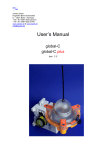
global-C / global-C plus user‘s manual navtec Remoto GmbH 1 Introduction This document introduces the navtec global-C and global-C plus. Both are 406 MHz beacons based on navtec’s successful global-3 design. The document is intended to explain the usage of the beacon. 1.1 Overview The global-C design covers two versions : 1. global-C, a COSPAS-SARSAT beacon on 406,028 MHz without built-in GPS comes in a yellow body and 2. global-C plus, same design with built-in GPS comes in an orange body. Both beacons are housed in the proven global-3 polycarbonate body distinguished by the colour. Activation, deactivation and handling have been adapted from this design. Function, design and handling have been wheelmark approved by BSH / Hamburg/Germany. The design of the navtec global-C EPIRB for COSPAS-SARSAT is based on the global-3. It comes in a polycarbonate body with vertical polarised antenna for 406 MHz and 121,5 MHz. Body colours are Yellow (RAL 1026) beacons without GPS (global-C) Orange (RAL 2007) for beacons with GPS (global-C plus) The cradle is available in Yellow (RAL 1018) Grey (RAL 7000, mil. colour) Blue (RAL 5013) White (RAL 9010) The cradle incorporates the HRU 1 The design is a class-2 type in temperature (-20 C). It is a full SOLAS / GMDSS compliant since the navtec parts fulfil all necessary requirements for pressure, drop test, release mechanism, etc. The navtec global-C contains a 121,5 MHz homing beacon. It does not contain a SART. 1 Hydrostatic Release Unit, both type approved units McMurdo/Pains Wessex and HAMMAR can be used. global-c_users_manual_en 1.3.doc Page 3 of 23 Last printed 26.05.2014