1
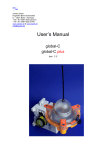
global-C / global-C plus user‘s manual
navtec Remoto GmbH
After this period the audible alarm ceases and the beacon starts the alert transmission. If the beacon is deactivated after audible alarm has ceased, a distress alert
will have already been sent (via satellite) and the nearest RCC has to be contacted.
Prior to activating the switch, the security device has to
be removed. Since this device has barbs that break
when the ring will be removed, it is quite easy to indicate that the beacon at least has been activated 3 once.
In addition, the activation will be logged in an internal
non-volatile logbook and can be used to indicate a battery problem in self-test mode.
After activation of the beacon it shall be placed into water.
3.4 Manual Deactivation
Deactivating : The navtec global-C EPIRB may be deactivated by moving the
switch to the left (test-position) and holding it there for 10 seconds.
When the main switch is activated in the TEST position a resistance in the form of a
little step down must be overcome. In addition to the 10-sec. hold time this is to prevent the unit from being inadvertently deactivated.
Deactivation
hold 10 sec.
Within a one-minute period, the beacon
can be deactivated without transmitting
via satellite.
After the one-minute period and when
the audible alarm has ceased an actual
distress alert has been sent. If the beacon is deactivated after this period, the
nearest RCC MUST be informed immediately.
In any event a one minute waiting period will occur between activation of the beacon
and transmission of the distress alert. During this waiting period, the navtec global-C
EPIRB generates an audible alarm.
This audible alarm is a special feature of navtec beacons.
3
See 3.3.9, Indication of previous activation of 61097-2
global-c_users_manual_en 1.3.doc
Page 7 of 23
Last printed 26.05.2014