1
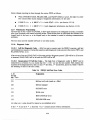
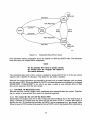
If the receive FIFO becomes more than three-quarters full, the DHQ 11 will send an XOFF code to that
channel, and to any other channel which receives a character and has the IA UTO bit set. When FIFO
becomes less than half full, an XON will be sent to all channels which had previously been sent an
XOFF.
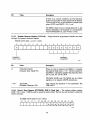
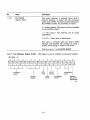
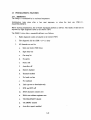
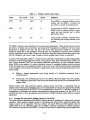
The DHQIl automatically controls character flow when programmed accordingly (auto-flow). Four
bits control this function:
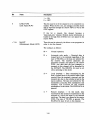
•
IAUTO
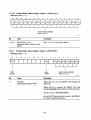
LNCTRL<l>
•
FORCE.XOFF
LNCTRL<5>
•
OAUTO
LNCTRL<4>
•
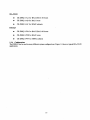
DISAB.XRPT
LPR<O>
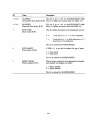
IAUTO and FORCE.XOFF both control incoming characters. IAUTO is an enable bit which allows
the level of the receive FIFO to control the generation of XOFF and XON characters. The
FORCE.XOFF bit is a direct command from the program to control the incomimg data stream.
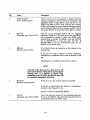
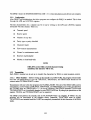
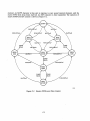
3.3.6.1 IAUTO - The DHQll hardware recognizes when the receive FIFO is three-quarters full and
half full. The logic uses these states for auto-flow control.
Each channel has a separate IAUTO bit. If there are 191 or more characters in the receive FIFO, and a
character is received on a channel with IAUTO set, an XOFF character is sent. If the channel does not
respond to the XOFF, the DHQll will send another XOFF in response to every alternate character
received. An XON will be sent when the receive FIFO contains less than. 128 characters, unless the
FORCE.XOFF bit for that channel is set. XONs are only sent to channl~ls to which an XOFF has
previously been sent.
By inserting XON and XOFF characters into the data stream, the prograrn can perform flow control
directly. However, if the DHQll is in IAUTO mode, the results will be unpredictable.
In IA UTO mode, if RX.ENA is set, XON and XOFF characters will be transmitted even if TX.ENA is
cleared.
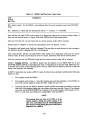
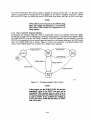
3.3.6.2 FORCE.XOFF - When FORCE.XOFF is set, the DHQ11 sends an XOFF and then acts as if
IA UTO is set and the receive FIFO is critical (was three-quarters full, and is not yet less than half full).
When FORCE.XOFF is reset, an XON will be sent unless the receive FIFO its critical and IAUTO is set.
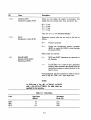
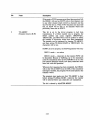
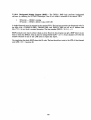
3.3.6.3 OAUTO - If the program sets OAUTO, the DHQ II will automatically respond to XON and
XOFF characters from the channel. It does this by clearing or setting the: TX.ENA bit.
The program may also control the TX.ENA bit, so in this case it is important to keep track of received
XON and XOFF characters.
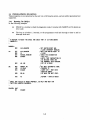
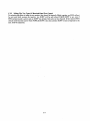
Received XON and XOFF characters will always be reported through the receive FIFO, unless the
DISAB.XRPT bit is set. It is possible, during read-modify-write operatio:ns by the program, for the
DHQ11 to change the TX.ENA bit between the read and the write actions. For this reason, if DMA
transfers are started while OA UTO is set, it is advisable to write to the low byte of TBUFFAD2 only.
3-26