1
[15]
[22]
[29]
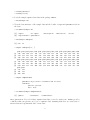
82.20326
69.26448
73.60255
96.19938
55.75460
89.48728
77.60070 79.48089
54.29840 139.89493
57.13887 64.98866
73.63257
91.36521
73.41650
46.46158
33.86029
59.02056
For vector alphas, transeS uses exactly the same syntax:
> trsample.eS <- transeS(sample.eS, tranparmult$lambda, tranparmult$alpha)
> trsample.eS@exprs[1:3, 1:8]
p1d0
p1d1
p1d2
p1d3
p2d0
p2d1
p2d2
p2d3
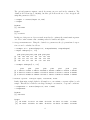
g1 5.686954 5.424873 5.449682 4.549380 5.590642 5.418542 5.268332 5.347915
g2 6.272797 6.308464 5.592073 4.915159 6.811348 6.710929 5.693269 6.492140
g3 6.488757 6.493737 6.388361 5.832776 7.173087 6.830052 6.345199 7.029530
It’s also possible to estimate the parameters using the more accurate lowess normalization (as
opposed to uniform normalization):
> tranparmult <- tranest(sample.eS, ngenes = 100, mult = TRUE,
+
lowessnorm = TRUE)
> tranparmult
$lambda
[1] 655.1817
$alpha
[1] 72.33459
[8] 59.91484
[15] 59.27235
[22] 99.95130
[29] 65.25109
54.85916
54.35704
86.55559
58.68123
98.40390
59.95882 67.84961 65.76304
69.41260 71.14899 62.35461
61.67145 59.51983 63.81498
61.70271 171.23313 119.38508
67.89693 63.68758
72.80078
61.59616
62.58284
57.23296
74.63962
75.55289
60.05210
73.56054
It is even possible now to estimate parameters using a specified model. For example, if we
think that the interaction of variables in vlist is important, we can add interaction to the
model:
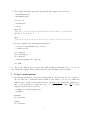
> tranpar <- tranest(sample.eS, model = "patient + dose + patient:dose")
> tranpar
$lambda
[1] 860.0836
$alpha
[1] 55.68625
The model is always specified in the same way as the right-hand side of an lm model. In the
example above, we set the parameters to minimize the mean squared error for a regression of
transformed gene expression against patient, log dose, and their interaction.
5