1
Be very careful of using interactions between factor variables. If you do not have enough
replications, you can easily overfit the data and have no errors to work with.
Naturally, it’s possible to use mult, lowessnorm, and model all together.
4
Finding differentially expressed genes
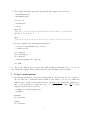
1. Transformation and Normalization. Before finding differentially expressed genes, the array data needs to be transformed and normalized.
> trsample.eS <- transeS(sample.eS, tranparmult$lambda, tranparmult$alpha)
> ntrsample.eS <- lnormeS(trsample.eS)
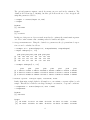
2. Finding differentially expressed genes The lmgene routine computes significant probes
using the method of Rocke (2003). A typical call would be
> sigprobes <- LMGene(ntrsample.eS)
There is an optional argument, level, which is the test level, .05 by default. A call using this
optional parameter would look like
> sigprobes <- LMGene(ntrsample.eS, level = 0.01)
The result is a list whose components have the names of the effects in the model. The values
are the significant genes for the test of that effect or else the message ”No significant genes”.
As with tranest, it’s possible to specify a more complex model to LMGene:
> sigprobes <- LMGene(ntrsample.eS, model = "patient+dose+patient:dose")
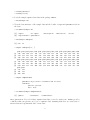
> sigprobes
$patient
[1] "g2"
[11] "g86"
[21] "g256"
[31] "g384"
[41] "g413"
[51] "g503"
"g3"
"g93"
"g271"
"g399"
"g414"
"g520"
"g9"
"g102"
"g277"
"g405"
"g415"
"g524"
"g10"
"g123"
"g304"
"g406"
"g423"
"g528"
"g14"
"g139"
"g310"
"g407"
"g425"
"g566"
$dose
[1] "No significant genes"
$`patient:dose`
[1] "No significant genes"
The routine LMGene requires the multtest package.
6
"g15"
"g155"
"g319"
"g408"
"g460"
"g607"
"g49"
"g178"
"g327"
"g409"
"g461"
"g612"
"g54"
"g179"
"g336"
"g410"
"g462"
"g84"
"g205"
"g372"
"g411"
"g463"
"g85"
"g250"
"g375"
"g412"
"g477"