1
iSense GPS Module User Guide
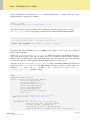
They work similar to the well-known sprintf functions in regular C, i.e. integer values etc. can be
printed using the % notation. For example
uint16 i = 128;
os().debug("value of i is %d, hex=%x", i, i);
will output „value of i is 128, hex=0x80“. The destination of the debug output can be set using
Os::set_log_mode, the corresponding constants can be found in iSense/src/isense/os.h.
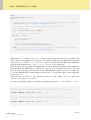
/** Sets the log mode to the given value, e.g.
* (ISENSE_LOG_MODE_UART0 | ISENSE_LOG_MODE_RADIO)
*/
void Os::set_log_mode( uint8 mode ) {log_mode_ = mode; }
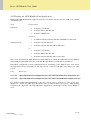
By default, the output destination is set to UART0, i.e. the output is sent to a PC via a connected
iSense Gateway Module.
In the GpsModuleDemoApplication::boot() method, the first boot notification message as
well as the fatal message at the end are hence sent via a potentially connected iSense Gateway
Module, while all other messages of the application will be sent out via the radio. These messages that
are sent out via the radio can be picked up with an iSerAerial node (see Section 4.4).
After the GpsModuleDemoApplication::boot() method enabled the GPS Module and passed
the itself as the PositionHandler, the GPS Module will start to acquire a valid position fix.
Whenever
a
new
fix
is
available,
the
GpsModuleDemoApplication::
handle_position(...) method is called.
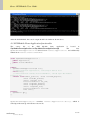
void
GpsModuleDemoApplication::
handle_location( uint8 latitude_degrees,
uint8 latitude_minutes,
uint16 latitude_frac,
DirectionIndicator lat_ind,
uint8 longitude_degrees,
uint8 longitude_minutes,
uint16 longitude_frac,
DirectionIndicator long_ind,
Time time )
{
// convert DirectionIndicators into characters
char indicators[4] ={'N', 'S', 'W', 'E'};
// output via the radio
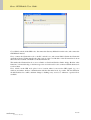
os().debug("%c %d° %d.%d' %c %d° %d.%d' #sat=%d",
indicators[lat_ind], latitude_degrees,
latitude_minutes, latitude_frac,
indicators[long_ind], longitude_degrees,
longitude_minutes, longitude_frac, gps_->satelites());
coalesenses
research to innovate
21 / 27