1
Bulletin No: TCH-003-049
Effective Date: 10/18/05
ABS System Physical Inspection. Inspect ABS
harnesses for damage, cuts, chafing, etc. and replace
as necessary (Bendix does not recommend repairing
or splicing harnesses).
Since the action of floodwaters and power-washing
may move the ABS wheel speed sensors from their
normal position close to the exciter (tone) ring, push
(by hand) each of the wheel speed sensors until
they contact the exciter ring. Normal wheel bearing
play will adjust the sensor position when the wheel
turns. When replacing ABS wheel speed sensors,
either because of damage, or as a result of electronic
diagnostic checks (see below), follow carefully the
lubrication and re-installation instructions in the
instruction sheet that is included with the replacement
sensor (or, if available, you may use BW-120-A).
Whenever a wheel speed sensor is removed from its
mounting block, Bendix recommends that the sensor
clip be replaced.
ABS System Electronic Inspection.
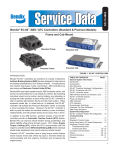
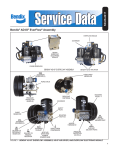
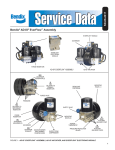
One of two types of Bendix ECU styles may be used
on the power vehicle: frame-mount or cab-mount. See
below Figure 1.
All cab-mounted ECUs that have been submerged
must be replaced.
Unless damaged, frame-mounted ECUs are normally
“weatherproof” and are not affected by water or most
types of contamination. Attach the power vehicle to
a towed vehicle and power up the system. Note any
ABS indicator lamp diagnostic codes - verify PLC
communication between the trailer and tractor. As
necessary, use diagnostic software (e.g. Bendix®
ACom5™ PC-Diagnostic Software) to look for any
present or intermittent trouble code history stored in
the ECU. Replace components as necessary.
Cancels: N/A
Page: 3 of 4
If the contamination cannot be removed from an air
line in this manner, replace the air line using SAE
approved materials.
Air Brake System and Accessory Leakage Test
Park the vehicle on level ground and chock the wheels.
Build system pressure to governor cut-out and allow
the pressure to stabilize for one minute.
Step 1: Observe the dash gauges for two additional
minutes without the service brakes applied.
Step 2: Release the parking brakes, and apply the
service brakes. Allow the pressure to stabilize.
Continue holding for two minutes (you may use a
block of wood to hold the pedal in position.) Observe
the dash gauges.
If you see any noticeable decrease of the dash air
gauge readings (i.e. more than 4 psi, plus two psi for
each additional trailer) during either two minute test,
repair the leaks and repeat this test to confirm that
they have been repaired.
For more information, see Bendix air leakage video
BW2322(DVD), BW2324(VHS), or BW2327(CD).
Bendix Technical Assistance Team
For direct telephone technical support, call the Bendix
technical assistance team at:
1-800-AIR-BRAKE (1-800-247-2725-2-1),
Monday through Friday, 8:00 A.M. to 6:00 P.M. EST,
and follow the instructions in the recorded message.
Or, you may e-mail the Bendix technical assistance
team at: [email protected].
See BW1396 for further dual circuit brake system
troubleshooting tests.
GENERAL
Bendix recommends that standard operator pretrip inspections to ensure proper air brake system
operation be rigorously performed for all vehicles
potentially impacted by flood conditions.
When replacing pneumatic system components that
have been subjected to flood conditions, Bendix
recommends that all contaminated air hoses be
disconnected and flushed with clean water and blown
out with air pressure to remove contaminants.
CAUTION: Take all necessary precautions for
safety of the technician and others in the work area
during this procedure, including eye protection.
See over for General Precautions.